
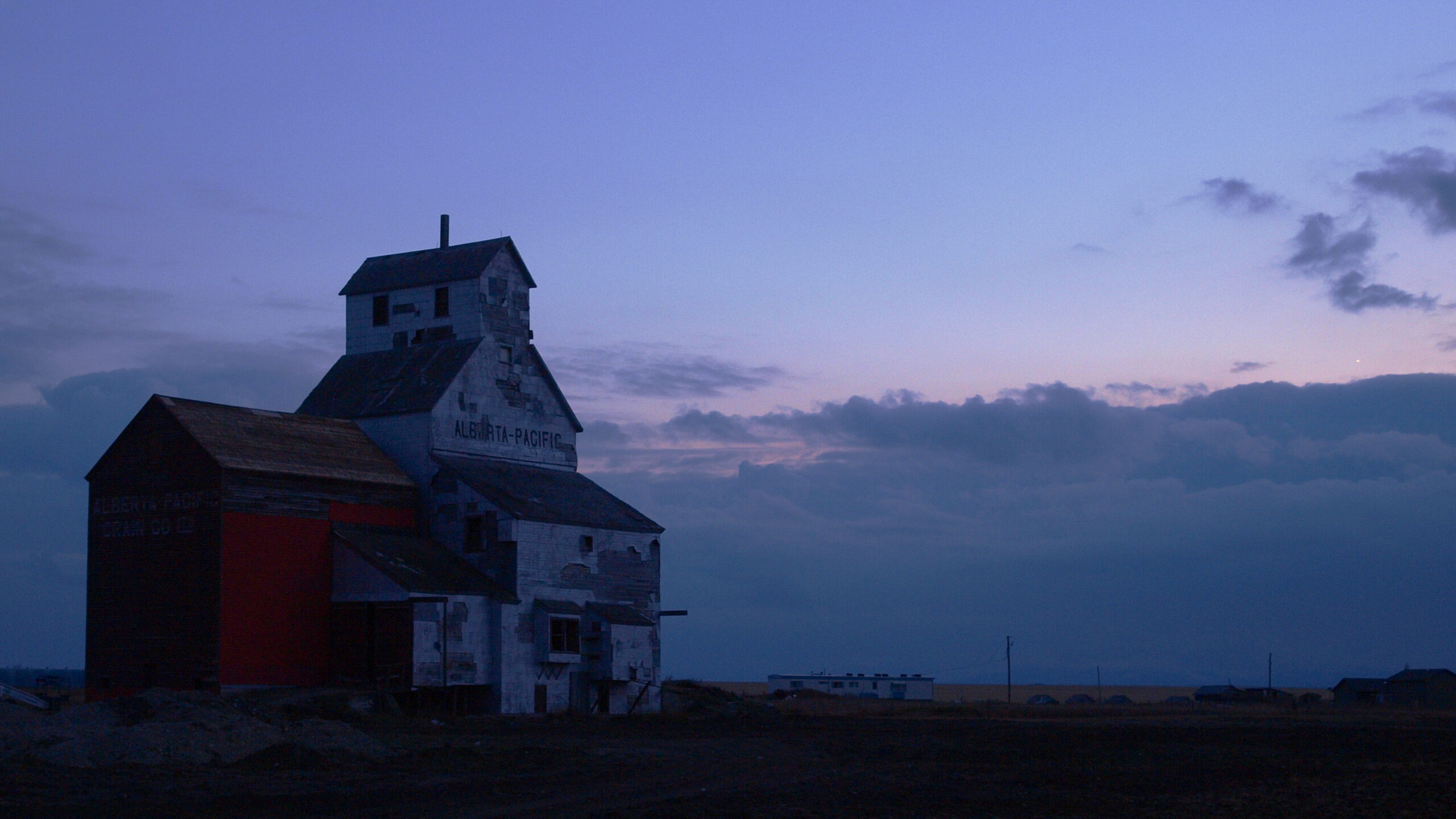
In most places in the United States, snow in June is a meteorologic anomaly. Even in Minnesota, famous for its wintry weather, a late spring snowfall is worth remarking upon. A native Minnesotan might see two or three such instances in his lifetime, and he will remember each one for the way it disrupted the normal course of life, the manner in which it drew him closer to both the natural world and the realm that exists beyond it.
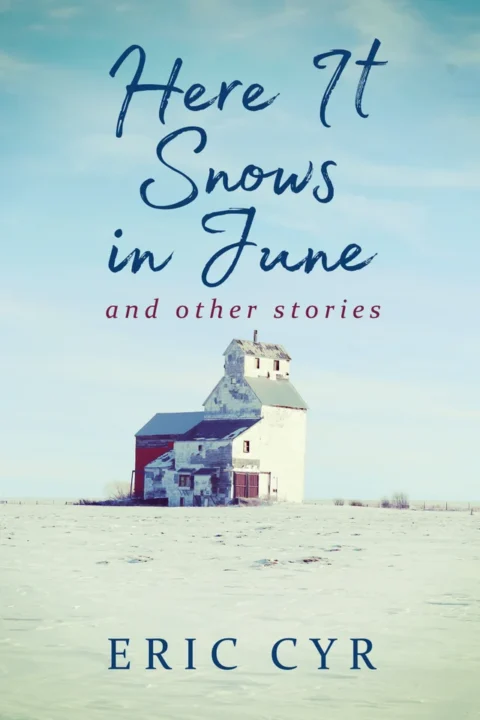
The same could be said for the fifteen short stories in Minnesotan Eric Cyr’s debut collection, Here It Snows in June and Other Stories. In each piece, readers witness boys and men striving to determine the kind of people they want to be and endeavoring to achieve that maturity, their conflicts and challenges highlighted by the course of the sun, the rise of the moon, the threat of a bear, the call of a loon, and in one instance, the humorous possibility of ninja beavers.
The male perspective is a consistent feature. Set in various domestic spheres in the Land of 10,000 Lakes, the stories collectively, though not linearly, cover the natural span of a man’s life. Scouts appear more than once in these stories, as do the Minnesota Twins. The Vikings make a strong showing in the tragicomic “Cold Is a State of Mind.” Other characters show propensities for music and the fine arts. Though there are no female protagonists, mothers play a steady role as a kind of compass, directing their sons toward virtue and holiness. It is one boy’s mother who takes him to church for confession twice a year, another’s mom who taught him not to pray for bad things to happen to those who hurt him.
Cyr’s experience as a musician likely contributes to the notable range of styles in the collection. First-, second-, and third-person narration are employed successfully. Three stories are three pages or less. Another three are explicitly related through their protagonist, while other names repeated in a scattered manner suggest there may be more dots to connect; perhaps the world is not as chaotic and unruly as it often seems. One selection, “The Key,” was a finalist in Luminor’s inaugural short story contest.
The reality of the protagonist’s conscience, an awareness of an objective good and evil, colors each narrative, quietly insisting the reader acknowledge the same in himself.
An undercurrent of Catholic morality flows beneath the surface of these stories, occasionally coming to the fore in a line of memorized Scripture or an allusion to the Stations of the Cross, elsewhere appearing more markedly in a parish softball team or a stint at seminary. However overt the reference, the reality of the protagonist’s conscience, an awareness of an objective good and evil, colors each narrative, quietly insisting the reader acknowledge the same in himself.
Learning to Die
The collection opens with “Ars Moriendi,” the brief story of Henry, a fragile young boy who dodges his homeschool math work for a walk in the woods. The deer skull he finds while doubled over in a coughing fit does not have the putrid scent of death, but rather some sweet quality that entices him to bring it home. He knows enough about antlers to recognize that “the deer had died when the horns were new, before it had had time to rub them smooth.” Subtle details—the cough syrup Henry imbibes morning and night, the mini home shrine honoring Sts. Jude and Peregrine—indicate the boy may meet a similar fate. If that’s the case, the reader understands Henry will not come to his end without having contemplated life and death. The collection of treasures he keeps in a shoebox beneath his bed serves as evidence of his ability to see what others brush past.
Elsewhere, protagonists are boys seeking their fathers’ approval. In “Fruit of Knowledge,” Colby is both thrilled and anxious about his first hunting trip. There is the matter of killing a deer, but also the opportunity to be alone with his father. Colby wants to tell his dad about the dodgeball game that took a turn yesterday in gym class, though he cannot predict his dad’s reaction. Will he be proud, angry, ashamed of his son’s behavior? Tony in “Primogeniture” is a grown man but speaks as a son, looking back on the near success his late father claimed to be, a guy who was always this close to greatness—the man Tony believed him to be until he became a man himself. Adult Tony is surprised to find he and his brother don’t agree on which of their father’s stories are true and which were fabrications. Having now lost his father twice, once in body and once in spirit, Tony must decide what space he will allow the memory of his father to occupy in the man he chooses to be.
Learning to Live
Still other characters are fathers navigating their children’s growing independence or looking back to see where they went wrong. In two back-to-back stories, young husbands grapple with the realities of the promises they made in matrimony. The second-person narrative in “Each the Size of a Child’s Heart” digs into the hidden pain of a striated marriage. While the unnamed narrator’s wife is more concerned with the causes she works for than for her husband and son, there is no irony in stating, “But she is your wife. You love her. You made a vow.” (You won’t believe this ending; I’m not going to spoil it.) Jen and Tyler are at odds in the next story, “Stuck.” Dangerous road conditions and a chance encounter lead to an unspoken but powerful realignment that leaves the couple with an understanding, which readers can hope will serve the young family for decades to come.
A trio of stories—“Sacrifice Hit,” “Castor and Pollux,” and the title story—function independently and as a set, connected through their protagonist, teenage Kyle. In each story, Kyle is literally or metaphorically knocked down. He is not the strongest, the fastest, the most popular; he grasps for his father’s approval and for the interest of Greta, who will not have him. And yet when readers last encounter him, he has found his center within his own home, with a wife and daughter to love and serve. He no longer sees himself in “the snow that hit the pavement [and] broke apart and melted as soon as it landed, like minuscule worlds erased.” From the failures and mistakes, the humiliation and rejection, he has grown into a man who bears more resemblance to “the large flakes that settled, unharmed, on the bright green blades of grass.”
Humanity Reimagined, Rediscovered
To say that these stories examine what it is to be a proper man is an accurate, though narrow, assessment. The world seen through male eyes is still the world in which we all live, in which we all strive to find our purpose and live it well.
It is for all of us to honor our parents and love our children; to live our vocations with fortitude, patience, and grace; to not neglect the natural world but to recognize in it the hand of our Father. Would that we all valued space for silence and stillness, as the characters in these stories often do. Would that we all welcomed the unexpected—like snow in June—with an abiding sense of wonder.