
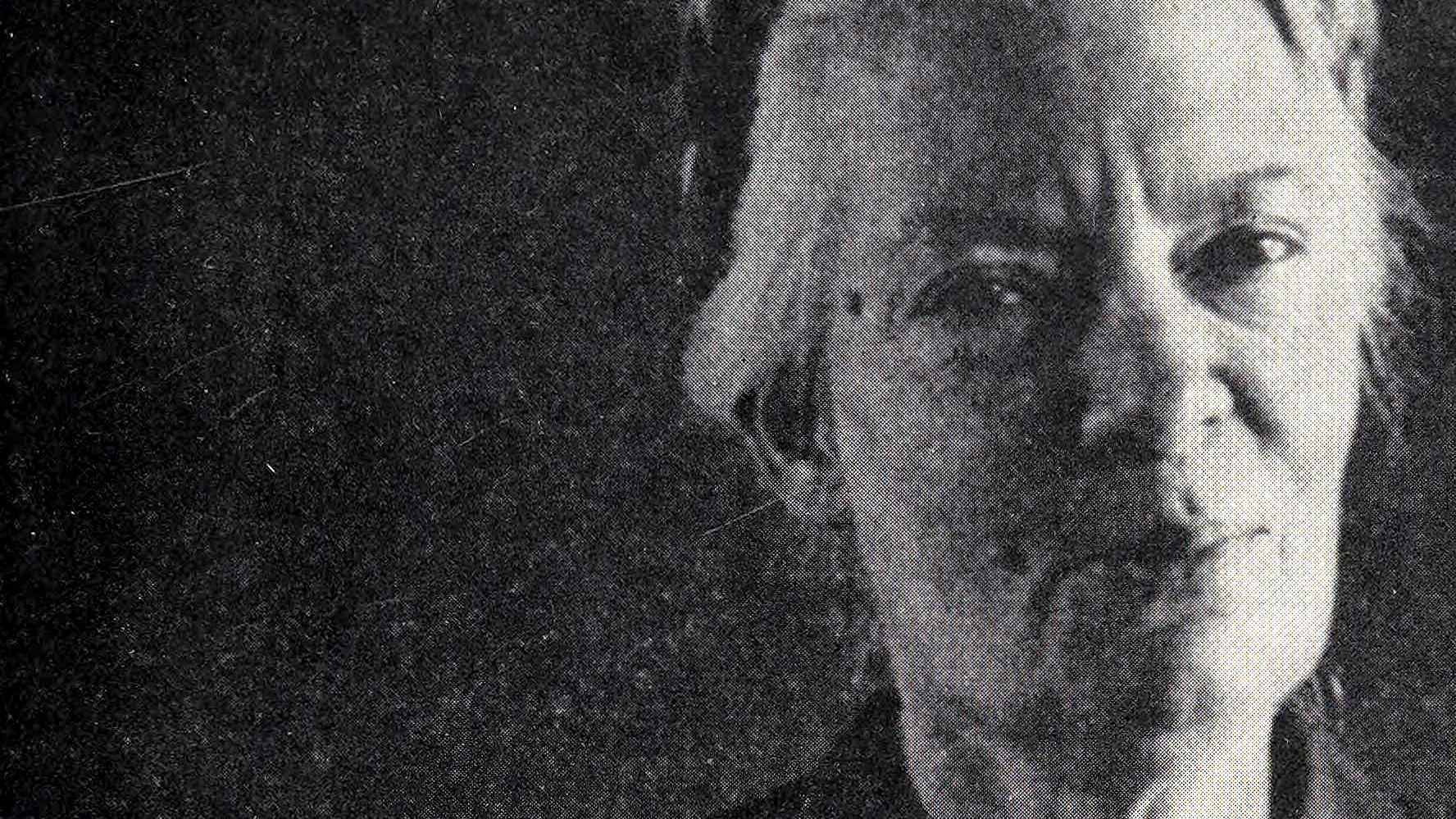
Recent discussions surrounding the possible canonization of twentieth century social activist Dorothy Day have led to a renewal of debate over this public figure, as both the Church and the public try to better understand exactly who she was and what shaped her accomplishments. One of the more intriguing aspects of Dorothy Day’s life is the way in which many of her admirers presumptuously align her devout Catholic beliefs with her ardent socialist politics, especially within her Catholic Worker Movement. However, there are many significant intersections between Day’s Catholic Worker Movement and the traditional principles of democracy long upheld in the United States. By analyzing Day’s Catholic Worker Movement specifically in light of Alexis de Tocqueville’s five principles of democracy, today’s Catholic can understand how Dorothy Day’s unique witness to the gospel was not a result of progressive ideology but rather depended on the basic freedoms provided for in the staunchly democratic way of American life.
To know the Catholic Worker Movement, one must first know Dorothy Day. Dorothy Day was a journalist, social activist, and self-proclaimed anarchist who also fully identified as a devout Catholic. Born in New York City in 1897, she grew up in a nominally Protestant family of writers, worked for various newspapers, and ran in progressive circles well into her twenties. Her bohemian lifestyle was oriented toward social justice. She involved herself in the Communist Party and surrounded herself with socialist radicals. Later, Day would describe this period as “dissoluted, wasted, full of sensation and sensuality.” However, this disconcerting period was followed by a time of peace and prayer as Day’s interest in Catholicism grew slowly and steadily. Her full conversion took place after a failed marriage and the birth of her only daughter, Tamar, in 1926.
During the Great Depression, Dorothy Day met a French peasant named Peter Maurin, a Catholic writer, social activist, and philosopher who had tracked Day down through her freelance work. Together they wanted to create a Catholic newspaper to bring about “clarification of thought” and to use the Catholic Church’s social teaching to transform the social order—to build a society “where it is easier for people to be good.”
Within two years of its beginning, The Catholic Worker successfully surpassed one hundred thousand copies, covering social issues such as the labor movement, human rights, poverty, racism, and more. The paper was unique because it instilled the biblical promises of justice and mercy while passionately promoting specific philosophies and ideologies like personalism, decentralized society, distributism, grassroots efforts, voluntary poverty, nonviolence, manual labor, and anarchy. This perspective produced a revolutionary call to action that was met by the Catholic Worker Movement and manifested in actions such as serving the poor and homeless, opening houses of hospitality and farming communes, picketing on the streets, and accepting jail time.
The freedom to express radical egalitarianism is at the heart of the Catholic Worker Movement, which sees Christ in everyone.
The Catholic Worker history is one full of progressive action as the movement vehemently opposed ideas like individualism, capitalism, commodification, violence, government, and structure. And yet, by analyzing Day’s Catholic Worker Movement in light of Alexis de Tocqueville’s five principles of democracy—liberty, egalitarianism, individualism, populism, and laissez-faire—it is clear that Day and the Catholic Worker Movement are more aligned with these democratic values than generally thought by contemporary Catholics and the public.
Liberty
Tocqueville’s first principle of democracy is liberty. In Democracy in America he states, “It cannot be repeated too often that nothing is more fertile in prodigies than the art of being free; but there is nothing more arduous than the apprenticeship of liberty.” The entirety of the Catholic Worker Movement is dependent on freedom, a true freedom found only in a democracy. Without the freedoms listed in the First Amendment—freedom of religion, speech, petition, the press, and assembly—the Catholic Worker Movement could not exist. Furthermore, to Tocqueville’s point, Day formed the Catholic Worker Movement as an effort to demonstrate this “apprenticeship” of being free. In her 1966 Advent reflection, Dorothy Day wrote about the “tremendous freedom there is in the Church.” As she explained, “For those who live in Christ Jesus, for those who have put on Christ, for those who have washed the feet of others, there is no law. They have the liberty of the children of God.” The emphasis here is not on one’s freedom to act against moral law or to infringe upon civil order and the common good. Rather, as she quotes from Persona Humana, “In the depths of his conscience man detects a law which he does not impose on himself, but which holds him to obedience. . . . For man has in his heart a law written by God.”
Egalitarianism
Tocqueville’s second principle of democracy—egalitarianism—is also found within the Catholic Worker Movement. He writes, “Men cannot become absolutely equal unless they be entirely free, and consequently equality, pushed to its furthest extent, may be confounded with freedom.” Egalitarianism prioritizes the equality of all people, regardless of socioeconomic or financial status; all citizens are to be treated equally under the law. The freedom to express radical egalitarianism is at the heart of the Catholic Worker Movement, which sees Christ in everyone. This matter was very simple for Day, who, despite observing that the poor often smell and are ungrateful, said, “The Gospel takes away our right forever, to discriminate between the deserving and the undeserving poor.”
Individualism
Tocqueville writes of his third principle: “Individualism is a mature and calm feeling, which disposes each member of the community to sever himself from the mass of his fellow-creatures; and to draw apart with his family and his friends; so that, after he has thus formed a little circle of his own, he willingly leaves society at large to itself.” Tocqueville’s concern with individualism is that while a degree of it is necessary, it is not sustainable for man and eventually causes him to lose concern for the well-being of others. Day agreed with his latter sentiment and preferred the related philosophy of personalism, “A philosophy which regards the freedom and dignity of each person. . . . In following such wisdom, we move away from a self-centered individualism toward the good of the other. This is to be done by taking personal responsibility for changing conditions.”
The Catholic Worker Movement took this concept of personalism and personal responsibility a step further with its emphasis on hospitality. Day pressed the limits of hospitality, recognizing that the most hospitable are the poor: They have the mindset that “there is always room for one more” because “everyone takes just a little less.” She emphasized the beauty in personalism and hospitality, often quoting Dostoevsky that “beauty will save the world.” This beauty took form in the music, art, books, and conversations that Day used to create environments that elevated the dignity of those less fortunate. Writing on the importance of serving others not because they remind us of Christ but because they are Christ, Day asks, “Would you—or did you—give [the meal] on an old cracked plate, thinking that was good enough? Do you think that Martha and Mary thought that the old and chipped dish was good for their guest?”
Populism
Woven within these democratic concepts of freedom, equality, and individualism is also Tocqueville’s principle of populism, or the idea that decisions are made according to the will of the majority rather than the select few. Tocqueville valued localism overall, writing, “Local freedom, then, which leads a great number of citizens to value the affection of their neighbors and of their kindred, perpetually brings men together, and forces them to help one another, in spite of the propensities which sever them.” The Catholic Worker often emphasized this grassroots focus in its publication, writing about voting rights, child labor in its own neighborhood, nearby evictions, and local strikes. The movement also highlighted one of the seven themes of Catholic social teaching, the belief that “people have a right and a duty to participate in society, seeking together the common good and well-being of all, especially the poor and vulnerable.” This theme was often displayed in Day’s houses of hospitality.
The local communities that Day founded through her houses of hospitality displayed both Catholic social teaching and Tocqueville’s understanding of free local participation. The house’s sense of community manifested itself in the morning church bells signaling daily Mass together, the post–soup line Rosary, afternoon work, robust dinner crowds, and the conclusion of the day with cleaning and the gathering for evening Compline. Day writes how she often surveyed her surroundings during these hours, acknowledging the miracle of “the feeling of understanding and friendliness, which must account in large part for the relative order and peace of our home.” She talks of her many different guests and friends: Joey Fish, German George, Italian Mary, the Japanese woman named Kichi, the American Indian nicknamed “the Chief,” visiting priests from the Midwest, a Puerto Rican couple who spoke no English, and a young philosophy student. It raises the question of how anyone else outside of the house of hospitality could see these guests and know their individual and specific needs. Day’s ability to create an environment that focused on the people right beside her allowed for greater participation from those in her community, despite the propensities that may otherwise have severed them, as Tocqueville opined.
Laissez-faire
Tocqueville’s final principle of democracy is laissez-faire, or the idea of operating without much interference from large corporations or government entities. He believed that democracy was best suited with a hands-off approach that left the decisions and power to the individual. The Catholic Worker Movement valued this laissez-faire attitude nearly to a fault. Day was a self-proclaimed anarchist—not one who burned down buildings or rioted in the streets, but one who passionately believed she answered to her own conscience as a steward of God’s creation. She refused to go corporate, pay taxes, obtain insurance, or create any authority or hierarchy within the Catholic Worker Movement. As a result, members of the movement often dealt with legal issues involving the IRS and FBI, were often evicted from their houses of hospitality, served jail time, and did not have a blueprint to share with other communities on how to run their own hospitality houses or publications. During one particularly messy legal battle in which the IRS was demanding nearly $300,000 in taxes, Day wrote, “We do not intend to ‘incorporate’ the Catholic Worker movement. We intend to continue our emphasis on personal responsibility.” She continued, “Voluntary poverty meant that everyone at the CW worked without salary, and contributions came from them, and from our readers, which kept the work going.” This decentralized approach of avoiding government interference meant that the Catholic Worker Movement was kept afloat entirely through private donations, both financial and material. Day had no problem begging for its needs, as she was a supporter of distributism and believed it was not the government’s business to take care of the vulnerable but for those in the community to share from their abundance. This general skepticism and disdain for government and corporations aligns very closely with Tocqueville’s affection for the laissez-faire principle.
There is no question that Dorothy Day’s efforts in the Catholic Worker Movement were solely driven by her mission grounded in the gospel. However, it is important to recognize that this mission was largely enabled by the framework provided within Tocqueville’s principles of democracy. Further, her efforts prove that the gospel is fully capable of serving and flourishing hand in hand with American democracy, even today. As America’s 250th anniversary draws near, the American Catholic is offered the question of whether he or she is up to the challenge to answer Dorothy Day’s call to action—to partake in the gospel and, as Tocqueville would say, to accept the challenge “with a spirit of religion and a spirit of liberty.”