
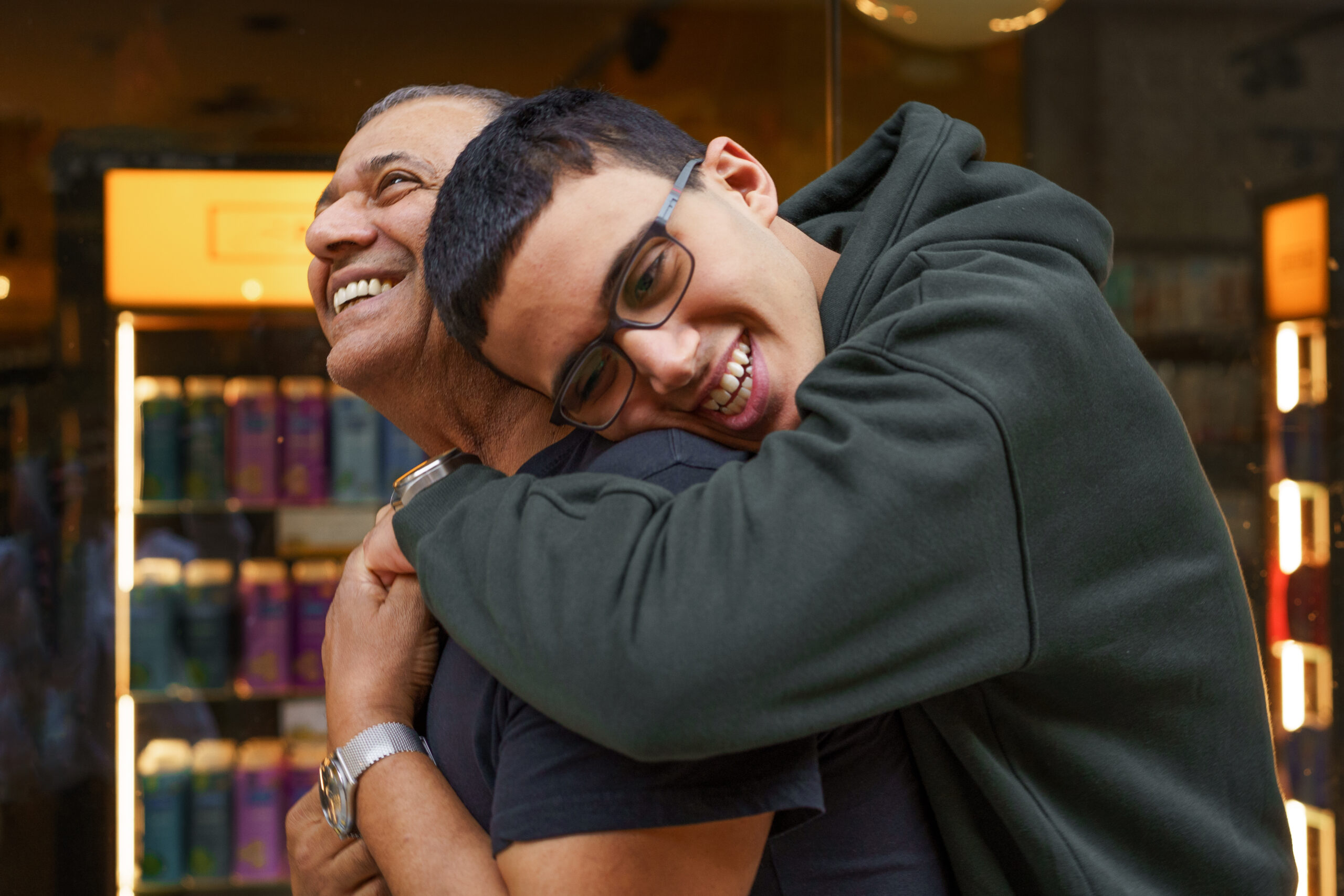
The members of the body that seem to be weaker are indispensable, and those members of the body that we think less honorable we clothe with greater honor, and our less respectable members are treated with greater respect; whereas our more respectable members do not need this. But God has so arranged the body, giving the greater honor to the inferior member, that there may be no dissension within the body, but the members may have the same care for one another. (1 Cor. 12:22–25)
Ah, St. Paul. One of the greatest heroes of the nascent Church reminds us in his characteristically paradoxical way who it is that is truly indispensable: Of all people, it is those we consider to be less honorable. Why might he ask us to clothe them with greater honor, and why show them greater respect? Because as a human person created in God’s image, they are worthy of welcome into our communities; they are deserving of honor. But perhaps there is also another reason, a greater challenge for us. Maybe our showing them honor isn’t for them. Maybe it forms us to fulfill the will of Christ in his command to love our neighbor as ourselves. The love that Jesus asks of us requires effort. If we are going to love with the charity Jesus asks of us, we must move beyond ourselves and consider the needs of the other first.
With that introduction, I am very happy to introduce you to a new book I edited, which Word on Fire has just published: Indispensable: A Catholic Guide to Welcoming Persons with Intellectual and Developmental Disabilities.
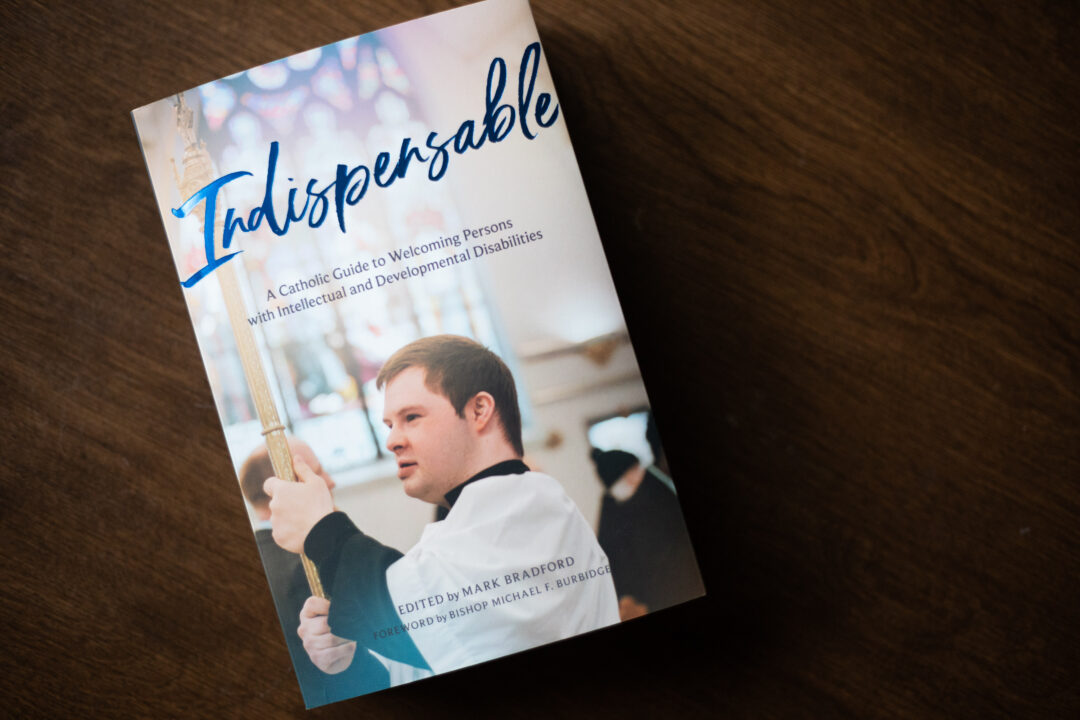
Indispensable was written to be a resource for parishes. It is for clergy, first and foremost, because they are responsible for creating a place of welcome in our parishes for persons with disabilities, but it’s also for those who lead parish ministries, who lead or teach in Catholic schools, and who have children with disabilities and may be curious about how the Church views certain issues like sacramental access, participation in parish life, inclusive education in Catholic schools, or sexuality and relationships. But really, Indispensable is for all Catholics. As St. Paul reminds us, care for those often seen as the least should be the concern of everyone so that there is no dissension in the body.
Ten authors, each an expert in his or her area, were invited to share their knowledge and to write with the understanding that the book is intended to be a practical, pastoral resource. The Most Reverend Michael F. Burbidge, bishop of the Diocese of Arlington, generously agreed to write the foreword, in which he reminds us that “every member of the Church, without distinction, has received the whole of the Gospel and has the joyful task of proclaiming it.” Therefore, it is important “that our national, diocesan, and parochial ministries be known for the warm welcome and embrace they are called to extend to our brothers and sisters with various disabilities.”
If we really do care for one another, the Body of Christ will be authentically pro-life and witness to the world that all life is valued.
Indispensable consists of eleven chapters and opens with a meditation on human dignity and the gift of vulnerability by Dr. Miguel Romero, who offers a distinct and accessible Catholic theology of disability drawn from the teachings of St. Thomas Aquinas and Pope St. John Paul II. Dr. Romero’s contribution is important to the theological discourse on disability, and readers will appreciate how it resonates deeply from the well of the Catholic anthropological understanding of the human person, whose dignity is in no way compromised or exalted by intellectual or developmental differences.
With the looming threat that prenatal diagnosis presents to families, Tracy Winsor and Bridget Mora from Be Not Afraid offer suggestions for the pastoral care of parents who may receive an adverse prenatal diagnosis. The authors warn us that even Catholic families can be vulnerable to medical or even family pressure to abort, and they offer practical suggestions on how to respond. Be Not Afraid is an organization Winsor cofounded in 2008 to support parents carrying to term after a prenatal diagnosis by offering emotional support and assistance with families’ tangible needs before birth and for up to a year after the birth of a child. Sometimes parents are called to face the death of a child before or after birth. Kathryn Grauerholz guides pastors and others through the most compassionate way to respond and help young families manage their grief.
Understanding how to better welcome persons with disabilities into our parishes is the primary goal of this book, and access to the sacraments is the foundation upon which growth in faith and true incorporation into the Body of Christ occurs. Deacon Larry Sutton has clarified what is required for the reception of the sacraments and offers practical suggestions for how pastors might address challenges in preparing children with developmental disabilities for the sacraments of initiation. Discerning vocations to marriage or the priesthood presents challenges that Sutton addresses from his years of experience as a psychologist and working with individuals with disabilities as a deacon. Fr. Matthew Schneider, LC, is an autistic priest and addresses autism and other disabilities in the context of the liturgy, and Dr. Anne Masters guides readers to understand the communication needs of non-speaking persons so that they can more meaningfully participate in different areas of parish life.
The influence of contemporary culture and the media on the human formation of persons with disabilities requires particular attention and care, especially in the area of relationships and sexuality. Dr. Mary O’Callaghan from the University of Notre Dame has provided a chapter that exposes the misperceptions and stereotypes about the sexuality of persons with intellectual and developmental disabilities, discusses the importance of proper education, and examines a Catholic response to these challenges within the context of Pope St. John Paul II’s Theology of the Body. Many Catholic parents are uncertain about how to address sexuality with their children with disabilities, and pastors of these souls need to understand the unique challenges they face and be prepared to offer appropriate support and guidance.
Catholic school administrators and teachers will find the chapter on opportunities and challenges of educating students with disabilities in Catholic schools by Dr. Michael Boyle to be a valuable resource, full of tools and strategies we hope will encourage pastors and principals to foster inclusion. He provides suggestions for locating potential funding and where school leaders may find financial resources to assist them in bringing Catholic education to different learners.
I have written a chapter to help readers understand the causes and manifestations of some of the more prevalent disabilities and a chapter with concrete suggestions of how pastors might create a parish that is welcoming to individuals living with intellectual and developmental disabilities and their families.
St. Paul challenges us to see differently those whom some consider the least among us—through the eyes of Jesus, who sees each of us as indispensable. As the American bishops wisely wrote in a 1978 pastoral statement, “The Church finds its true identity when it fully integrates itself with these ‘marginal’ people.”
This book was written to help readers understand how to better fulfill the will of Christ, who calls us to serve him by serving those he loved and showed preferential attention to during his ministry among us (see Matt. 25:40). We need to refocus our vision on the Body of Christ and accept St. Paul’s paradoxical request. Inclusion is often the word we use when we address the importance of “including” individuals with disabilities in the heart of the Church, but Jesus doesn’t ask us only to include them but rather to love them and welcome them.
With our sight perfected by grace and a sincere desire to become a welcoming Church to those with all disabilities, we, the authors of this book, pray this contribution will encourage and inspire parishes to draw all persons closer to the kingdom of God through a love that is genuine and welcoming. If we really do care for one another, the Body of Christ will be authentically pro-life and witness to the world that all life is valued: All persons are welcome from the least to the greatest.