
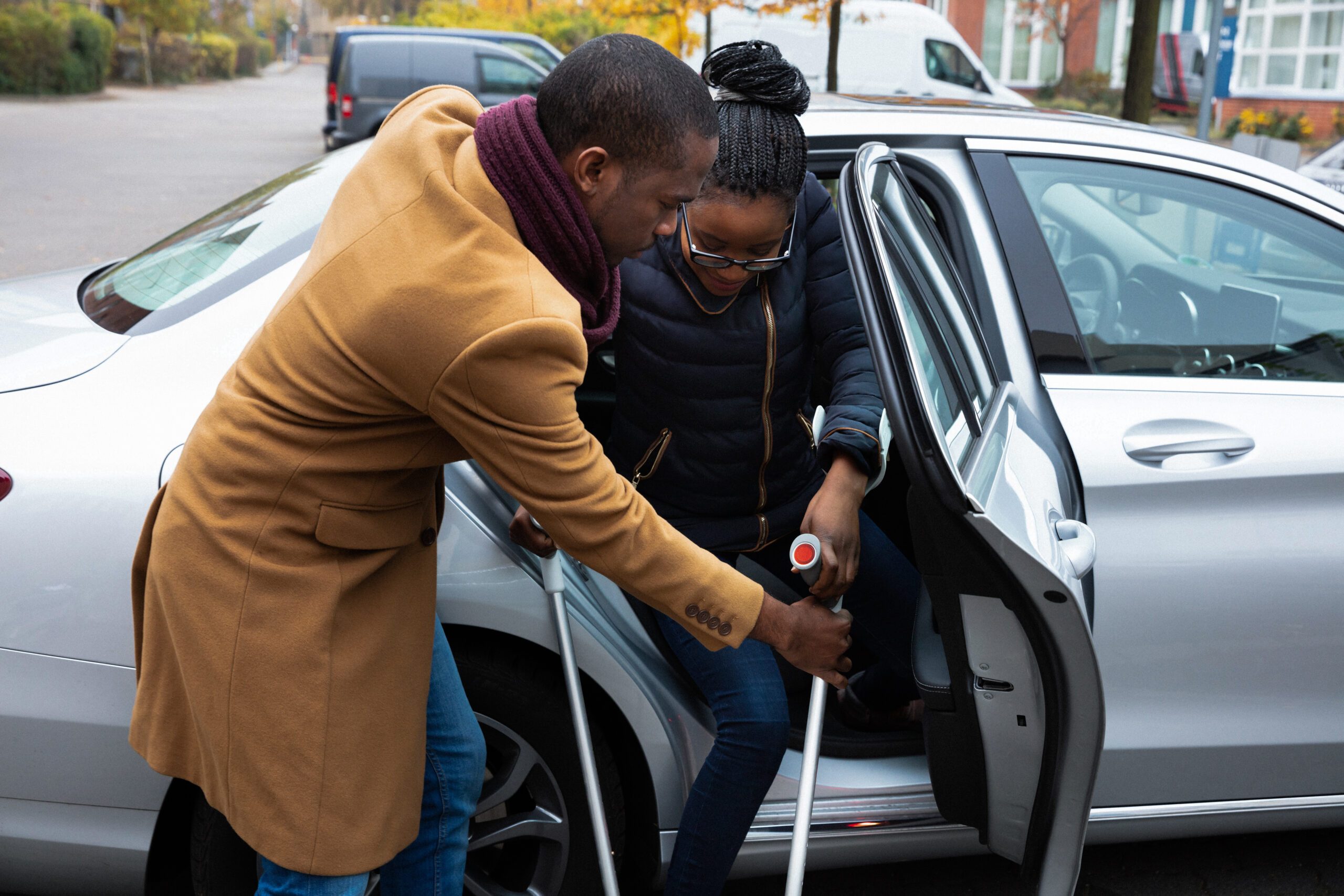
We all want to be free, don’t we? But what are we really asking for?
Freedom is one of those words in our language that requires context. “I just want to be free” is aspirational but lacks an object desired. Until we can define what it is we really want, the desire for freedom hangs in space, and we remain unhappily adrift and uncommitted. To define what the freedom is that we seek, we need to add a preposition to complete the sentence. A prisoner might desire freedom (from incarceration), someone unhappy in a job may want freedom (from an overbearing employer, or difficult colleagues, or simply too much work). Teenagers long to be free (from parental restraints so that they can eat what they want, stay up as late as they want, engage with social media as much as they want, purchase what they want, and believe what they want). You get the point.
The opposite of freedom, of course, is the imposition that restrains us, and none of us want to be restrained. But in each of those scenarios, something usually has been imposed to restrain freedom for a reason. Prisoners lose their freedom to pay a debt for an injury they have caused to society; employees are justly bound by the conditions and circumstances of their employment; and without some restraint, teenagers, whose executive function skills are still developing, may—if left on their own—grow up without the discipline required to become responsible adults. In the case of young people, the potential for addictions is ubiquitous these days, and being involuntarily bound to certain disciplines forms children for their eventual “freedom.”
When parenting is successful and freedoms are given when appropriate and safe, children learn to use their freedom wisely. When they win trust and experience the rewards of not surrendering their agency to vice, they voluntarily maintain self-discipline as a virtue that leads to their flourishing. But children aren’t the only ones tempted to use freedom without wisdom, are they?
For all of us, freedom from opens the possibility of freedom for. We often hear the word autonomy used in place of freedom, but freedom and autonomy aren’t the same thing. The Greek roots of the word autonomy are autos (self) and nomos (law): Autonomy is really about a desire to be a law to oneself. It easily becomes selfish, turning toward oneself as one’s first concern. Freedom is having the capacity to make appropriate choices knowingly and willingly. Can you see the difference?
The Catechism of the Catholic Church teaches, “Freedom is the power, rooted in reason and will, to act or not to act, to do this or that, and so to perform deliberate actions on one’s own responsibility. . . . Human freedom is a force for growth and maturity in truth and goodness; it attains its perfection when directed toward God, our beatitude” (CCC 1731).
Dependence and vulnerability, the “natural basis of existence,” are defining features of our humanity.
However, the Church also acknowledges that restraints on freedom are legitimate to preserve the common good. God placed Adam and Eve in the garden, free to eat the fruit of every tree except one. We know the end of that story. They abused the freedom God gave them, and now we live each day with the consequences of their having violated the restraint God asked of their freedom.
No Christian can claim to be autonomous, but neither can we understand freedom as absolute. Sometimes our choices must be restrained to preserve our moral or physical safety and the safety of others. We have traffic laws to keep our roads safe; we have tax laws to ensure the government has the revenue it needs to support the public good; we have laws against murder and theft, and many of our laws mirror the injunctions of the Ten Commandments. Parents place restraints on children’s behavior to keep them safe and to form them for eventual freedom and self-determination.
Freedom and dependence are close allies in Catholic teaching. St. Paul wrote to the Galatians that they “were called to freedom” but not to use their “freedom as an opportunity for self-indulgence, but through love [to] become slaves to one another” (Gal 5:13).
The philosopher Alasdair MacIntyre wrote a book called Dependent Rational Animals: Why Human Beings Need the Virtues, in which he argues against the myth of autonomy. He said that we begin life being radically dependent, and we continue to have periods throughout our lives when we return to that dependent state, either because of illness, injury or impairments, or simply old age. If dependence, then, is a fact of life for all us rational animals, states of dependence don’t compromise the dignity we enjoy as human persons created in God’s image, nor can dependence be said to compromise our freedom, if it is properly understood.
Human flourishing requires that we acknowledge our dependence on others and, in so doing, give others the gift of providing care to us. Relationships of mutual dependence are necessary for a healthy society, and they contribute to what we call the common good. Mutual dependence inspires love, the genuine love Christ expects us to show one another.
So what about people who are dependent on others because of disability?
When we acknowledge that each of us is dependent on others and that we may—at any time—become radically dependent on others because of injury or illness, our perspective on disability begins to assume a new understanding. What is disability, really?
The International Theological Commission recently published a new document called Quo Vadis, Humanitas?, or “Where are you going, humanity?” The document is primarily oriented toward questions about the nature of our humanity that are being raised by our technological age, and especially philosophies of trans- and post-humanism. Interestingly, Quo Vadis suggests that a theological reflection on disability has a “significant value in defending the infinite dignity of every person.” Why would that be? Because the voices of people with disabilities offer a “radical challenge to the culture of waste that resonates in certain transhumanist and posthumanist arguments.” The document says that a reflection on disability “is necessary to recall the decisive significance of dependence and vulnerability as integral elements of every human experience” (118, emphasis added).
Those who promote anti-humanist ideologies like trans- and post-humanism believe that technology will allow us one day to transcend natural human barriers. Quo Vadis says no. Dependence and vulnerability, the “natural basis of existence,” are defining features of our humanity. In other words, reflect on disability, and understand your humanity!
Persons with disabilities and their families are forced into accepting the meaning of freedom for people who are vulnerable and dependent. It is natural for persons with disabilities to desire freedom—freedom from the disability itself, from the pain and incapacitation that often accompany serious injury, or even from old age. But when these conditions are present in an individual, freedom can still be found in surrender, not in rejection of what cannot be overcome.
Joni Eareckson Tada found in her acquired disability a freedom for something incredible. She founded Joni and Friends in 1979, an international organization that refurbishes and distributes wheelchairs to people in developing countries. When Joni was seventeen, she dove into the Chesapeake Bay and broke her neck, leaving her a quadriplegic. After going through a period of despair, severe depression, and even thoughts of suicide, her injury forced her into a decision. She could either reclaim her freedom in a new way or reject life lived with her disability. Her injury was a tragedy, but in accepting it, she was free to do something truly remarkable. She chose life and is now changing many lives through her ministry.
Joni’s is an extreme example, but her life points to the reality that dependence and vulnerability are a constituent part of our identity as humans. In the end, we are all as free as we choose to be, but our freedom has been given to us for a purpose. Disabled or not, we are all free and dependent rational animals.