
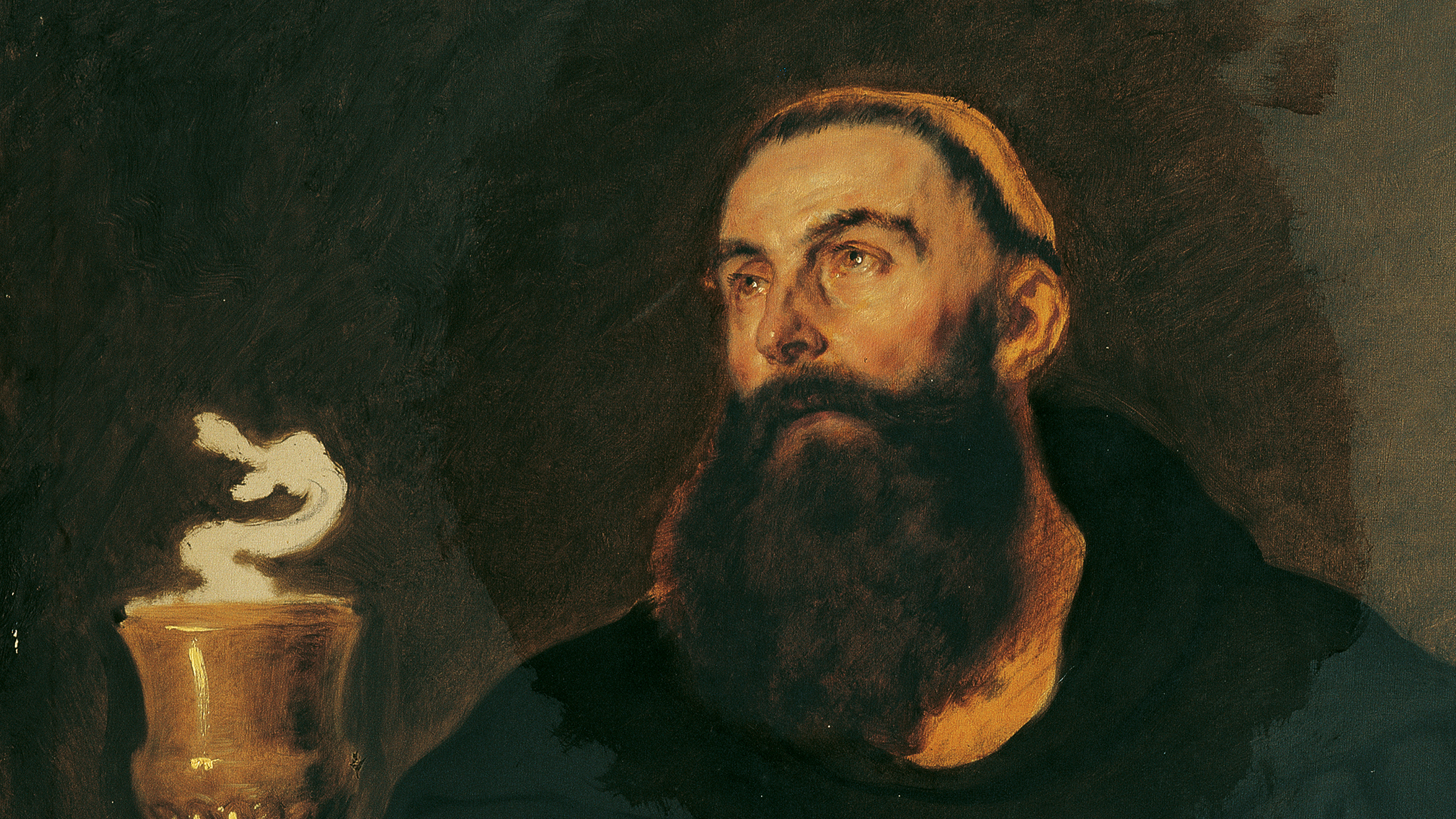
Buried deep in chapter 64 of the Rule of St. Benedict, the chapter that addresses the election of abbots, Benedict provides a practical guide to living out one of the principles of Catholic social teaching (CST). He wrote:
Let him [the abbot] so temper everything that the strong may still have something to desire and the weak may not draw back.
In just twenty-one words, Benedict provides a remarkably precise guide for living out CST’s core principle of the common good.
St. Benedict composed his Rule around the year 530 during a time of profound disorder in western Europe. Rome had fallen and Arian Ostrogothic rulers governed Italy with their deeply flawed understanding of Christ’s divinity. Centuries before Catholic social teaching received its first formal articulation in the nineteenth century by Leo XIII, Benedict wrote his Rule to bring order and stability to the common life that was being sought in the new monastic communities.
The Rule of St. Benedict still stands as a landmark in the development of Western civilization. It struck a balance between prayer and work (or in secular terms, work and leisure), it required literacy and a commitment to learning, and it helped shape a distinctively Western anthropology girded by the formation of habit, ordered liberty, and the dignity of labor. It has come to be appreciated as a foundational legislative text that not only shaped Western monasticism but contributed decisively to the stability of Western civilization amid turbulent times, laying a solid foundation for the spiritual and intellectual renewal of Europe.
When I first read the Rule, I was struck by how well Benedict’s words can support the inclusion of persons with disabilities in our parishes within the context of CST’s vision of the common good.
But what is the common good, and how does it involve persons with disabilities? A more extensive definition from the Compendium of the Social Doctrine of the Church states, “The common good indicates ‘the sum total of social conditions which allow people, either as groups or as individuals, to reach their fulfillment more fully and more easily.’” The nested quotation is from Gaudium et Spes, Vatican II’s pastoral constitution on the Church.
The common good isn’t always easy to achieve, but it remains essential if we are going to fulfill our Lord’s command to love one another.
Applied to parish life, Benedict’s principle suggests that our communities be structured in such a way that those who are stronger will continue to find challenges to their spiritual growth while the weaker members are free of barriers that might cause them to be left out, ignored, or discouraged from participating in the life of the Church.
Our parishes might benefit from reflecting on these words of St. Benedict. There remains in some—and in society more broadly—a lingering attitude toward disability that focuses primarily on deficits. It quietly assumes that those with physical or cognitive impairments have little or nothing to contribute.
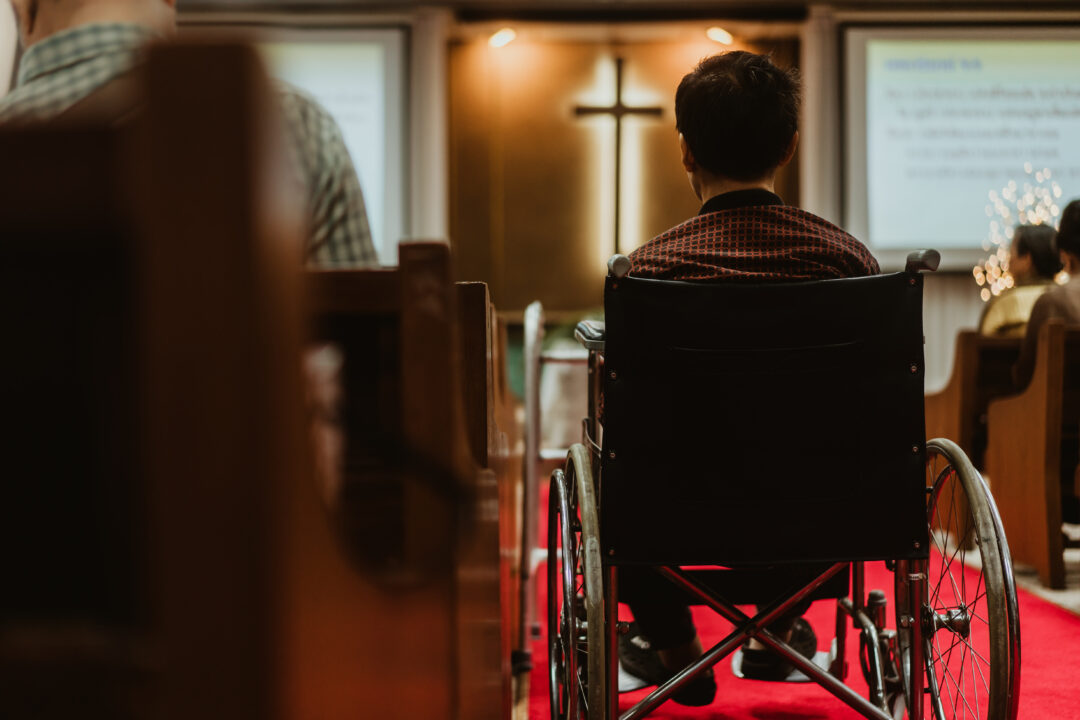
Such a reductive view of the human person presumes that people with disabilities cannot meaningfully participate in the Church’s evangelical mission, engage fully in the liturgy, or contribute to the social life of the parish. Yet even a cursory reading of the New Testament makes clear that these assumptions are contrary to the example of Jesus. At their root lies a flawed anthropology that measures human worth by ability and productivity, rather than recognizing the dignity of every person and their capacity for participation in the life and mission of the Church.
The consequences of this mindset are real. Many people with disabilities—and their families—report feeling like they are a nuisance or a distraction at Mass rather than participants whose gifts are valued and welcomed into the body of Christ.
The common good cannot be realized where a reductive anthropology of the human person persists—one that measures human worth by capacity and production rather than by the reality of their creation in God’s image and their redemption in Christ. The gospel demands a reformation of attitudes that distort our spiritual perception of the human person.
There are no in-groups and out-groups in a parish committed to the common good. Paragraph 167 of the Compendium teaches that “the common good . . . involves all members of society,” and “no one is exempt from cooperating, according to each one’s possibilities, in attaining it and developing it.” It asks us to push ourselves beyond our comfortable circle of people like us and reach out to the stranger, the weak, and the vulnerable among us.

The New Testament itself offers examples of communities striving, with greater or lesser success, to live this vision of shared life. St. Luke gives us a beautiful description of the tight-knit post-Pentecostal community in Jerusalem in the Acts of the Apostles. He wrote, “All who believed were together and had all things in common; they would sell their possessions and goods and distribute the proceeds to all, as any had need. Day by day, as they spent much time together in the temple, they broke bread at home and ate their food with glad and generous hearts, praising God and having the goodwill of all the people” (Acts 2:44–47).
Responding to a much different situation where tensions existed in the young church in Macedonia, St. Paul encouraged Christians to greater faithfulness and charity toward one another. He beseeched them, “Admonish the idlers, encourage the fainthearted, help the weak, be patient with all of them. See that none of you repays evil for evil, but always seek to do good to one another and to all (1 Thess 5:14–15).
In these two examples, the Scriptures provide two very different communities living under very different circumstances: the church in Jerusalem—where the memory of Pentecost must have been vivid in their minds, inspiring their intense fellowship—and the young struggling church in Thessalonica, living with internal tensions that required apostolic correction and encouragement.
The common good isn’t always easy to achieve, but it remains essential if we are going to fulfill our Lord’s command to love one another.
The fire and fellowship of the church in Jerusalem may seem almost idyllic to us. In parish life no one is being asked to sell all their possessions to support others in need, but we are expected to support one another, even in radical ways when necessary. Extending the gift of our charity to those in need and being magnanimous with the weak, welcoming them as active participants in our parishes, should be possible everywhere. In fact, the spiritual health of a parish could be measured by it.
Every Christian community has strong and weak members. St. Benedict saw this clearly within his monastic communities and instructed his abbots to govern in such a way that both were sanctified in their common life.
Pursuing the common good isn’t an option. It is a defining mark of authentic Christian life. Parishes that take this principle seriously will structure their life together so that the strong continue to grow in holiness while the weak are not discouraged or excluded. When this happens, the whole body of Christ grows together in faith, hope, and charity.