
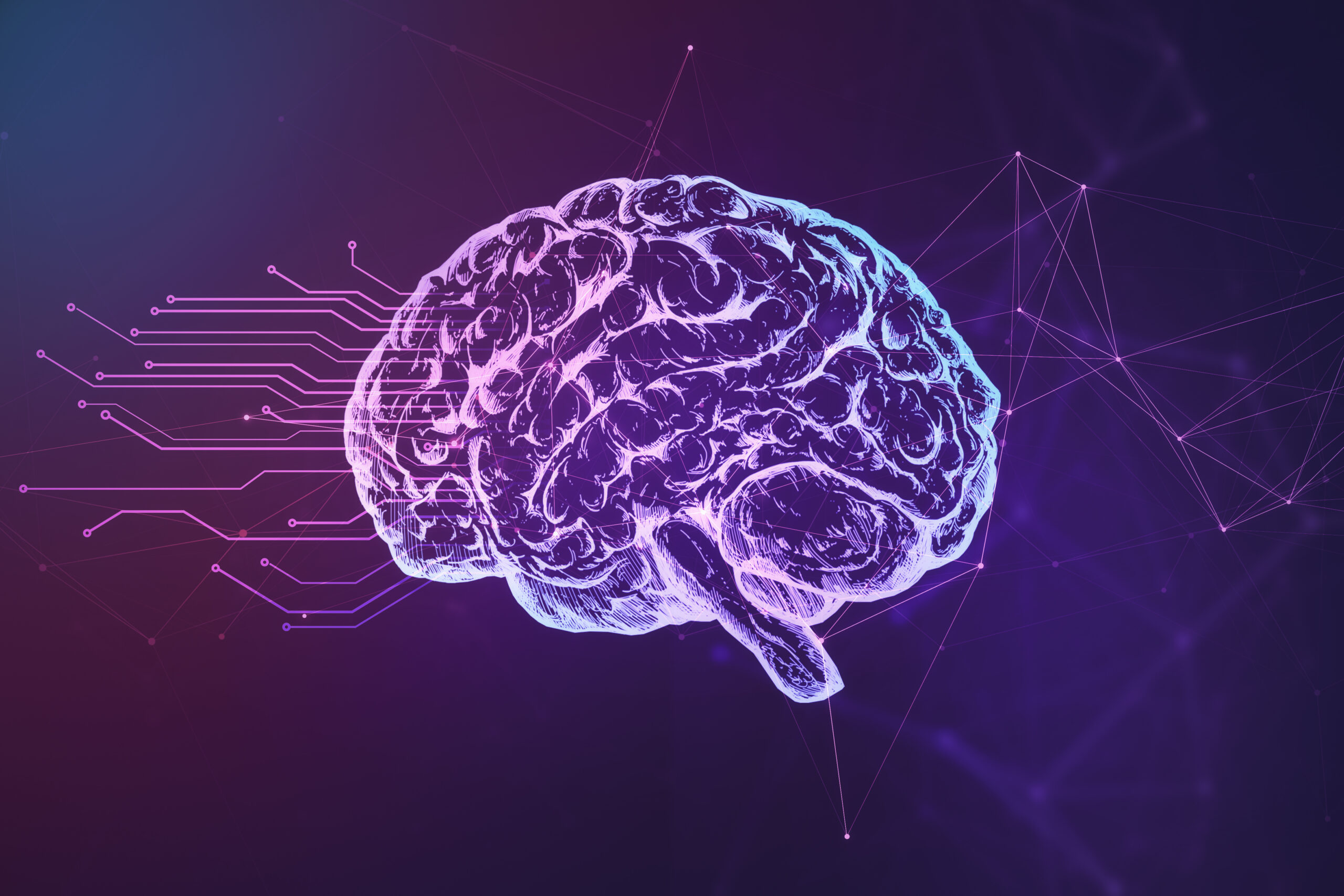
Faith in the Age of Algorithms
When Time released its “100 Most Influential People in AI” in late August 2025, the names were predictable: Sam Altman of OpenAI, Jensen Huang of NVIDIA, Elon Musk of xAI. The list brimmed with CEOs, researchers, entrepreneurs, and policymakers—the men and women who spend their lives building algorithms, funding start-ups, and shaping the future of technology.
And then, in the midst of this familiar roll call, appeared a startling name: Pope Leo XIV.
A man whose authority comes not from patents or capital but from prayer and moral witness is placed beside the titans of Silicon Valley. At first, the pairing seems almost absurd. What does a pastor of souls have to do with neural networks and machine learning?
But the surprise is precisely the point. The pope’s inclusion is not a token gesture. It is a cultural signpost: a recognition that even at the bleeding edge of code and capital, the world senses something deeper is at stake. For all their brilliance, the architects of AI recognize they are not simply building machines but shaping realities that will alter how human beings think, love, and live.
They can program algorithms to mimic speech or predict behavior. But they cannot answer the oldest question: What is all this power for?
That is why, however unusual it may look on the page, the pope belongs among technologists. His presence reminds us that the future of AI is not only technical but profoundly moral and spiritual.
The AI 100: A Secular Canonization of Power
To grasp why the pope’s inclusion matters, we must first learn the scale of the moment. Artificial intelligence is not simply another innovation. It is the fastest-adopted technology in history. Electricity took decades to spread, the internet took years, but generative AI reached hundreds of millions of users in just months.
What makes it different is not only speed but intimacy. For the first time, a technology can interact with us in ways that feel uncannily human. Large language models do not just calculate; they converse, predict, improvise, and even persuade. They are not conscious, but they simulate companionship with unsettling fluency, drawing on oceans of data and probabilities. Where past technologies amplified our muscles or our memory, AI reaches into the fabric of thought and relationship itself.
The architects of AI recognize they are not simply building machines but shaping realities that will alter how human beings think, love, and live.
This is why names on the AI 100 matter. Those listed are not just building tools. They are constructing systems that will reshape economies, politics, culture, and even war. AI is already changing how truth is perceived, how education is delivered, and how communities are formed. It is not another wave of innovation; it is the tectonic plate shifting beneath all others.
And that is why the presence of the pope is more than symbolic. It signals that what is unfolding is not merely technical or economic but civilizational. A new world is being born before our eyes, and the question is no longer only who will build it but who will guide it.
Why the Pope? The Vatican’s Foray into AI
At first glance, the pope seems the last person who should appear on a list of AI’s most powerful figures. He does not run a lab or command venture capital. Yet his presence is no accident. It reflects years of deliberate engagement between the Church and the emerging world of artificial intelligence.
In 2019, the Vatican launched the Rome Call for AI Ethics, a moral framework signed by IBM and Microsoft, which urges that AI be transparent, inclusive, and always serve the interests of human dignity. Pope Francis took up the use of the term “algorethics” (a combination of algorithm and ethics) to remind engineers that every line of code carries moral weight. Since then, the Vatican has hosted international conferences on AI, gathering scientists, philosophers, and corporate leaders. Again and again, Pope Leo has warned: Algorithms must not become instruments of surveillance, engines of bias, or substitutes for what it means to be human.
Why does this matter to technologists? Because even they know they are out of their depth. Silicon Valley can optimize models, but it cannot answer the most straightforward moral question: What is all this power for? Technologists can design systems that write sermons, grade students, or guide weapons, but the systems cannot tell us whether they should. Beneath the glossy demos, there is unease: an awareness that AI is a force whose consequences no one fully understands.
This is why the pope is taken seriously. His presence is not a matter of nostalgia but necessity. In a field that could reshape the world, even the most secular actors recognize that conscience must sit beside code.
AI and the Battle Over the Human Person
Artificial intelligence is often described in technical terms: parameters, training data, and neural networks.
But beneath the jargon lies a more profound question: What does it mean to be human?
That is why the pope’s inclusion on an AI power list matters. He stands as a witness to a truth that risks being lost in the glow of silicon: Human beings are not machines, and machines, however powerful, are not persons.
Consider what makes today’s AI distinct. The most advanced systems, known as large language models, are trained on trillions of words, ingesting libraries of text to predict the most likely next word in a sentence. By stacking probability on probability, they produce speech that feels natural, even conversational. Combine this with other models that generate images, music, or video and suddenly a machine can appear startlingly human-like.
And yet, there is no consciousness here. No intention. No interior life. A neural net can simulate conversation, but it cannot love. It can analyze medical scans, but it cannot suffer. It can compose a sonnet, but it does not know what beauty is. The danger is not that machines will become human, but that humans will begin to treat themselves as machines, reducible to patterns of data, valuable only insofar as they can be optimized.
The Church insists: We cannot let algorithms, however sophisticated, define what justice is, or who counts as fully human.
This is not science fiction. Already, AI systems are being integrated into hiring, policing, and even warfare. In these contexts, a line of code can mean the difference between justice and discrimination, peace and violence. The Church insists: We cannot let algorithms, however sophisticated, define what justice is, or who counts as fully human.
Here lies the battle: Silicon Valley often dreams of transhumanism or uploading minds, fusing flesh with code, promising digital immortality. It is a vision of salvation without God, eternity without grace. The pope’s presence among AI leaders is therefore not decorative. It is prophetic. It serves as a reminder that while AI can extend our reach, it cannot redefine our essence. Human beings are not accidents of code but bearers of the imago Dei, the image of God.
And so the deeper struggle around AI is not about market share or technical dominance. It is about anthropology: Will we continue to see ourselves as mysteries created in love, or reduce ourselves to machines that can be optimized, monetized, and eventually discarded?
The Digital Areopagus
In the Acts of the Apostles, Paul travels to Athens and finds himself standing before the Areopagus, the great marketplace of ideas. Surrounded by philosophers, poets, and civic leaders, he speaks not in abstractions but to the deepest longings of his hearers. He names their “unknown god” and proclaims the Gospel in the very heart of cultural debate.
Something similar is happening today. Artificial intelligence has become our new Areopagus, the place where humanity debates its destiny. It is not an arena of marble columns but of glowing screens, not filled with Stoics and Epicureans but with researchers, CEOs, and policymakers. And yet, the questions echo the same:
What is truth? What is freedom? What is the human person for?
This is why the pope’s presence on an AI power list is so striking. It is a symbolic acknowledgment that the Church has entered the arena. While others speak of efficiency, scale, and profit, the Church insists on dignity, justice, and love. And though the pope does not code, his voice calls out across the digital Areopagus: Do not mistake cleverness for wisdom, or power for purpose.
The challenge is urgent. If the Church does not speak in this new marketplace, others will gladly fill the silence. Silicon Valley has its own evangelists and its own gospels, salvation through data, immortality through machines, utopia through algorithms. These are not neutral visions. They are catechisms, shaping how millions imagine the meaning of life.
In Athens, Paul did not retreat. He proclaimed Christ in the very center of cultural debate. Today, the Areopagus is digital, and AI is its altar. The pope’s inclusion signals that the Church is not absent from this conversation. The question now is whether we, the faithful, will also step into it.
Echoes and Meaning: A Strange Consolation
History teaches us that every technological revolution forces humanity to ask again who we are and how we ought to live. The printing press unsettled the Church, but it also unleashed the Gospel in new ways. The Industrial Revolution destabilized economies, but it gave rise to Catholic social teaching and the defense of workers’ dignity. The nuclear age confronted humanity with the power to destroy itself, and papal voices became global calls for restraint and peace.
Artificial intelligence now joins this lineage of upheavals, although it is spreading faster and affecting more dimensions of life simultaneously. It does not merely print texts, move goods, or split atoms. It enters the inner spaces of the human mind, offering answers, companionship, even a counterfeit of wisdom.
For the faithful, this moment should not be treated as a curiosity but as a summons. We cannot imagine AI as someone else’s problem, sealed off in labs and boardrooms. It is already reshaping classrooms, workplaces, hospitals, and homes. Every algorithm, whether we notice it or not, teaches a vision of the human person, what is valuable, what is expendable, what it means to be truly alive. If Christians do not bring the Gospel into this mission field, other creeds will gladly take its place: efficiency, profit, transhumanism. These catechisms promise transcendence without God, eternity without grace.