
How a world that no longer needs our work forces us to rediscover why God gave it to us.
The Shock of a New Age
Something decisive has shifted in the last twenty-four months. The world’s largest technology companies are entering a wave of labor reductions unmatched in recent memory. Meta announced more than 11,000 cuts in a single round in late 2022, the largest in its history. Amazon has eliminated roughly 27,000 roles across its corporate divisions since 2022. Alphabet eliminated about 12,000 positions in a single major restructuring round. Microsoft followed with about 10,000 cuts across engineering, cloud, and gaming. Salesforce eliminated more than 8,000 roles as part of a broad reset. Cisco reported more than 4,000 cuts. According to layoff trackers, Intel removed more than 15,000 roles in 2024 alone. Even companies that reported solid revenue or rising margins continued to narrow their workforces.
Hiring paused because artificial intelligence began taking over high-value tasks at scale.
Across the United States, more than 95,000 technology-sector workers lost their jobs in 2024, according to major layoff trackers. Global totals are significantly higher when Asia and Europe are included, though exact figures vary. This contraction happened during a period of strong market capitalization for many firms. Hiring did not pause because technology was weak. Hiring paused because artificial intelligence began taking over high-value tasks at scale.
New graduates face the same pressure from a different angle. Multiple employer surveys report the weakest entry-level hiring market in more than a decade. Engineering and computer science graduates now face applicant pools that have doubled in size in two years. Recruiters report that a single junior software role can receive more than a thousand applications. A growing share of firms have reduced graduate programs by 50% or cancelled them altogether. A generation trained for digital work is meeting a labor market that needs fewer humans to perform that work.
The cause is not mysterious. Artificial Intelligence frontier models now match or exceed expert-level performance in domains that once required years of study. Some models score in the top 10% of the bar exam. Others reach professional coding benchmarks. Others can analyze legal documents or summarize complex financial records in minutes. Firms report task time reductions of 40% to 70% when shifting work to these systems. Executives across major sectors describe these reductions as a path to operating with smaller teams.

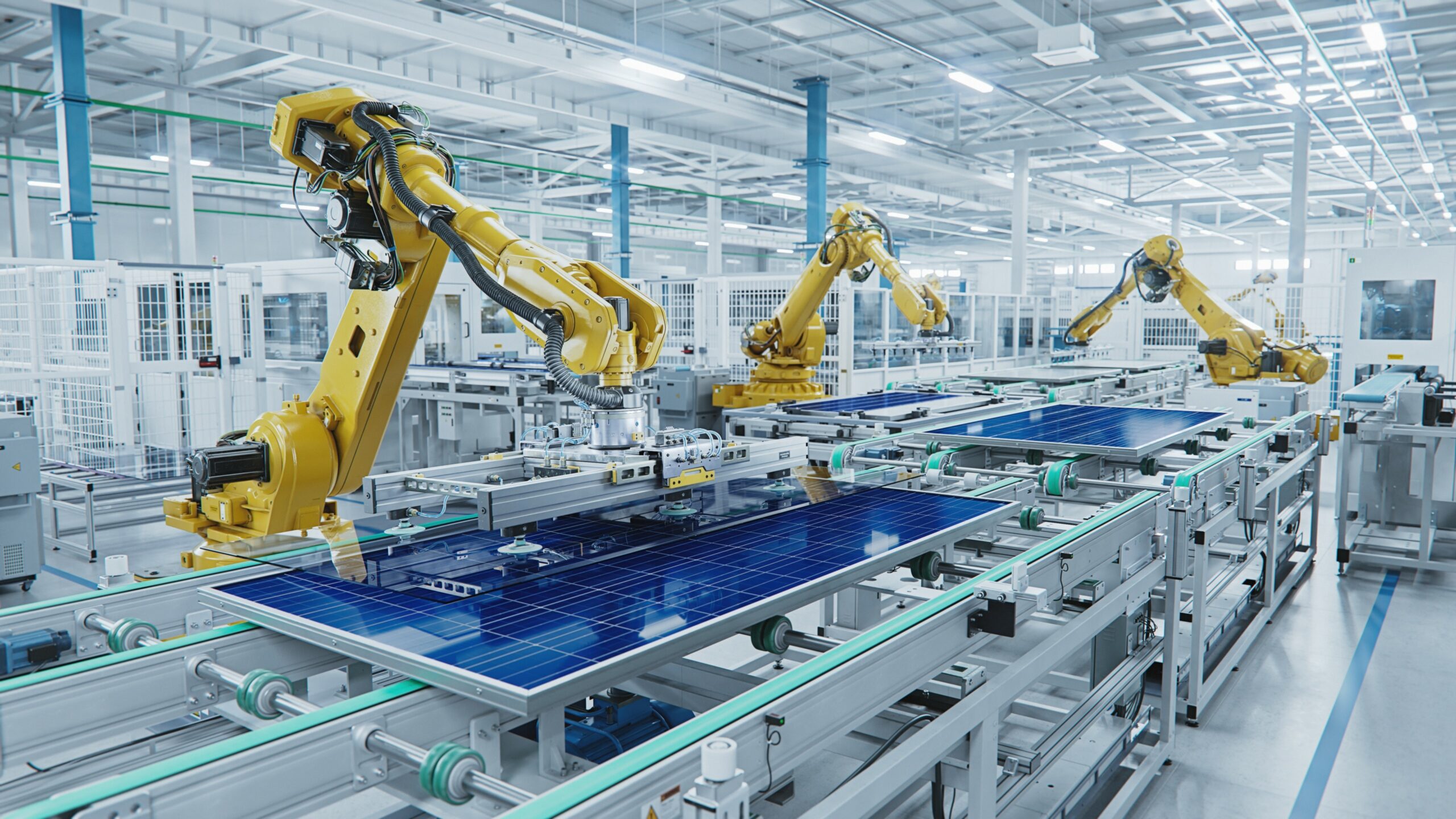
The shift does not stop with text and analysis. Robotics and embodied artificial intelligence have crossed from research into deployment. One of the largest retailers in the United States reports that autonomous systems complete hundreds of thousands of warehouse tasks each day. Global investment in robotics exceeded $12 billion in 2024. Factories, warehouses, and logistics networks are introducing machines that can lift, move, stack, and navigate with growing precision. Once these systems scale, large pools of manual labor become optional rather than essential.
Past technological revolutions replaced human strength. This one reaches into cognition and presence. It touches the very capacities that allow humans to contribute, create, and build.
What happens to the soul when the world no longer needs the work that once shaped it?
For Christians, this raises concerns beyond economics. Work was given as a gift in Genesis. It was the first invitation into creation. A technology that, at its core, begins to remove human labor forces a deeper question. What happens to the soul when the world no longer needs the work that once shaped it?
When Work Shapes the Soul
A job is more than a salary. Economists can measure wages and productivity, but they cannot capture what work does to the inner life.
Scripture introduces labor not as punishment but as participation. Genesis shows God placing the human person in the garden to cultivate and to guard it. This is the first task given to humanity. It appears before suffering and before disorder. Work is not a burden imposed on a fallen world. It is a gift that draws the human person into God’s creative action.
Christian tradition continues this view with remarkable consistency. The Church Fathers taught that work is a school for the soul. Benedictine communities united prayer and labor because both form character. Thomas Aquinas described human action as the way the person becomes who he is meant to be. Modern Catholic social teaching insists that labor has priority over capital because the human person has priority over the tools that serve him. These teachings present a single truth. Work forms identity. It anchors purpose. It creates responsibility. It builds community. It orders the day and disciplines the will.

Secular research confirms this spiritual intuition. Long-term unemployment is associated with higher rates of depression, addiction, family breakdown, and loss of direction. Communities with stable employment show stronger social bonds, lower crime, and higher psychological resilience. A salary pays the bills, but the daily act of showing up, serving others, solving problems, creating value, and living within a rhythm of responsibility shapes habits of mind and habits of heart.
Work is one of the few places where human beings learn perseverance, patience, cooperation, and sacrifice. These qualities are moral before they are economic.
When work collapses, something larger collapses with it.
When work collapses, something larger collapses with it. The loss is not just income. It is identity and meaning. People lose the structure that shapes virtue. They lose the community that gives them a sense of belonging. They lose the sense that their effort matters, which means that the current wave of automation places more than jobs at risk. It places the formation of the human person at risk.
This is why the Christian understanding of work matters now. Artificial intelligence may change the tasks of the world, but it cannot change the truth that work is a path into purpose and holiness. Any future shaped by technology must reckon with this reality.
The Age of Replacement, Not Transition
The modern economy has entered a phase that looks less like transition and more like substitution.
Previous technological revolutions automated physical strain. Machines replaced muscle, not mind. Steam engines multiplied human strength. Electricity extended human reach. Computing accelerated calculation. In each case, the technology expanded what humans could do while opening new fields of work. People moved from farms to factories, from factories to offices, from offices to digital industries. Displacement was absolute, but expansion followed. Jobs changed, yet work remained human.
Artificial intelligence breaks this pattern.

It targets the very capacities that once made humans economically irreplaceable. To speak in an analogous way, reasoning, planning, communication, pattern recognition, and decision-making were the competencies that defined knowledge work. They were the tasks that justified education and experience. They were the foundation of salaries and careers. Now they are the tasks performed by models that operate at scale, without fatigue, and with cost structures that no human worker can match. The substitution effect is direct rather than complementary. When a model performs legal summarization in minutes or writes production code at speed, it is not extending human capability. It is removing the need for human participation.
The scale of this shift is already visible. Models complete support interactions for millions of customers per day. They analyze medical images with an accuracy that rivals that of specialists. They produce financial analysis and risk assessments for major institutions. They design hardware circuits, draft marketing plans, and generate product documentation. Executives report that these systems reduce the need for entire categories of entry-level and mid-level cognitive labor. This is not happening gradually. It is a compression of roles that once took decades to form.
Artificial intelligence does not simply change the labor market. It changes the landscape in which the human soul grows.
The pace of adoption outstrips the ability of workers, universities, and governments to adapt. Technological change always creates friction, but when the core of human cognitive work is automated faster than new industries emerge, society faces a challenge without precedent. The structures that support dignity begin to strain. Work provides purpose and formation. It integrates individuals into communities. It shapes the rhythms of life. When those structures weaken, the consequences reach beyond economics. They come into the moral and spiritual life of the person. Artificial intelligence does not simply change the labor market. It changes the landscape in which the human soul grows.
When a Society Loses the Formation of Work
The disappearance of meaningful work reaches far beyond economics. It alters what people believe about themselves and what a society believes about its future.
Recent global workforce studies show that more than 20% of workers describe themselves as disengaged from their roles, not because the tasks are complex, but because the roles feel detached from purpose. Young adults speak of drifting through temporary jobs with no clear path toward mastery or responsibility. A generation raised on the promise of digital opportunity now enters an economy where contribution feels optional and sometimes irrelevant.
The loss of work is also the loss of a cultural training ground. Work has always been one of the main places where people encounter discipline, cooperation, accountability, and patience. It is where they learn to submit their will to something larger than their impulses. It is where they discover their strengths and confront their weaknesses. When stable work contracts, so does the slow formation that gives shape to character. People move through life without the anchors that once came from teams, mentors, and shared effort.

Communities feel the strain as well. The decline of work reduces the shared spaces where people from different backgrounds meet, collaborate, and build trust. Factories, offices, workshops, and storefronts once created natural points of encounter. Remove these, and a city becomes a set of isolated individuals. Social cohesion weakens not because people choose isolation, but because the structures that once forced cooperation no longer exist. A society can maintain output while losing the everyday life that makes it worth sustaining.
Christian tradition reads this moment with clarity. Work is not only a task. It is a path of virtue. It calls the person out of self-interest and into service. It teaches that life has direction and that effort can be redeemed. Genesis presents work as the first invitation into stewardship. The letters of Paul frame labor as an offering to God. This is why the erosion of work becomes a spiritual wound. When significant parts of a generation never enter stable work, they lose access to one of the strongest channels through which desire matures and purpose takes root.
Artificial intelligence intensifies this risk. When roles disappear faster than new forms of contribution emerge, people are left without the daily habits that once ordered their inner lives. Without the formation that work provides, dignity becomes fragile. A society that loses work loses more than jobs. It loses the structures that teach people who they are and what they are for. This loss begins quietly, then reshapes everything.
A Christian Vision for an AI-Shaped Future
The question is not only what artificial intelligence will do to the economy. The question is: What are Christians called to do in a world where machines are rewriting the value of human work?
If work is a gift that shapes the soul, then Christians cannot leave this transition to the logic of markets or the decisions of a few powerful firms. The Church has faced every major technological revolution in history, and in each age it has defended the truth that the human person is not defined by productivity but by dignity.
The first responsibility is clarity. Christians must speak plainly about the difference between tools that serve the human person and systems that erase the human person. Artificial intelligence can enable extraordinary progress in medicine, education, and coordination. It can also concentrate power, displace workers, and reduce people to data points in an efficiency equation. When algorithms replace the spaces where virtue once formed, Christians must insist that economic growth is never an excuse for the loss of human purpose.
The second responsibility is solidarity. Productivity gains from artificial intelligence should not accrue solely to shareholders or corporate margins. They must translate into opportunities for those who are displaced. This includes real investment in training, support for local communities, and protection for workers who face sudden disruption. Christian social teaching states that labor has priority over capital because the person has priority over the tool. In an age where tools can outthink workers, that principle becomes more urgent, not less.
Christians cannot remain commentators while the structure of work transforms.
The third responsibility is to build. Christians cannot remain commentators while the structure of work transforms. Parishes, universities, and ministries can help create pathways for meaningful contribution even as traditional jobs decline. This includes forming people for service, craftsmanship, caregiving, education, and spiritual leadership. It also includes supporting new forms of work that affirm human presence rather than replace it. A society where machines perform many tasks still needs people who guide, teach, heal, and accompany.
The final responsibility is hope. Christians know that dignity does not come from output. It comes from the image of God within every person. This truth becomes a foundation in a world where economic systems may no longer need human labor, but human souls will always need purpose. Artificial intelligence may reshape how society functions, but it cannot define what the human person is for. Christians must help the world remember that work is not a measure of worth. It is a gift that directs the heart toward creation, service, and love.