

“Who Do You Say That I Am?”
I did not come to Christianity because I stopped searching. I came because my search reached a point where it demanded a decision.
I grew up in a world where religion structured everything. There were rules, practices, and rhythms that shaped daily life. But access to Christianity was almost nonexistent. There was no internet, no YouTube, no easy way to explore or even ask questions. Bibles were not available. I had a close friend who quietly lent me a small pocket-sized Bible, and I would hide it to read.
What I was searching for was not just religion; I was searching for truth.
And I discovered that truth must engage both the mind and the heart. It must be something that can be known, not blindly followed. For the first time, I began to experience what it means to exercise the freedom God has given us. I began to think, to question, to seek, and to follow where truth leads.
It was in Christianity that I encountered the union of faith and reason. It was truth that could be known and yet went beyond what reason alone could reach. Faith did not replace reason; it completed it.
And yet, what I found was not only intellectual clarity—it was something deeper. Scripture speaks of the circumcision of the heart, a transformation from within. That is what began to happen. The words of Christ did not simply inform me; they pierced me. They revealed not only who God is but something about myself that required a response.
That response could not remain theoretical. It led me to the question that could no longer be avoided: “Who do you say that I am?”
As a young adult, I encountered Christ through Scripture, and that encounter changed the direction of my life. What struck me first was the coherence of it all, the unity of the Old and New Testaments. What was written centuries before found fulfillment in Christ. This was not something that could be easily dismissed or fabricated—it pointed to truth.
But more than that, I encountered Christ himself.
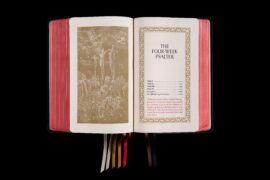
In him, I recognized the voice of the shepherd. There was something unmistakable. I could sense it, even before I fully understood it. A longing I had carried was suddenly met.
What I had known before offered structure, prayer times, fasting, and moral expectations. These were not without value, but they often remained external. One could follow the rules without a real transformation of the heart.
What I encountered in Christ was different.
He did not stop at external obedience. He went straight to the heart. “Whoever looks at a woman with lust has already committed adultery in his heart.” “Everyone who is angry with his brother will be liable to judgment.” These words left no room for ambiguity. This was not about outward compliance. This was about interior conversion.
This was the circumcision of the heart.
And with it came something else: grace. Not something I could earn. Not something measured by a scale of good and bad. It was given. And it changed everything.
Grace did not leave me where I was. It exposed what was disordered within me, and it demanded a response. But it did not abandon me there; it called me to be changed. It gave me the strength to respond, not perfectly, but truly. It made possible what I could not do on my own.
I began to see that the Christian life is not about managing behavior from the outside but about being transformed from within. I encountered a God who is both just and merciful. Not arbitrarily, but with a truth that holds. A God who is logos, reason itself, and who entered into human suffering. Not distant, not abstract—personal. Not a God who merely commands but a God who gives himself in grace, bearing our sins and making union with him possible, though we do not deserve it.
And it was this grace that made it possible to follow him.
But following him was not without cost.
The Church needs evangelists who are intellectually formed, spiritually grounded, culturally engaged, and unafraid to proclaim Christ clearly. That is what this master’s program seeks to form.
To follow Christ meant confronting real fear. It meant leaving behind what was familiar, even risking rejection. I knew I had to leave. I longed for baptism. I longed for the Eucharist. I hungered for Christ.
I came alone. He said, “Come, follow me,” and I followed.
What sustained me were the words of Christ himself: “Whoever loves father or mother more than me is not worthy of me.” “Whoever denies me before men, I will deny before my Father.” These were not abstract sayings. They gave me the courage to move forward.
My journey of evangelization begins there. It begins with being evangelized myself.
Evangelization is not optional. And Christ himself commands it: “Go therefore and make disciples of all nations.”
Over time, especially through the evangelical vision of Bishop Robert Barron and the work of Word on Fire, I came to understand more clearly what I had encountered. Evangelization unfolds through truth, goodness, and beauty.
In my own life, I first encountered truth through Scripture, through the coherence of the faith, and through the alignment of reason and belief. Then I began to see its goodness, the transformation of life, the call to holiness, and the reordering of the will. Alongside this, I encountered beauty—the beauty of the Church, of the liturgy, and of a faith that is not only true but radiant.
But people do not all enter the same way. Some are searching for truth. Others are seeking meaning and goodness. Many are drawn first by beauty, by something that moves them before they understand it. Evangelization meets each person there. The word “evangelization” can sound big and may even intimidate, but it is not complicated. It begins with witness, leading others to encounter Christ, as I did.
As Bishop Barron often says, “Evangelization is one starving person showing another starving person where to find bread.” Having been hungry myself and fed, I now feel called to do the same. That light within me was not meant to be hidden under a bushel but to be shared.
This desire to understand more deeply what I had encountered and to share it with clarity led me to the Master of Arts in Evangelization & Culture, offered through the Word on Fire Institute.
What drew me was the clarity of the Word on Fire vision, especially its emphasis on evangelization through truth, goodness, and beauty. This program uniquely brings together theology, culture, and evangelization in a way that speaks directly to our world today. It takes seriously the reality that many no longer encounter Christianity in any meaningful way, and it proposes not a new message but a renewed way of presenting the Gospel.
The program gave me not a script but a way of seeing. It strengthened my confidence that the faith is both intellectually credible and deeply human. It formed me to present Christ not as an idea to consider but as a person to encounter. It also gave me the courage to speak about Christ in a culture that often does not know how to hear him and to bring the Gospel where it is no longer heard.
Courses in Christology, Scripture, theology, literature, philosophy, and art were not isolated academic subjects. They formed a coherent vision of reality centered on Christ. The program consistently emphasized that evangelization is not merely about transferring information or winning arguments. It is about presenting Christ himself as the fulfillment of the deepest desires of the human heart.
What surprised me was how much it changed the way I listen. I had expected to learn how to speak more clearly about the faith. What I did not expect was that it would teach me to hear more carefully, to recognize the hidden questions behind what people say, and to see where Christ is already being sought, even when he is not yet named.
As a physician, I have spent years at the bedside of patients and families facing suffering, uncertainty, and, more often than not, death. In those moments, the deepest questions emerge, questions that medicine alone cannot answer. Why do we suffer? What is the dignity of a human life? What gives hope in the face of death? These are not only medical questions. They are theological ones, questions about dignity, about meaning, about what—or who—waits on the other side.
The formation I received has helped me to bring these together. It has given me the language and confidence to speak about Christ in a way that is both truthful and attentive to the human person, especially in situations where people are searching for meaning amid suffering.
This is how I continue to draw on my profession and what I have learned in the ordinary encounters of life: accompanying others, answering questions, and pointing to Christ as the one who does not abandon us.
The program gave me not a script but a way of seeing. It strengthened my confidence that the faith is both intellectually credible and deeply human.
We are living in a moment when Christianity is often no longer truly encountered but simply assumed, ignored, or forgotten. The Church needs evangelists who are intellectually formed, spiritually grounded, culturally engaged, and unafraid to proclaim Christ clearly.
That is what this master’s program seeks to form.
And in our present cultural moment, that mission could not be more necessary.
This experience has also shaped how I see the world around me now. I recognize the quiet absence of Christ not as an abstract idea but as something lived. It is often not rejection but a lack of encounter, leaving people searching even when they cannot name what they are missing.
And yet, the question has not changed. “Who do you say that I am?”
This is not a question we answer once. It is a question that continues to shape a life.
It shaped my conversion.
It shaped my formation.
It continues to shape my mission.
Because once Christ is encountered, he does not leave us where we are.
He asks for everything.
And the answer we give determines everything.