
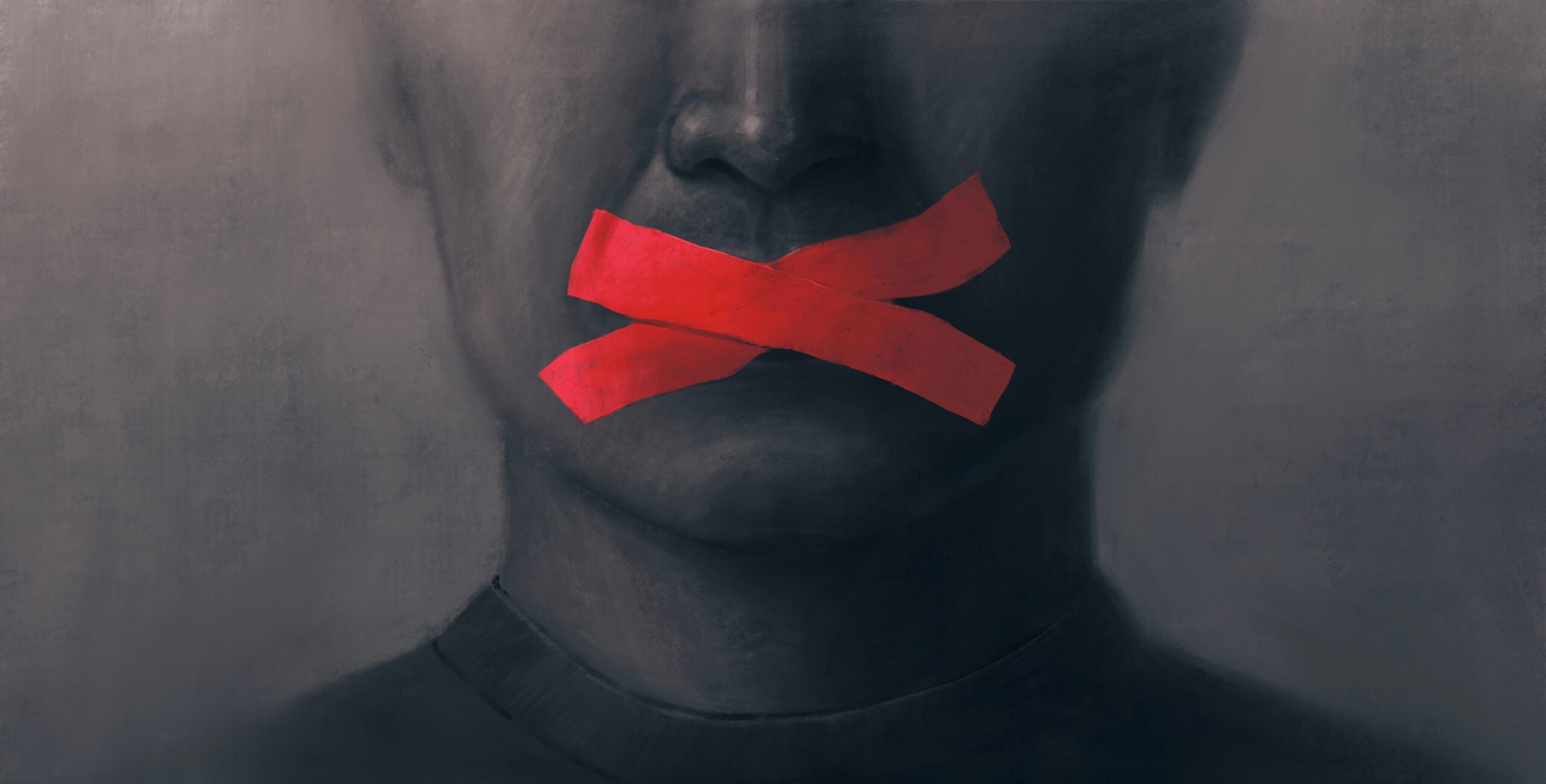
A new wave of anti-Christian censorship is afoot in Europe. The continent and civilization that Hilaire Belloc argued was inextricably linked to the faith has become a principal threat to the faith. While the threat is very real, it is not yet time to despair, however.
In March, the Supreme Court of Finland handed down a conviction of Päivi Räsänen for “hate speech.” A prominent former Finnish stateswoman, Räsänen came under the scrutiny of the high tribunal for a 2019 tweet of Bible verses Romans 1:24–27, as well as a 2004 pamphlet offering the perspective of a Christian medical professional on homosexuality. Her crime? “Incitement” to “hatred” or “intolerance” of a specific minority group through the use of “offensive” and “insulting” speech.
The offending speech? Räsänen suggested that the homosexual lifestyle is not a naturally healthy variety of sexuality and cited facts not disputed even by advocates of gay rights, such as the fact that the rate of sexual abuse as a child is significantly higher among homosexual persons. All of this was couched within the expression of a pretty typical traditional biblical outlook on human sexuality and marriage.
Räsänen’s is not an isolated case. In March, Catholic priest Msgr. Jakob Rolland came under police investigation for illicit speech. Fr. Rolland’s alleged crime was that he dared to utter on a radio program that the Catholic Church teaches that homosexual inclination is not itself sinful, but sexual activity outside of traditional marriage is sinful—and that the Church accompanies persons with same-sex attraction (including those whose same-sex attraction is unwanted) with spiritual and pastoral guidance. Icelandic authorities are investigating whether such statements run afoul of Iceland’s ban on “conversion therapy.”
The frosty winds of censorship are not just ablow in the Nordic countries. In the past year in Spain, Bishop José Ignacio Munilla of Orihuela-Alicante was investigated by prosecutors for alleged violation of hate speech laws for similar comments. While the charges against the bishop were ultimately dismissed, the chilling effects of the threats of legal trouble are doubtless felt by Spanish clergy.
It replaced the old Christian faith with a new secular progressive faith, complete with a clerisy to enforce its dogmas and punish heretical dissenters.
Anti-Christian censorship is not only occurring in the expression of the traditional Christian outlook on homosexuality. It has also come for pro-life speech—and thought. Isabel Vaughan-Spruce is currently awaiting trial for the crime of standing outside an abortion facility in Birmingham, England, and silently praying. This comes on the heels of a 2024 conviction of Adam Smith-Connor, a British Army veteran, who dared to pray silently outside a British abortion facility for his unborn son who had been aborted years before. It is now a thought crime in Britain to have pro-life Christian thoughts while standing near an abortion facility.
All of this underscores that the pretenses of the liberalism of yesteryear are long gone. The idea was that the liberal state was fair in that it would secure rights for all and remain neutral between rival visions of the good life, between sincerely held but incompatible “comprehensive doctrines.” Most famously articulated and defended by political philosopher John Rawls, this idea was always a pipe dream. For, in the first instance, a polity can’t help but advance some substantial vision of the good. The state has never been and can’t ever really be neutral. Modern Europe’s public philosophy demonstrates that it didn’t abandon “faith.” It replaced the old Christian faith with a new secular progressive faith, complete with a clerisy to enforce its dogmas and punish heretical dissenters.
A second problem for Rawls was that the neutralist liberalism he defended was itself the product of a particular political-philosophical outlook, of a “comprehensive doctrine,” which Rawls didn’t deign to actually defend. Rawls eschewed foundational questions of metaphysics and philosophical anthropology, instead appealing to custom, to the embedded practices of Western liberal democracy in the late twentieth century, to work up his theory of justice. It’s thus no surprise that Rawls’s project failed; for, while arguments from custom have their place, everyone knows that custom and tradition can be deficient when they fail to accord with right reason. The reactionary conservatives of the eighteenth century who appealed to history and tradition and eschewed any appeal to universal principles met a similar fate.
A sound political philosophy must recover sound first principles. Yet Western liberal democracies need not eschew their tradition to find them. The deeply Judeo-Christian idea of the imago Dei, the idea that human beings are endowed by their Creator with immeasurable dignity, is that starting point and the patrimony that too many in Europe and America have forgotten. That dignity, which flows from the powers of reason and free will that God gave us, is the very basis of the values of free speech and exercise of religion. These principles of our constitutional republic were so cherished that they were enshrined in the First Amendment.
While European judges will talk the talk of dignity, they misconstrue it because they have lost the vertical pedigree of dignity. God endows human beings with rights and responsibilities, including the responsibility to exercise one’s capacities in accord with the ends embedded in one’s nature.
While this wave of censorship presents a grave threat to Christian liberty in Europe, hope remains for at least two reasons. First, the brave response of the African bishops to speak out against the errors and confusion to the faithful that implementation of Fiducia Supplicans would have created indicates that Africa remains the refuge for orthodoxy that it has been over and over since the Holy Family fled there. No doubt it will be the African faithful who will lead the re-evangelization of Europe.
Secondly, the United States Supreme Court has paved a pathway of sanity through the conflict between traditional freedoms of speech and free exercise of religion and novel LGBTQ+ rights claims. “Anti-discrimination” laws that make sexual orientation a characteristic for special protection cannot coerce Christians to utter what they take to be lies incompatible with their faith. Hence, the Supreme Court struck down a Colorado law that would have forced Christian small business owner and website creator Lorie Smith to make custom websites for gay couples celebrating their “marriages.”
In contrast with the European courts’ path, the American Supreme Court weighed in just this last term on so-called anti-conversion therapy laws in an important case: Chiles v. Salazar. While such language evokes the discredited electroshock therapies of yore, the language of the law is extremely broad, forbidding even counseling persons who seek help with unwanted sexual attraction and behavior. If free speech and free exercise of religion have any meaning, why cannot a Catholic homosexual person who seeks to change his behaviors, to live chastely, seek out counseling from a Catholic counselor? The idea that consenting adults cannot engage in talk therapy regarding unwanted same-sex attraction was so absurd on its face that two liberal justices joined the six more conservative justices in an 8–1 opinion, striking down yet another draconian Colorado law as violative of the right to think and speak freely.
If and when Europe recovers its ancient faith, its judges will have an admirable example of jurisprudence to emulate to restore the rights of the faithful. Meanwhile, the American faithful would do well to remember that their patrimony, strong protection for speech and free exercise, is always a presidential election or two away from being eroded by radical progressive judges who would have the Supreme Court emulate Europe.