
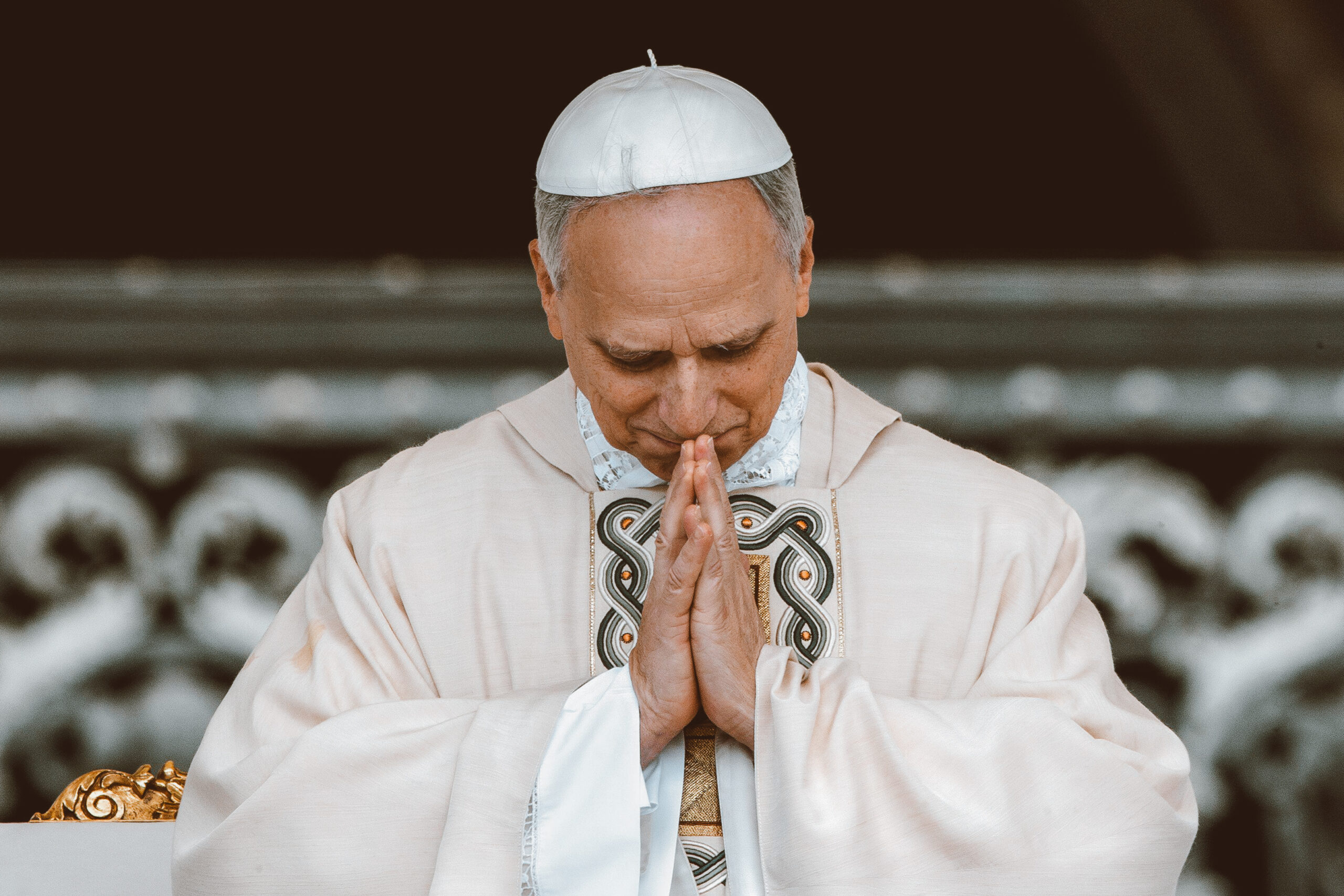
On September 13, 2025, Pope Leo XIV gave an address to participants in the seminar promoted by the Pontifical Academy of Theology. It is a fairly brief speech you can easily read for yourself. Nevertheless, I would like to offer some thoughts about its main points.
First, the context of his remarks was a seminar on “Creation, Nature, Environment for a World of Peace.” In this connection, Pope Leo highlighted his continuity with his three predecessors—St. John Paul II, Benedict XVI, and Francis—regarding the importance of concern for the environment and “the care of creation,” noting that environmental issues impact societies and their peaceful coexistence.
Accordingly, Pope Leo affirms that “any effort to improve the environmental and social conditions of our world requires the commitment of everyone, each doing his or her part, with an attitude of solidarity and collaboration that transcends regional, national, cultural, or even religious barriers and limitations.”
Flowing from this, the newly elected pontiff discusses “the missionary and dialogical impulse of future theological endeavors,” taking his cue from Pope Francis’s 2023 apostolic letter Ad Theologiam Promovendam, which I wrote about here. Pope Leo considers theology to be integral to the Church’s missionary activity, since its “ultimate goal” is the same as the purpose of evangelization: “facilitating communion with God.” In order to accomplish this goal, theology has to engage with many aspects of culture, such as science, history, and the specific cultural contexts of the people it addresses.
To this end, Pope Leo points to “the great Fathers and Masters of antiquity” as prime examples to follow. In particular, he names two great theological giants: St. Augustine and St. Thomas Aquinas. His presentation gives a sense of the complementarity of these two great Doctors of the Church.
Regarding St. Augustine, Leo, the former Augustinian friar, notes, “His theology was never a purely abstract pursuit but always the fruit of his experience of God and his life-giving relationship that flowed from it.” In other words, St. Augustine’s theology, while highly intellectual, was also rooted in real, existential human experience. Thus, his works “were incarnate and capable of responding to the spiritual, doctrinal, pastoral and social needs of his time.”
It is evident that AI remains a key focus of Pope Leo’s pastoral concerns.
For his part, St. Thomas Aquinas was a master at theological systematization, using the tools of “Aristotelian reason.” As a result, St. Thomas “built a solid bridge between Christian faith and universal science, understanding theology as a sapida scientia or sapientia [i.e, wisdom].”
Similarly, Pope Leo, quoting Pope Francis’s aforementioned Ad Theologiam Promovendam 1, notes Bl. Antonio Rosmini’s insistence that “‘the critical reasoning behind all knowledge should be oriented towards the Idea of Wisdom.’” This emphasis on theology as wisdom, says Leo, “opens up greater existential horizons, dialoguing with science, philosophy, art and all human experience.”
As a particularly illustrative example, Pope Leo highlights the social doctrine of the Church as a “significant witness to the knowledge of faith at the service of humanity in all its dimensions—personal, social and political.”
Significantly, Pope Leo immediately brings up the issue of artificial intelligence, something that has appeared to be particularly important to him from the beginning of his pontificate. In fact, AI may have had something to do with his choice of papal name. As Elise Ann Allen reported back in May: “In a meeting with the College of Cardinals . . . two days after his election to the papacy, Pope Leo XIV explained that he chose his papal name as a commitment to the Church’s social teaching amid a new revolution in artificial intelligence.” It is evident that AI remains a key focus of Pope Leo’s pastoral concerns.
In the address under consideration here, Pope Leo states: “Theology must be directly involved because an exclusively ethical approach to the complex world of artificial intelligence is not enough. Instead, we need to refer to an anthropological vision that underpins ethical action and, therefore, return to the age-old question: What is a human being? What is his or her inherent dignity, which is irreconcilable with a digital android?”
With AI as but one example, Pope Leo urges theologians to be concerned with “the concrete affairs of humanity today.” In order to fulfill this task effectively, he encourages theologians “to engage in dialogue not only with philosophy, but also with physics, biology, economics, law, literature and music, in order to enrich yourselves and others, and to bring the good leaven of the Gospel into different cultures, in your encounters with believers of other religions and with non-believers.” (As commentary, might I add that Pope Leo is urging theologians to do precisely what Word on Fire tries to do: engage the culture in all of its elements, including the various arts and sciences.)
Pope Leo also insightfully highlights theologians’ need to work together. “In order for this ad extra [missionary] dialogue to take place, as you know, there must first be an ad intra dialogue, that is, dialogue among theologians.” He then expresses his desire that the Pontifical Academy of Theology “will become a place of encounter and friendship among theologians, a place of communion and sharing where all can walk together toward Christ.”
Again referring to the academy’s new statutes issued under Ad Theologiam Promovendam, Pope Leo affirms “the three ‘faces’ of the Academy” outlined therein. First, there is the academic-scientific face. Then, there is the sapiential face, which includes “prayer, listening and sharing.” Finally, there is the face of solidarity, which aims toward “concrete acts of charity.”
This vision of theology has real merit. Theology must be academically and intellectually rigorous, but it must also be rooted in prayerful union with God and with the Church, seeing the big picture and fostering real spiritual growth. At the same time, the whole enterprise must be animated by the theological virtue of charity. As Pope Leo says, “True knowledge of God is realized in a life transformed by love.”