
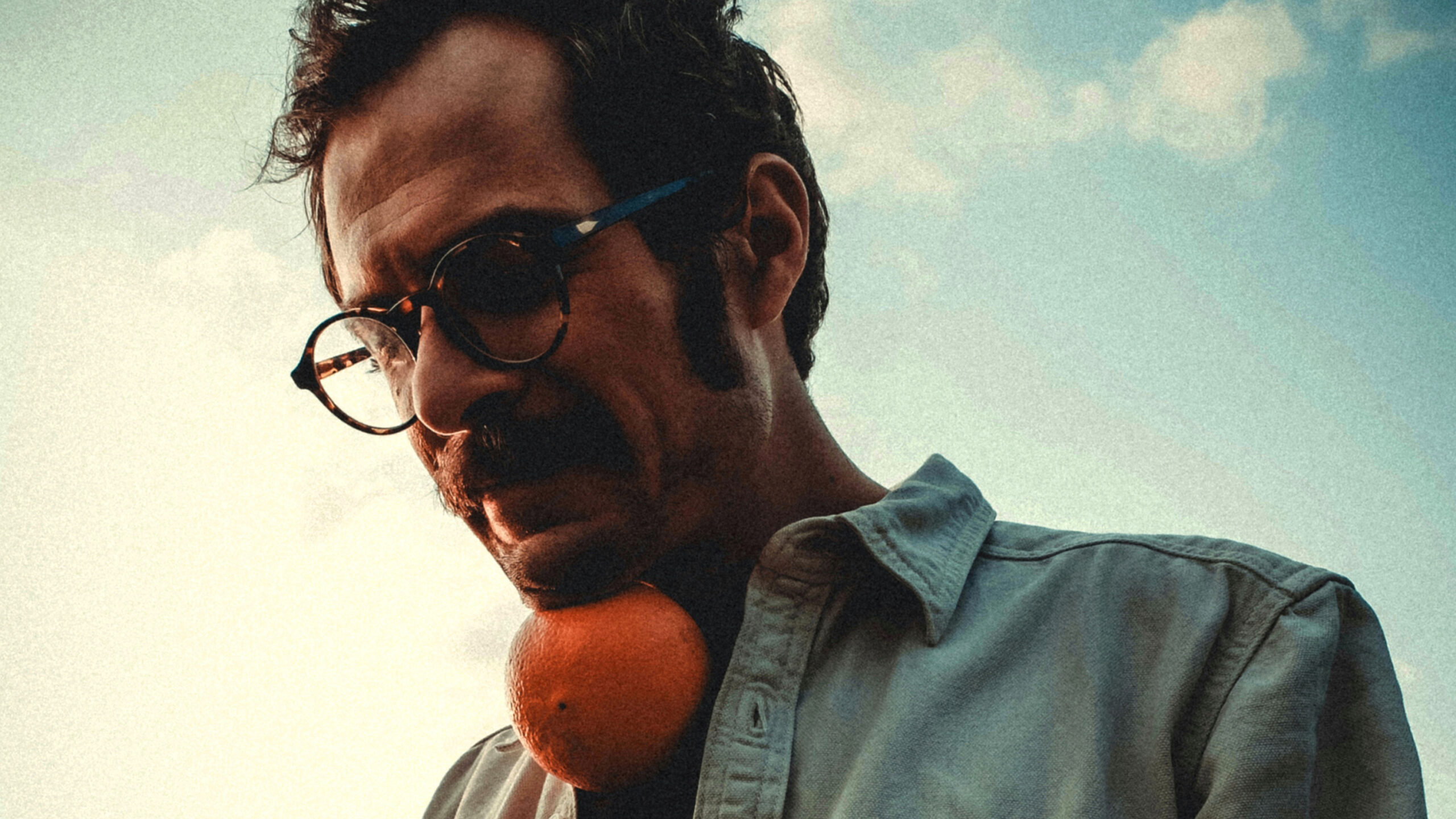
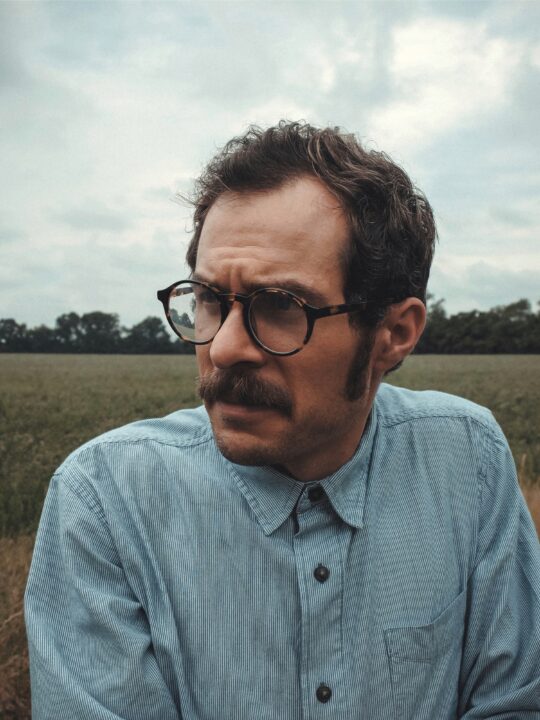
Former Ruins is the musical project of Levi Dylan Sikes, a Catholic convert from South Bend, IN. He has released multiple albums and EPs, and his most recent album, In Your Field, was released in September on his label, Slow Embrace Records. Andrew Tolkmith, assistant literary editor for Word on Fire Publishing, interviewed Levi about the new album, his conversion, and the enthralling yet daunting vocation of the twenty-first-century Catholic songwriter.
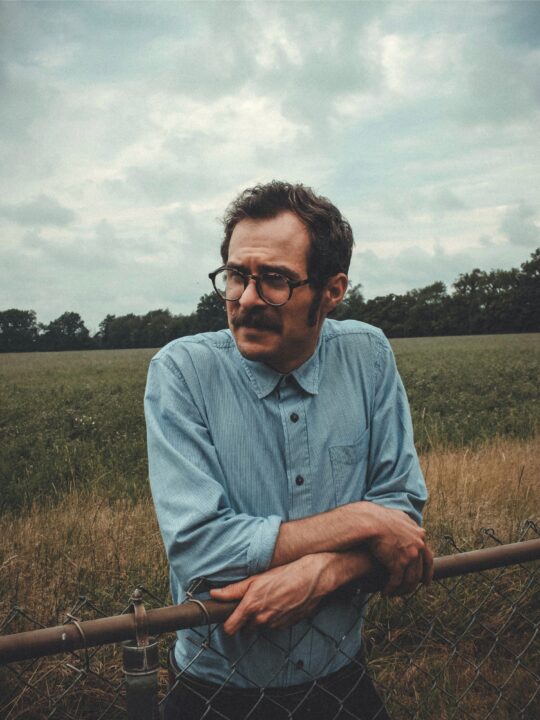
Andrew Tolkmith: You were received into the Catholic Church five years ago. Would you share about your journey to the Church and how your conversion has deepened your musical vision?
Levi Dylan Sikes: I’m grateful to have been raised by prayerful parents who were neither legalistic nor casual about faith in Jesus. They affirmed the necessity of being part of a local body of believers but maintained a kind of restiveness with most denominational church models. We viewed history prior to the Reformation with skepticism and remained ever on the hunt for the second chapter of Acts here and now. How hard it was to figure out how to ‘do’ church. It was understood that nobody had it all right, and things must have gotten off the tracks pretty early on.
Ending up in college at the height of the New Atheist movement, I was simultaneously playing traffic cop to the various denominational claims ranging from ordination to soteriology and sexual morality to dispensationalism. Curating for myself a version of the faith that was biblically sound, culturally sensitive, and steeled against the withering critiques of Hitchens, Dawkins, and the rest was exhausting and provoked a yearning to simply trust.
A couple years into marriage and ready to welcome our first child, my wife and I started becoming curious about the Catholic Church by way of the Theology of the Body. A friend with a penchant for ripping Lighthouse Catholic Media CDs nicked from narthexes emailed Scott Hahn talks to us and other Protestant friends. As we studied and prayed over the next five years, we heard the voice of the Catholic Church harmonize aspects of Christian faith and practice that all too often became fault lines among Protestants. But would I trust this voice to direct my attention where I’d never thought to look, or to tell me I was wrong precisely when I thought I was right?
Every time I thought the Catholic Church was going to say something blockheaded about my real, intimate relationship with Jesus I had known since boyhood, it didn’t.
Most surprisingly, the Church’s structure began to function as a fireplace for the fire I had known in my charismatic upbringing. The sacraments and the prayers surrounding the liturgical action itself feel profoundly consonant with that charismatic disposition to see God act right here, right now. The firm understanding that the Holy Spirit has led, and will keep leading, the Church into all truth is a promise that now has definite shape to it. Conversely, when all we mean by ‘the Church’ is just whatever remnant of believers at any point in history have held to the truth, however I might construe it, we make less of the Holy Spirit’s intervention and power. At the same time, I was heartened by the Catholic Church’s recognition in Lumen Gentium 8 of those “elements of sanctification” operative outside its formal and visible boundaries, because I myself experienced them. Every time I thought the Catholic Church was going to say something blockheaded about my real, intimate relationship with Jesus I had known since boyhood, it didn’t. It said something wise and knowing, but something that still summoned me to keep discerning and going deeper.
There is so much more to tell, especially the particular reasons why I chose against Orthodoxy or an Anglo-Catholic “middle way.” That part of the journey became quite interior, and at the risk of sounding trite, I wanted the story of the Catholic Church to be true. The writings of G. K. Chesterton and John Henry Newman, both former Anglicans, were instrumental. Their imaginative intellectualism spoke to me, especially since it coincided with such obvious mirth in Chesterton and heartfelt poeticism in Newman. It has been entirely worth the cost, and that’s the story I’m retelling with each album.
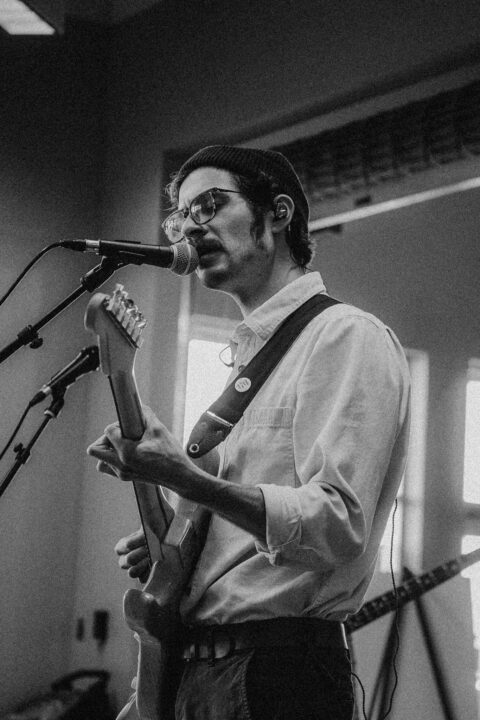
The effect on my musical vision comes through in the lyricism. I have been given the great relief of not needing to be as clever as I once thought faithfulness required. I can receive the Father’s good gifts with more serenity and less angst. Chesterton’s quip about walls and the play of children comes to mind. I don’t sound very chilled out on my records, but you’re just going to have to trust me that there’s been a sea change in that regard.
From record to record, you seem to draw vast and varied influences for your sound. Your previous album, No Creature Is Hidden, seems to recall the sonic dynamism of bands like New Order, The National, The War on Drugs, and Future Islands. What most inspired you while making In Your Field?
The concept of provenance became a touchstone for me in the making of this record. It’s how something is made, and with what limits are in force, that conveys something special. Pressure Machine by The Killers and Dulling the Horns by Wild Pink were both major influences from this production standpoint. The latter especially helped open me up to Sam [Schmidt] and Grady [Schafhauser]’s proposal that I upend my home production process and instead get in a room with them for a week for live tracking. In Sam’s words, I was to “show up and perform the songs.” Sam insisted that our goal was to capture more closely than ever what I actually sound like, and I became deeply aware of my tendency on previous records to selectively present my voice, in particular. You can’t have a vocal comp of dozens and dozens of takes and not be revealing something negative about your own self-regard. The experience of doing no more than four takes per song, some with even fewer, and having a friend swivel around and say “We got it, that’s all I need” was an exercise in trust I didn’t know I needed. But I did, desperately. Back to Wild Pink, I learned that this fifth album of theirs, which was the first to really grab me, was made in much the same way. That’s telling.
Christian contemporary music (CCM) resonates strongly in the record, though you deviate from the genre in myriad ways. To take an example, while much of CCM centers topically on worship, your songs are much more confessional in nature. As you’ve honed your craft, are there elements of CCM that you’ve considered very helpful to draw from, and are there other elements that are not as helpful?
CCM is very aware of the listener from the standpoint of accessible lyricism and clear melodies, and that’s not nothing. It’s also helpful to do right by your audience and not be forever vague about the subject of your songs. Nobody accuses CCM of being too nuanced! If I want to write something devotional and direct, I don’t hesitate as much as I used to. A Christian is obviously who I am, and nobody is served (least of all God) by an awkward suppression or obfuscation of my beliefs for the sake of market appeal.
What is not as helpful in CCM is its tendency to mistake bigness—in both sweeping generalizations and actual production style—for catharsis. There is also an attachment to the idea that a polished, flawless performance maximizes emotional impact, and so this naturally scrubs away signs of wear or age. Johnny Cash’s cover of “Hurt,” and especially its music video, felt revelatory when I first heard it as a young teenager. It told me more about God’s judgment and mercy than anything CCM could have produced. Christianity is also quite strange and multivalent, a point underscored often by Bishop Barron. CCM usually doesn’t encourage the kind of bandwidth in terms of subject matter or tone that our faith and its literary tradition affords us. Flannery O’Connor’s “large, startling figures” are seldom found in CCM. I’m happy to say that many other Christian singer-songwriters have taken her cues; you just need to go looking for them.
When you released In Your Field in September, you wrote that it was an album that was conducive to playing live, in contrast to No Creature Is Hidden. What do you think are the chief virtues of 1) making Catholic music that can be played live and 2) making Catholic music that can’t be re-created outside the studio?
Writing for the purpose of playing live keeps me in touch with my very real limits. The whole exercise of In Your Field felt like an education in receiving more of what I’m really made of and not as I idealize myself to be. The upshot is that many listeners catch a live gig precisely to encounter who the artist really is. Learning to take yourself lightly is, to riff off Chesterton, listening to your better angels.
If the song can be a little world, I want you to encounter something true, good, and beautiful there, something that traces its ultimate origin back to God.
For the musician, the studio can bring out that impulse for world-building that a Catholic “sub-creator” like Tolkien did so well. I love sculpting synthetic or recorded parts and playing with the stereo field to convey scale, intimacy, or catharsis. Production techniques can evoke nostalgia or situate hand-played parts in an atmosphere that amplifies emotional impact. If the song can be a little world, I want you to encounter something true, good, and beautiful there, something that traces its ultimate origin back to God. An immersive oil painting might do that objectively better than a pencil sketch. I do think the studio can make an already good song objectively better with respect to this aim. It creates experiences beyond what I can ever convey in bare-bones troubadour mode, like how a cathedral does something different than a crypt. And yet we make pilgrimages to both.
In Your Field, the new album from Former Ruins, is available now on physical and streaming platforms. To learn more about Former Ruins and to support Levi’s work, visit formerruins.com. Photo credits: Cora Schiavone and Jennifer Sikes. Read the second installment of this interview here.