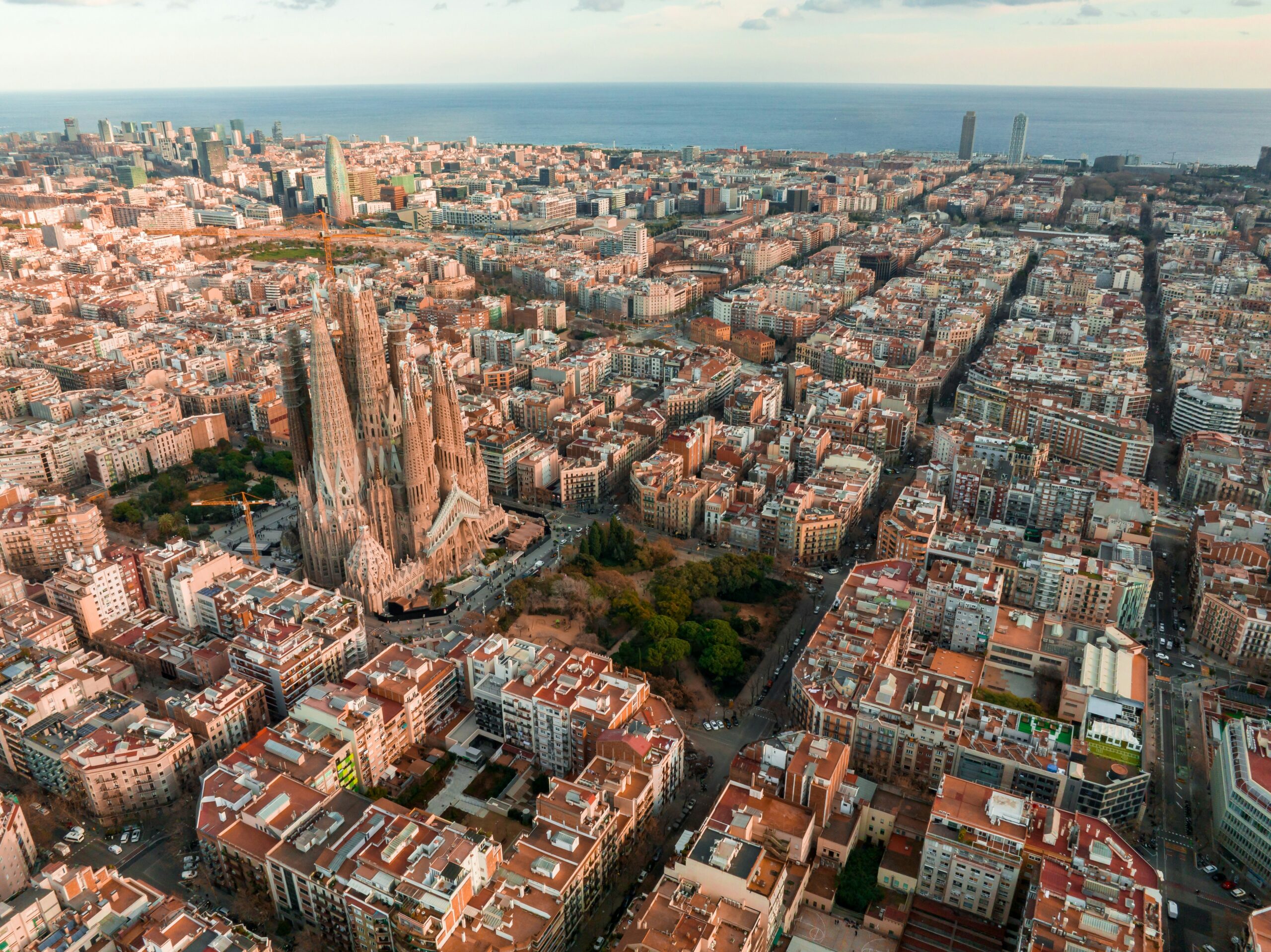
On January 13, the Vatican announced that Pope Leo XIV will visit Spain in June; his itinerary tentatively includes Madrid, Barcelona, and the Canary Islands. This may well be a divinely ordained trip, given that Spain seems to be at a tipping point politically and spiritually. The constitutional monarchy has begun a slow transition of the crown from a conservative, level-headed father to a charming, intelligent daughter who may restore the prestige and influence of the institution. The leftist government may be at its end stage, and an apparent migration of Spanish voters to rightist parties may—or may not—portend hope for the future; and Christian renewal movements may soon see a growth spurt.
Spain has been massively influential in the history of the Church. The Iberian country is home to three of the great Doctors of the Church: the Hispano-Roman St. Isidore of Spain, St. Teresa of Avila, and St. John of the Cross. Although not officially a Doctor, St. Ignatius of Loyola from Spain’s Basque region is a Doctor of the Church in all but name. The reception that the pope receives this summer should tell us a great deal about the political, cultural, and spiritual future of the country. As the day of the pope’s arrival nears, here is a brief overview of the country.
Constitutional Monarchy
I was recently in Spain, the latest of many visits, and the former King of Spain Juan Carlos had just released his memoir. Juan Carlos is responsible for fostering a Spanish democracy in 1978 when he broke with Franco’s authoritarian regime and promoted a new constitution. It was Spain’s third attempt at democracy, but this time it stuck: Spain is now a constitutional monarchy with a parliamentary form of government. In a constitutional monarchy, kings and queens have no formal role in governing, but they can be influential. Such was the case in 1981 when a group of military officers staged a takeover (golpe de estado) in Spain’s parliament in Madrid. Using the sheer force of his personality, the king went on the airwaves and told the insurrectionists to lay down their arms. They did, and so for decades, Spain was the home of Europe’s most beloved monarch.
But things change. In 2020, the king self-exiled to the United Arab Emirates because of financial and sexual scandals. Though he is currently on a limited book tour in Spain, it is doubtful that he will see his children and grandchildren in Madrid; his son, King Felipe VI, has told the former king to keep his distance. Reconciliación is Juan Carlos’s attempt to regain respect and recognition for what he has done for Spain, despite his transgressions.
Will the monarchy survive? The 6’6” Felipe VI is doing all he can to re-dignify the Spanish crown. Recently his oldest daughter, Leonor, turned eighteen; she is scheduled to one day succeed her father. Accordingly, she delivered her “commitment-to-the-country” speech a few months back. She is winsome and well spoken, and she has a chance to endear herself to the citizens of Spain.
The one reliable prediction about politics is that politics is reliably unpredictable.
Political Disarray
Over the past few years, unfortunately, the complex politics of Spain have become a mess: The country is beginning to look less like a two-party system and more like a fractured multiparty system. (It’s complicated, but if you want more detail about Spain’s Byzantine politics, read here and here.) Right now, the PSOE party—that is, the socialists—are in power. The prime minister, Pedro Sánchez, is nicknamed “Sr. Guapo” (Mr. Handsome), but some Spaniards regard him as the devil himself. He is a publicly declared atheist and was the first leader in Spain’s history to decline to swear on the Bible or a crucifix. Right now, Sánchez is desperately clinging to power. He has given everything every minor party has demanded so that he can keep his job, but that window may be closing. The problem with appeasement is that you have to keep on appeasing until you run out of stuff to appease with. At the moment, Sánchez can’t even get a budget passed. One former ally has just said that Sánchez’s government is in “free fall.” Sánchez just can’t keep up with all of his Faustian bargains. Then again, like the proverbial cat, he’s known as “the politician with nine lives.” It’s just not clear how many lives are left.
To make things worse, his wife, María Begoña Gómez, is about to go on trial for fiscal corruption. Does all this mean that the conservatives will be back in power? Possibly, but the country’s politics are moving to the extremes. In Spain as well as in the US, we’re reminded of lines from W. B. Yeats’s prophetic poem “The Second Coming”:
Things fall apart; the centre cannot hold;
Mere anarchy is loosed upon the world.
One interesting trend: More and more young people are voting for the conservative parties, even for Vox, which is the furthest to the right, though it is not clear where this will lead. The one reliable prediction about politics is that politics is reliably unpredictable.
Monkey See, Monkey Do
Back in May 2011, Spain had an interesting episode: the 15-M Movement, or Los Indignados (“the Indignant Ones”), primarily among the young. I happened to be in the country at that time, and it was interesting to see groups of young people camping in the plaza mayores (city centers), sitting in circles discussing the country as best they knew how. The movement may have been prompted by Occupy Wall Street (OWS) in the US, but the Spanish movement was more serious than OWS, which was easy to ridicule.
Out of the Los Indignados phenomenon came a new political party, the neo-Marxist Podemos, which means “We can.” If that sounds familiar, think “Yes, we can”—Barack Obama’s slogan. The initial leader of the new political party was Pablo Iglesias, a former political science professor.
Iglesias liked to condemn politicians who “live in chalets.” In 2021, Iglesias abruptly left politics; he and his partner now live in, ironically, a chalet in the picturesque mountains just northwest of Madrid, the Sierra de Guadarrama. Podemos has driven PSOE further and further to the left, just as has been the case in the US: The democrats have been consistently forced further left by their radical wing, egged on by a compliant, dishonest media. Accordingly, Podemos has imported every bad idea the democrats have dreamed up. No radical position is too extreme. If you want transgender surgery in Spain, it is at taxpayer expense. Spain has put so many resources into the drastic procedures that the country has become a travel destination for those looking for a change. If, however, you need hearing aids or glasses, you must pagar de su propio bolsillo (pay from your own pocket).
The major countries of Europe as well as the European Union have committed, at least on paper, to take significant steps toward their own defense in the face of Russian aggression; indeed some observers explain that, technically, Russia has already declared war, not just on Ukraine but on Europe as a whole. While other European nations have pledged to strengthen their military and fortify their logistics, Spain’s contribution will be to fight—climate change.
The Church in Spain
Despite Spain’s rich religious heritage, Islam is the country’s fastest growing religion. The quasi-good news for the Catholic Church in Spain is that its decline is slowing. Fortunately, the incidence of reported clerical abuse in Spain has been considerably less than, for example, the accusations in Ireland, or even those in the US.
Promising are the various renewal movements that continue apace, such as Opus Dei (“Work of God”), the movement that Spanish progressives and the liberal press everywhere love to hate. The Opus Dei presence is considerable given that the organization’s founder, the Spaniard Josemaría Escrivá, was canonized in 2002. The last time the conservative Partido Popular party led the government, a surprising number of Opus Dei members were appointed to high cabinet-level positions.
Spain has been massively influential in the history of the Church.
The latest Dan Brown novel, El último secreto (The Secret of Secrets), is currently featured in Spanish bookstores everywhere. Brown loves to slander all things Catholic (see The Da Vinci Code), including Opus Dei. The odd thing about Brown’s books is that not only are they propaganda, but they are also lousy. That, however, has not prevented their popularity. Reportedly his books have now been translated into fifty-six languages. There is no better illustration of Flannery O’Connor’s observation:
Everywhere I go I’m asked if I think the university stifles writers. My opinion is that they don’t stifle enough of them. There’s many a best-seller that could have been prevented by a good teacher.
The charismatic movement in Spain includes a strong Catholic dimension; Pentecostalism is growing as well, largely due to immigration from Latin America. Another notable group is the Neocatechumenal Way (“the Kikos”), which is focused on revitalizing faith through Scripture, liturgy, and community. Yet another hopeful sign is the Eucharistic Congress held in the enchanting city of Covadonga, high in the mountains of the Picos de Europa in the northern autonomous community of Las Asturias. The event, sponsored by the Servant Sisters of the Home of the Mother, seems to be gaining momentum. According to the Catholic News Agency, 1,700 young people from twenty-eight countries attended last July. The pope’s visit may give it a huge boost. I hope to take my granddaughter in 2026.
Atlas and the Carmelites
In the Theogony, the Greek poet Hesiod described the epic war between the Titans and the Olympians. The Olympians, led by Zeus, won the fight, and Zeus punished the Titan Atlas by condemning him to carry the world on his back. I think Hesiod had it half right. He was correct insofar as the world is held in place by more than just physics: It is maintained by an otherworldly power. Hesiod’s story came to mind some years ago.
I had just arrived in Madrid already feeling homesick, knowing I’d be away from the family for at least two weeks. In those days, there were no mobile phones or texting, only phone booths and sweaty internet cafes. So, as I had done before, I ducked into a Carmelite convent located in the Puerta del Sol, the symbolic center of Spain. It is a very congested, commercial part of the city, with pickpockets around every corner.
When I entered, the cloistered nuns—shielded from view—were just beginning the Rosary, and I was fortunate to join in. By the time we were finished, I had a distinct impression that it was the dedication of the Carmelite sisters to continuous prayer that keeps the earth spinning on its axis. They were, in a sense, fulfilling the role that Hesiod assigned to Atlas.
More broadly, were it not for the constant intercession of simple men and women everywhere, the world would once again descend into chaos. I came away with a deeper understanding of the obligation that God has placed on all of us to do our part, beginning with constant prayer.
In this apparently pivotal time for Spain, Pope Leo’s reception should shed light on the country’s political, cultural, and spiritual future. Hopefully his visit will ignite intercession across the country and a Christian renewal movement may soon take hold.