
Traditional conservatism seems to be in transition; it is not clear where it is going and when it will get there. Some would say it is in disarray. Others lament that conservatism today is fragmented and involves too many contradictions.
By contrast, there seems less debate among progressives, and for some, their apparent unity is a sign of strength. But the divisions within conservatism, while at times troubling, are not necessarily bad; any entity should undertake internal debates and challenges. The hope, of course, is that such activity will result in greater coherence and even unity, but at the same time conservatives should not—and cannot—paper over disagreements. By contrast, progressivism in recent years has suppressed challenging and moderating voices, and the consequences are all too apparent.
Since it is not clear where conservatism is going, it may be helpful to think about where it has been.
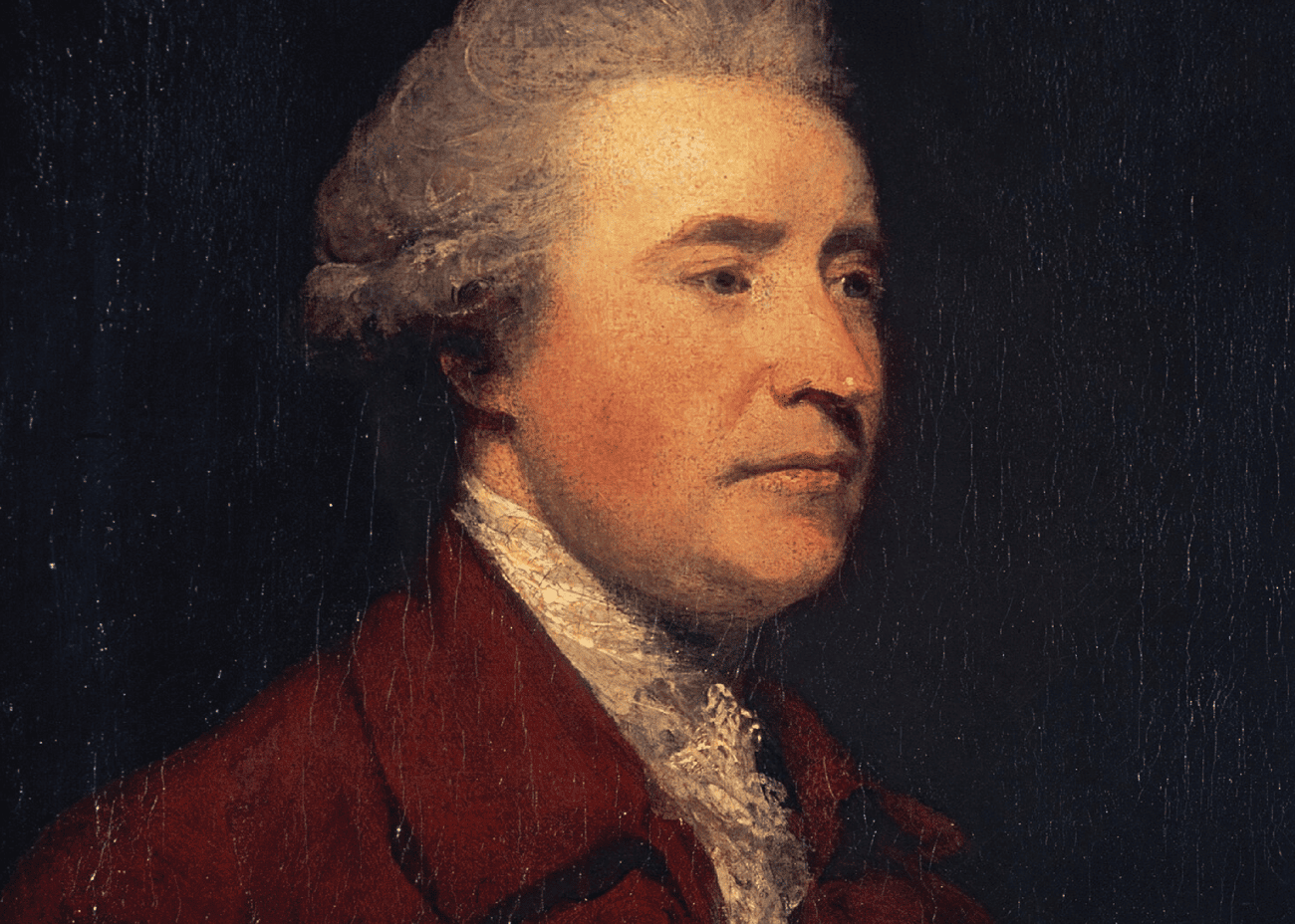
For that reason, a helpful exercise is to consider the British statesman Edmund Burke (1729–1797), who for some is the most important progenitor of modern conservative political philosophy. Burke took the opportunity to articulate his political philosophy in response to the tumultuous French Revolution, the violent and bloody results of which, in retrospect, seem to have validated his ideas. The best source of his thought is his book Reflections on the Revolution in France. He thought that the French Revolution, which started in 1789 and blew itself out within a year, was not only the ruin of France but a threat to the entire Western world.
Burke’s thought is just as relevant today as it was in his time—perhaps even more so. His political philosophy offers keen insight into the political and cultural divisions that characterize our times.
Tradition, Reform, and Hate
In a ranking of the elements of Burke’s thought, the concept of tradition may occupy first place. Indeed, there is no idea so relevant today. Virtually every progressive impulse today is a revolt against tradition. Why is there such chaos in education, where public meetings turn into shouting matches while student performance steadily declines? Because many of the best educational ideas are time-tested and thus draw their authority from tradition. Why are some opposed to a canon of great literature? Because any canon is produced over time and thus becomes a matter of tradition. Why does there seem to be so much trouble for those who engage in conventional religious belief? Because religion is traditional. Why are there so many radical ideas about gender? Because the commonsense categories of male and female are traditional.
If you cannot love what immediately surrounds you, it is hypocritical to suppose you can act charitably on a higher plane.
In the view of revolutionaries, whether in the late eighteenth century or the early twenty-first century, tradition is an impediment to hurried change. Tradition, as a source of authority, frustrates the power that impatient proponents require to push their ideas through.
For Burke, however, tradition is not an obstacle to reform. Rather, a respect for tradition, and the proper caution it brings, means that improvement will be long lasting. Accordingly, Burke believed in progress as an “organic” undertaking, one that is not rashly imposed but is allowed to grow from deep roots. Otherwise—and to change the metaphor—the cure may be worse than the disease, as the French demonstrated when the sewers of Paris were clogged with blood that flowed from the innovation of the guillotine.
For that reason, Burke explained that “under the pretext of zeal,” people “too frequently wander from their true principles.” In their haste, they are all too eager to forsake a “firm but cautious and deliberate spirit.” Change may truly be needed, but if society is a kind of living organism, and if its organic structure and processes are too badly damaged, there will be little to protect, guide, and mature that growth over time. Reform is a process, not a one-time event.
But it gets worse. Burke shrewdly observed that those who were forcing the French Revolution began, perversely, “by despising everything that belonged to you.” What better explains the way in which so many today scoff at traditional marriage and family, natural gender roles, or—dare we say it—chastity? This is an astute observation on Burke’s part, and we unfortunately see it played out every day. Burke explained that if you cannot love what immediately surrounds you, it is hypocritical to suppose you can act charitably on a higher plane.
He further observed, “Turbulent, discontented men of quality, in proportion as they are puffed up with personal pride and arrogance, generally despise their own order.” We must first “be attached to the subdivision.” He famously wrote that we must “love the little platoon we belong to in society, as the first principle (the germ as it were) of public affections. It is the first link in the series by which we proceed towards a love to our country and to mankind.”
Ordered Liberty and Manners
Burke, like any sensible statesman, recognized the sacred nature of liberty, but he also understood that unrestrained and unfocused freedom is no virtue at all because it leads to a loss of civic and individual order. Instead of commending the French revolutionaries for their celebration of freedom, he first asked how such liberty was to be enjoyed. He compared the pursuit of liberty to opening a bottle of champagne, the merit of which all depended on the quality of the sparkling beverage.
When I see the spirit of liberty in action, I see a strong principle at work; and this, for a while, is all I can possibly know of it. The wild gas, the fixed air, is plainly broke loose: but we ought to suspend our judgment until the first effervescence is a little subsided, till the liquor is cleared, and until we see something deeper than the agitation of a troubled and frothy surface.
Even more succinctly, Burke explained that although the “effect of liberty to individuals is, that they may do what they please,” nonetheless, before congratulating them, “we ought to see what it will please them to do.”
If individuals are to enjoy a right to liberty, they must also accept the restraints and duties that accompany such a right.
“I must be tolerably sure,” he wrote, “before I venture publicly to congratulate men upon a blessing, that they have really received one.” Burke recognized that liberty could even be weaponized. He further warned against “compulsory freedom,” where some people may force others to exercise their freedom in particular ways. In saying this, Burke likely had in mind the thought of Jean-Jacques Rousseau, one of the inspirations of the French Revolution. Rousseau enigmatically wrote in Of the Social Contract that men “must be forced to be free.”
Such liberty, Burke observed, was causing a dangerous and violent deterioration of everyday manners and customs that made society predictable and safe. He described “a ferocious dissoluteness in manners, and of an insolent irreligion in opinions and practices.” For that reason, if individuals are to enjoy a right to liberty, they must also accept the restraints and duties that accompany such a right.
Religion and the Survival of the Republic
Burke warns that society suffers malnutrition without the nurturance of religion. George Washington said something similar in his Farewell Address when he warned that religion would be indispensable for the future of the new republic. Washington explained that “reason and experience both forbid us to expect that national morality can prevail in exclusion of religious principle.”
Six years earlier, Burke also stressed the irreplaceable role of religion:
Nothing is more certain, than that our manners, our civilization, and all the good things which are connected with manners, and with civilization, have, in this European world of ours, depended for ages upon two principles; and were indeed the result of both combined; I mean the spirit of a gentleman, and the spirit of religion.
Burke did not specify a particular denomination, but he no doubt had in mind the Western tradition. His mother was Roman Catholic, his father Anglican. Burke went to a Quaker school, then to the decidedly Protestant Trinity College in Dublin and was a practicing adherent to the Church of Ireland branch of the Anglican Church. His sister opted for Roman Catholicism.
Religion, according to Burke, is not a luxury; to the contrary, it holds it all together. It is an essential “buttress to the social fabric.” In architecture, a buttress ensures that the structure is stable, and it protects it from any force that might destabilize it. Mixing his metaphors, he adds that religion “cements the whole” and is a part of individual life “from the cradle to the grave.” He adds, “Religion is a part of man’s rights.” Indeed, the authors of the US Constitution ensured that right would be protected in the very first amendment.
Democracy’s Future
We seem to be at a point in the Western world at which we have an opportunity to judge soberly if we are capable of self-government. Some think our best days are behind us. It is important to note that Burke was not enthusiastic about a democratic form of government, but he did think it possible. Its success, though, is not guaranteed, and these Burkean principles may be the difference between success and failure.
This brief discussion is by no means all he had to say, but it is an important beginning; readers would do well to read Reflections on the Revolution in France from cover to cover. Aside from its rich substance, Burke’s elegant prose is a workshop for those who want to become better writers.