
From Dust We Are, To God We Shall Return
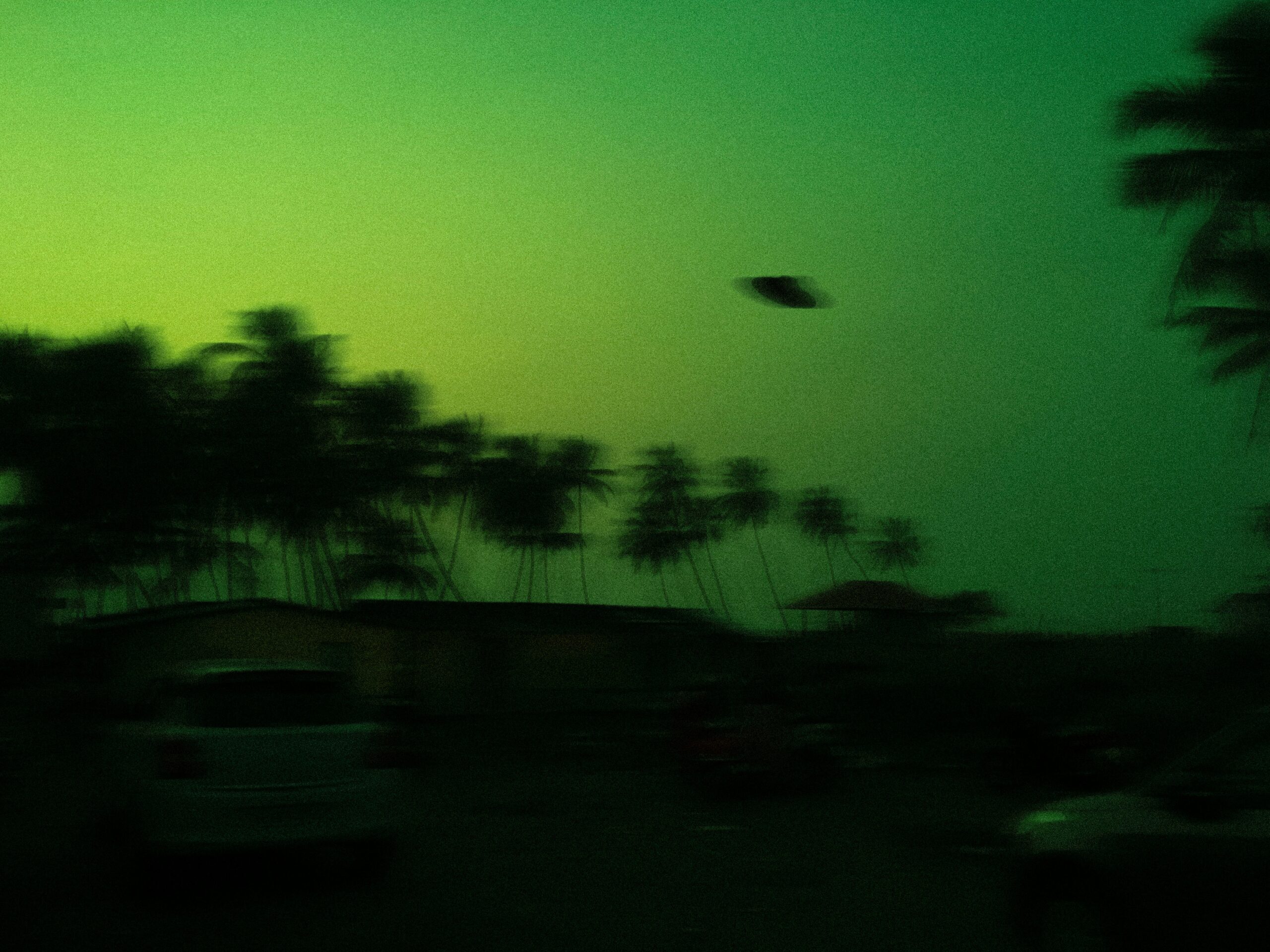
Fresh on the chemtrails of the US Department of War’s release of new UFO/UAP files, the advent of Steven Spielberg’s sci-fi film, Disclosure Day, is accelerating speculation about aliens into warp drive.
One of the most provocative questions is a simple one: Do aliens believe in God?
Disclosure Day’s plot remains top secret, but its screenwriter, David Koepp, has said “religion is an important part” of the film. That is consistent with both the trailer scene of nuns in a state of prayerful awe and a character asking, “Why would he make such a vast universe yet save it only for us?” in the teaser trailer.
Could Disclosure Day be a close encounter of the religious kind?
Some sci-fi flicks touch on spiritual themes only gently (“It’s better than the alternative,” says character Eva Stratt about her belief in God in Project Hail Mary), while others dig much deeper into the topic.
In the classic The Day the Earth Stood Still (1951), the alien Klaatu is a Christ-like figure who wants to bring peace to our planet but is killed by humans and comes back to life—just temporarily; he says only “the Almighty Spirit” has the power of life and death.
Scott Derrickson’s 2008 remake of the film is also infused with religious imagery and themes. Keanu Reeves’s Klaatu is likened to the threatening God of the Old Testament becoming the forgiving deity of the New.
One of the most direct divine interventions in film history comes in George Pal’s film version of the H. G. Wells classic novel War of the Worlds. Wells, noted for his atheism, would have been madder than Stephen King over Stanley Kubrick’s The Shining had he witnessed the 1953 movie’s finale, in which Earthlings gather in houses of worship to pray for deliverance from Martians. The invaders are suddenly killed by germs and, per the screenplay, as the film fades to black, a choir sings a hymn that ends “in a great ‘Amen.’”
***
What about the Bible itself? What does the good book say about little green men?
There are of course noteworthy biblical appearances by angelic and demonic creatures. However, Andrew Davison concludes in Astrobiology and Christian Doctrine, “Biblical texts are silent on extraterrestrial life.”
Still, he mentions scriptural language that could suggest otherwise, like John 10:16, which quotes Jesus as saying, “I have other sheep too that do not belong to this fold.” Davison thinks that is a reference to Gentiles, not Martians—but do we really know?
Could Disclosure Day be a close encounter of the religious kind?
Br. Guy Consolmagno, president of the Vatican Observatory Foundation, said, “Here’s what’s in the Bible: discussions of the Nephilim. In Genesis. Who the heck are the Nephilim?” He goes on to cite how God, in Psalms and the book of Job, “names” the stars “and they sang to him with joy. . . . It shows that the author of Scripture then was not afraid of the idea that God created more than just you and me.”
In John 14:2, Jesus says, “In my Father’s house there are many dwelling places.” Is that just foreshadowing the diversity of life on Earth? Or might it mean the Almighty runs an interstellar Airbnb?
I like to think so. After all, there are up to a (literal) septillion stars in the universe, and a (figurative) gazillion planets orbiting most of them. To echo the Spielberg teaser, what good is all that cosmic real estate without knowing creatures to inhabit and explore it?
Carl Sagan once said, “We are a way for the universe to know itself.” And Ross Douthat adds in Believe that the intricate structure of reality combined with our miraculous minds “points to the possibility that we are just a little bit divine ourselves.”
As I wrote in this Substack column, “There is no appreciation of creation without us—sentient creatures—to marvel at its magnitude and majesty in the first place . . . [and] it seems reasonable to assume that innumerable beings on uncountable worlds—past, present and future—have been and will be created in the image and likeness of God.”
But what is the fate of all those intelligent creatures? Are they—and we—just smart dust, and to dust we shall return?
Les Claypool and Sean Ono Lennon, in their new and complex concept album, The Great Parrot-Ox and the Golden Egg of Empathy, sing:
And are humans nothing more than meat machines?
Or is therе more?
Is there morе to us?
The tune is infused with a sanguine tone that suggests their answer is yes, to which I would simply add that, more than mere meat machines or smart dust, we are spiritual sentients, with no expiration date. “For God formed us to be imperishable” (Wisdom 2:23 NABRE).
The universe, whether expanding or contracting, will one day end. God willing, we will not.
And neither would soul-filled beings on far-flung planets. No matter how different in physical appearance they may be (think Project Hail Mary’s Rocky), there is little doubt in my Catholic mind that we share a common debt to a common Creator with whom we hope to spend eternity once our days are done on the multitude of our material worlds. Fr. Richard D’Souza of the Vatican Observatory said of those possible souls, “They would be children of God.”
And being such siblings of the same supreme Being, should any ET come calling one fateful day, I imagine they’ll be more missionary than menacing when we take them to our leaders.
***
Disclosure Day premieres on June 12. The trailer says, “When the time is right, everything will become clear.”
What’s already clear to me is that there is an alien in all of us. Whether we live on Earth, Erid, Vulcan, Tatooine, Pandora, or Cybertron, or any other imagined land with intelligent life, we beings-with-souls inhabit this mortal coil for a mere blink of a galactic eye.
Sure, we may be temporary residents on our various earths, but we are not mere creatures of them. For in a very real sense, we are all extraterrestrials, traveling—often suffering—through this short and physical life, every one of us on a sojourn that we pray ends up in a joyous and spiritual world without end. As Pope Leo XIV said in his first encyclical, Magnifica Humanitas, “Finitude, when truly accepted, does not diminish us but opens us to recognizing the face of God and others.”
That’s a movie hard to make, but it has a Hollywood ending that is sure to please.