
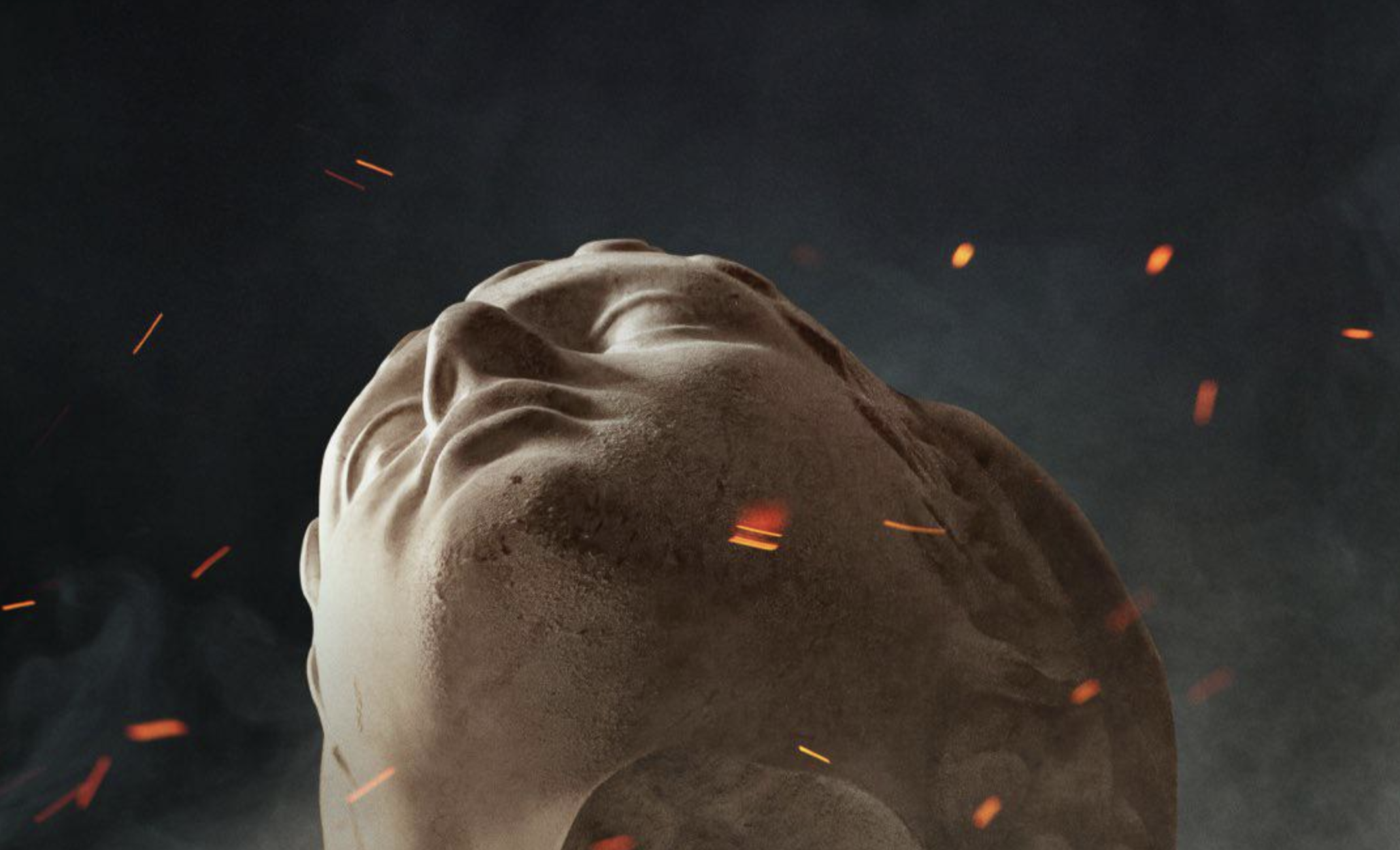
Christopher Nolan’s new film version of The Odyssey has been a hot topic for months before its release a couple Fridays ago on July 17, and will—and should—continue to be. Some have praised the movie for its cinematic quality, while others have criticized it for its colloquial language—Odysseus’s son, Telemachus, and one of Penelope’s suitors, Antinous, both call the Ithacan king “dad” or “your daddy”—for the casting of Ellen Page (the star of Juno, who now identifies as a man and goes by “Elliot”) as an Ithacan soldier, or for changes Nolan has made to the Greek epic. But we will not have arrived at an understanding of what Nolan has done in making the film until we grasp that his re-vision of Homer’s Odyssey is deeply indebted to the later epic tradition that followed it, particularly Virgil’s Aeneid. If we see how Nolan sets out to retell the story of Odysseus’s nostos, or homecoming, from our side of those epics, the beauty of his telling’s portrayal of the good of hospitality, the danger of rational control’s abuse of that good, and the penitential possibility of exile all become apparent to us.
When discussing films of this kind that rely largely on a past work, whether a novel or an epic or a medieval romance, we tend to call them “adaptations,” and discuss the relative “faithfulness” of the movie to the original. It is, however, more fruitful and more true to reality to see the films, if they are true works of art, as not merely adaptations of the prior work to a new medium—the screen—but adaptations of the older story to a new vision, relating that work through the whole literary tradition to our present moment. What Nolan is doing, as Clarence Brown wrote of a different author, is “advanc[ing] the frontier of vision by creating something new out of the resources of a strong tradition.” Looking only for the old will produce disappointment. For instance, friends of mine weren’t pleased that David Lowery’s film The Green Knight (2021) did not replicate the joyous tone of the original medieval poem, but, as I argued at the time, this shift in atmosphere to the world of the old-English poem Beowulf was done by design to show twenty-first-century Americans something about ourselves through the art of film.
Likewise with Nolan’s Odyssey—it does not take place in the elegant, polychromatic Greek world of the poleis, the city-states, filled with gods, but in the darker, more ambiguous world of Rome imagined by Virgil in his Aeneid. While Homer’s epic reveals to its audience and its characters the actions of gods—from Poseidon’s displeasure at Odysseus to Athena’s intercession to Hermes’s embassy to Calypso to set the “man of many turns” free to pursue the last stages of his homeward voyage—Virgil generally conceals divine action from his characters, even as he occasionally pulls back the curtain to his readers. Aeneas is famously frustrated when his mother, Venus, after disguising herself as a Tyrian huntress and telling him about the ways of Carthage and Dido its queen, lets her mask slip briefly before slipping away. “Why do you cheat your son so many times, / Cruel one, with visions false? Why may we not / Join hand to hand, speak and hear truthful words?” Aeneas cries out to her.
Nolan’s genius consists in his realizing something fundamental about the Trojan Horse that isn’t even implicit in either Homer or Virgil.
Nolan’s Odysseus and audience seldom or never see the gods. The only divine presence to manifest herself is Athena, but not in the guise of Mentor appearing to Telemachus, as Homer would have it, but occasionally to Odysseus, more full of disappointment than counsel, and a scene toward the movie’s end suggests that what the king of Ithaca sees is more a projection of Athenaic presence than the face of the goddess herself. The cinematic epic takes place in a world like that of the Aeneid, the apparently disenchanted world of the American empire, where clever technological ruses have introduced something hostile to civilization within its walls, whether we think of the impact of smartphones and social media on our young people’s mental health, the effect no-fault divorce laws have had on our nation’s family formation and the fertility crisis that has arisen, or how influencer culture and AI chatbots have created a “second cave” of opinion that masquerades as knowledge and sophistication.
Its citizens, like ourselves, have too often closed themselves off from God by living in pursuit of ends without regard to the injustice of the means. Nolan’s Odysseus mentions to Penelope in an early scene that Agamemnon’s interest in war with Troy is not simply the injustice apparently done his brother, Menelaus, by the Trojan prince Paris’s absconding with Menelaus’s wife, Helen, but rather an interest in gaining an economic hegemony currently possessed by Troy over maritime trade. After almost ten years of war, Odysseus, whom Homer’s Zeus says “is beyond all other men in mind,” comes up with a trick to win the war: the Trojan horse. “One man’s idea,” Nolan’s Odysseus will say, that brings civilization crashing down.
Nolan’s genius consists in his realizing something fundamental about the Trojan horse that isn’t even implicit in either Homer or Virgil. One of the fundamental virtues of Western civilization, from the Greeks to the Romans to Jews and Christians, is hospitality, or xenia. In The Iliad, we see Greek and Trojan soldiers, who, upon realizing that they and their families are guest-friends—having enjoyed each others’ hospitality at table, by the hearth, and in provision of a place to sleep—forebear to fight each other, and this after nine years of brutal warfare. The author of the letter to the Hebrews (certainly with Abraham’s hospitality in mind) advises his audience, “Do not neglect to show hospitality to strangers, for by doing that some have entertained angels without knowing it.” Hospitality includes the giving of gifts to mark the occasion. As Nolan’s Sinon says—to the best of his knowledge—the horse has been left as a gift to Athena, but as Odysseus later realizes, his genius tactic perverted the nature of the gift; he hid within what should be a pure offering the corruption of “ten years of rage,” waiting to pour out and destroy the city. “We violated all that’s ever sacred between people,” he tells Penelope. To welcome the stranger as if he might be a god—as if he might be made in the image of God—is to accept a gift without guile, but the “trick” of the horse has undermined that civilizing trust, sapping Western civilization of its meaning.
Nolan’s telling of the end of the tale ties together strands from the tradition in a way that illuminates something that had been dark.
Odysseus’s journey home is riddled by failures of hospitality, where the bonds that should tie peoples together—namely, the law of Zeus (hospitality) and the concomitant civilizational goods of “palaces, trade, and language”—fail to tie but rather ensnare. As Calypso later tells Odysseus, he is a man who wants to “control his fate,” and reason is the tool he attempts to use for that purpose, but his reasoning is out of place in the world that he has helped bring into being. Nolan’s cyclops, unlike Homer’s, does not speak except after losing its eye. It gurgles, in what sounds like words murmured through water, the name Poseidon. “That thing talks? Why didn’t it talk to us before?” one of Odysseus’s men asks. “Do you talk to ants?” he replies. After escaping its cave, Odysseus and his remaining men land on an island populated by armored giants (likely referencing Homer’s Laestrygonians), which likewise do not speak, before arriving at Circe’s island. Circe, while explicitly invoking the hospitality of Zeus, uses her language not to communicate but to trap Odysseus’s men because she fears their nature as soldiers and what savageries they might inflict on her, Eurylochus’s attempts at kindness notwithstanding.
Once trust goes, only force remains—unless faith and intellect beyond mere instrumental reasoning can take the helm. After he’s returned to his native shape, Eurylochus tells Odysseus they shouldn’t leave Circe alive because she’s a witch. “Who gave her those powers?” the man of many ways asks. “Your gods.” One of the major actions within the soul of Odysseus throughout the movie is his relation to the gods, but as is more appropriate to a post-Christian era, the struggle has less to do with his deeds and more to do with his belief and the way faith or lack of it characterizes his acts. When one of his sailors characterizes the cyclops as a “son of Poseidon,” interpreting its difficult-to-understand murmurings as a prayer, Odysseus retorts, “We can’t live by omens and sacrifices.” It seems then that at the beginning of his journey, Odysseus is a secular, Western man, although Eurylochus’s response—questioning how many times he’s heard Odysseus praying to Athena during their voyage—complicates that picture. Odysseus is a man like Jacob, wrestling with belief in a purposeful cosmos that could be governed by anything rather than a place of “fires of anarchy and pain” made by his own idea.
To return home, Calypso tells Odysseus that he must take “a leap of faith,” making a raft of the remains of his ship and casting himself on the waves, accepting punishment from Poseidon, and he does. But the greater act of faith begins when Odysseus goes to the temple of Athena at Pylos to rescue Telemachus in a scene of Nolan’s invention—by doing so, Odysseus is reenacting in reverse the brutality of the taking of Troy, which includes the desecration of Athena’s temple, but here, he has come to save innocence rather than take it. Nolan’s telling of the end of the tale ties together strands from the tradition in a way that illuminates something that had been dark. In Homer’s Odyssey, our hero receives a prophecy from Teiresias in Hades that after reaching home, he will have to make a final journey to the west, traveling until he cannot see water. But the purpose of this journey is unclear. Odysseus discusses it with Penelope at the end of the epic, but they do not have an answer to that question. In the Inferno, Dante, working with Virgil’s villainous idea of Ulysses (the Roman name and imagined form of Odysseus), has the hero tell the story of his audacious quest for knowledge, being unsatisfied with the love of his wife and son, but it is hard to square this explanation with the character we know from Homer. Nolan, on the other hand, sees the purpose of this journey.
One of the distinguishing marks that separates mankind from beasts, one of the beauties of civilized life, is that we bury and honor our dead. One of the horrors of living in a world after Troy—for “to burn the walls of Troy was to burn the world,” as Odysseus says—is to live in a world where to save the living means forbearing the honor due the dead. Odysseus has to leave men’s bodies behind, in the cyclops’ cave, in Athena’s temple at Pylos, and his life is indebted to those men and the honor due them. The purpose told Odysseus for his journey west by Sinon in Hades is to make sacrifice for those he had to leave unburied. But first, Odysseus must accept a world beyond his control, where his receptive intellect works within a certain divine providence to restore the order of his city not only through his own strategy but through the sacrifices he must make to honor the dead.
In Homer’s epic, Odysseus tells the tale of his many journeys to the Phaiakians, a seafaring people who take him in after he has been set free from Calypso’s island. Nolan omits this civilization in order to show that the Odysseus whose intelligence has been at the service of destroying civilization must be turned to revitalizing it. Louise Cowan wrote that in “retelling his story imaginatively [Odysseus] interprets it for himself. He gives it the form and hence the meaning which until now it has lacked. In all his wanderings, incapable of self-criticism, he has merely repeated his mistakes. For people do not learn from experience; they learn from reflection and interpretation.” By having him share this moment with Penelope instead, Nolan shows that the learning that is needed to bring civilization back is rooted in the conversation made possible in the sacred space of marriage between man and wife, the most dangerous and important place of hospitality. Only within that place does Odysseus leave to honor his men, taking Penelope with him “in his fastest ship, with his brightest crew, to sail towards the horizon, chasing the setting sun,” in piety seeking to give thanks for his difficult homecoming.