
I can still vividly remember the experience I had on a plane flying over the Atlantic to London during my last year of college. I was in the early stages of my Catholic reversion, staring out the window of the plane, the cool blackness reflecting back at me, and wondering whether God actually existed. If so, I knew he was the only one who could bring healing and peace into my life. I was in a desperate way, and I was having an existential crisis of meaning. If God did not exist, then the entirety of my life meant nothing.
Sure, I could read as much Camus and Sartre as I wanted, commit myself to believing that I was capable of giving my life its own meaning as a “creative” act of the will, but, in the end, I knew it would only be a “necessary” delusion. I couldn’t deny that without God, without some transcendent being grounding all of reality, nothing mattered. One of the great and terrible consequences of sin and suffering in our fallen world is that we can cease to see meaning in our lives and reality in general. Sin and suffering can render the world dark and clouded, convincing us that our lives are meaningless. And this yields a particularly awful form of suffering. As Viktor Frankl wrote, “Life is never made unbearable by circumstances, but only by lack of meaning and purpose.”
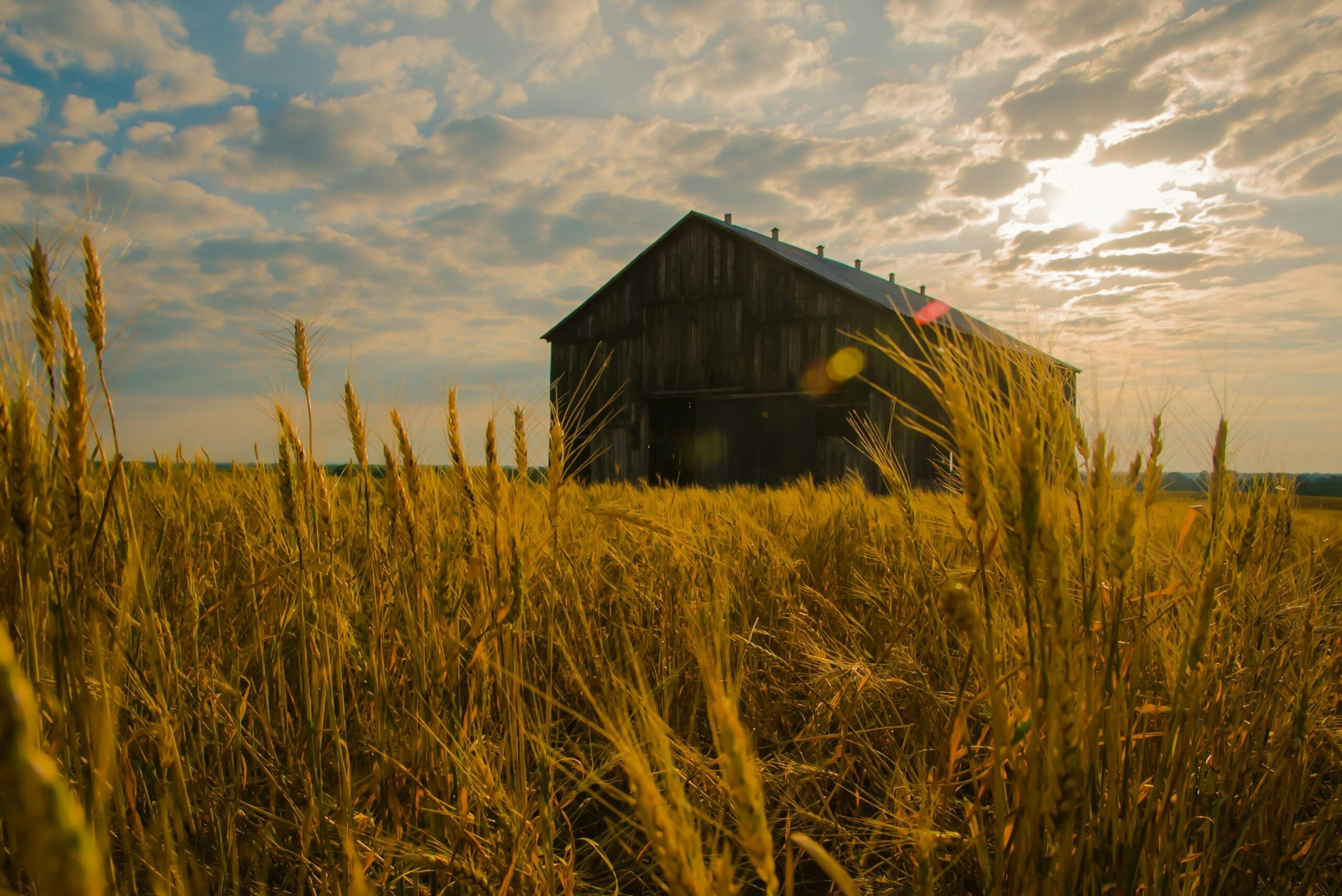
One of the strangest and eeriest stories I’ve read is Haruki Murakami’s “Barn Burning.” In the story, the narrator begins a romantic relationship with a young woman. Soon after he meets her, she introduces him to a well-dressed, polished, and seemingly wealthy young man who, nevertheless, has an odd and glacial quality to him. There is a dreamlike effect to the story, and none of the characters are given a name, which gives the tale a parabolic feeling. At one point, the narrator and the man are talking with each other after the woman has gone to bed, and the man tells the narrator something he has never told anyone before. He tells him that every few months, he feels the need to burn down an old barn in the country that is otherwise “expendable.” The narrator presses him on this, fascinated by this bizarre and illegal “hobby,” and asks him how he judges whether a barn is expendable or not. The man responds:
I don’t judge anything. The barns are waiting to be burned. I just accept that. I merely accept what’s there. It’s like the rain. The rain falls. The river swells up. Something gets carried away in the flow. Is the rain making a judgment? It’s not like I’m out to commit an immoral act. I have my own code of morality.
The man then informs the narrator that he feels the need to burn down another barn, and that he will do it soon. The narrator is intrigued by this, and so he spends time identifying five barns in the area on a map so that he can keep track of them. He also starts running by the barns every morning, expecting to eventually find the ashy remnants of one. But he never does.
One of the great and terrible consequences of sin and suffering in our fallen world is that we can cease to see meaning in our lives and reality in general.
Shortly after their conversation, the young woman disappears. The narrator searches for her, even visiting her apartment, but is unable to find her. Near the end of the story, the narrator runs into the man again at a coffee shop. He sits down with him and asks him whether he has seen the girl, to which he says no. He also asks him whether he ever burned down that barn. The man tells him he did, and when the narrator questions him about which one, since he has been meticulously keeping an eye on these barns, the man merely tells him he must have overlooked one.
The story concludes: “I still run past the five barns every morning. No barn in my neighborhood has burned down. And I haven’t heard about any barn burning. December’s come again, and the winter birds fly overhead. And I keep on getting older.”
We are not explicitly told what happened to the girl, but the implication, of course, is that the man has killed her—the “barn burning” is a euphemism for the man’s kidnapping and killing of women.
There are many ways to read the story, but through one lens, it sheds light on one of the primary effects of sin: how it leaves the reality of our lives and existence disparate and incoherent. Thomas Aquinas taught that sin darkens the intellect, and so the more we sin, the less intelligible the world and others become to us and the less we are able to make sense of our place in the world and why we are here. Murakami’s story can be taken as a parable of anti-meaning, so to speak. It’s interesting that Murakami keeps the characters nameless, for one. A name implies identity, and an identity implies relationship and meaning. The characters in the story are nameless because they inhabit a meaningless world in which their actions mean, well, nothing.
Not only do we never come to know what actually happened to the girl (even though we can suspect it), we are left without any satisfying explanation as to why the man commits these evils. As he tells us, he sees his behaviors as no different than the falling of rain or the activity of nature in general: They are amoral acts without any rhyme or reason beyond the act itself. The point is that there is no point. The man simply does what he does, and that’s that. There is no intelligible reason or cause—there is no grand explanation for why he “burns” these barns or those. And despite the narrator’s attempt to understand, implied by his obsessive and neurotic tracking of the barns, he never comes to an understanding. He will only keep searching, getting older and older each year without uncovering any satisfying answers.
Until the next life, we won’t understand how all of the threads of this divine narrative fit together, but in faith we know it will all be revealed one day.
This is what sin and suffering, untethered from the light of God, leave us with: a world that doesn’t make sense. We are the product of a meaningless environment, and our actions stem from base impulses or incoherent urges that, in the end, are no different than the weather. And, again, that is one of the great and awful effects of sin: It creates an anti-narrative of our lives. This is what hell must be like: a state of being that lacks any coherence, a vast chaos where nothing ever fits together, nothing makes sense, and what we do or who we are doesn’t matter.
Christ tells us, “I am the light of the world” (John 8:12). He alone offers the light that illuminates the threads of our lives and reality. Christ, as the divine author, is the only one who can give our lives a story, who can help make sense of the seemingly senseless evil and suffering in our world. In other words, he is the Word, the logic of God, and has power to make all things coherent and meaningful. He also gives us a name, one that he continually calls as he invites us to achieve some specific task of love in the greater narrative of reality. Until the next life, we won’t understand how all of the threads of this divine narrative fit together, but in faith we know it will all be revealed one day.
The cross of Christ is the greatest example of how God takes the depths of an otherwise meaningless event—the irrational killing of an innocent man—and transforms it into the climax of a merciful narrative of redemption. It is the cross that shows us his narrative power, that reveals God’s infinitely creative capacity to imbue all of reality, no matter how dark or intelligible, with transcendent meaning. The cross gives our lives direction, one that entails our own death and suffering, yes, but when united with Christ, concludes with the resurrection and everlasting life.
As Pope Benedict XVI beautifully reminds us, “Being Christian is not the result of an ethical choice or a lofty idea, but the encounter with an event, a person, which gives life a new horizon and a decisive direction.” It is this truth that saved me from the depths of my existential crisis those years ago and for which I remain infinitely grateful. Thank God that we have recourse to the divine storyteller, who names us, directs us, and gives us a role to play in his grand narrative of meaningful love.