

There is a particular energy in a reader who has recently discovered Flannery O’Connor. Such a person cannot help but introduce O’Connor’s short stories into otherwise unrelated conversation and recommend favorites to family, friends, and sometimes other folks in waiting rooms. When pressed to explain what it is about O’Connor’s writing that is just so good or why she remains popular—perhaps increasingly so among contemporary Catholics—such a reader may struggle to articulate the writer’s strengths.
One could quote O’Connor’s line about the presence of grace in her stories: “offered, and usually rejected.” Or her explanation of the violent material in her work: “when you have to assume that [your audience does not hold the same beliefs you do], then you have to make your vision apparent by shock—to the hard of hearing you shout, and for the almost-blind you draw large and startling figures.” O’Connor excelled at showing people as they really are—that is, unaware of the state of their souls. To the uninitiated (those sitting in those waiting rooms, for example), this isn’t much of a pitch.
Understanding Telos
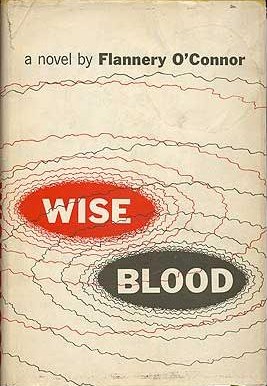
A close examination of O’Connor’s first novel, Wise Blood, offers another approach—namely, that what contributes to the endurance of O’Connor’s work is a deep-seated understanding of telos, our ultimate end, our final purpose. For Aristotle, the human telos was eudaimonia—a Greek term meaning living well or living in alignment with one’s true purpose. For O’Connor, a devout lifelong Catholic, this could only mean union with the Lord.
In the author’s note to the second edition of Wise Blood, O’Connor writes that to her mind, her protagonist’s integrity lies in his not being able to “get rid of the ragged figure who moves from tree to tree in the back of his mind”—that is, he cannot rid himself of Christ, of his offer of mercy and grace. And Hazel Motes certainly does try: He engages with a prostitute, kills a man, preaches the Church Without Christ, blinds himself. Nothing yields the result he thinks he wants. “Freedom cannot be conceived of simply,” O’Connor writes. “It is a mystery and one which a novel, even a comic novel, can only deepen.”
Introducing Hazel Motes
From its first line, Wise Blood is concerned with direction. We meet Hazel Motes sitting “at a forward angle on the green plush train seat, looking one minute at the window as if he might want to jump out of it, and the next down the aisle at the other end of the car.” He is simultaneously in motion and undecided as to where he’s going. Perhaps many of us could say the same of ourselves.
O’Connor excelled at showing people as they really are—that is, unaware of the state of their souls.
Surely the end of the car seems the better choice. Yet we learn that when Hazel boarded the train, the porter, standing between two cars, had directed him—first with a gesture and then verbally—to go left. The scene evokes the image of the final judgement in Matthew 25, when the Son of Man will separate souls as a shepherd separates sheep from goats, the former on his right, the latter on his left. The sense of memento mori is deepened by an observation by the woman across the aisle from Hazel. Upon inspecting Hazel, she finds, “The outline of a skull under his skin was plain and insistent.”
If not for the introductory note, a reader might be inclined to think Hazel’s fate is decided in these first pages. “You might as well go one place as another,” Hazel tells the woman. But time and again, we see that he doesn’t really believe this. While the woman notices the skull, it is his eyes that “held her attention longest. . . . They seemed, to her, almost like passages leading somewhere.” Hazel, like all of us, does have a final destination, just as the train he’s riding on does. We are each free to choose where that will be.
The Impossibility of a Life Without Christ
Though Hazel “knew by the time he was twelve years old that he was going to be a preacher,” his experience in the army created a desire “to be converted to nothing.” His belief is not strong enough to hold up on its own, and so he is determined to win others to his side. He doesn’t know it yet, but the masses will never turn to him.
While still on the train, Hazel tells another passenger he doesn’t believe in Jesus and wouldn’t “even if He existed. Even if He was on this train.” When she replies, “Who said you had to?” Hazel recoils and has nothing more to say. If she doesn’t care what he believes—if no one else cares—then Hazel will be left with no one but himself when all is said and done. The thought is paralyzing.
Hazel recalls the deaths of his immediate family as he lies in a berth that feels like a coffin, with only the smallest bit of light coming through. Suddenly, the confrontation with his mortality overwhelms him, and he calls for Jesus. The porter, standing motionless, tells Hazel, “Jesus been gone a long time.” This should be what Hazel wants to hear, but spoken in a “sour triumphant voice,” the words are chilling.
Can You Deny Your Soul?
Essentially the first thing Hazel does when he arrives in Taulkinham is visit a prostitute, not for pleasure but to prove he doesn’t have a soul. En route, Hazel’s taxi driver mistakes him for a preacher, citing his hat—“a stiff black broad-brimmed hat, . . . a hat that an elderly country preacher would wear”—and “a look in your face somewheres.” Hazel is adamant that he is not a preacher; the hat is no more than a hat. In saying so, he “[tilts] the hat over one eye.” A moment later, he “[knocks] the hat accidentally straight again,” suggesting that whatever seed of faith or hope that once existed within him cannot so easily be brushed aside. What’s more, at a junction earlier that day, “his hat had blown away and he had had to run in the other direction to save the hat.” The hat—and whatever exactly it represents—means more to him than he is willing to admit.
Over the course of the novel, Hazel fails to convince himself that he doesn’t have a soul, and the knowledge effectively destroys him. Whatever the taxi driver recognized in Hazel’s face, Hazel cannot escape. He dies on the penultimate page, though neither the police officers with him nor the landlady on whose bed they lay him notice. Again, and for the last time, the state of his soul is irrelevant to those around him, and yet still worth space in the novel.
Left with Hazel’s body and up close to his face, the landlady declares, “I see you’ve come home!” Has he? What does “home” mean for Hazel? The last time Hazel left the house, she asked whether he was planning to find somewhere else to stay. He told her that wasn’t where he was going, “There’s no other house nor no other city.” There was nothing he could do for himself that would lead him where he wanted to go.
As she realizes he’s dead, we see his skull and his eyes again: “The outline of a skull was plain under his skin and the deep burned eye sockets seemed to lead into the dark tunnel where he had disappeared.” Hazel tried and failed as a preacher. He converted no one. The only thing he succeeded at, if you can call it that, was blinding himself—a task another would-be preacher botched on himself.
And yet something has changed in Hazel. There is the possibility that he’s reached the point of surrender. “[His] suit that had been glare-blue when it was bought was a softer shade now.” He doesn’t have that stiff, broad-brimmed hat anymore. The one he wears now is the color of wheat.
A Mentor’s Admiration
Wise Blood marked the start of a mentor-friendship between O’Connor and novelist Caroline Gordon that lasted until the end of O’Connor’s life. Asked by an editor friend to read a manuscript he was considering for publication, Gordon quickly recognized O’Connor’s talent, remarking, “I wish I had had as firm a grasp on my subject matter when I was her age!” She called O’Connor “a Catholic novelist with a real dramatic sense, one who relies more on her technique than her piety.” Years later, Gordon would write to O’Connor that in addition to her ear for “the rhythms of colloquial speech . . . what Yeats called the primitive ear . . . you have another kind of ear, one that is attuned to—shall we say the music of the spheres? It is attuned to that music or you would not choose the subjects you choose.”
Gordon, then a recent convert to Catholicism, was an effective mentor for O’Connor—firm, but encouraging; honest, and willing to admit when her solution wasn’t quite right—because she was equally interested in the “music of the spheres.” “There is only one plot,” Gordon wrote to O’Connor more than once, “The Scheme of Redemption. All other plots, if they are any good, are splinters off this basic plot. There is only one author: The HG [Holy Ghost].”
Gordon wrote that she was converted by reading the Gospels, but also in part by her own work. “I have lived most of my life on the evidence of things not seen—what else is writing a novel but that?—and my work has progressed slowly and steadily in one direction.”
Ask Me How I Know

A similar case could be made for Tom Claiborne, the protagonist of The Malefactors, Gordon’s first novel after coming into the Church. Semi-autobiographical (Claiborne is modeled, to some extent, on Gordon’s husband, Allen Tate), the novel examines what remains of a group of literati, who spent their younger years in worldly pursuits. Now Tom and his wife, Vera, have come to occupy Blencker’s Bridge, an estate which they anticipated would resemble a kind of Eden but has fallen short of Claiborne’s expectations.
The novel opens with Claiborne reluctant to get out of bed. He and his wife are throwing a party—every day is a party at Blencker’s Bridge—and though he’s promised to get up early, he hasn’t slept well. All around, things are far from perfect. Brokenness pervades their crew. One man committed suicide. Claiborne’s cousin’s ex-wife, Catherine (who at one point attempted alchemy), joined a religious community after she left her husband.
Living Rightly
Owing to Vera’s interest in farming, the party features a presentation by a man who encourages artificial insemination in cattle. “It’s against Nature,” an older man protests. “Cattle have got their nature, same as a man’s got his nature. It’s up to a man to respect it. . . . A man has got to live according to Nature—if he lives right.” If this seems to come out of left field, it’s because the day feels scattered. Many of the pieces don’t seem to fit together. This is, indeed, how Claiborne is experiencing life at middle age.
The party prompts Claiborne to reconsider his relationship with George, his first cousin, who is more like a brother. George has relinquished his artistic dreams and found stable work, while Claiborne hasn’t been able to write more than a few lines in years. He hasn’t admitted this to anyone, not even Vera, but “Walking beside him now, [Claiborne] realized that he had always thought of George’s life as, in some sort, a makeshift compared to his own. . . . But a moment ago, [George] had looked at his cousin with eyes full of pity. It did not use to be like that, Claiborne told himself bitterly. Now anybody—everybody if they only knew it—can pity me!”
Hearing Voices
Before the party leads to Claiborne having an affair with his wife’s cousin, he takes Catherine, whom he hasn’t seen in some time, to view a statue on the grounds. In the course of conversation, Catherine tells Claiborne she’d been meaning to thank him. For what, Claiborne is clueless. Catherine recalls that when he told her she “had no talent for writing” and she asked what she ought to do, he said, “Anything! Get drunk. Join the Church.” She’d been reading the Church Fathers, but she confesses, “I had never realized that what they said applied to me—until that day.” She’d begun her formation the next day, albeit with a “terrible hangover.”
Claiborne is not comforted. He believes she ought to feel more remorse for leaving George. She answers that she prays every day and had been “praying to St. Ciannic [whose statue they sought] this afternoon.” This means little to him. Still, when she turns to look at him, “again that feeling of being immersed, of being slowly lifted and borne forward on a powerful, smoothly rolling tide came over him.” He rejects the idea of petitioning “an old man who lived in the depths of a Celtic forest seven hundred years ago.” Catherine is resolute: “‘He is more alive today than I am,’ she said.”
Never Really Alone
Claiborne is not ready to admit it, but he too has had some experience with the supernatural. Now and then the voice of “someone who seemed to stand always a little behind him” presses on him, some cross between Jiminy Cricket and a psychiatrist, asking him to consider the judgments and decisions he’s making. “It was always one voice,” he muses. Alone in his room, Claiborne reaches out to the voice: “‘I am in a bad way,’ he whispered. . . . ‘Can’t you see that I am in a very bad way?’” But there is no answer. “When could there be any answer?” the text asks.
The affair is further complicated by Vera’s cousin manipulating their relationship to advance her own literary career. Claiborne has moved out of Blencker’s Bridge and into the city. He has found work to support himself. There is hope that the accountability his editorship will demand of him will do him some good—until George shares news of Vera’s attempted suicide.
Without hesitation, Claiborne goes to her at the Catholic farm where Vera has taken residence. Claiborne had called Vera’s work at home “phony farming.” He thinks he knows “the real thing,” not from doing the work himself but from what he witnessed at his family’s home as a child. “A woman has got to tend something,” George says. “And she hasn’t got any children.” Claiborne “never thought about her wanting a child.”
“‘No,’ George said, ‘no, I don’t suppose you ever did.’”
Someone to Tend To
Vera is caring for a child without a larynx and an elderly man who has already had two strokes. She has found something to tend to. She is willing to speak to Claiborne, though it is not what she says that strikes him but rather how she looks at him. “It is her eyes, he thought. I was always afraid of them, of that straight look that asked more than I could give. . . . I did not know what it would be like to have her look at me and ask nothing.” All he can do for her now is to go away, but where, he doesn’t know.
The urgency in Claiborne’s action is an indication of his willingness to surrender to an order that is not of his own making.
She asks him to go back “wherever [he] came from.” He’ll go, he says, but “Not to where I came from.” As with Catherine, he tells her to “Have a religious conversion,” to which she replies, “I think maybe I have had it!”
Two women now have taken Claiborne’s words to heart, insincere as they were. He doesn’t want to hear a priest’s (mistakenly inverted) suggestion that he remind Vera about wives being subject to their husbands as Christ is subject to his Church. “I’m not in a position to make highfalutin statements like that,” he says. Catherine reminds him of it as well, once he goes back to the city, finds himself restless in his borrowed apartment, and at the inspiration of a dream, comes to her for help. Claiborne thinks this concept doesn’t apply to them; neither is Catholic.
Here, he is wrong. Catherine reveals that Vera was baptized as a child. “I didn’t know that,” Claiborne says. “I didn’t know anything.” He recalls Vera praying in a church, and understands there was more happening in that moment than he could see. Perhaps there was more going on all along than he had eyes to see. Vera “had been subject even in her secret.”
Final Destination
“Even with fast driving he could not get [to the farm] before eleven o’clock,” but Claiborne does not wait to begin his journey. The older man at the party was on to something: “A man has got to live according to Nature—if he lives right.” The urgency in Claiborne’s action is an indication of his willingness to surrender to an order that is not of his own making. Whenever he arrives, he knows that “drunk or sober, the old priest would hear him knock and would get up and let him in. He could sleep in the hay if there was no bed. He could be sitting there on the bench with the other bums when she came down in the morning.”
This profound reversal from Claiborne’s struggle to get out of bed is evidence of a change from pride to humility, from fear to hope. His revelation is, to some extent, the opposite of Hazel’s. Claiborne’s discovery that he has a soul when he was nearly convinced he didn’t opens a new kind of life up to him. His marriage could be happy. He and Vera might have a kind of family. They could live not for this world but for something greater, for Someone who is always beside them, not waiting to judge but anxious to love, to pour out mercy and grace, and to lead them home. This is the kind of life in which the Voice would answer when they called.
As for who this kind of life is made for, the priest at the end of the novel puts it this way: “It’s hard to tell who’s in the flock and who isn’t.” Like Claiborne, we can go decades without knowing what’s inside even those we are closest to—without knowing what’s really inside ourselves. The less we try to control our lives and the more we submit to the natural order of things, the closer we will come to the telos for which we were created.