
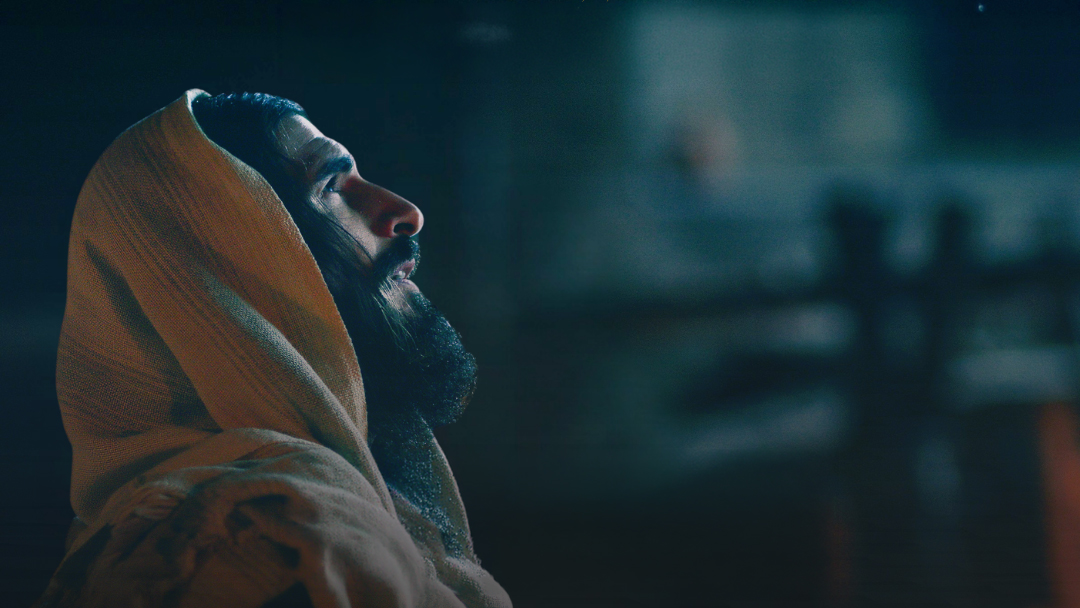
On the night before he died, Jesus prayed, no less than three times, that his followers may all be one—completely one, as he and the Father are one (John 17:20–23). The world’s conversion to him, he proclaimed, depended on it.
And for the first thousand years of Christianity, the faithful were indeed united. There were heresies and divisions, of course, but there was only one Church—a single flock with a single shepherd and a single leadership structure.
But with the Great East-West Schism of 1054, followed by the Protestant Reformation of the sixteenth century, that precious and precarious gift of unity imploded. Today, there are, by conservative estimates, over nine thousand denominations. Division is the rule, fragmentation the reality.
Is Christian unity possible once again?
This is the question at the heart of That They May Be One, a galvanizing new documentary hitting theaters May 19 and 20. Executive produced by Adriana Gonzalez of Flourish Your Faith Ministries, the film features charismatic Christians, both Catholic and Protestant—Cardinal Raniero Cantalamessa, Francis Chan, Mary Healy, Randy Clark, and others—reflecting on Christ’s call to unity and some of the remarkable efforts to answer it over the past two hundred years.
The film, which was initially inspired by Healy’s wonderful 2020 talk on Christian unity, blends interviews and dramatic reenactments. (Of these latter, the most impressive is the Pentecost sequence—a beautiful slow-motion portrayal of the descent of the Holy Spirit in wind and fire.) Gonzalez also reflects on her own journey into the charismatic world and the pursuit of Christian unity. But the heart of the film is a fascinating historical through line, one that will come as news—and a surprise—to many.
The story begins with an Italian nun named St. Elena Guerra (canonized in 2024 by Pope Francis) with a deep devotion to the Holy Spirit. Toward the end of the nineteenth century, St. Elena wrote a series of letters to Pope Leo XIII, entreating him to promote a renewal of the Church in the power of the Holy Spirit. This Leo did, enthusiastically: He penned an encyclical on the Holy Spirit (Divinum Illud Munus in 1897), which established a novena to the Spirit between the Feast of the Ascension and Pentecost. Then, on January 1, 1901, Leo consecrated the twentieth century to the Third Person of the Trinity with a singing of the ancient hymn Veni Creator Spiritus in St. Peter’s Basilica.
On the very same day that Leo sang this hymn, a young woman named Agnes Ozman, studying Scripture under Charles Parham in Topeka, Kansas, experienced at a prayer gathering what charismatics call a “baptism of the Holy Spirit”—not a sacrament or alternative to the sacrament but a sudden immersion into the divine Comforter. Ozman found herself joyfully speaking in tongues, sensing the “depth and presence of the Lord” in a powerful new way. Five years later, another student of Parham’s, William J. Seymour, inaugurated the Azusa Street Revival in Los Angeles, a three-year movement of prayer, song, and healing. And with that, the Pentecostal movement was born.
This charismatic energy, Gonzalez shows us, eventually came back full circle to the Catholic Church. In 1967, a group of students gathered at The Ark and The Dove retreat center at Duquesne University sang the Veni Creator and experienced an outpouring of the Holy Spirit. This was the beginning of the Catholic charismatic renewal, which has found enthusiastic support from the hierarchy of the Church. These various pneumatic events of the twentieth century, happening all across the Christian spectrum and all over the world, were, David Cole argues, “one big event”: “It’s the Holy Spirit coming to all of us, and giving us spiritual eyes to see each other.”
Christian unity will never be the work of human effort alone; rather, it will be a work of the Spirit that unfolds in the Spirit.
Thus, hand in hand with the charismatic renewal was a growing passion for ecumenism. The “Duquesne Weekend” arrived right on the heels of the Second Vatican Council, whose decree on ecumenism, Unitatis Redintegratio, spoke of non-Catholic Christians as “separated brethren” and underscored the “sacramental bond of unity” shared by Christians through baptism—an “imperfect” but still very real communion in the Spirit.
Ecumenism in America arguably reached its high-water mark in 1977 with an interdenominational gathering of fifty thousand Christians at Arrowhead Stadium in Kansas City. At this conference—which opens the film—Ralph Martin, one of the leaders of the Catholic charismatic renewal, prophetically channeled a lament from the Father to the Christian world: “The body of my Son is broken.”
Yet after this conference, Martin notes in the film, “There was a pulling back from being together.” Indeed, while there continues to be, in general, prayer for unity and goodwill on all sides, ecumenism seems to have stalled out and stagnated. In an article for the National Catholic Register, Fr. Raymond de Souza goes so far as to argue that “there is more pretending now than actual progress,” and that—in light of new divisions within the Anglican and Orthodox communities—“2025 was the year Christian unity died.”
Yet Christians are a people of resurrection hope, and That They May Be One is a radiant sign of new life. Particularly noteworthy is the ecumenical work of Francis Chan, an Evangelical pastor who participated in a Catholic charismatic event in 2018 and in 2020 made waves with comments about the Eucharist and Christian unity. Chan has since written about unity and continued to be one of its most public and compelling advocates. Unity in Christ wasn’t always a priority, he admits in the film; on the contrary, he had had a narrow, exclusionary mindset toward other believers. But it was Scripture that convicted him of its centrality: “This is what he died for,” he says in the film, “and this is what grieves him, the disunity in the body.”
There are other signs of life too: The ascendancy of Leo XIV—who not only took on the name of Leo XIII but has also made unity one of the chief themes of his first year as pope—is striking. And these “interesting times” are crackling with spiritual energy: Secularism has caved in on itself, yielding increasingly dysfunctional and destructive tendencies; meanwhile, a Christian revival is apparently sweeping the Western world, with a dramatic increase in Bible sales, church attendance, and conversions.
But how might a “New Pentecost” come about? And how can we avoid stagnating a second time, pressing forward to the tangible realization of Jesus’s great prayer?
That They May Be One leaves us with two necessary conditions, one divine and the other human. The first, the divine condition, is the presence of the Holy Spirit. Unity and the Spirit—as St. Paul makes clear again and again in his letters—go hand in hand. (Indeed, Leo XIII’s encyclical on the Holy Spirit was preceded, in the previous year, by one on the unity of the Church.) Christian unity will never be the work of human effort alone; rather, it will be a work of the Spirit that unfolds in the Spirit. Thus, Christians should pray for the Holy Spirit to come—for example, by reciting the Prayer to the Holy Spirit or singing the Veni Creator Spiritus. (Flourish Your Faith is also offering a novena before Pentecost featuring Chan, Healy, and other speakers.)
Yet the Spirit won’t unite us without us; human effort, too, remains a necessary condition. The film thus emphasizes our need simply to be together; as Matt Lozano puts it, this means “suffering difference, suffering tensions, suffering staying in relationship even when it’s difficult.” And that suffering, in turn, takes great courage, humility, and patience—a willingness to undergo the painful transformations of grace that overcome our own prejudices, smugness, and self-love. In a word: holiness.
Without disagreeing with either of those things—and most Christians would welcome them, at least in principle—the concrete pathway to unity can be difficult to discern. (Pope Leo made precisely this point in his recent remarks to Sarah Mullally, the new Archbishop of Canterbury.) There are deep, complex institutional and historical differences in play, and there are sharp theological disagreements on fundamental tenets—mutually exclusive claims about Christ and the Church that, no matter how much goodwill we bring to the table, can never coexist. From the Catholic perspective, the Church suffers all kinds of tensions about fine points of theology—a splendid “unity-in-diversity,” as Healy notes, not “uniformity”—but it can’t suffer tensions over its central teachings or teaching authority. To do so would be to trade in our inheritance for a mess of pottage.
Thus, while what kick-started the ecumenical movement of the twentieth century—a renewal in the Spirit—can and must continue, Christians also have to grow, together, in “the Spirit of truth” (John 14:17, 15:26, 16:13). Our minds, in short, have to catch up with our hearts. This refinement will burn away dross in every direction—and it, too, will be painful. If simply being together after centuries of internecine warfare was difficult enough, thinking together—which will first require speaking, as it were, in theological tongues—will seem downright impossible. But it’s not—and the Joint Declaration on Justification between Catholics and Lutherans is a prime example. These kinds of intellectual and theological bridges have to be built, and it will require, again, both an outpouring of the Spirit and heroic human effort, such that we can say, with the early Church, “It has seemed good to the Holy Spirit and to us” (Acts 15:28).
Full, visible, doctrinal unity of all Christians can’t be treated as a “side issue,” because—as Gonzalez says in the film—“it wasn’t a side issue to Jesus.” And Catholics, given our own theological and ecclesial identity, can’t take the back seat; on the contrary, we have to take the lead, holding fast to what we must but stretching ourselves, acrobatically, where we can.
All the sacrifice will be worth it—not only because it’s what Christ, who only has our good and our joy in mind, commands of us but also because the implications of such a “New Pentecost” for evangelization will be staggering. Jesus, as Gonzalez beautifully reminds us, came to cast fire on the earth (Luke 12:49). That fire is the fire of the Spirit, a Spirit of unity drawing together all peoples (Eph 4:3, 2:14), and indeed all things in heaven and earth (Eph 1:10; Col 1:20).
Come, Holy Spirit! Lord, bring us to unity in your Church!
Find a theater and buy tickets for That They May Be One, in theaters May 19 and 20, at Fathom Entertainment.