
The College Beat: Article I
. . .
Mom was terminal.
It was late August 2022: the week I was supposed to leave for my freshman year of college. Instead, my family had received a devastating diagnosis. Cancer. Not long left.
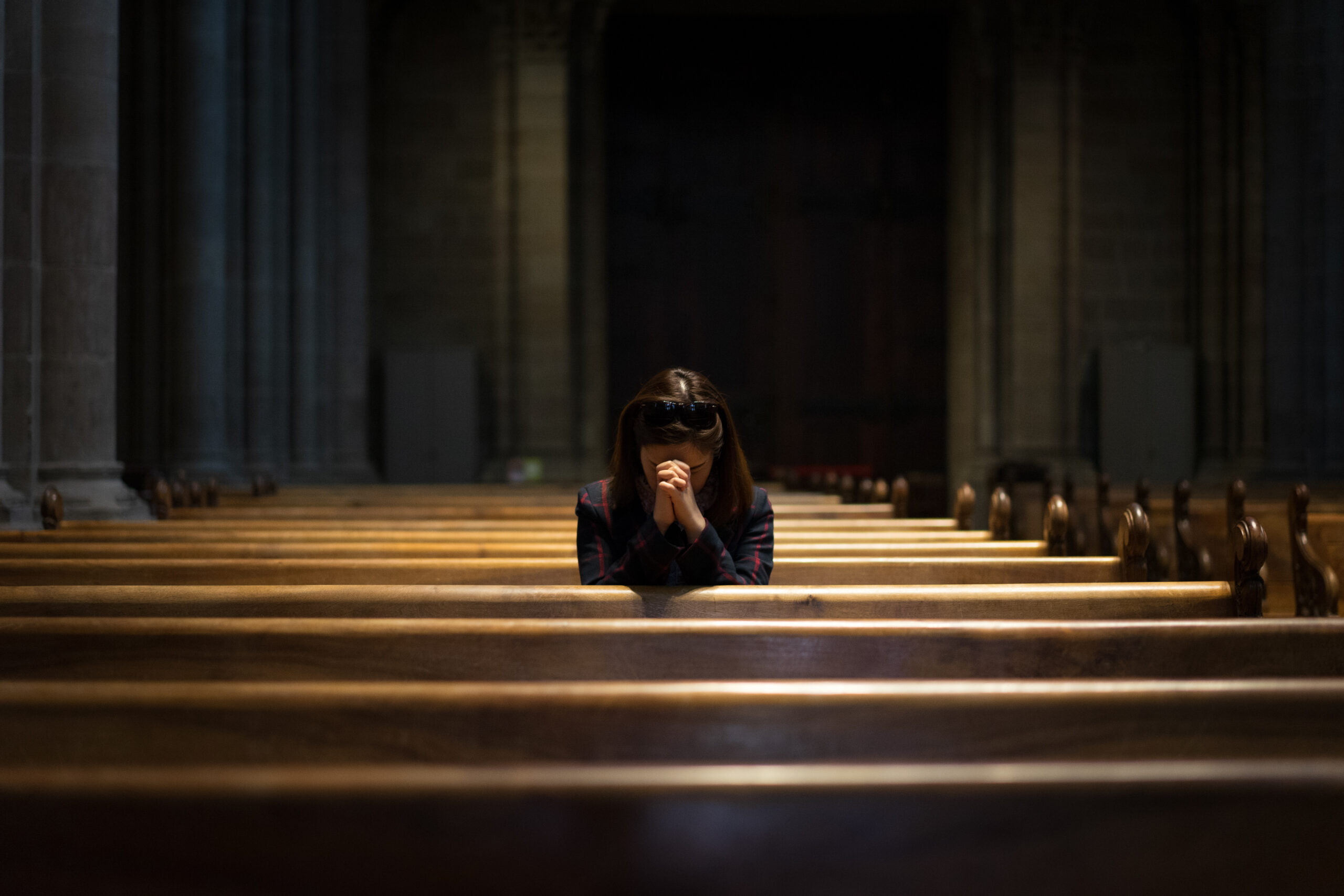
The first thing I thought to do was call my then-boyfriend, now-fiancé and ask him to meet me at the perpetual Adoration chapel near my house. He dropped everything, no questions asked.
She died just days later; her funeral was the day of my parents’ twentieth wedding anniversary.
Suffice it to say freshman year was not normal. I missed freshman orientation for her funeral and spent my first two days navigating our laughably tiny college campus with a paper map. I wasn’t just lost physically. Emotionally, I was in survival mode, trying to make friends and attend classes like any normal freshman without anything being normal about my interior life.
Though I was raised in the faith, it might have been understandable if I had stepped away then. Catholicism was hard. Prayer rarely gave me emotional satisfaction—more often than not, it felt more painful than simply ignoring God. Nor did I get a free pass from the rules or a get-out-of-jail-free card for my difficulties.
But faced with the question, “Why stay Catholic?” I felt like answering as Peter did.
“Master, to whom shall we go? You have the words of eternal life” (John 6:68).
The heavier my present life felt, the more easily I could recognize a greater reality at work.
College life was everything I hoped it would be. I had fantastic classes, a community of supportive friends, and a devoted boyfriend. Yet nothing and no one could fill the hole in my heart the way the faith did.
The Church gave me a home when my mother’s absence made my earthly home feel empty. It offered eternity when I grasped just how finite this life is. Most of all, it gave my suffering meaning. The heavier my present life felt, the more easily I could recognize a greater reality at work.
Through this cross, Catholicism grew exponentially more real to me.
Suffering can either pull you into yourself or out of yourself. An easy and natural reaction to my mother’s death would have been to develop a victim complex, seeking pity for the hardship—and in time, maintaining my sense of victimhood while lamenting the fact that no one understood how I felt. Not only am I inclined by temperament to that attitude but it also seems the default mindset with which our culture encourages young people to respond to difficulties. But this slippery slope sooner or later plants you at the very center of the universe—a hell of your own creation.
But the Church offers a different way.
One glance at the crucifix and I could not pretend that I was the only one who had ever suffered deeply. My grief paled in comparison to the weight Christ bore innocently and willingly. He beckoned me to unite my suffering to his own, and in time to learn what it meant to suffer redemptively. My favorite saint, Josemaría Escrivá, puts it so well: “The great Christian revolution has been to convert pain into fruitful suffering and to turn a bad thing into something good. We have deprived the devil of this weapon; and with it we conquer eternity.”
The Church offered me compassion, while also showing me that the only way to become more holy from my grief was to grow out of myself. Life wasn’t about me—at least in the sense that it wasn’t about my comfort, emotional satisfaction, or the fulfillment of the path I had imagined for myself. It was about my holiness, and our Lord was inviting me to see this new cross as a means of growing in the holiness I needed.
Very little of this is the fruit of my own thought. The time I spent with our Lord in Adoration and the Mass gave me insights—and just pure love—I could never have come to on my own. I also had a very wise and sensitive spiritual director, who himself had lost a brother when he was a young man.
Now, three years later, although the loss is no longer so immediate, I still feel how deeply I need the faith. Knowing that you need to grow out of yourself is one thing. Actually doing so is quite another. Without the grace of regular confession and spiritual guidance, I don’t know where I would be. Every time, without fail, our Lord shakes me out of my ways and gives me mercy I do not deserve.
I am not the saint I wish I was already, but my mother’s life and death left me an incredibly concrete example of what it means to become holy in the modern world. I saw her struggle. But I also saw her sustained by hope, even when that meant hoping in the midst of hopelessness. Love took the shape of a cross in her life; I strive to live the same way.