
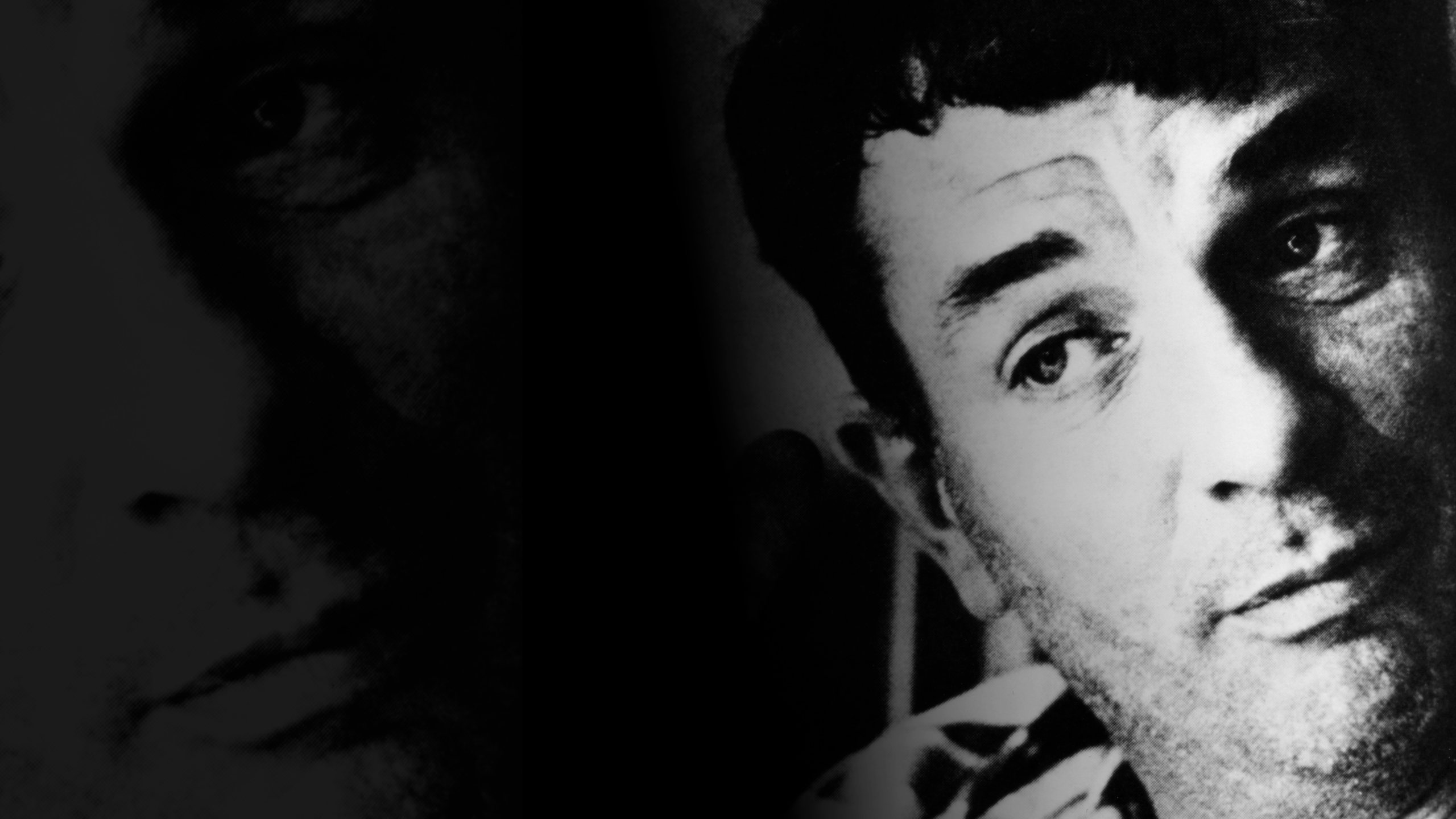
“I’m not a beatnik. I’m a Catholic.”
—Jack Kerouac
Jack Kerouac is undoubtedly one of the most influential and important writers of the twentieth century. His work exploded into the American consciousness with the same freedom and ecstasy as a Charlie Parker saxophone solo. He came to define the “Beat Generation,” and his work, most notably On The Road, changed the course of prose and poetry for decades to come. Whilst he will forever be revered as a major figure in the development of 1960s counterculture, he always identified as a social and political conservative informed by his lifelong love for Catholicism. I’d like to share some insights into Kerouac’s biography, work, and devotion to the Catholic Church and her advocacy for life, beauty, and art as a road to God.
Jack Kerouac was born in Lowell, Massachusetts, in 1922 to French-Canadian parents. His older brother, Gerard, died in 1926 of rheumatic fever at the tender age of nine. This tragedy left an enduring impression on four-year-old Jack, who was later convinced Gerard became his guardian angel. After Gerard’s death, Kerouac’s mother deeply embraced Catholicism whilst his father retreated into alcoholism, foreshadowing the path their son would later follow, torn between spiritual yearning and hedonistic excess.
Kerouac had a profound dedication to his mother. In an interview with Ben Hecht in 1958, he was asked, “Who is it you love in the world, Jack?” Without hesitation Kerouac responded, “My mother.” His love for her ran deep, and she became not only his confidant and anchor but his spiritual guide, expressing in Old Angel Midnight (1973), “I’m my mother’s son and my mother is the universe.”
The young Kerouac made his first confession in 1928, and during penance he had a vision of Christ, who expressed to him that he “had a good soul but would suffer in life and die in pain and horror, but in the end would receive salvation.” One of his earliest mentors was the Lowell parish priest, Fr. “Spike” Morissette, who encouraged him to write during his adolescence. From this point on, Kerouac’s Catholicism was set in his heart for the rest of his life.
Kerouac himself personified the inherent contradiction of the Beat Generation, being at once a Catholic Republican and hedonistic wanderer.
Jack Kerouac was an all-American boy in high school. He was athletic and was awarded scholarships for his sports prowess. It was the American transcendentalist Thoreau who inspired Kerouac to abandon college and to “live in the woods like Thoreau,” as in his famous work Walden. He eventually dropped out of Columbia University and lived in New York with his first wife. It was in New York that he met Allen Ginsberg, Neal Cassady, and William S. Burroughs, all who, with Kerouac, would become the leading figures in the new literary movement dubbed the “Beat Generation.”
Kerouac defined the term in the San Francisco Blues in 1954:
It’s the beat generation. It’s the begát. It’s the beat to keep. It’s the beat in the heart. It’s being beat and down in the world and like old time low down. And like an ancient civilization, the slave boatman rowing galleys to a beat.
He elaborated in a famous Playboy magazine interview in 1959:
I went one afternoon to the church of my childhood and had a vision of what I must have really meant with “Beat” . . . the vision of the word Beat as being to mean beatific. . . . People began to call themselves beatniks, beats, jazzniks, bopniks, bugniks and finally I was called the “avatar” of all this.
The term “beat” is derived from the Catholic concept of “beatitude.” The term was misinterpreted throughout Kerouac’s life, who was always adamant about its Catholic roots, explaining to fellow Catholic conservative William F. Buckley on his program Firing Line, “A lot of hoodlums and communists jumped on my back and turned the idea that I had. . . . The Beat Generation was about beatitude and pleasure in life and tenderness, but they called it in the papers ‘beat mutiny’ and ‘beat insurrection,’ words I never used, being a Catholic.” The concept was also heavily tied to the bebop jazz movement, which revolutionized music with its free-form improvisation, fast tempos, and complex chord progressions, exemplified by one of Kerouac’s artistic heroes, Charlie “Bird” Parker.
Kerouac situated the Beat Generation as worldly saints on the road of life seeking God through spirituality, poetry, drugs, music, and sex. Kerouac himself personified the inherent contradiction of the Beat Generation, being at once a Catholic Republican and hedonistic wanderer. This combination of sincere spiritual exploration and materialistic experimentation (through drugs, lived experience) led Kerouac and his cohort to the outer regions of the American imagination and to creating arguably some of the most influential literature of the twentieth century.
Before Kerouac sincerely set out on the literary path, he briefly joined the United States Navy in 1943 before he was honorably discharged for having schizoid personality disorder. While in the Navy, he composed his first novel, The Sea Is My Brother. He moved back in with his parents, who had moved from Lowell to Queens, and he wrote his first published novel: The Town and the City (1950). It was an autobiographical novel heavily influenced by Thomas Wolfe. Even though Kerouac hadn’t developed his now famous “spontaneous prose” method, the work contains early hints of the writer he was to become, at once immediate, luminous, and alive:
And what does the rain say at night in a small town, what does the rain have to say? Who walks beneath dripping melancholy branches listening to the rain? Who is there in the rain’s million-needled blurring splash, listening to the grave music of the rain at night, September rain, September rain, so dark and soft? Who is there listening to steady level roaring rain all around, brooding and listening and waiting, in the rain-washed, rain-twinkled dark of night?
Over the following six years, he developed the novel that would become his magnum opus, On The Road (1957). It’s a semi-autobiographical novel detailing his road trips with Neal Cassady across America and Mexico, along with interactions with Allen Ginsberg, William S. Burroughs, and various other people associated with the Beat movement. Each person is presented under a pseudonym in the novel, with Kerouac himself dubbed “Sal Paradise.” Famously, Kerouac wrote the final draft of On The Road in twenty days on a 120-foot roll of teletype paper he fed into his typewriter so he wouldn’t have to interrupt his subconscious mind. On The Road is an astonishing novel that came to define post–World War II America, the Beat Generation as a movement, and retrospectively has entered the elusive “Great American Novel” canon with the likes of Twain, Steinbeck, and Faulkner—company with whom the budding writer Kerouac longed to be associated.
The novel was sketched out over many years via notebooks and then written in what became Kerouac’s famous “spontaneous prose.” The late nineteenth-century philosopher William James used the metaphor of the “river” or “stream” for “the stream of thought, consciousness, or subjective life,” which became the bedrock for the term “stream of consciousness.” James’s language became the vocabulary to describe writers of the modernist movement like James Joyce, Virginia Woolf, and Marcel Proust, where the author intends to become a scribe of a character’s interior, subconscious monologue with minimal authorial mediation. Kerouac was heavily influenced by the modernist movement, in particular James Joyce and his technique in works like Ulysses (1922). Kerouac developed “spontaneous prose” as a direct heir, whilst incorporating the phrases and rhythm of jazz and bebop into the color and meter of the prose. The musicality, life, and beauty of the prose is accentuated when read aloud.
He later described what he perceived the novel to be about, always framing it within a Catholic context:
On The Road was really a story about two Catholic buddies roaming the country in search of God. And we found him. I found him in the sky, in Market Street San Francisco (those 2 visions), and Dean (Neal) had God sweating out of his forehead all the way. THERE IS NO OTHER WAY OUT FOR THE HOLY MAN: HE MUST SWEAT FOR GOD. And once he has found Him, the Godhood of God is forever Established and really must not be spoken about.
On the surface, On The Road is a journey where the reader is taken upon a wild ride across America with two mad drunks, who do some crazy things and meet up with strange people. But the book ultimately points toward an internal pilgrimage between two Catholic men struggling to find meaning, purpose, and ultimately Christ in a modern world littered with sin, corruption, and temptation. At the book’s heart are the two characters Sal Paradise (Jack Kerouac) and Dean Moriarty (Neal Cassady). Sal Paradise is framed as a pilgrim on the road to discover meaning, purpose, and communion with people, music, beauty, and the American landscape more broadly. Whilst he engages in a sometimes misguided pursuit of pleasure and hedonistic escape, the fundamental drive appears to be a longing for something deeper. Sal Paradise often returns to his belief in traditional values, even though his life is anything but conventional:
I believed in a good home, in sane and sound living, in good food, good times, work, faith and hope. I have always believed in these things. It was with some amazement that I realized I was one of the few people in the world who really believed in these things without going around making a dull middle class philosophy out of it. I was suddenly left with nothing in my hands but a handful of crazy stars.
Dean Moriarty, on the other hand, is a character who resembles the holy fool, whose manic monologues, infidelity, and general abandon portray a man whose spirit burns for love and presence but lacks the ability to follow what his heart ultimately yearns for. Sal gives us an insight into Dean’s character:
Then a complete silence fell over everybody; where once Dean would have talked his way out, he now fell silent himself, but standing in front of everybody, ragged and broken and idiotic, right under the lightbulbs, his bony mad face covered with sweat and throbbing veins, saying, “Yes, yes, yes,” as though tremendous revelations were pouring into him all the time now, and I am convinced they were, and the others suspected as much and were frightened. He was BEAT—the root, the soul of Beatific. What was he knowing?
They are both deeply human—perhaps more precisely, youthfully Augustinian—characters who share a strong spiritual longing, yet don’t have the discipline, humility, and order to commit to God. Both characters in a perhaps consciously (Paradise/Kerouac) or seemingly subconsciously (Moriarty/Cassady) seek sainthood and are haunted by their inability to turn away from sin and fully give themselves over to Christ and his Church. Creation acts as an omnipresent witness throughout the novel, being a source of spiritual connection and sacramental communion for the two characters, as Sal ponders the mountain, the desert, and the American landscape:
All in darkness now as we fumed and screamed in our mountain nook, mad drunken Americans in the mighty land. We were on the roof of America and all we could do was yell, I guess—across the night, eastward over the Plains, where somewhere an old man with white hair was probably walking toward us with the Word, and would arrive any minute and make us silent.
On The Road was met with mixed reviews, with some praising and others criticizing its experimental style and themes. An early advocate for the book was New York Times reviewer Gilbert Millstein, who wrote in 1957, “[On The Road] is a historic occasion in so far as the exposure of an authentic work of art is of any great moment in an age in which the attention is fragmented and the sensibilities are blunted by the superlatives of fashion. . . . There are sections of On the Road in which the writing is of an almost breathtaking beauty.” The book went on to become the most influential work of Kerouac’s career and came to define the Beat Generation as a literary and cultural movement, not only in the margins of the American underground but all over the world.
For all his humanity, Jack Kerouac’s Catholic faith was the beating heart of his work and life.
Kerouac went on to notably write and publish The Dharma Bums (1958), Doctor Sax (1959), Big Sur (1962), and Desolation Angels (1965), along with various other novels and poetry books. Perhaps echoing Thomas Merton, Kerouac started to incorporate his interest in Buddhism (particularly Zen) into his writing. Maybe the most profound example is the long poetic work called The Scripture of The Golden Eternity (1960). His preoccupation with God is clear:
One that is what is, the golden eternity, or, God, or, Tathagata—the name. The Named One. The human God. Sentient Godhood. Animate Divine. The Deified One. The Verified One. The Free One. The Liberator. The Still One. The settled One. The Established One. Golden Eternity. All is Well. The Empty One. The Ready One. The Quitter. The Sitter. The Justified One. The Happy One.
He goes on to reference St. Thérèse and St. Francis:
Love is all in all, said Sainte Therese, choosing Love for her vocation and pouring out her happiness, from her garden by the gate, with a gentle smile, pouring roses on the earth, so that the beggar in the thunderbolt received of the endless offering of her dark void. Man goes a-beggaring into nothingness. “Ignorance is the father, Habit-Energy is the Mother.” Opposites are not the same for the same reason they are the same. . . . A lot of large people isn’t really a lot of large people, it’s only the golden eternity. When St. Francis went to heaven he did not add to heaven nor detract from earth.
One of Kerouac’s most moving and profound works is Visions of Gerard, written from the perspective of his older brother, Gerard. It portrays Gerard as a saint who loves creation, and the novel is pregnant with Catholic imagery and is imbued with Kerouac’s signature, down-to-earth blend of the sacred and the profane. Perhaps this line beautifully sums up the novel: “[Life] is a vast ethereal movie, I’m an extra and Gerard is the hero and God is directing it from Heaven.”
Kerouac had an immense influence on the countercultural movement of the 1960s, with The Beatles, Patti Smith, Tom Waits, and The Doors all counting him as a major influence. The latter band’s keyboard player, Ray Manzarek, said in his autobiography, Light My Fire, “If Jack Kerouac hadn’t written On The Road, The Doors would never have existed.” Perhaps Kerouac had the biggest impact on Bob Dylan, who stated, “I read On The Road in maybe 1959. It changed my life like it changed everyone else’s.”
Even though Kerouac’s work became essential reading for the countercultural movement, paradoxically, Kerouac identified as a conservative and would repeatedly decry the communists, hippies, and anti-establishment figures who misappropriated his work for their own ends. Unfortunately, Kerouac’s lifelong alcoholism often undermined his poetic eloquence and the importance of his message.
In the short novella Satori in Paris (1966), Kerouac gives us a characteristically honest insight into his compulsion toward alcoholism: “My manners, abominable at times, can be sweet. As I grew older I became a drunk. Why? Because I like ecstasy of the mind. I’m a wretch. But I love, love.” Jack Kerouac died at the age of forty-seven in 1969 from internal hemorrhaging due to cirrhosis of the liver from his years of alcoholism. He had a Catholic funeral presided over by his childhood parish priest, Fr. Morissette, who shared a very intimate portrait of Jack:
He was always fascinated by the mysterious and religion. Later on in life, I told him he was drinking too much, and I said, “Well, Jack, are you not afraid of hell?” He replied, “I’m not concerned about hell; I’m concerned about heaven.” He said, “I have to be high, cause I have my inspiration” and all that. But he was like a monk—his bedroom, his home with his mother, was very, very simple. All he had was his bed, the chair, the desk, piles of paper, and his typewriter. Right over his desk was a big crucifix; he always had a devotion for the crucifix.
For all his humanity, Jack Kerouac’s Catholic faith was the beating heart of his work and life. Whilst his work will always be tied to counterculture, I think he would’ve liked to have been remembered as a Catholic artist in the tradition of fellow novelists Flannery O’Connor and Graham Greene. Like many teenagers exploring the music of Bob Dylan or Jim Morrison, I read On The Road at a formative time in my own artistic and intellectual development, with the vivid, beautiful, and ecstatic prose leaving an enduring impression. I’d like to leave you with a brief line from his work that always stayed with me over the years. It ties Kerouac’s earthy vision of life on the road with his unending search to discover and articulate God:
As we crossed the Colorado-Utah border I saw God in the sky in the form of huge gold sunburning clouds above the desert that seemed to point a finger at me and say, “Pass here and go on, you’re on the road to heaven.”
—Jack Kerouac, On The Road (1957)