
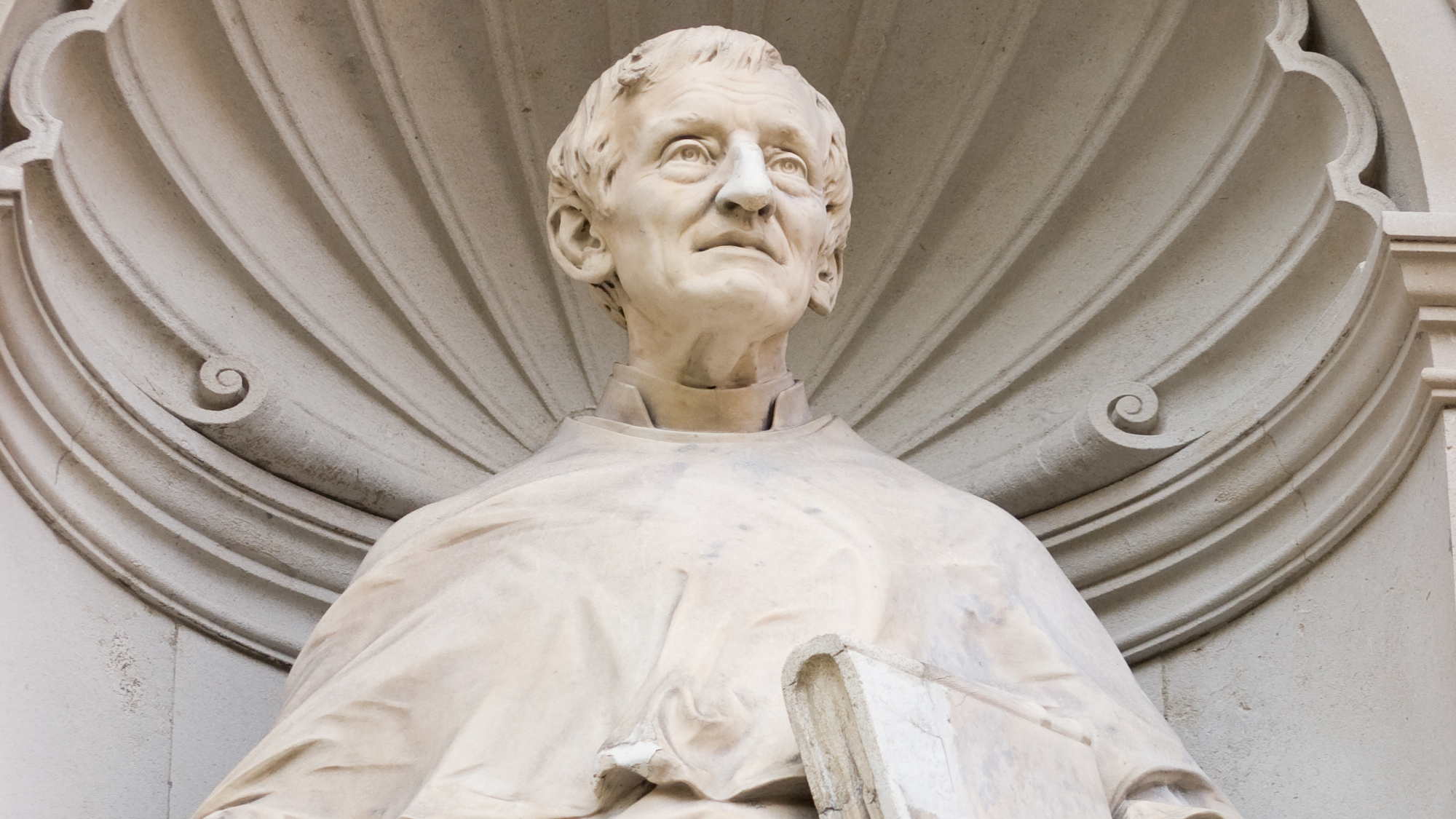
Upon the recent announcement at the end of July that Pope Leo XIV has given confirmation to the request that St. John Henry Newman, the most famous convert from Anglicanism and great writer and thinker of the nineteenth century, be named a Doctor of the Church, Catholic scholars and leaders among the laity have been called upon to summarize his great legacy. As for anyone worthy of the title “Doctor,” that legacy is tremendous. It includes not only his status as a famous convert who helped many others swim the Tiber by virtue of his polemics and by being a “master of the interior life” and a vocal lover of the Church’s beautiful, traditional liturgy but also his numerous books of theological importance concerning topics such as the development of doctrine (which, unfortunately, has been recently misunderstood in the life of the Church, despite the helpful clarifications that exist in both popular articles and academic books).
But something that should not be forgotten is his great involvement in Catholic education at the university level. As its first rector, he helped to build the Catholic University of Ireland, now University College Dublin, but before being offered that post, the interest of Irish Catholics occasioned one of his most important works: the lectures that became The Idea of a University. In those lectures, Newman, ever the universal thinker, did not seek to discuss first the particularities of Catholic education but what a university was in itself. While scholars have written a great deal about his understanding of knowledge as its own end, the limitation of liberal education in forming the gentleman but not the saint, less has been written on the issue most pertinent to universities in our day, Catholic and not—namely, the need for theology in the circle of the disciplines.
Newman saw that the disciplines in the university—from literature, philosophy, theology, and history to mathematics and the sciences—all participated in the search for truth, a truth which could not be one way in one discipline and another elsewhere but which was everywhere present. One of the primary goals of the university is providing a place where men and women of different tempers and intellectual formations can sharpen each other’s efforts in the search for truth. Theology has a particular role in such an endeavor.
Less than 10 percent of Catholic universities and colleges in the United States are faithfully Catholic in the classroom, the dorm room, and the board room.
With a correct understanding of what a university is, Newman argues, the exclusion of theology is nonsensical. As he writes at the end of discourse 2, “a University, I should lay down, by its very name professes to teach universal knowledge: Theology is surely a branch of knowledge: how then is it possible for it to profess all branches of knowledge, and yet to exclude from the subjects of its teaching one which, to say the least, is as important and as large as any of them?” Yet the danger of excluding theology from its rightful place in the university (and Newman is not speaking of only Catholic universities here) is not that theological matters will not be taught—especially because, as he writes, “revealed truth enters to a very great extent into the province of science, philosophy, and literature”—but that the other disciplines will usurp the role of theology, and the integrity of the other disciplines will dissipate, such that they will be corrupted.
On first glance, it may seem difficult to see how Newman’s claim applies today; on the one hand, secular, state-sponsored universities make no pretensions to teach theology, and there would be a media frenzy if any of the 181 colleges and universities that claim to be Catholic shut down their theology departments. Yet the irrationalism that has come to reign in much of contemporary academia—from the violence of recent campus protests to the plagiarism committed by major university presidents to the “cancellation” attempts (and successes) of professors or students who violate the leftist orthodoxy which makes up the common opinion of academics today—has theological origins.
The French postmodern critical theorist Jacques Derrida criticized the West for being “logocentric,” privileging rational argument and debate, especially through speech. This logocentricity depends on Christian metaphysics—namely, the idea that, as St. John puts it, “in the beginning was the Word (Logos), and the Word was with God, and the Word was God” (John 1:1). The knowledge of the second person of the Trinity as Word, revealed by Christ to his Church, provided further knowledge of the world; because the world was made by God the Word (“through whom all things were made,” as we profess in the Nicene Creed, following John 1:3), the world has an inherent logical order to it, such that it can be known, although not exhaustively, by rational agents, like humans and angels. Though Derrida would disagree in profound ways with the Enlightenment philosopher Immanuel Kant, his criticism here follows on what Kant had claimed about metaphysics—namely, that human beings cannot really know things as they are, only how they appear to us. While contemporary academics often dislike Derrida for not being as blatantly political as they would prefer, his anti-logos stance underpins their refusal to engage rationally with the minority of professors who disagree with their tactics, preferring to threaten their jobs instead.

This anti-logocentricity is foundational to the grievance studies (critical race theory, gender ideology, and others based on identity politics), which have by and large usurped the interdisciplinary role of theology in today’s universities when it comes to guiding university administrations and faculty by providing a moral narrative and first principles, particularly by appropriating (and occasionally rejecting) Christian theological language. As political theorist Joshua Mitchell has argued, “Identity politics does not simply parse different kinds of people. Identity politics is concerned with the relationship of transgression and innocence between different, purportedly monovalent, kinds of people. Identity politics is not just about who we are, it is about a moral stain or purity that defines who we are.” The doctrines of identity politics—a helpful list can be found here—have motivated such administrative actions as discriminatory diversity, equity, and inclusion (DEI) trainings (at historically high-profile Catholic universities, yes, but not only at universities), racial discrimination in faculty hiring (as well as the use of “diversity statements” to prioritize new hires who concur), and in affirmative action programs for student admission.
A point worth stressing is that Newman’s understanding of the university presupposes that the world is fundamentally intelligible and that as human beings, we are the kind of rational agents who are in the position to come to understand it, with great effort and through productive disagreements with others in community. But practitioners of identity politics, writes Michael Brendan Dougherty, interpret “disagreement as desecration and defilement.” The theological presuppositions of such “studies” are much less reasonable and humane than those of Christian theology. One thinks, for instance, of the great Summa theologiae of St. Thomas Aquinas, who spends so much effort carefully responding to the best versions of counterarguments against his own positions.
According to the Cardinal Newman Guide, published by the Cardinal Newman Society, less than 10 percent of Catholic universities and colleges in the United States are faithfully Catholic in the classroom, the dorm room, and the board room. The reasons why are legion: The reforms proposed by St. John Paul II in his apostolic constitution Ex Corde Ecclesiae (1990) were largely ignored by schools not on the Newman Guide list, such as the University of Notre Dame and Boston College, as such schools continued to follow the “Land o’ Lakes Statement,” which in 1967 argued that Catholic universities needed autonomy from their local bishops. Most such universities have used this “autonomy” to refound their academic and student life practices on the anti-logocentric foundation of the grievance studies, even allowing their theology departments to be ideologized, teaching feminist and queer theology rather than thinking with the mind and heart of the Church.
St. John Henry Newman is the academic Doctor that the Catholic Church in America needs today as faithful Catholics continue to work for reform in our universities. The first step to rectify the mistakes of the past is to understand them; our Catholic colleges and universities cannot be Christocentric without being logocentric.