
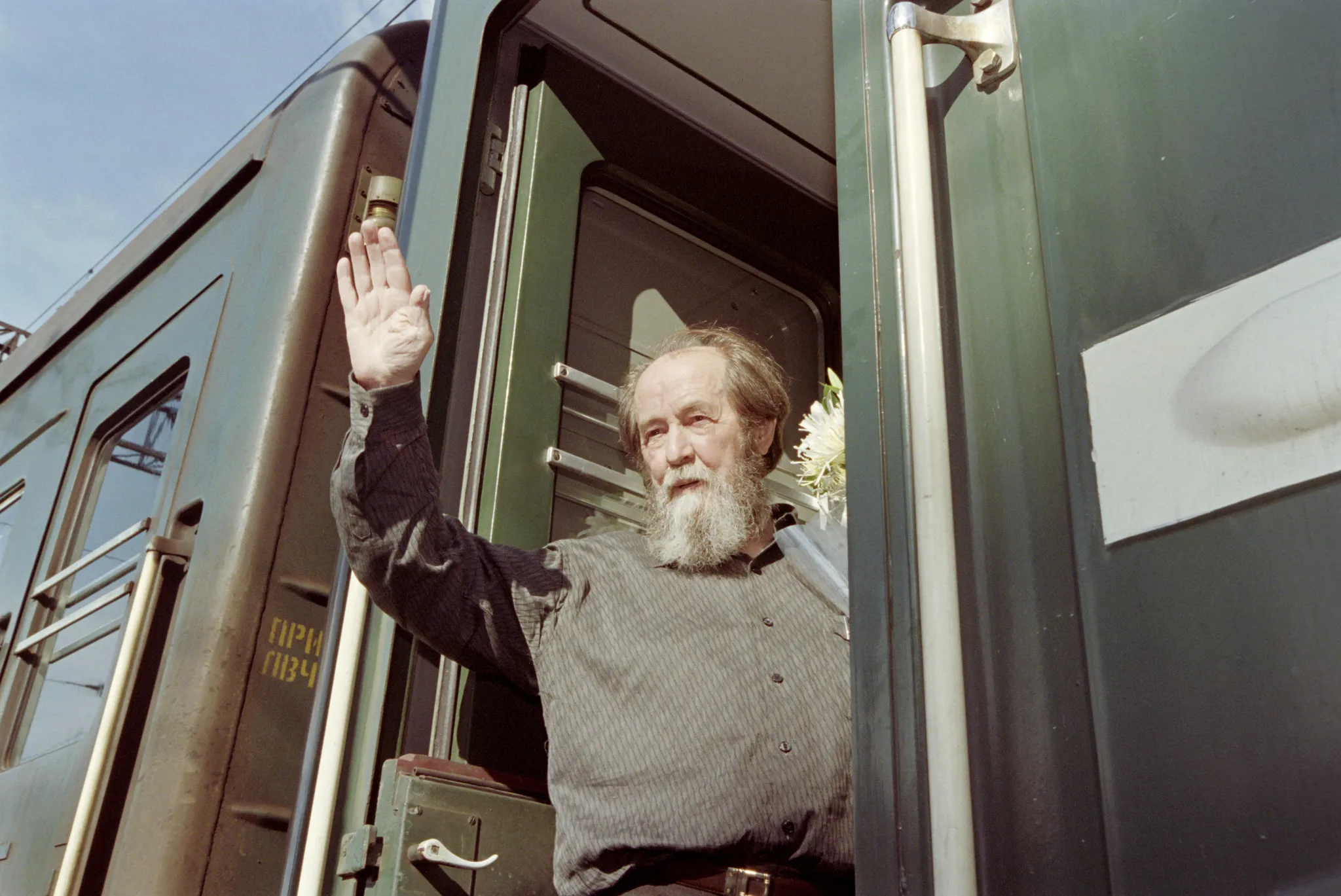
“Beauty will save the world.”
This claim, drawn from Fyodor Dostoevsky’s 1869 novel, The Idiot, served as the starting point for Aleksandr Solzhenitsyn’s acceptance speech for the 1970 Nobel Prize in Literature. In his speech, Solzhenitsyn referred to Dostoevsky’s statement as “enigmatic,” and he admitted that “for a long time,” he considered the statement to be nothing more than “mere words.” After all, he had asked himself, how could it be possible for beauty to save the world? “When in bloodthirsty history,” he had retorted, “did beauty ever save anyone from anything? Ennobled, uplifted, yes—but whom has it saved?”
But over the course of his life, Solzhenitsyn gained some insights into the saving power of beauty, and he shared some of those hard-won insights in his Nobel speech. He had gradually come to realize that in contemporary society, beauty is often more effective at touching the hearts and minds of people (and changing those hearts and minds) than are claims focused on goodness or truth:
So perhaps that ancient trinity of Truth, Goodness and Beauty is not simply an empty, faded formula as we thought in the days of our self-confident, materialistic youth? If the tops of these three trees converge, as the scholars maintained, but the too blatant, too direct stems of Truth and Goodness are crushed, cut down, not allowed through—then perhaps the fantastic, unpredictable, unexpected stems of Beauty will push through and soar TO THAT VERY SAME PLACE, and in so doing will fulfil the work of all three?
He was absolutely right about all of that. Some people these days become highly defensive when presented with any claims regarding goodness or truth. “Who are you,” some of them say, “to tell me what’s good?” Or else they echo (perhaps unwittingly, in the case of those who are biblically illiterate) those deeply cynical words of Pontius Pilate: “What is truth?” (John 18:38).
God, who is Beauty itself, has, in Jesus Christ, already saved the world.
Beauty, on the other hand, does not tend to raise such defenses for most people, or at least, beauty does so to a lesser degree. Experiences of beauty, and appeals to beauty, can have a significant impact on the worldview of at least some of those people whose hearts and minds are otherwise closed to the reality of objective goodness and truth, as both Hans Urs von Balthasar and Bishop Robert Barron have repeatedly asserted.
In his speech, Solzhenitsyn attributed some of the conflict between nations and peoples of the world to the lack of a shared “scale of values”—that is, a lack of agreement regarding the nature of good and evil. The central theme of his speech was that beauty—and more specifically, beauty as expressed in art and literature—could help to address this lack of agreement and thereby contribute to greater peace and mutual understanding between peoples and nations. In this sense, beauty can help “save the world.” Solzhenitsyn was right about this too. Beautiful art and literature can help “save the world” in the way he describes. But he missed the opportunity to express a deeper, and far more significant, connection between beauty and the “saving” of the world. Beauty can, and will, continue to help save the world. But the deeper truth is that Beauty has already saved the world—Beauty with a capital B, the Beauty to which St. Augustine referred as “O Beauty ever ancient, ever new.” God, who is Beauty itself, has, in Jesus Christ, already saved the world.
Admittedly, the world doesn’t always look like it’s been saved. When we look around at all of the hatred, violence, and other forms of evil in the world, we sometimes might find it hard to believe that the world has been saved. But that’s on us, not God. God has, in fact, already saved the world, but he has also entrusted us with the privilege and responsibility of sharing in his saving work by spreading that salvation all around the globe, down through the centuries. And we haven’t always done a great job of that, to say the least—especially in recent decades, as increasing numbers of people have rejected God and his offer of salvation.
To his lasting credit, Solzhenitsyn did make the connection between God and the salvation of the world more explicit in some of his subsequent speeches, including his 1978 commencement address at Harvard University:
We have lost the concept of a Supreme Complete Entity which used to restrain our passions and our irresponsibility. We have placed too much hope in politics and social reforms, only to find out that we were being deprived of our most precious possession: our spiritual life.
“Supreme Complete Entity” was obviously Solzhenitsyn’s idiosyncratic way of referring to God, the direct mention of whom was undoubtedly already frowned upon by many at Harvard even back in 1978.

Five years later, in his speech accepting the Templeton Prize, Solzhenitsyn was even more explicit in his references to the world’s need for God:
If I were called upon to identify briefly the principal trait of the entire twentieth century, here too, I would be unable to find anything more precise and pithy than to repeat once again: “Men have forgotten God.” The failings of human consciousness, deprived of its divine dimension, have been a determining factor in all the major crimes of this century.
. . .
Instead of the ill-advised hopes of the last two centuries, which have reduced us to insignificance and brought us to the brink of nuclear and non-nuclear death, we can only reach with determination for the warm hand of God, which we have so rashly and self-confidently pushed away.
But even in this speech, Solzhenitsyn still spoke of the “saving” of the world as if it were an outcome to be achieved only in the future, and one whose achievement was entirely dependent on us human beings and therefore still open to doubt: “Whether [the world] really will be saved we shall have to wait and see: this will depend on our conscience, on our spiritual lucidity, on our individual and combined efforts in the face of catastrophic circumstances.”
Yes, we do indeed have a role to play in the ongoing salvation of the world. And that role does depend, in part, on our consciences, our “spiritual lucidity,” and our individual and combined efforts. But it’s important, even crucial, always to remind ourselves that the salvation of the world doesn’t depend entirely on us. When we start to think that saving the world will be completely our own doing, we tend to forget God in the process. Too many of us continue to place “too much hope in politics and social reforms” and too little hope in God.
Beauty can and will continue to help save the world, but at the most fundamental level, Beauty has already saved the world. Thank God for that!