
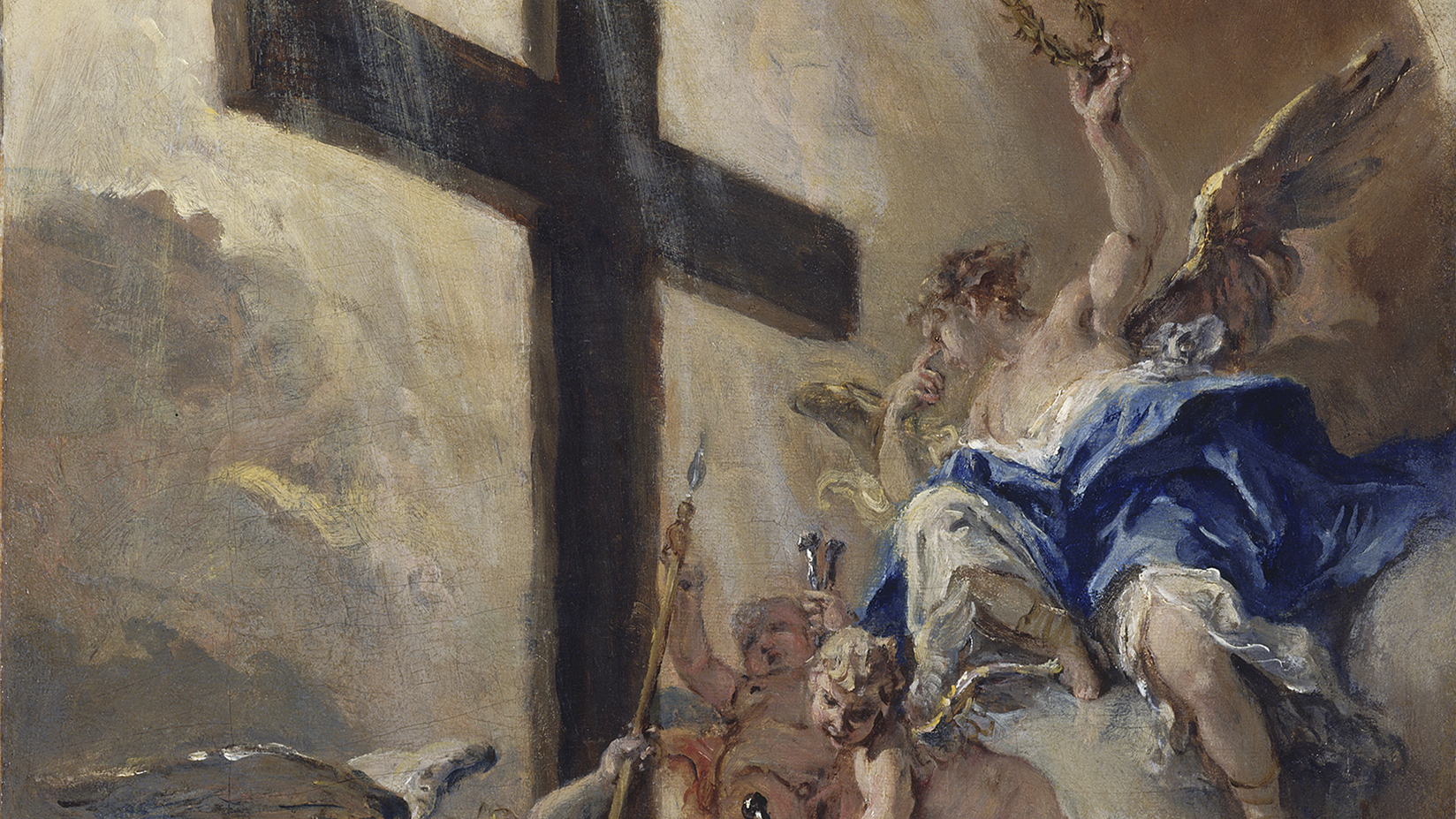
Omnia in cruce manifestantur. “All things are revealed in the cross.” So said St. Bonaventure in his classic book The Triple Way. Indeed, all things are revealed in the cross—at least, all of the most important things in life. The nature of God, the nature of love, the nature of human beings, the meaning and purpose of human life, our intended destination, and the path to that destination are all revealed in the cross, either explicitly or implicitly. And much that the cross reveals to us is symbolized by the outstretched arms of the God-man on that cross. Those outstretched arms simultaneously embody:
· God’s loving embrace of all of humanity; indeed, his embrace of all of creation
· God’s gift of himself to us in Jesus Christ
· Jesus’s loving self-surrender to God the Father and to us
· Jesus’s self-sacrifice on our behalf
· Jesus’s radical spirit of openness, both to God the Father and to us
· Prayer to God the Father
· Worship of God the Father
The Catholic Church has always realized, going back to the earliest years after the crucifixion of Jesus Christ, that both the form of the cross and the posture of the crucified God-man on that cross carry profound symbolic significance. Late in the first century, the Didache referred to the cross as sēmeion epektaseōs, a “sign of expansion,” stretching out to all the earth. In the early fourth century, Lactantius, a Christian apologist, wrote, “In his suffering God stretched out his arms and embraced the world, thus prefiguring the coming of a people which would, from East to West, gather under his wings.” A few decades later, Cyril of Jerusalem echoed this insight: “On the Cross God stretched out his hands to encompass the bounds of the universe.” On the cross, the God of the universe embraces the universe. And the meaning of that embrace? It’s all about love—love in life, the world, the cosmos.
The path to our intended destination is the path of self-giving love, perfectly exemplified for us by Jesus in his sacrificial death on the cross.
Life is all about love, because God is all about love. Love isn’t just something that God has; love is what God is (see 1 John 4:8). God is Being itself, the ultimate reality. The essence of God is love. Therefore, the essence of ultimate reality is love. On the cross, Jesus revealed this—the most profound truth about who and what God is and what life is all about—in the most dramatic and striking manner possible. The God-man, having taken on human flesh in an initial act of profound love for us, stretched out his arms of flesh in the ultimate act of love, giving up his life for the sake of our salvation. There could be no greater expression of God’s love for us than this (see John 15:13).
In stretching out his arms on the cross, Jesus not only revealed the nature of God; he also revealed much about the nature of genuine love. The heart of love consists in the gift of self to the beloved, the gift that was so clearly symbolized in those outstretched arms, extended to embrace us human beings and all of creation. Those outstretched arms, nailed to the cross on our behalf, also dramatically embodied the self-sacrificial, self-surrendering nature of true love.
Jesus’s outstretched arms also reveal much about human nature, positive as well as negative. Jesus, both in his earthly life and in his suffering and death on the cross, assumed the archetypal human nature, the humanity that God created (and intended) all of us to have: loving, self-giving, self-sacrificial, open in love to both God and our fellow human beings, willing to surrender ourselves in love to the God who has surrendered himself in love to and for us, steeped in prayer to and worship of God our heavenly Father.
Jesus’s outstretched arms on the cross also serve as a bitter reminder to us of the negative side of our fallen human nature, a painful reminder of just how short we human beings fall in our response to God’s call to love. The God of love became one of us, lived among us, loved us, taught us, fed us, healed us, even raised some of us from the dead (see Mark 5:21–43; Luke 7:11–17; John 11:1–44), and we tortured and crucified him.
As Hans Urs von Balthasar has pointed out, the cross is the “center and zenith” of history; it is a “symbol of both God’s love and the world’s sin, of both judgment and salvation.” However, Balthasar also emphasizes that we should not think of the cross in isolation, but always keep in mind what he calls the “other side” of the cross, its “inner meaning,” which is the resurrection. On the other side of the crucifixion, God the Father raised Jesus from the dead, and in Jesus’s subsequent ascension into heaven, our human nature, in him, has been taken into heaven as well. And that is, of course, the destination that God intends for us. God created us to share forever in his divine life and love and bliss. Jesus Christ has opened the path (and is himself the path—see John 14:6) for us sinners to become “participants of the divine nature” (2 Pet 1:4).
The path to that destination involves saying yes to God’s gift of a share in the divine life; yes to Jesus Christ and to membership in his body, the Church; and yes to love. The path to our intended destination is the path of self-giving love, perfectly exemplified for us by Jesus in his sacrificial death on the cross.
Most of us are not called to actual martyrdom (thank God!), but we are all called to die to self (see Mark 8:34–38; John 12:24–26) and to stretch out our hands in self-giving love to God and neighbor, in imitation of the God-man who stretched out his arms on the cross in love for all of us.
All things really are revealed in the cross.