
Have you ever thought about your soul / Can it be saved? / Or perhaps you think / That when you are dead / You just stay in your grave / Is God just a thought within your head / Or is he a part of you? / Is Christ just a name / That you read in the book / When you were in school? […]
Well, I have seen the truth / Yes, I’ve seen the light / And I’ve changed my ways / And I’ll be prepared / When you’re lonely and scared / At the end of our days
Could it be you’re afraid / Of what your friends might say / If they knew you believe in God above? / They should realise before they criticise / That God is the only way to love
—“After Forever” Black Sabbath (1971)
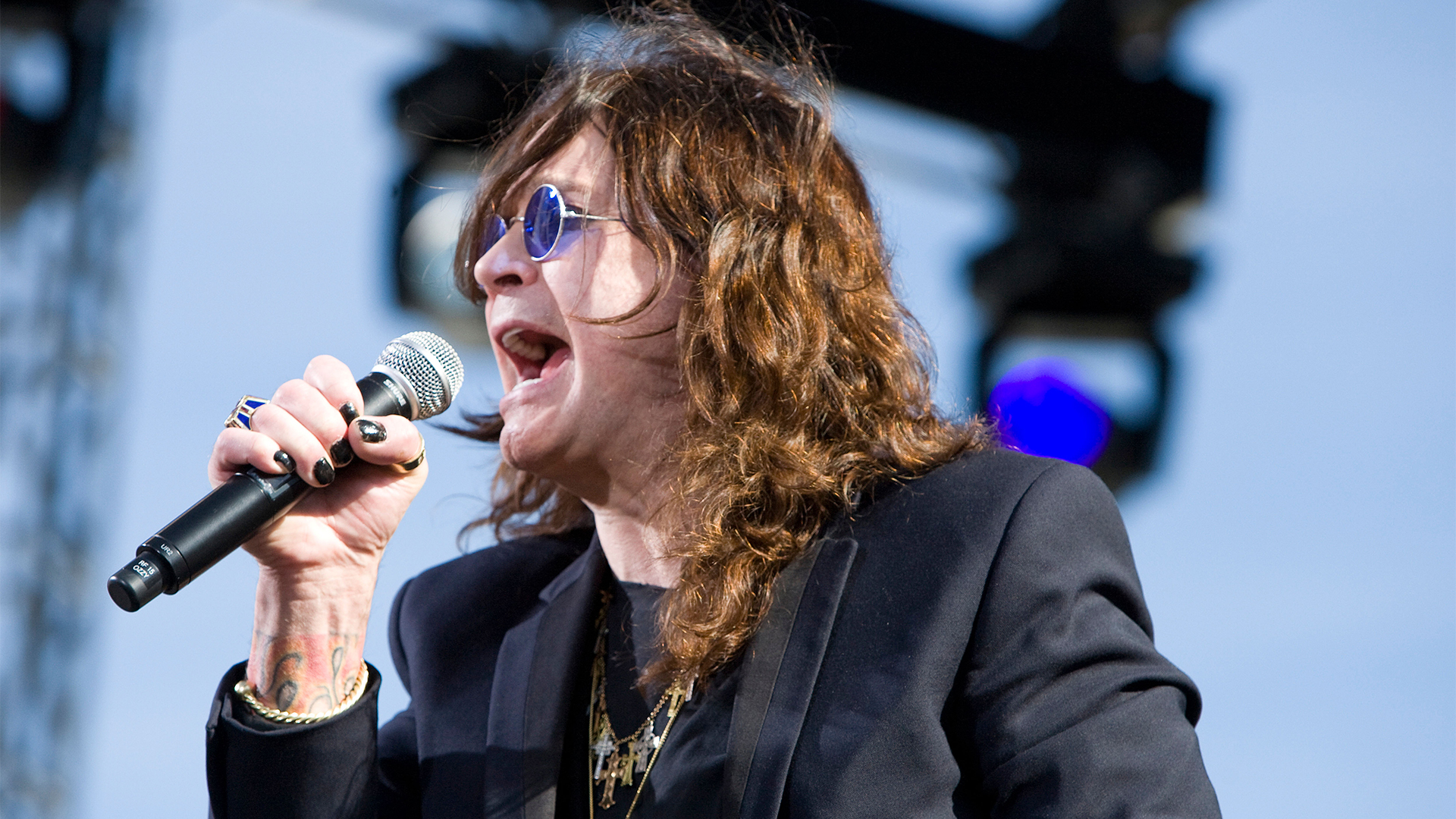
When not donning his trademark circular sunglasses, his smoky, coal-rimmed eyes held a certain mischievous twinkle. We all became familiar with and fond of his “hesitant Brummie” accent. He was a devoted husband, father of six, and grandfather of ten, but he will forever be renowned as a singer, songwriter, writer, media personality, and a godfather and icon of heavy metal.
After two hours of medics struggling to revive him, John Michael “Ozzy” Osbourne died at the age of seventy-six in his home on the morning of July 22, 2025, surrounded by his family. Though the official cause of death has not been determined at the time of this writing, it is expected to be due to his long battle with stage 2 Parkinson’s disease.
Ozzy will be remembered for many things. He was an electrifying performer, a whirlwind of artistic expression, a singular talent who pioneered an entire musical genre, but woven within his mystique was also a profound and complex spiritual life.
Born on December 3, 1948, in the Aston area of Birmingham, England, Ozzy struggled with undiagnosed dyslexia and severe bullying during his school years. His mother was a non-practicing Catholic, and his father was a nominal member of the Church of England. Ozzy was likewise baptized and raised in the Church of England, even briefly considering the priesthood in his youth. Upon hearing The Beatles’ “She Loves You” when he was fourteen, he realized that he wanted to be a musician for the rest of his life.
He left school at fifteen to work a variety of menial jobs, such as a car horn tuner and plumber. A few years later in 1967, Ozzy joined up with bassist Geezer Butler as the lead singer of his new band. They lasted only a couple gigs before they broke up. Then the two joined guitarist Tony Iommi and drummer Bill Ward to form the band Earth—a name Ozzy hated. While playing shows around England, the band realized they were being confused with another English group named Earth. The cinema across the street from the band’s rehearsal space began playing the 1963 Italian horror film Black Sabbath, starring Boris Karloff. The group noticed the popularity of the film, with lines of people flocking to see the show. Inspired by this popularity, as well as the horror genre and the fiction writing of Dennis Wheatley, Osbourne and Butler wrote the lyrics for the song “Black Sabbath.” For the piece, they took up use of the tritone, known as “the devil’s interval,” and they relished in offering a stark contrast to the flower power, folk, and hippie music prevalent at the time. They made the decision to embark on a new chapter, renaming the band Black Sabbath and creating work that took on the musical equivalence of horror films. As the lead singer of the group, Ozzy assumed the stage name “Prince of Darkness.”
Ozzy’s music and his stage persona served as a gripping embodiment of memento mori. He beckoned us all to remember we will die.
It was theatrical, performative, and dramatic. The music was heavy, growling, and exciting, making use of down-tuned guitars both to facilitate faster chord changes and to lend a lower, darker sound. Black Sabbath’s first three albums Black Sabbath, Paranoid, and Master of Reality were all hugely successful and are now hailed in particular as pivotal in the development of heavy metal.
Right from the start, beginning with the band’s name, Black Sabbath and Ozzy himself were often criticised and misunderstood as satanic. His consistent responses—throughout his life, in fact—always staunchly denied the accusations and affirmed that he believed in God. He told The Guardian, “I’m a Christian. I was christened as a Christian. I used to go to Sunday school.” He also told Audacy, “I believe in God. I don’t go to church, but I don’t think you have to . . . go to church to believe in God.”
In a 1986 interview with SPIN magazine, Ozzy said he sings about dark subject matter within the context of a broader message. Of his detractors, he explained, “They never stop to listen. They’ve already prejudged me and tried me, and I ain’t gonna sit there trying to defend myself. Anybody that knows Ozzy Osbourne and knows what I’m about knows me anyway.”
He elaborated, “They ought to stop and listen to the lyrics. I write so much positive stuff! Food for the thought. Like ‘Killer of Giants,’ ‘Revelation Mother Earth,’ ‘War Pigs’—I could go on for years. . . . I am not a negative person. I am a very truthful person, true to what I believe. I can only do what I believe in. If I was a fake at what I was doing, I couldn’t do it.”
He was Ozzy on stage, and he was John Osbourne off stage. In 1982, he explained to Entertainment Tonight, “Does Christopher Lee play golf with vampire’s teeth? Do these people who do horror movies walk around with black cloaks on every day of the week? It’s just a role I’m playing.”
Ozzy’s music and his stage persona served as a gripping embodiment of memento mori. He beckoned us all to remember we will die. He called on the listener to confront death, heed his warnings, seek God’s aid, beware the devil’s temptations, don’t fall amidst a dullened crowd ignoring the sand sifting down the hourglass.
An early example of this message is clear in the lyrics of “Black Sabbath”:
Satan’s sittin’ there, he’s smilin’
Watches those flames get higher and higher
Oh, no, no, please, God, help meIs it the end, my friend?
Satan’s comin’ ‘round the bend
People runnin’ ‘cause they’re scared
The people better go and beware
No, no, please, no
Ozzy was known for his alcohol consumption and “an almost mythological intake of drugs.” Starting in 1979, during a seven-year period while he was fired from Black Sabbath, he released his first solo albums Blizzard of Ozz (1980) and Diary of a Madman (1981), launching hits like “Crazy Train” and “Flying High Again.” He began a long journey to sobriety in 1984 with frequent attempts at rehab, but he didn’t become serious about his recovery until 2014. Throughout his hurdles, his wife, Sharon, was his rock and unwavering source of support and encouragement.
Between Black Sabbath and his solo work, Ozzy Osbourne sold more than 100 million albums worldwide. His thirteen solo albums all achieved platinum status, with seven becoming certified multi-platinum. He was inducted into the Rock and Roll Hall of Fame both as a member of Black Sabbath and later as a solo artist.
Ozzy crafted a legacy that shaped the future of heavy metal music. He was one of rock’s most influential forefathers. He and the rest of Black Sabbath are credited with setting the stage for countless bands like AC/DC, Motörhead, Guns ‘n’ Roses, and Metallica, with Lars Ulrich saying, “If there was no Black Sabbath, hard rock and heavy metal would be shaped very differently.”
Later in life, Ozzy battled a variety of health issues, including spinal injuries, Parkinson’s disease, and continued hereditary tremors. Writer Mark Ellis noted that “beneath his wild persona, Osbourne’s life revealed a surprising spiritual journey, marked by his own statements affirming his belief in God.” Despite his unpredictability, controversies, addictions, and health troubles, Ozzy’s life was consistent in his professions of faith.
Ozzy told The New York Times that he was “a practicing member of the Church of England,” and he prayed before every performance. The 2011 documentary God Bless Ozzy Osbourne ends as he closes the door behind him to kneel alone in prayer. As he created swirling works of art, he kept a copy of the Serenity Prayer on his desk, saying it helped him stay sober.
Ozzy gave his final performance on July 5 in his hometown of Birmingham, mere weeks before the world said its final goodbye to the music legend. He gave the crowd a warm and heartfelt “God bless you” before leaving the stage.
Perhaps you’ll think before you say / “God is dead and gone” / Open your eyes, just realise / That he is the one / The only one who can save you now / From all this sin and hate