
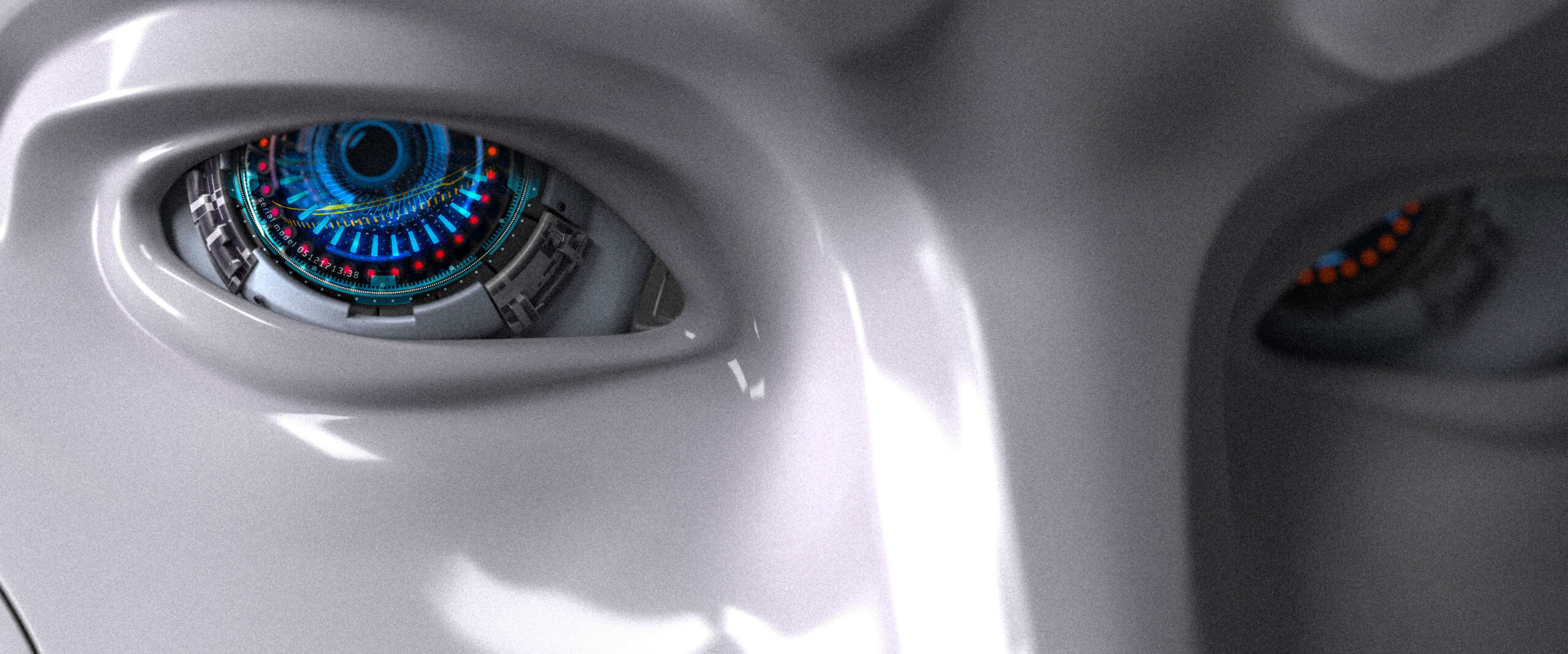
“The first ultra-intelligent machine is the last invention that man need ever make, provided that the machine is docile enough to tell us how to keep it under control.”
—Irving John Good, British mathematician
“For it is no longer about dominating matter, it is about its destruction.”
—Georges Bernanos
In 1947, having returned to the hated Vichy France after a bitter exile away, Georges Bernanos wrote a missive, dubbed France Against the Robots. A gifted French Catholic novelist, Bernanos spent the first six decades of his life writing novels of searing pain twinned with inextinguishable grace (e.g., The Diary of a Country Priest and Under the Sun of Satan), as well as rousing polemics about the French Catholic spirit and the evils of totalitarianism. Having arrived in liberated France, he was asked by President Charles de Gaulle to serve in his cabinet. But Bernanos refused. Instead, he began writing about the deformations he witnessed in French culture (and Western culture in general) with respect to technique and efficiency, technology and inhumanity, faithlessness and self-absorption.
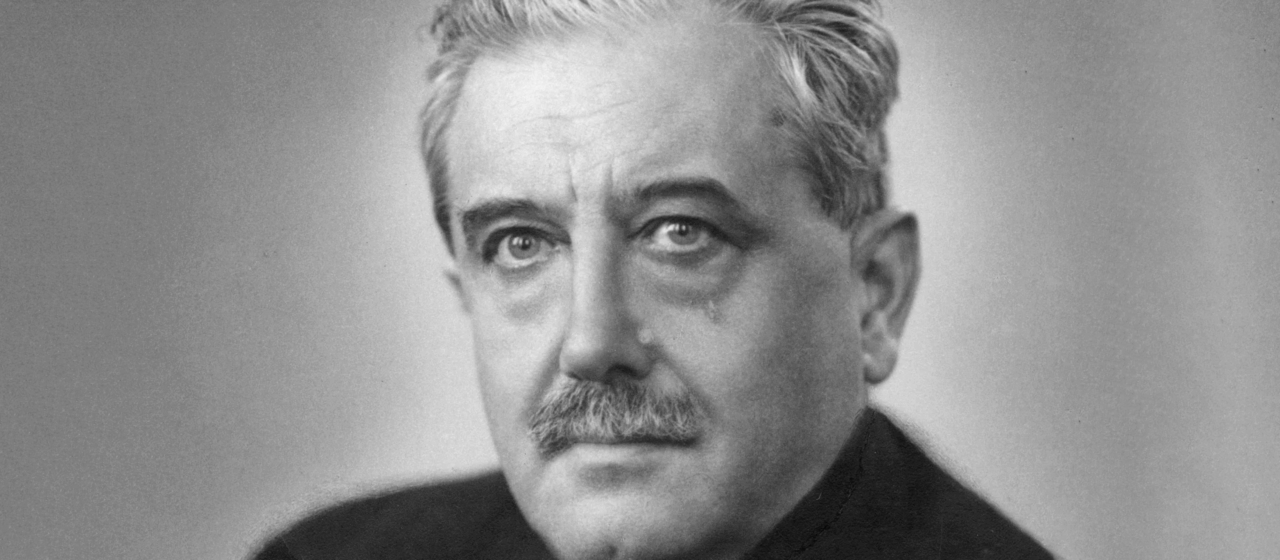
What Georges Bernanos saw was a postwar era embracing on all sides the intoxicating promise of technology with wild abandon. “Life will be better!” people insisted. “What could go wrong?” friends inquired. Having seen civilization’s marauding tanks and suffocating gas chambers, poison gas and atomic bombs, Bernanos hadn’t forgotten. What could go wrong? Plenty. And so he was grim. In France Against the Robots, he wrote,
Society was taken surprise by the Invasion of the Machine; it collapsed, suddenly, as it were, in the most extraordinary manner, beneath that iron weight. For it had never foreseen the Invasion of the Machines; the Invasion of the Machines was, for it, an entirely new phenomenon. Until that moment the world had known only tools, instruments, more or less perfect, no doubt, but always in the form of a prolongation, an extension of the human limb. The first real machine, the first Robot, was the famous machine for weaving cotton that started its career in England round about 1760. The English workmen broke it to pieces, and a few years later the weavers of Lyons did the same with other similar machines. When we were young, the ushers at school used to try to make us laugh at these simple-hearted enemies of progress.
Bernanos went on to explain how it would be convenient to conclude that he is simply a sentimental old fool standing athwart progress and pining for an earlier day. But his message was both keenly diagnostic and eerily prophetic. The Catholic novelist put his finger on our bleary intoxication with technology—a drunkenness that could lead us to our utter destruction.
The Machines are creating a type of man. . . . But what is the use of telling you of the type of man they are creating? Fools! Aren’t you the sons or the grandsons of those other fools who were so deeply affected, when I was a child, in the presence of that colossal Bazaar, the so-called Universal Exhibition of 1900, who slobbered over the noble emulation born of commercial competition, over the peaceful battles of Industry? . . . What is the good, since your experience of 1914 wasn’t good enough for you? Your 1940 experience will probably be of no more use. . . . Thirty, sixty, a hundred million dead won’t rid you of your fixed idea: “Speed! I must go faster at all costs!” Go faster? Where to? You damned fools, you don’t mind where you go!
In pursuit of his twisted utopia, Adolf Hitler wasn’t the first, nor the last, to declare, “Science cannot lie.” But like Bernanos, Winston Churchill corrected this with the grave assertion,
The dark ages may return, the Stone Age may return on the gleaming wings of science, and what might now shower immeasurable material blessings upon mankind, may even bring about its total destruction. Beware, I say; time may be short. Do not let us take the course of allowing events to drift along until it is too late.
In a mealtime conversation with Pope Leo XIV, Chilean Cardinal Fernando Chomalí Garib asked him about his reason for choosing his name. As OSV News reported,
He told [Cardinal Chomalí] he is very concerned about the cultural shifts we are living through, a Copernican revolution really—artificial intelligence, robotics, human relationships. He was inspired by Leo XIII, who in the midst of the Industrial Revolution wrote Rerum Novarum, launching an important dialogue between the church and the modern world.
The new pope believes the church has a vital role to play in today’s moment of “perplexity.” There is a revolution happening, and it must be addressed seriously. The church can contribute through its moral authority and also its academic strength.
“Time may be short. Do not let us take the course of allowing events to drift along until it is too late.”
In 1947, Georges Bernanos worried about the impact of machines on nations, cultures, and, most importantly, the human soul. Again, from France Against the Robots,
Fools! Who are you running away from? Alas! You are running away from yourselves—everyone of you is trying to escape from himself, as though he believes that by faster and faster flight he could, at last, get out of the close sheath of his skin. . . . One cannot understand the least things about modern civilization if one does not first and foremost realize that it is a universal conspiracy to destroy the inner life.
With Pope Leo XIV naming artificial intelligence as a tremendous, unparalleled challenge to the soul and society of man, and in recognizing the Catholic Church as the robust bulwark responding to this challenge, it seems that the weary and admonishing soul of Georges Bernanos might actually rest a little easier.