
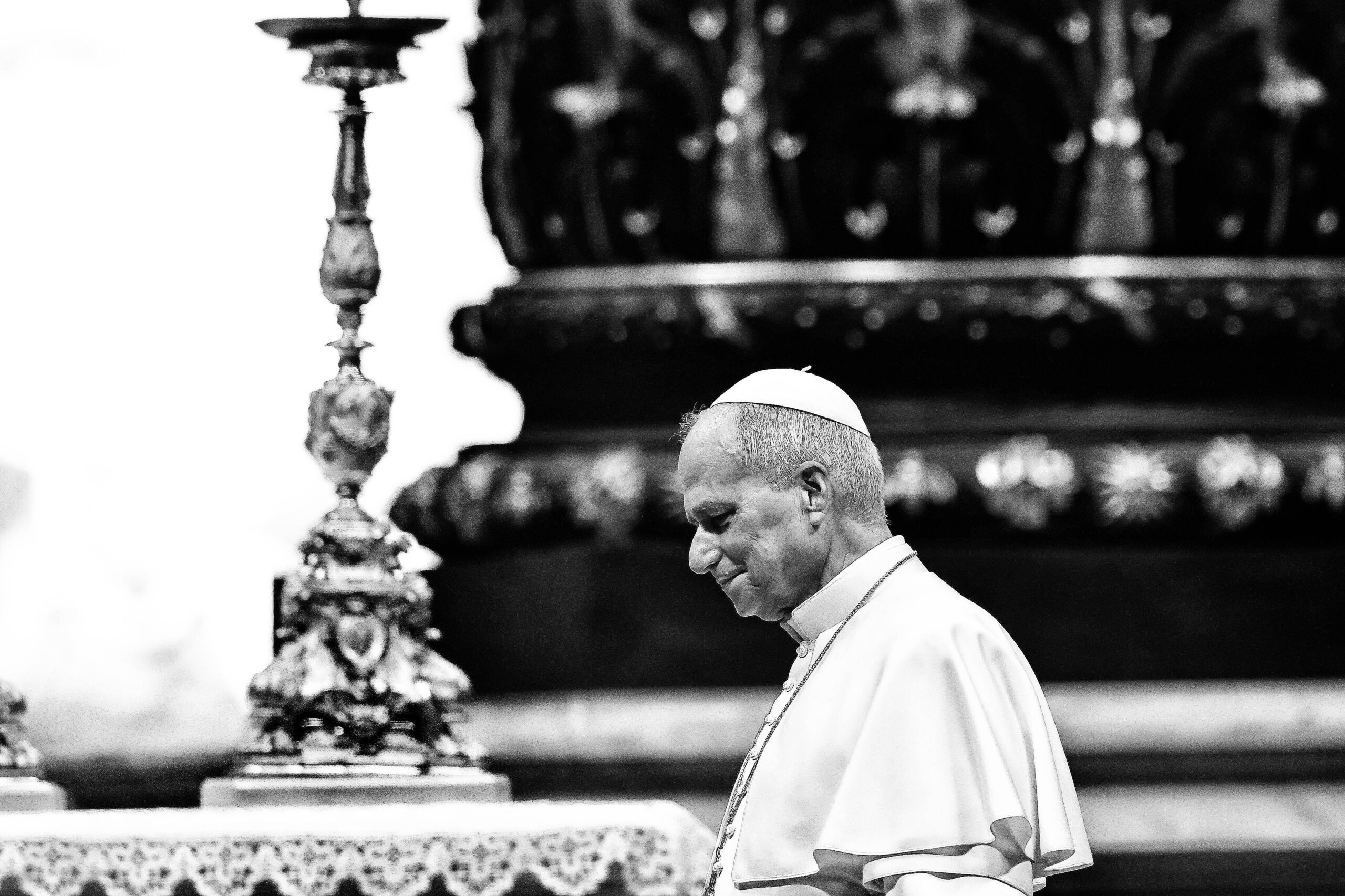
The Word on Fire Institute will be embarking on a six-week summit delving deeply into Magnifica Humanitas to explore various topics with accessible teachings, debate, pastoral scenarios drawn from real-life situations, and space to think alongside others asking the same questions. UK Program Director, Brenden Thompson, joined me to discussed more of what we can expect from the summit.
Joshua Bitting: Brenden, thank you for heading up this summit on Magnifica Humanitas, the first encyclical by Pope Leo XIV, which focuses on the dignity and safeguarding of the human person in an era of rapid growth in artificial intelligence. What’s the purpose of this summit, and what are you hoping our audience will gain from it?
Brenden Thompson: During the public reception of Magnifica Humanitas, I was most intrigued by the reaction of the political commentator and podcaster Alastair Campbell, well known as former UK Prime Minister Tony Blair’s spokesman. As someone who once said of the Labour government of the late ’90s and early 2000s that “we don’t do God,” his warm reception of the document indicated to me something of the special quality of this first encyclical of Pope Leo XIV.
Soon after the encyclical was released, Campbell shared with his The Rest Is Politics podcast audience that on the recommendation of someone involved in the world of AI, he decided he would take a look at Magnifica Humanitas. He was full of praise for the first encyclical he, a non-Catholic skeptic, had ever read and spoke of how he was genuinely moved and provoked by its insights and analysis.
How marvelous that someone in the world of AI recommended a document from the pope to a non-Catholic who not only read it but spoke about it like someone who had just watched a riveting film in the cinema and could not wait to tell people about it. In short, I want those who take part in this Word on Fire Institute summit to embody both halves of this story: the passion of someone who’s just encountered something remarkable and the instinct to share with others.
In this encyclical, Pope Leo has given all of us—everyone touched directly or indirectly by AI—a great gift. This summit is a chance to receive that gift. It is an opportunity to take our lead from the Holy Father, to slowly journey through his meditations and to let them reshape how we see technology and, more fundamentally, what it means to be human.
We want to give people an opportunity to go beyond shallow analysis and offer the slower discernment it deserves.
This summit also has a broader aim to avoid the risk that this document gets flattened into a single-issue document. Many already speak of Magnifica Humanitas as simply “the AI encyclical.” AI is of course a central theme of the document, but we want to give people an opportunity to go beyond shallow analysis and offer the slower discernment it deserves. Six weeks is not long enough to cover everything in depth, but we hope it is long enough to inspire a cohort of people who can see and share some of the richness it contains.
Artificial intelligence is a topic that evokes a strong response from many people, and perhaps polarized responses ranging from daily use of it to a determination not to engage with it. We released a course on evangelization and artificial intelligence earlier this year. Clearly, the Word on Fire Institute is determined to engage with new forms of technology and to find how to evangelize in this new world. What do you see as the major opportunities and challenges for Catholics engaging with AI and how it will shape our culture?
In Magnifica Humanitas, Pope Leo invites readers into a space beyond outright suspicion and uncritical acceptance. His invitation is more demanding. It’s an invitation to discover how to engage deeply with this topic so that a central question is not lost—namely, how, in this ongoing digital revolution that is seemingly remaking the world, can we still choose paths that make us more human, not less.
Used well, this technology can free up time for the relationships and activities that deserve our attention. It could also contribute to developments in a number of fields at the service of humanity, such as medicine, business, and education. There is also an opportunity for the Church in its engagement with those in the tech industry—not just to condemn what they’re building but to offer the wisdom many of them are asking for in how to build it responsibly.
The pope is not anti-technology, but he is clear about its challenges. Many of those challenges are similar to ones known to the Church before anyone had heard the term “artificial intelligence”: the cost to individuals, communities, and societies when relationships are sacrificed for productivity; human dignity made secondary to “progress”; and every human “limitation” seen simply as another obstacle just waiting to be transcended by the right technology.
Brenden, in your many years of experience in evangelization and discipleship work, speaking to audiences and leading retreats and workshops all around the world, do you think that Pope Leo’s approach to this topic will resonate with Catholics worldwide?
Pope Leo’s approach and insights can and are resonating with Catholics, not just because they do not require technical ability but because they go beyond technical questions to offer a robust and compelling vision that is uniquely Catholic.
This past year, I have begun to offer workshops and input online and in-person, gauging the reception of this document and exploring wider engagement with AI in the Church. Catholics do not need to understand how a model is trained to feel the force of some of the pope’s central questions: What happens to human dignity when we start measuring ourselves against something we’ve built to imitate us, or let our formation as human beings be outsourced to it?
What I have also noticed when running sessions across quite different contexts is that the resonance tends to be strongest wherever people already feel the personal cost at work and at home.
As Americans in an America-based apostolate, we can think in narrow terms of how encyclicals are received. Do you see that this will have a deep impact on how companies, legislative bodies, and the general populations respond to the AI path forward?
From my vantage point in Britain, it seems—to make a huge generalization—that business has been quick to explore the implementation of AI, governments have been slow to regulate or imagine policy implications, and the general public still sees it as somewhat of a novelty. In that context, one thing has struck me about the encyclical’s reception: the small signs of this document moving past the Church’s own audience. In the months since its release, there have been a few encouraging examples of major tech companies themselves raising questions similar to ones the pope raises, or others raising them with the major AI labs and governments. While it’s hard to neatly determine cause and effect in cultural influence and debates, it certainly seems that Magnifica Humanitas has arrived at the right moment.
Time will tell how and whether it shapes wider attitudes and specific legislative approaches; history may be instructive here. When Leo XIV’s predecessor Leo XIII wrote Rerum Novarum in the late nineteenth century in the throes of the industrial revolution, it did not rewrite labor laws the week after it was published. It took decades for its moral logic to help form the Church’s social critique and contribute to how movements in society actually organized work. I’d expect something similar here. The immediate impact might not be a bill or act of parliament but perhaps a shift in what serious people inside and outside the Church feel able to say about the shape of the future AI is creating and the lives it touches.
What is a Word on Fire summit? How does it differ from other online offerings? What makes this summit unique, and what features of trusted experts and content-rich conversations can the participants expect?
The word “summit” can conjure images of an elite gathering, but here we are using the word in the way a mountaineer might use it. Coming from the Latin summum, meaning the “highest point,” it indicates our intention to offer an intellectual and spiritual hike to a peak, as opposed to a walk in the park.
Alongside serious intellectual formation, we’ll be working through pastoral scenarios and giving people concrete challenges to put what they’re learning into practice.
This is not a one-hour podcast, or our top ten quotations from the document with novel reflections (there are plenty of good resources online and in print already out there). Instead, we want to invite people into something that will require effort but will, we pray, reap a more profound reward: hard-won, shared wisdom. We think the effort involved appropriately honors the authority the document comes from, that of the Holy Father, as much as it reveres the profound themes it explores.
One of the great benefits of this summit is the way this will be done alongside others. Most online formation happens in isolation. One of the real riches of the Word on Fire Institute as a whole, and in particular with this summit, is how we balance convenience and challenge. The content will be released daily for the six weeks of the program asynchronously, so people can engage on their own schedule and join from anywhere in the world.
This summit also comes after Word on Fire’s own print release of the encyclical. We want to offer a rich environment of learning by bringing together thought-provoking posts alongside our rich repository of resources on the topic, including an Institute course on evangelization and AI, a previous Evangelization & Culture journal issue, numerous Evangelization & Culture Online articles, and previous live stream interviews.
Finally, what makes this summit distinctive is that we’re approaching it as evangelists, not just students. Alongside serious intellectual formation, we’ll be working through pastoral scenarios and giving people concrete challenges to put what they’re learning into practice. Each week is built around a different chapter of the encyclical. We will also have a live stream conversation with an expert from the field. Every week will close with a summary, so a member who has fallen behind can read one thing and know exactly what they’ve missed and how to catch up.
Artificial intelligence is relatively unlegislated and under-regulated. At the heart of evangelization is an encounter with Christ that radiates out, bringing Christ to the culture and proclaiming him in it. How would you encourage our rising generation of evangelists from every season of life to not fall under the influence of online personalities and so-called experts with a platform that may actually be contributing to the exploitative nature of AI for their readers/consumers?
No technology or use of it is neutral. It takes on the character of whoever builds it, funds it, and uses it. Therefore, a first step in taking a more discerning approach with using such potent technology (whether it’s AI or social media) is simply to take time and ask some deeper questions about the content, the creators, and the platforms themselves. Before we unconsciously let someone else’s take on AI or other topics shape our thinking, we would benefit from reflecting on what it is they’re actually inviting us into and who benefits from our engagement.
But do we really need to take such a discerning and cautious approach? For the pope, I believe it boils down to a core concern that once we start measuring the human person against something we’ve built to surpass, enhance, or replace us, it becomes that bit easier to treat some human lives as less valuable, less useful, less worthy of dignity. That’s the real risk of formation-by-influencer: not that they might get a fact wrong here or there, but that they (or we) might be contributing to an ecosystem that quietly reshapes the vision of the human person.
One of the sharpest sections of Magnifica Humanitas deals directly with truth. In an age when almost anything can be manufactured or manipulated, the pope argues we need a renewed, critical education that lets us tell what’s true from what’s false. The loudest voices—or the ones with the highest production value—aren’t always worthy of the attention they receive. Volume and polish are not automatic markers of wisdom. To help in navigating the Wild West of the digital arena, we should seek to find oases that offer this kind of education and other people who want to exercise the spiritual muscles of discernment. I hope if you join us for the Magnifica Humanitas Summit, you will find such a space and such a community.
None of this discernment happens automatically, and its success as an approach needs more than just education and a discerning attitude—it needs Christ. A Christ-centered life is the only foundation strong enough to withstand powerful ideologies and vested interests. Only the person who continues to put Christ at the center of their life is capable of finding the antidote to the fear and anxiety that is an all too common consequence of overexposure to the digital world. Closeness to Christ as a disciple is an ongoing education in the kind of freedom needed to test any claim, about AI or about themselves, against the way, the truth, and the life.
Thank you for taking the time to share about what this summit will entail and for your words of encouragement for our evangelists. How can folks register for this unique opportunity?
I am so excited for this summit, and I’d love to welcome anyone to be a part of it. Applications open now and close Friday, September 18. The summit runs for six weeks inside the Word on Fire Institute, and you can register here.
You don’t need to arrive with any expertise, just the willingness to stick with it for six weeks, and an open mind to let the pope’s wisdom take root.