
Pope Leo XIV’s first encyclical, Magnifica Humanitas, is timely and important. It warns us that the growing phenomenon of artificial intelligence (AI) is a potential threat to human dignity.
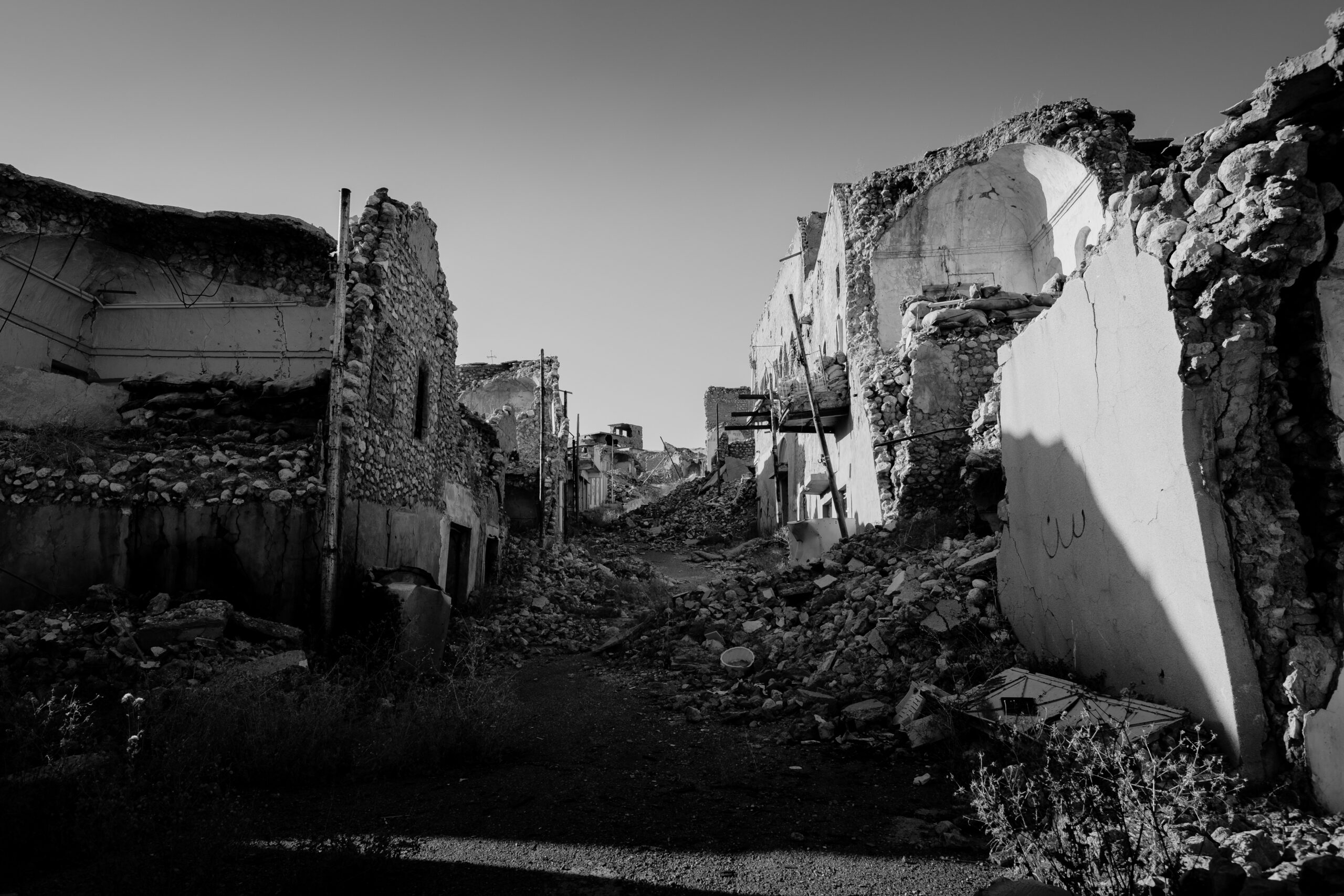
The section of the encyclical that is proving controversial, however, is Pope Leo’s assertion that the just war theory (JWT) is outdated. His position is ironic given that St. Augustine (354–430) is the progenitor of the just war theory—and Pope Leo XIV is an Augustinian. The pontiff, then, appears to be taking a distinct step away from not only almost two millennia of Church history but also his own Augustinian tradition. The encyclical reads,
Today, more than ever, without prejudice to the right to self-defense in the strictest sense, it is important to reaffirm that the “just war” theory, which has all too often been used to justify any kind of war, is now outdated. (192, emphasis added)
Though an encyclical is not promulgated ex cathedra, it should nonetheless be received with reverence and earnestness. At the same time, those with concerns have not only a right but an obligation to express them.
What Is the Just War Theory?
The JWT is a vast subject; here we briefly summarize what seems essential for purposes of understanding Magnifica Humanitas.
St. Augustine’s development of the JWT is principally found in Contra Faustum Manichaeum (Reply to Faustus the Manichaean), book 22, and in his treatise The City of God (19.7.12). He also discusses the moral responsibilities of warfare in his letters, such as Letter 189 to Boniface. Later, St. Thomas Aquinas synthesized and organized St. Augustine’s thought, making it available for a broader audience, primarily in the Summa theologiae, specifically in the Second Part of the Second Part (2-2.40).
The JWT is typically organized under two headings, jus ad bello (“justice at war”) and jus in bellum (“justice in war”). The first category addresses the decision to go to war; the second addresses what strategies and tactics in war are morally permissible. The Catechism of the Catholic Church (2309) helpfully fills in the blanks. War should be undertaken only as a last resort. War must have a just cause, meaning it is undertaken for self-defense, or, in some instances, for humanitarian purposes. War, moreover, should not be engaged if there is no probability of success. Those directing the war effort should be legitimate authorities.
“It is important to reaffirm that the ‘just war’ theory, which has all too often been used to justify any kind of war, is now outdated.”
Once war is engaged, noncombatants must not be targeted; even inadvertent collateral damage—that is, nonmilitary civilian deaths—must be strictly avoided or limited as much as possible. This is referred to as “discrimination.” Those fighting cannot be trained to fight animated by blood lust—a love of killing or a delight in brutality. The strategy of war should be proportionate to its goals, not, for example, with the aim of utter annihilation.
One does not need to be a Christian to embrace the JWT; for that matter, religion is not required, as there is a strong secular philosophical tradition of the JWT. Before St. Augustine, the Roman philosopher and statesman Cicero, deeply revered by the American founders, introduced several of the principles of the JWT in On Duties (De Officiis 1.34–40) and On the Republic (De Re Publica 3). A prominent contemporary secular theorist, Michael Walzer, published his most notable work, Just and Unjust Wars: A Moral Argument with Historical Illustrations, in 1977, and it’s still in print. Walzer does, however, credit Catholic theologians for promulgating the theory.
Leo’s Concern
Leo expresses several valid concerns. He warns against a growing “culture of power characterized by polarization and violence” justified by “dehumanizing ambition” (185). The growth of technology, he continues, can break the connection between moral responsibility and the use of force so that “new tools” may be “detached from ethics and responsibility,” and consequently, “decisions about life and death” may be “more rapid and impersonal” (182).
He worries that the “moral maturity of peoples” (182) may be insufficient to meet these challenges, thus war is becoming the norm, not the exception. He fears “a disconcerting loss of historical memory, as first-hand accounts of the Holocaust and the two World Wars are disappearing” (191). Most importantly, as a National Catholic Reporter article notes, he worries that “a framework developed in earlier centuries can no longer carry the full moral weight of the Gospel in an age of drones, cyberwarfare, artificial intelligence, autonomous weapons, nuclear arsenals, permanent war economies and civilian populations treated as the battlefield itself.”

For these reasons, Leo “reaffirms” that the JWT is outdated. This implies that the obsolete nature of the JWT has first been affirmed. Leo is certainly not the first to question whether the JWT can keep up with technology, but the only authority he offers in this case is a footnote referencing the late Pope Francis’s encyclical Fratelli Tutti (2020). To be sure, Magnifica Humanitas exhibits echoes of Fratelli Tutti, but even in that document Francis gives no meaningful explanation for his dismissal of the JWT. Rather, he notes the challenge of applying the JWT to modern conflicts when he writes that “it is very difficult nowadays to invoke the rational criteria elaborated in earlier centuries to speak of the possibility of a ‘just war’” (258). In the accompanying footnote (fn 242), he dismisses the JWT altogether, although only in passing. Neither pontiff sees a need to reference the long and important debate, engaged by notable theologians, philosophers, and political scientists, regarding the relevance or irrelevance of the JWT in the modern age.
What Replaces the Just War Theory?
Magnifica Humanitas rightly insists that the “development and use of AI in warfare must be subject to the most rigorous ethical constraints” (197). If the JWT is outdated, however, what now are those ethical guidelines? Pope Leo rightly says, “No algorithm can make war morally acceptable” (198). What, then, makes war morally unacceptable?
First of all, Leo explains that there are “far more effective and capable tools for promoting human life and resolving conflicts, such as dialogue, diplomacy and forgiveness” (192). No doubt this is an important ideal to be pursued; at the same time, it reflects an optimistic view of human nature that may be difficult to find in St. Augustine’s voluminous writing. The Augustinian view of human nature is darker and more pessimistic than, for example, the Thomistic view. While both theologians believe human nature was originally good but wounded by original sin, they disagree on the extent of the damage. For that reason, Robert Royal, president of the Faith and Reason Institute, writes that while valuable, Magnifica Humanitas proceeds from “an over-optimistic belief in multilateral statism and ‘dialogue.’”
Secondly, while not a formal endorsement of pacifism, there is a pacifist leaning in Magnifica Humanitas. If so, this is again ironic because St. Augustine’s development of the JWT, after the Visigoth sack of Rome in AD 410, was to counter the view that Christians must be pacifists due to an overinterpretation of Jesus’s admonitions to love your enemy and to turn the other cheek. This confirms what others have observed, for example, scholar Daniel J. Mahoney, who notes that Leo’s teaching is “functional pacifism.” Although the encyclical does not advocate a formal doctrine of pacifism, its practical outworking would look suspiciously like a pacifist position, although, to be fair, the encyclical does not rule out self-defense.

The remaining candidates to guide war are few: Utilitarianism teaches that the most ethical approach to war is whatever is most efficient in obtaining one’s goals. The “realist” approach denies that any ethical concerns are relevant to war because war involves violence and killing. Unfortunately, the realist paradigm may deteriorate into nihilism—if there are no moral principles, perhaps there is no God.
Moral Equivalence?
Whether intentional or not, Magnifica Humanitas implies a moral equivalence among all participants in a conflict. In conflict, however, it is indisputable that some deliberately target civilians, either because they are indifferent to the death of noncombatants or because they actively pursue civilian deaths as a matter of strategy. For example, one of the strategies of terrorist groups is to cause civilian deaths purposely in order to provoke an over-response from the target country and thus win sympathy for their cause. In this way, they hope to gain credibility from the wider population and from the media. Such has been the undeniable strategy of the IRA in Great Britain, ETA in Spain, and several terrorist groups in the Middle East.
In the present Russian war on Ukraine, one side refrains from deliberately targeting civilians while the other not only directs deliberate attacks against civilians but has kidnapped over twenty thousand children and is currently brainwashing and preparing them to fight against their own home country, against their own parents. Such an appalling strategy is not an absence of dialogue nor an unwillingness to forgive—it is unmitigated, unilateral evil. Surely the pontiff would agree.
Given that moral responsibility and accountability in war is one of Leo’s principal concerns, these important differences must be maintained and underscored; in that interest, the pope should be cautious with assertions such as “Jesus does not listen to the prayers of those who wage war, but rejects them.” The phrase “wage war” commonly means “to actively engage in or carry on a military conflict or combat against an opponent,” and refers to both sides of a conflict.
Leo’s Reliance on the Just War Theory
In a further irony, in his call for peace, his warnings of the complicated threats of technology, and his depreciation of the JWT, the pope himself invokes several principles of the just war theory to make his argument. For example, he underscores the danger that “the ethical principles that protect civilians and the most vulnerable are weakened” (192) today because the memory of the two World Wars is fading into the past. A more emphatic assertion of the principle of discrimination is hard to imagine. Leo reminds us that the only legitimate purpose of war is to achieve or to regain peace, whether war is accepted in self-defense or undertaken for humanitarian reasons.
“I do not love the bright sword for its sharpness, nor the arrow for its swiftness, nor the warrior for his glory. I love only that which they defend.”
Yet again, Magnifica Humanitas condemns forms of conflict driven by the desire for “territorial expansion” (190). That these ambitions are to be condemned proceeds directly from the JWT requirement that the aim of a just war must be peace, not an illicit land grab. As noted earlier, the JWT teaches that war is only a last resort—which is emphasized in Magnifica Humanitas:
The Holy See has recently observed that the growing ease with which autonomous weapons systems can be deployed makes war more “feasible” and less subject to human control. This violates the principle that armed force should be used only as a last resort in cases of legitimate self-defense. (197)
Gandalf and Faramir
Magnifica Humanitas highlights several legitimate concerns and underscores the standard that should govern all human interaction: the dignity of the human person. Leo also rightly warns that the ethical standards that govern conflict must keep up with technology; if not, they stand in danger of obsolescence.
But, as Magnifica Humanitas demonstrates, the JWT will not easily be shaken. It is embedded in Western culture and its principles underlie military strategy; the theory is the reason why the international press quickly condemns civilian deaths in any conflict. JWT principles are likewise woven into international law, especially in the Geneva Conventions. Walzer argues that the JWT has become indispensable for the US military. Pope Leo himself, since the release of his encyclical, has said the war in Iran is not a “just war.” The New York Times reports,
On June 6, in remarks en route to Madrid for a visit, he was asked if a “just war” was being waged in Iran. The pontiff replied, “I believe this has already been made very clear: In Iran, the criteria for a just war are not present.”
In several passages of the encyclical, Leo calls for a “civilization of love.” To this end, Tolkien fans were delighted to find that Magnifica Humanitas quotes Tolkien’s Lord of the Rings, when Gandalf explains to Frodo the duty each of us has in difficult times:
It is not our part to master all the tides of the world, but to do what is in us for the succour of those years wherein we are set, uprooting the evil in the fields that we know, so that those who live after may have clean earth to till.
The pontiff might have also quoted Faramir, Captain of Gondor, who, of all the characters in The Lord of the Rings, most often speaks for Tolkien himself. Faramir’s reflection proceeds from the just war theory. Tolkien knew World War I through his own experience, and he vicariously experienced World War II through the involvement of two of his sons, Michael and Christopher. Faramir declares, “I do not love the bright sword for its sharpness, nor the arrow for its swiftness, nor the warrior for his glory. I love only that which they defend.”