When you ask about the origins of organizations formed to serve the unmet needs of persons with intellectual and developmental disabilities, you find a common theme. Tricia Borah told us how a volunteer mission inspired her to begin a parish ministry to serve individuals with disabilities in an inclusive setting. Elizabeth Wellendorf shared with us how she moved to Bethlehem to put her nursing skills to work serving children with disabilities. There are many others too.
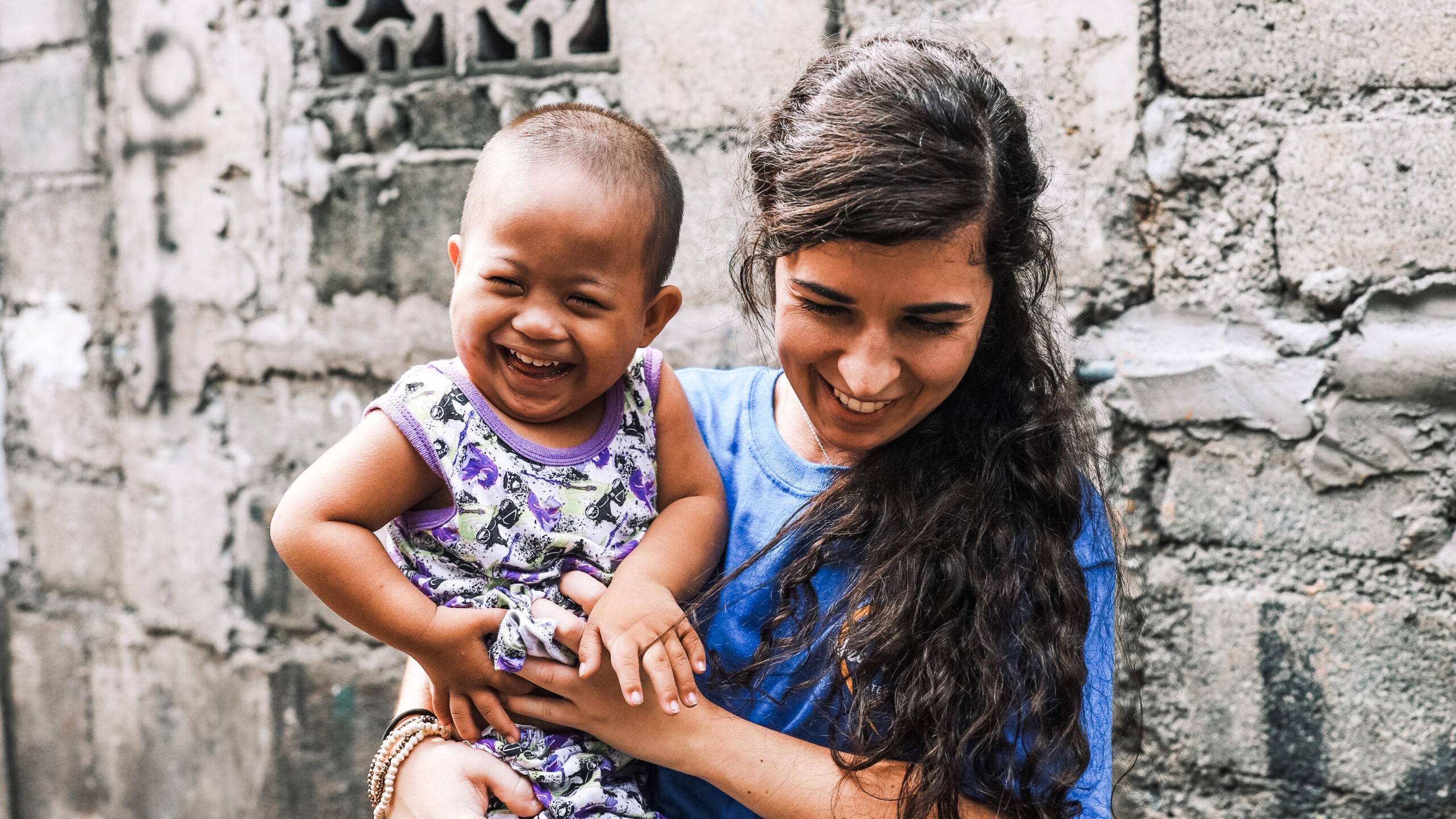
Lauren Costabile’s is another similar story with a huge impact. In this interview, she tells how the Lord moved her to begin an international organization that now provides critical surgeries to resolve cardiac defects in young children with Down syndrome. Lauren is amazing, and so is the organization she founded: Hearts of Joy International.
Maybe God is calling you too. Sometimes big ideas start small—maybe even with a simple gesture of love and welcome you give to an individual in your parish.
Mark Bradford: Lauren, thanks so much for agreeing to this interview. I’ve known about your work with Hearts of Joy for years, and I think we finally had an opportunity to meet at the UN a couple of years ago. Please share with everyone the mission of your organization.
Lauren Costabile: Yes, we both spoke at the UN a few years ago as part of the Holy See’s World Down Syndrome Day event. Thank you for having me for this interview and highlighting our mission. I am so grateful!
Hearts of Joy International provides lifesaving heart surgery for children with Down syndrome around the world. We love and care for the forgotten, unwanted, and vulnerable, serving children with Down syndrome in Uganda, the Philippines, India, and the US. In a world that often sees them as less valuable due to poverty and cultural stigma, we affirm their worth as image-bearers of God and restore dignity through holistic, family-centered care. Our work extends beyond surgery; we walk with families from diagnosis to recovery, offering love and emotional and spiritual support with an emphasis on long-term healing. We are healing hearts literally and spiritually and transforming how entire communities value children with disabilities.
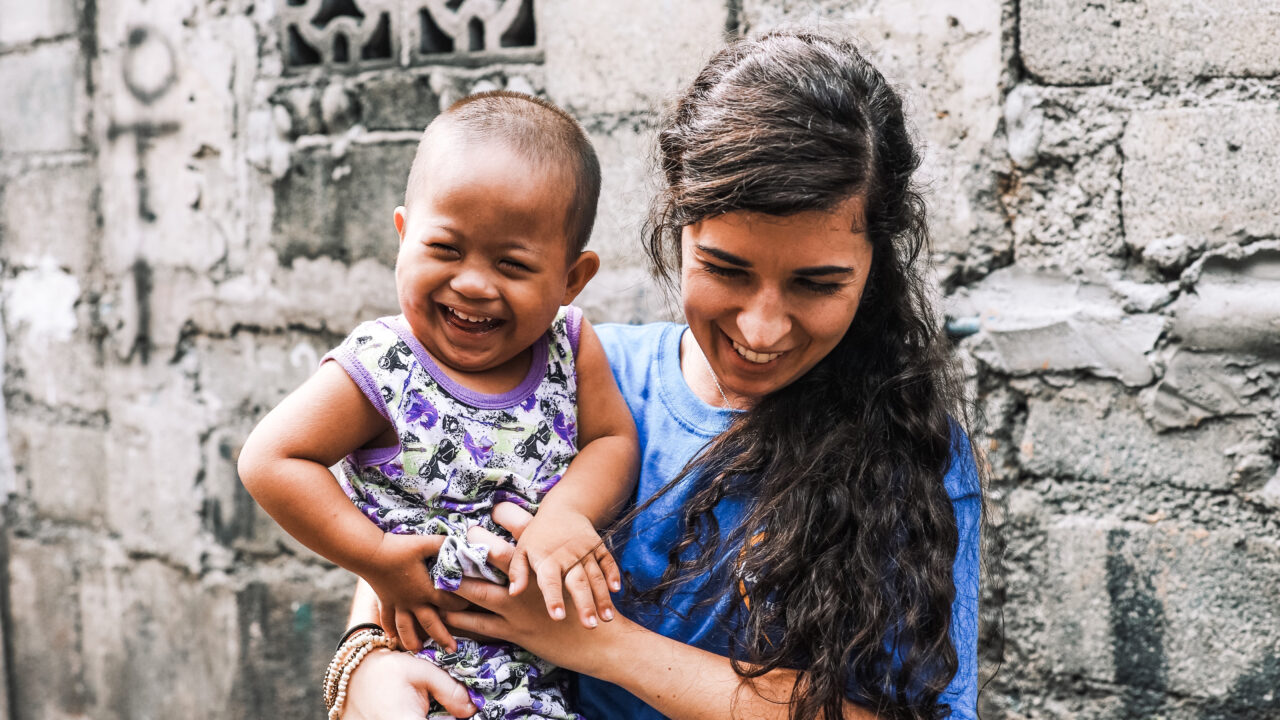
Hearts of Joy International is the only global cardiac organization dedicated exclusively to serving children with Down syndrome. This focus makes us uniquely positioned to meet the urgent needs of an underserved population often overlooked in both the medical and nonprofit sectors.
Most people who get involved working with people who have Down syndrome have a relative or close friend with this condition. What is your association or interest in Down syndrome, and how did you choose cardiac care as your specific area of focus?
I do not have a relative with Down syndrome; rather, my journey began when I volunteered as a counselor at a summer camp for children with special needs when I was seventeen years old. That was where God planted the seed in my heart for this community and showed me the beauty and joy of those with Down syndrome. Children with Down syndrome reveal the heart of God. I believe their hearts are fashioned to see the way that God sees. They love freely without conditions, and their example ignites a deep conviction that every person is created and loved by God with inherent dignity and purpose.
I felt a calling to serve, so I studied recreational therapy and later got my child life certificate and worked with children and adults with disabilities for more than fifteen years. In 2017, I visited Uganda for the first time and was curious about how people with Down syndrome are treated there and what resources are available to them. I visited several children in their homes, and I can’t unsee what I saw that day. It was shocking. Not only were people unaware of this condition, but there was a stigma against them. These children were seen as a burden or a curse. There was a deep shame associated with having a child with Down syndrome, and these children were kept inside their homes and not included as part of the community. This brought great sorrow to my heart that the people I love most were not seen for the beautiful gift that they are. I do not blame these families: They have inherited a story that has been told for far too long. These parents were doing their very best within the limits of what they had been taught and what they could afford. But the story needed to change.
Because of this deep lack of awareness and limited resources, children with Down syndrome were denied access to even the most basic necessities, including proper medical care, education, and early intervention. At that moment, I thought back to camp and remembered noticing that many of my campers had scars running down the center of their chests. At the time, I didn’t understand what they were. Curious, I had asked the camp directors, and they explained something that would later change the course of my life: Nearly 50 percent of children with Down syndrome are born with a congenital heart defect and many will require surgery to survive. That information lodged quietly in my heart, but as a teenager I didn’t yet grasp the weight of it. Life moved on, and the thought faded into the background until years later when everything came rushing back as I found myself standing on that red dirt road in Uganda.
Children with Down syndrome reveal the heart of God. I believe their hearts are fashioned to see the way that God sees.
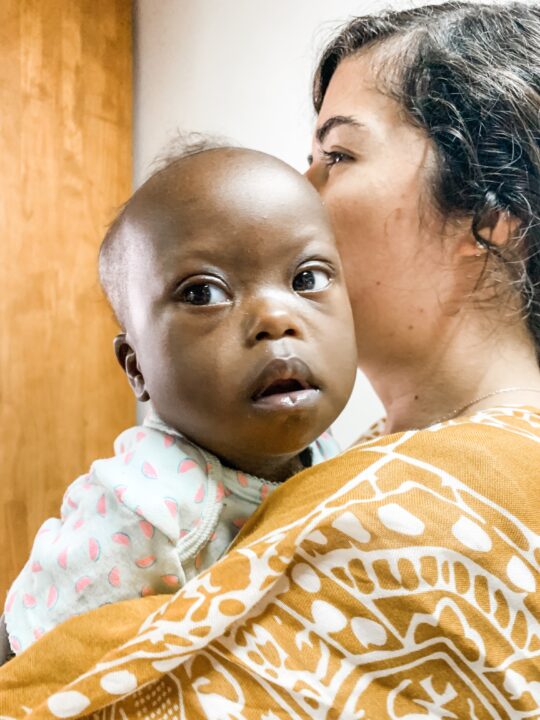
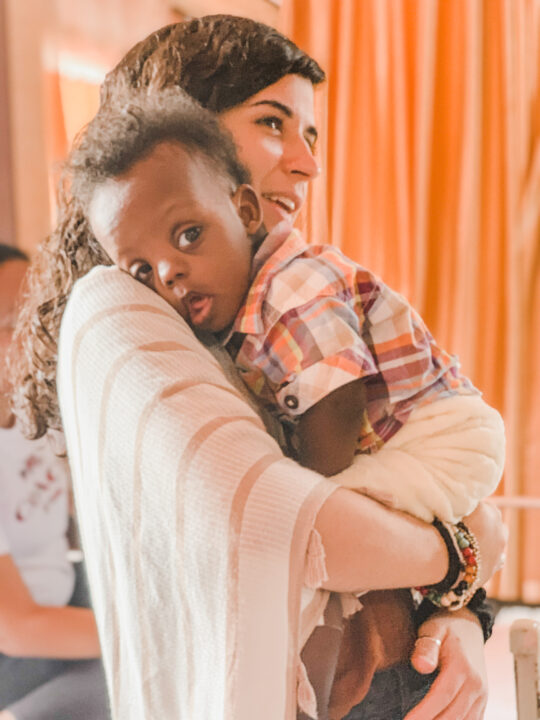
The last child we met that day was the most precious little baby girl. She had big brown eyes, soft curly hair, and the sweetest button nose. She radiated joy. When I held her in my arms, I could feel her heart beating against mine. No one had told me she had a heart defect, but her breathing was labored and strained. In that moment, I felt God gently whisper to my own heart, “Help her. Help this little one.” In that moment, I didn’t know exactly how I was called to help her, but I knew there was a greater purpose to our meeting, and God was unfolding the rest. Soon after, I returned to the United States, but that baby never left my thoughts. I stayed in touch with her family and encouraged them to take her to the hospital for a heart scan.
While I was still in Uganda, I had also taught an educational class for mothers about Down syndrome. I showed pictures and videos, explained what the condition was, and emphasized one critical message: If they ever encountered a child with Down syndrome, the most important thing they could do was encourage the parents to take the child to a clinic to check their heart. One day, I received a phone call from the translator from that class. She had been in a village nearly three hours away and recognized a two-year-old girl with Down syndrome because of what I shared in the class.
She spoke with the child’s mother, explained the conditionm, and helped her get to a clinic for an echocardiogram. She was diagnosed with a congenital heart defect and urgently needed surgery. I immediately knew that I was called to help her. The plan was to have her heart surgery at the local cardiac hospital in Uganda. I did what any millennial would do: I made a video, started a GoFundMe, posted it on social media, and sent out some emails to family and friends. Within one week, we doubled our goal, and I felt certain God was doing something bigger than I could see.
At the same time, the other baby was still on my heart. I later found out that her parents finally took her for a heart scan, and it turned out she had three holes in her heart and needed an operation too. She was six months old, the perfect age for corrective surgery, but her family couldn’t afford it. I began to see that this was the way the Lord meant for me to help her.
I planned to fly back to Uganda to be with both girls for their surgeries. Then I received a phone call that they had been removed from the hospital’s surgical list. There were too many children on the list in need of surgery and because they had Down syndrome, they were considered “too complex” and “too high risk.” That was the moment I realized how overloaded and broken the healthcare system truly was. Here I was with enough money for their surgeries, and yet two babies were getting sicker by the minute and there was nowhere to send them.
Mother Teresa has always been one of my greatest inspirations. I deeply admire her faith, courage, and unwavering dedication to those society deems unwanted or unworthy. Her love for the poor and for people with disabilities resonates deeply with me. In her books, she shares about how she prays in such detail with strong conviction. Inspired by her example, I prayed boldly. I asked God specifically for a hospital and cardiac team willing to operate on these girls.
I spent months researching and contacting hospitals and cardiac organizations around the world, across the US, Europe, and beyond. Doors continued to close. Rejection after rejection followed. Months went by and I was discouraged and exhausted. Just as I was ready to give up, I received an email from an organization in Uganda. They would accept both girls, but their hospital was in India.
I felt God gently whisper to my own heart, “Help her. Help this little one.”
As I read further, the email stated, “Our partner hospital in India was founded by a man named Dr. Devi Shetty, who was Mother Teresa’s cardiologist.” He had operated on her heart and was at her bedside when she passed away. I was overwhelmed with awe and amazement. In that moment, I knew this was where we were meant to go. Mother Teresa literally sent us her cardiologist! God had answered my prayer in a way far greater than I could have imagined.
I flew back to Uganda, picked up the girls, and together we traveled to India. We stayed for about a month. The little baby received her lifesaving surgery. The other toddler unfortunately and heartbreakingly, did not. At two-and-a-half-years-old, the damage to her lungs was too severe. Because her heart defect had gone untreated for too long, blood had flooded her lungs, making surgery impossible. She was inoperable. The doctors told me she would be lucky to live to see her tenth birthday. This was devastating news. She ended up passing away at just five years old. Her life was short, yet profound and carried immense purpose.
I knew then that I couldn’t allow other children to suffer the same fate simply because of lack of awareness, education, or access to care. There are children who need our help, and I was determined to create a program that was just for them. Soon after, I filed for nonprofit status. And that was the beginning of Hearts of Joy International.
Fun fact about me: I was born with a single palmar crease in my right hand. This crease is a single line that runs across the palm and is a marker for Down syndrome. When I was a month old, the doctors actually told my parents that they thought I had Down syndrome. I do not, but God has literally written my purpose and the path of my life in the palm of my hand. I believe God has a purpose for all of us, and when we partner with one another in love, we can accomplish great things in the world.
Here in the US, Down syndrome is pretty well understood and accepted—with the exception, of course, of the huge number of abortions. What is the situation for families as far as awareness in the parts of the world you serve? Help us understand the need for your work and how many children you have cared for since your organization began.
In the US, Down syndrome is often diagnosed prenatally. At birth, babies receive immediate cardiac evaluations and, if necessary, timely access to lifesaving heart surgery, often within the first few months of life. In developing countries, however, the situation is drastically different. Due to limited resources, stigma, and lack of medical education, children with Down syndrome are frequently undiagnosed and do not receive essential heart screenings. Many families live in extreme poverty, unaware of their child’s condition or unable to afford medical treatment. As a result, children are dying from conditions that are entirely treatable with surgical care. This leaves families feeling helpless with no hope. We know that this is incredibly preventable and strive to rewrite the story for these children.
We are healing hearts literally and spiritually and transforming how entire communities value children with disabilities.
Our vision is a world where no child with Down syndrome dies for lack of access to heart surgery, where every child is seen, valued, and given the chance to live a full, joyful life. We strive to renew global narratives around Down syndrome, replacing shame and stigma with joy, value, and belovedness. As hearts are healed and families transformed, we empower them to become advocates for change in their own communities. This is how stigma ends: through unconditional love that sacrifices, serves, and sees every life as full of purpose. Each child is a powerful reminder of what’s possible when this love takes action. Since we began in 2019, we have healed the hearts of over 165 children around the world.
Your work sounds very expensive. It must be a challenge to find funding to support such involved medical procedures. How does the cost of medical care in other countries compare to the US, especially for cardiac surgery?
Complete treatment for one patient costs $10,000, and that includes surgery costs, ICU and hospital stay, airfare, accommodations, transportation, food, passports, visas and other travel documents, care packages or supplies for their hospital stay, and much more. The surgery costs vary in the US, anywhere between $50,000 and $200,000.
How can people learn more about Hearts of Joy and possibly support your work?
You can visit our website, HeartsOfJoyInternational.com, to support our mission or contact us to get involved. You can also follow us on social media on Instagram, Facebook, and YouTube.