
Gazing Into the Abyss
Years ago, during the 1992 presidential campaign, Democratic candidate Bill Clinton popularized a means of making abortion more palatable to the uncertain voter. “Abortion,” he insisted, “should be safe, legal, and rare.” Now, for those of us who oppose abortion, the devil resides in the “rare” category. The point, however, was that there was, even among the party that supported abortion, a certain (cynical or not) reticence that abortion is not an unalloyed good.
Those days are gone.
In 2005, seventy-one-year-old feminist icon Gloria Steinem posed in a black-and-white photo with her arms overhead and thumbs and index fingers forming a diamond. And on her T-shirt was a solitary sentence, “I had an abortion.” Gloria smiled easily. According to the article that featured Steinem and numerous others wearing the same T-shirt in different poses, “[Gloria] describes her abortion as the first time she acted in her own life, rather than let things happen to her.” She wasn’t ashamed: She was proud.
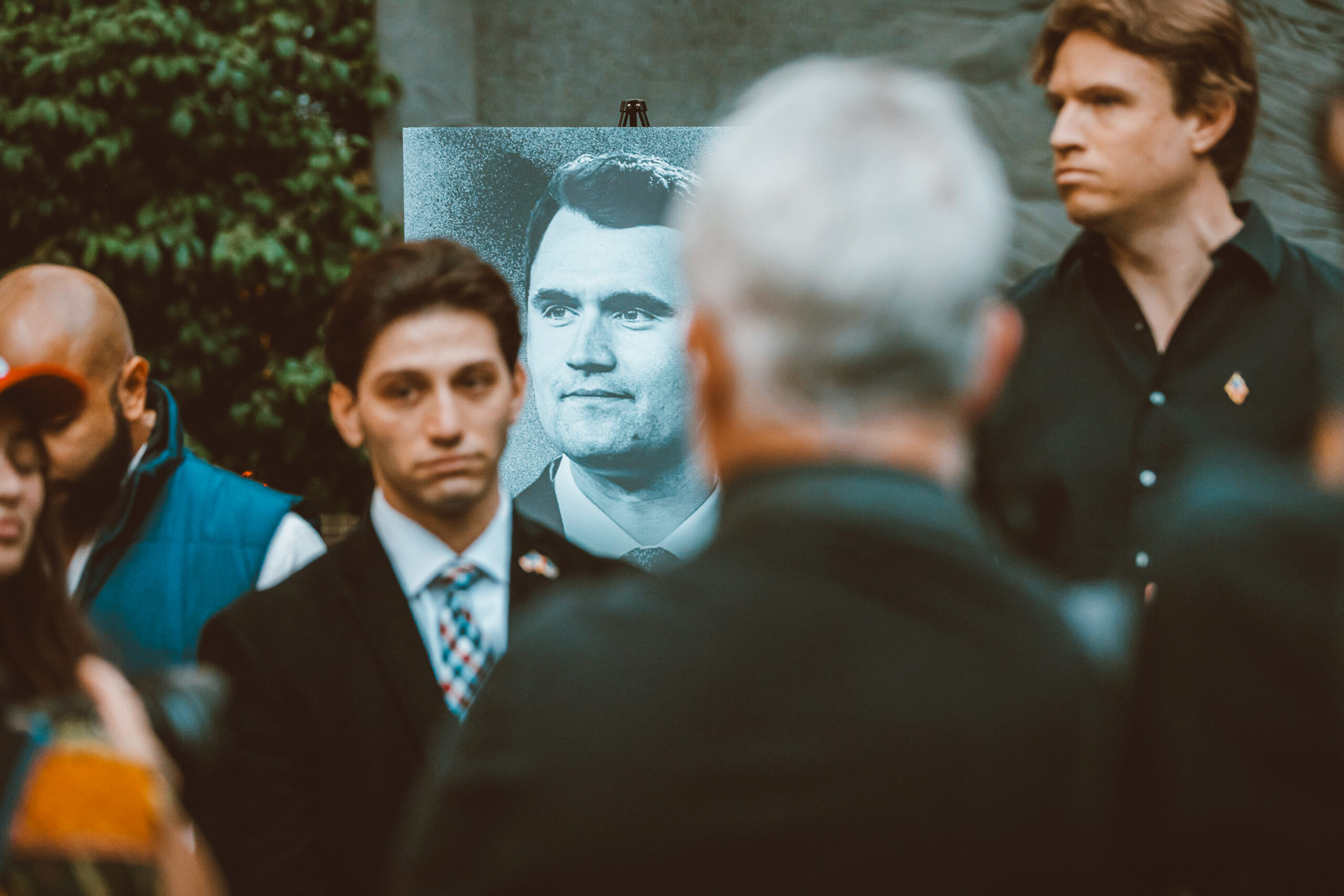
When Charlie Kirk, the conservative founder of Turning Point USA and outspoken “Prove Me Wrong” debater on college campuses was assassinated, one expected everyone to stand still and sober up. “There may be differences and disagreements, even vehement ones,” the expected response might say, “But one should not be killed over this.”
That was not the response.
Instead, nationally and internationally, across social media and during prayer vigils on college campuses and in Times Square, a brazen campaign of interruption, disruption, and disrespect ensued. “F— Charlie Kirk!” has been the battle cry. “Nazi!” “Fascist!” “[Fill-in-the-epithet]!” has flooded the public square, along with grotesque memes ghoulishly poking fun or effigies morbidly parading the bloody assassination.
We have moved from outrageous assertions for effect to outrageous assertions from conviction.
A national poll was conducted within twenty-four hours of the Kirk assassination, asking whether the murder was justified. Twenty-two percent (more than one in five respondents under the age of thirty) answered that, regardless of political party, it was, in fact, justified. If you break it down by political party, it gets even worse. Moving back in time, a 2024 Rutgers University survey asked (after an assassination attempt on President Trump) whether it would be “somewhat justified or completely justified” to assassinate Elon Musk or Donald Trump. The answer was 31 percent and 38 percent respectively, across party lines.
Once upon a time, we could expect a contingent of kooks or attention-seeking provocateurs to say beastly things in the wake of indisputably evil acts. We would shake our heads and shake them off. Now, we find sizable swaths of educated (I won’t say “well-educated”), affluent, and influential people who aren’t simply wrestling with the moral nature of such terrible things but who are thrusting their way forward to rashly celebrate and justify them. We have moved from outrageous assertions for effect to outrageous assertions from conviction.
Where is the fundamental—I mean base—moral compass? How will we agree on the lowest rudiments of a common culture—a culture now living on the fumes of a once-commonly-held faith in God and democratic political philosophy? In 1939, George Orwell shook his head as he saw society riven by fascism, communism, and free-market capitalism, saying, “We have now sunk to a depth at which the restatement of the obvious is the first duty of intelligent men.” Is this the beginning of an irreparable moral fracturing from which more hate, more violence, and more internal strife will emerge?
I fear that it is.
William Butler Yeats could just as easily have penned his poem “The Second Coming” last week as he did last century. He opened:
Turning and turning in the widening gyre
The falcon cannot hear the falconer;
Things fall apart; the centre cannot hold;
Mere anarchy is loosed upon the world,
The blood-dimmed tide is loosed, and everywhere
The ceremony of innocence is drowned;
The best lack all conviction, while the worst
Are full of passionate intensity.
But how has this come to pass?
My theory is that we have gone through a generation of willful forgetfulness. Our faith, our traditions, and our mores have been criticized as parochial, patriarchal, and irrelevant. As such, we have too often diluted, downplayed, and discarded them in the name of inoffensiveness. Our belief system gave way to an enlightened moral relativism. But, as we know, nature abhors a vacuum and so does morality. The vacuity of relativism was quickly filled by angry, absolutist ideology rooted in the denial of God and the glorification of man in all of his base appetites and strange theorizing. But even ideology corrodes and fails. And when it does, when the hoped-for eschaton, invariably, is not immanentized, disillusionment leads to decadence. What arises is a blind groping around for passions—violence, sex, drugs, and alcohol—to distract, to anesthetize, to deaden the deadness. And this leads to nihilism—meaninglessness, the void, the abyss.

As Aleksandr Solzhenitsyn saw this take place in the Soviet nightmare, he lamented, “Men have forgotten God; that’s why all this has happened.” Fyodor Dostoevsky preceded Solzhenitsyn in this assertion through the voice of intellectual atheist Ivan Karamazov, “If there is no God, then everything is permitted.”
Friedrich Nietzsche, the jarring, erratic philosophical genius from the nineteenth century, warned a listing society, “If you gaze for long into an abyss, the abyss gazes also into you.”
Have we finally fallen into that abyss?
We are on the edge.
But sometimes, peering into the consuming darkness, hearing the low growl, sensing the abject lifelessness of the abyss makes us pause.
And draw back.
And when we turn and walk, one halting step at a time, away from the menacing void, we see what we unwittingly left behind: warmth and light, confession and forgiveness, communion and fellowship, hope and love. There—away from the abyss—is God.
And he was with us the whole time.
Let us pray for each other fervently—friends and enemies alike—to find our way home.