The following story has been covered by numerous media outlets, including Orlando Health, Live Science, WESH2 News, ABC News, and Good Morning America. However, none included the key element of the miraculous story: the role of faith, prayer, and surrender to God.
* * *
At nineteen weeks pregnant, my husband, Greg, and I went to our baby’s anatomy scan, not realizing how much our lives were about to change.
I happily texted pictures of the scan and announced to the world: It’s a boy! The next day, I received a call from my OB. I heard something I never expected: The findings include congenital high airway obstruction syndrome (CHAOS). Our case was exceedingly rare; he’d only ever read about it in a textbook, and the care required was far too complex and specialized for him or any doctor in that office. He spoke highly of a fetal care specialist in the city and referred us to his care.
The world fell around me. I couldn’t stop crying. Greg found me in a corner, and I told him why: Our baby was sick and might die in the womb.
Congenital high airway obstruction syndrome is a rare condition in which the baby’s trachea—the windpipe—is completely blocked by a web or membrane. In the womb, babies don’t need to breathe, but their lungs naturally create secretions that normally come out through the mouth. The obstruction prevents these secretions from leaving the lungs, causing a treacherous domino effect: The lungs become so large they compress the heart, leading to heart failure and death.
The scientific literature on CHAOS was bleak. “Devastatingly fatal,” it said, but there were a few survivors. It offered a glimmer of hope, but still, we prepared ourselves for the worst. God, in his infinite glory and wisdom, chose us to be this baby’s parents, and it was a cross we bore heavily.
In the scientific articles, there was a concerning trend. Many of these babies diagnosed with CHAOS did not die of stillbirth nor after birth. They died via abortion. None of these babies were offered a chance at survival. Their parents were likely counseled that CHAOS was “incompatible with life” or that their children had little chance of survival, so they “might as well be terminated” in the womb.
Whatever the outcome of this pregnancy, whether Cassian lived or died, it was ultimately for God’s glory.
This was the agenda Greg and I feared the most when we went to the fetal care specialist. Instead, we were met with the complete opposite: compassion. The doctor confirmed the diagnosis and gave us the gift of hope—the first true hope since the diagnosis. When he accepted our case and presented a treatment plan, the doctor told us, “What we do here is promote life.”
Our son was in a dire condition. We named him Cassian Ignatius, after St. Ignatius of Loyola, founder of the Jesuits, whose motto is Ad majorem Dei gloriam. “For the greater glory of God.” Whatever the outcome of this pregnancy, whether Cassian lived or died, it was ultimately for God’s glory.
The CHAOS caused hydrops, a condition where the baby is swollen with fluid. The doctor, understanding the need for expediency, immediately scheduled an in-utero surgery to attempt to pierce the obstruction using a laser scope. Unfortunately, the attempt was unsuccessful, and we were back to square one. Cassian’s condition increased in precarity; his life hung in a delicate balance between lungs continuing to crush his heart and waiting for him to grow big enough for the tools needed to operate on his trachea. Time was both friend and enemy.
There was great uncertainty in being pregnant with a sick baby, knowing any day he could deteriorate. With the help of the hospital’s palliative care team, we created a memory-making plan in case Cassian passed. We highlighted the need for immediate baptism, skin-to-skin for his last moments, and getting footprints and handprints. Every appointment was an opportunity to reevaluate our plans.
Every day we prayed and asked God, “What is it that you want us to do? What is the purpose of this? What are you trying to teach us?” All we could do was hope, pray for a miracle, and surrender to God’s will regardless of outcome.
The doctors came up with a new plan for an innovative surgery and presented it to the hospital’s ethics committee, who approved of the surgery to save Cassian’s life. The surgery was not without risks, however, especially to me. There was no telling if theoretical outcomes of the surgery would come to fruition. I would be incurring irrevocable changes to my health, not because I had to but because I wanted to. At any moment I could have opted out, but I truly felt God was calling me to sacrifice. The words of our Savior now echoed back to me in relation to my son: “This is my body given up for you.”
Thus, at twenty-five weeks gestation, the surgeons partially delivered Cassian via C-section from his shoulders up. They drained the fluid from his lungs and installed a tracheal catheter to allow the movement of fluid out of his lungs. The surgeons took a picture of Cassian, and it was beautifully profound to see the baby I was carrying. My son was partially born into the world and felt air on his face. They returned him to the womb, and I remained in the hospital for the remainder of my pregnancy.
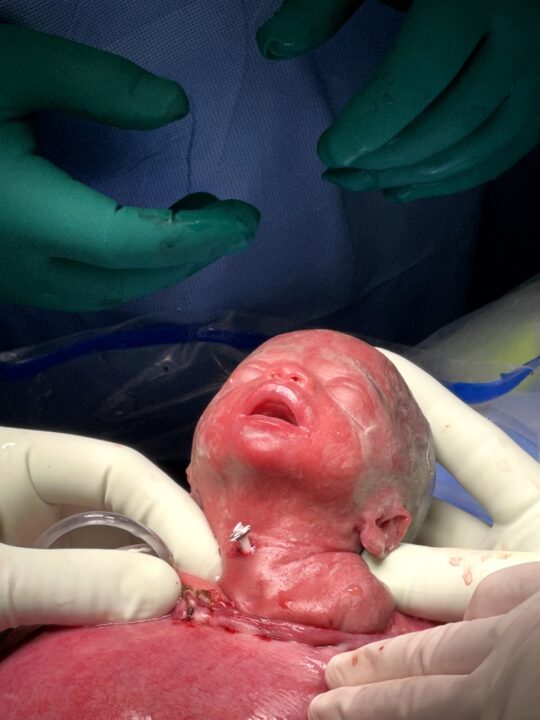
Within the walls of the hospital, I contemplated suffering, sacrifice, and selflessness. My room, in a way, became a cloistered convent. Mornings and evenings were spent in prayer, praising the majesty of the Lord, uniting myself to the cross, and asking the saints for their continued intercession for the healing of my son.
Five weeks after the surgery, with no further medical intervention, on the feast day of St. Ignatius, Cassian’s hydrops spontaneously resolved. That day my husband, on his way to the hospital, saw a rainbow in the sky—a sign of God’s covenant. God miraculously healed Cassian of all the swelling in his body and reversed his heart failure!
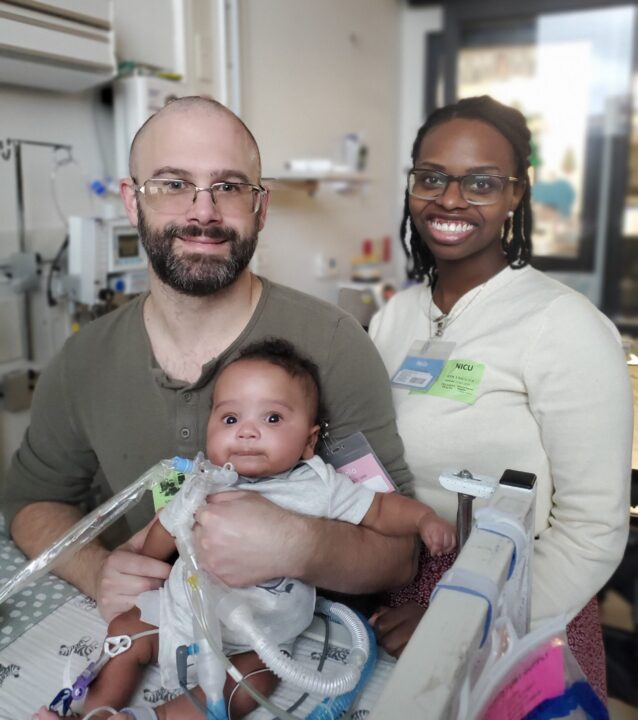
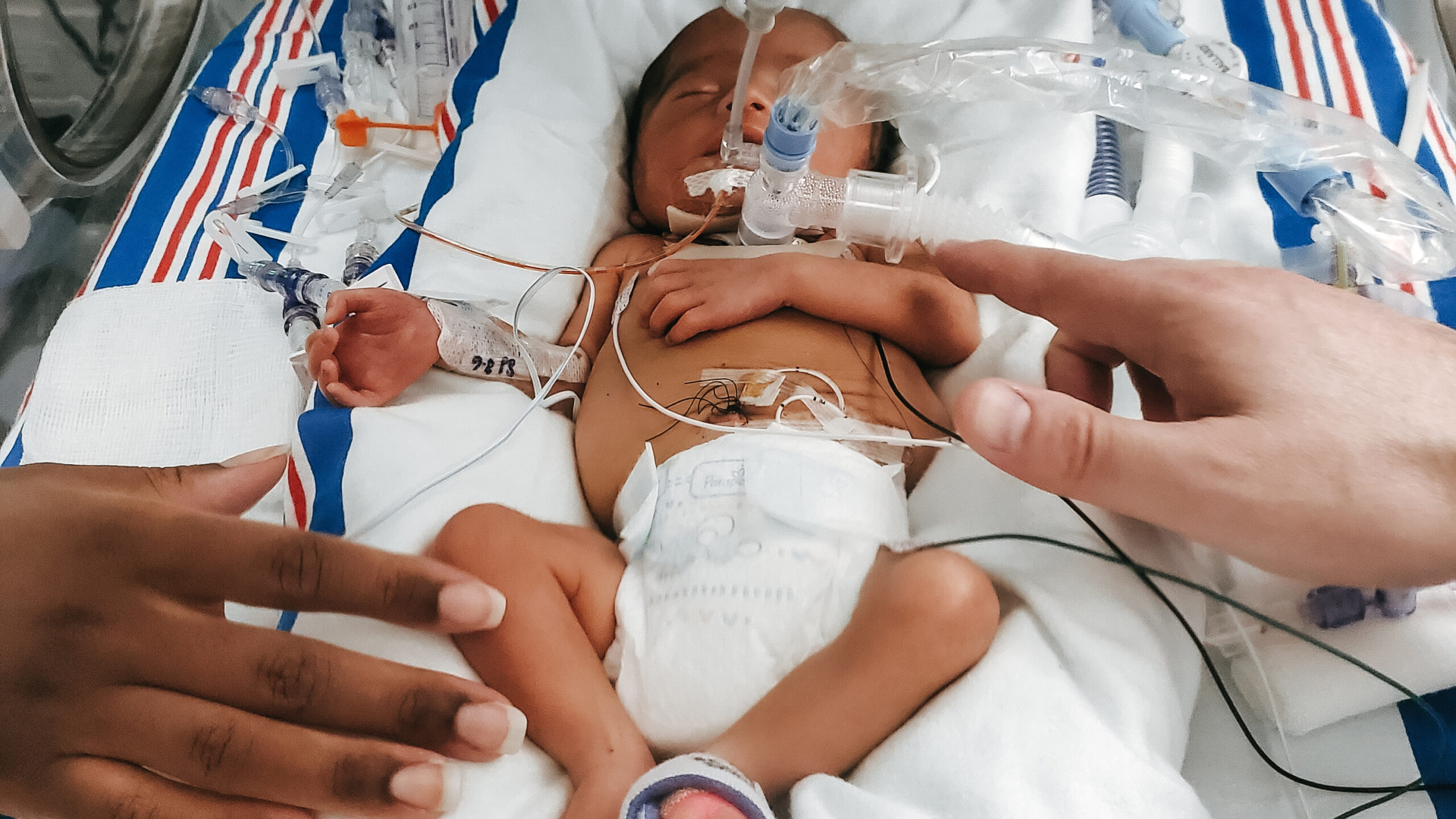
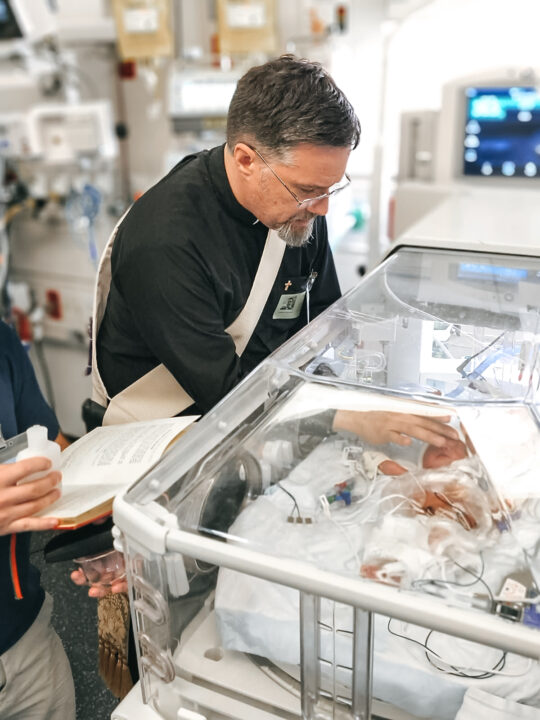
Six weeks after surgery, at thirty-one weeks, I went into labor. During delivery, Cassian had his third surgery while still attached to the placenta, where the doctors performed a lifesaving tracheostomy for him to breathe outside the womb. He was stabilized and admitted to the NICU, where he was promptly baptized by our deacon. When I woke up from the anesthesia, I was wheeled to the NICU, where I saw my little three-and-a-half-pound miracle. He lived, praised be to God! The NICU, even with its multitude of challenges, felt victorious. The baby who was not expected to live not only survived but thrived.
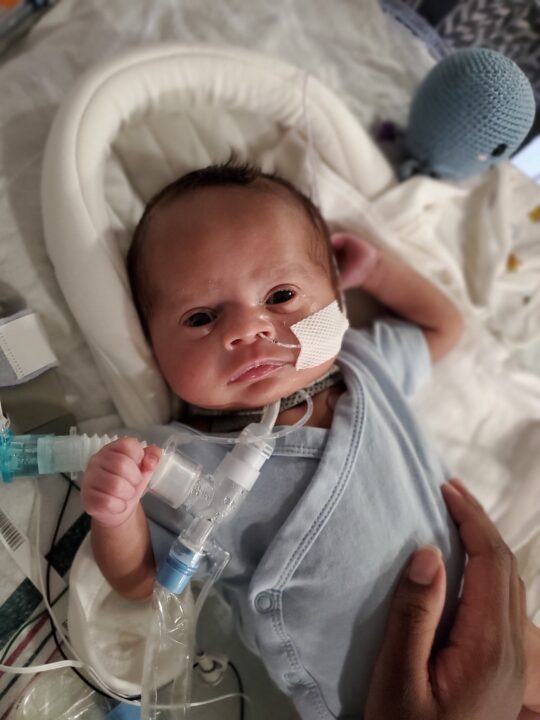
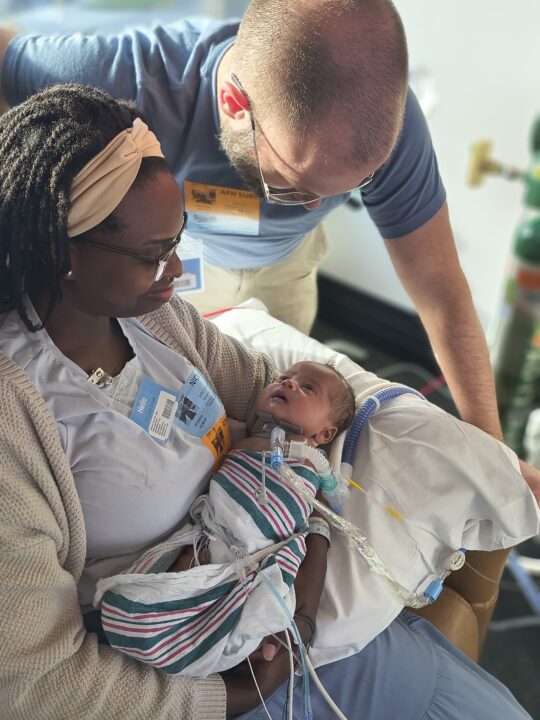
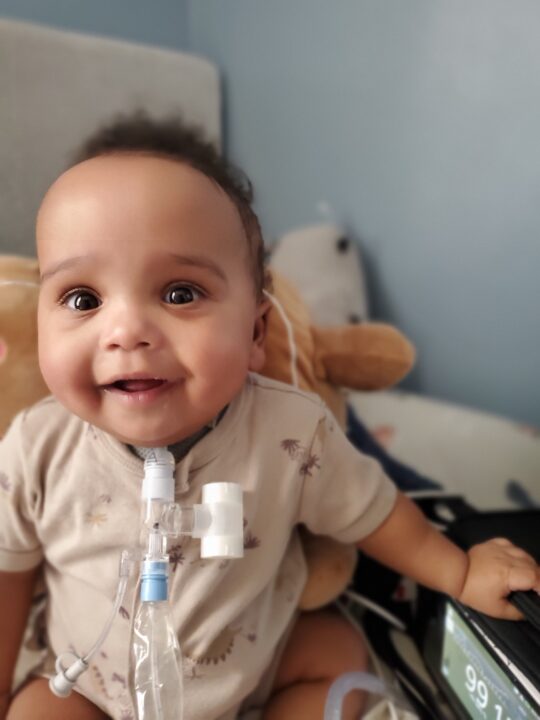
After four months in the NICU, Cassian finally came home just before Christmas. His story is that of faith and perseverance, and he is a living testimony to the providence of God. His survival ushers in a new era of treatment for babies with CHAOS. God had turned a devastating diagnosis into a leap in medical science and one miraculous birth.