
Yesterday, there was one word that dominated the national headlines: Annunciation.
In a sleepy Minneapolis suburb, a spasm of gunfire shattered the peace and pierced the stained glass windows of Annunciation Church (only a few miles from my clinic), where eager Catholic elementary school students, families, and elderly parishioners were gathered to celebrate Mass and inaugurate the school year. Two children have died and seventeen people are injured, including fourteen children and three elderly parishioners. The shooter, a twenty-three-year-old armed with a rifle, shotgun, and pistol, had written a four-page, self-indulgent letter to family; scrawled profanity, slurs, and political messages on his firearms and magazines; and recorded an eleven-minute video where he laughs, fawns over his weapons, and revels in his plans to unleash mayhem on unsuspecting innocents. While many will probe backstories and influences in a desperate attempt to find “a reason why,” none will be satisfactory. There is no ultimate earthly forensic answer to this massacre. To be sure, we will hear all of the theories: Mental illness? A troubled childhood? Gun culture? Social media radicalization?
Bah.
I’m tired of the world’s explanations.
This is wickedness.
Wickedness is not a very fashionable diagnosis to make nowadays. We always want something dispassionate, something clinical—some sensible diagram with arrows showing that A led to B and B led to C. We are all too eager to assert any number of plausible theories—anything to make sense of this tragedy. At this point, we don’t know enough, but you can almost hear it: “Physical abuse as a child must have caused it.” “Bullying in school must have caused it.” “Social isolation must have caused it.” “Drugs and alcohol must have caused it.” “Video games, YouTube, an ideologically fiery political climate must have caused it.” For, we tell ourselves, if we find something clinical, then we convince ourselves that it is fixable. Well, anti-bullying campaigns, sobriety campaigns, video game warnings, social media parental controls, gun control have all been tried for mass shootings in the past. And yet here we are.
This is wickedness.
Wickedness is rooted in sin. And sin has been with us since shortly after humanity’s dawn and will rankle us until Christ appears again triumphant.
Somehow, we’ve forgotten that.
She worried and feared. No doubt she was uncertain and unprepared. But she knew—she knew in her core—that God would make the senselessness aright.
We’ve scoffed at the simple-minded notion that sin could be at the root of such horrific modern problems. But G. K. Chesterton once observed, “Certain new theologians dispute original sin, which is the only part of Christian theology which can really be proved.” Aleksandr Solzhenitsyn declared, “The line separating good and evil passes not through states, nor between classes, nor between political parties either—but right through every human heart.” And in his letter to the Romans, St. Paul wrote, “All have sinned and fallen short of the glory of God.” Winston Churchill once noted, “The truth is incontrovertible. Malice may attack it, ignorance may deride it, but in the end, there it is.” Sin is at the root of wickedness. And what happened at Annunciation Church was pure wickedness.
Sin pervades our lives. All of us. And, untended by prayer and unannealed by the sacraments, we are plunged into its abyss of darkness. The students, families, faculty, and parishioners of Annunciation Church knew this and yesterday approached the altar with joy and contrition. The shooter did not. He skulked outside and approached the altar with gunfire. Whatever theories we may have about him, sin is foremost.
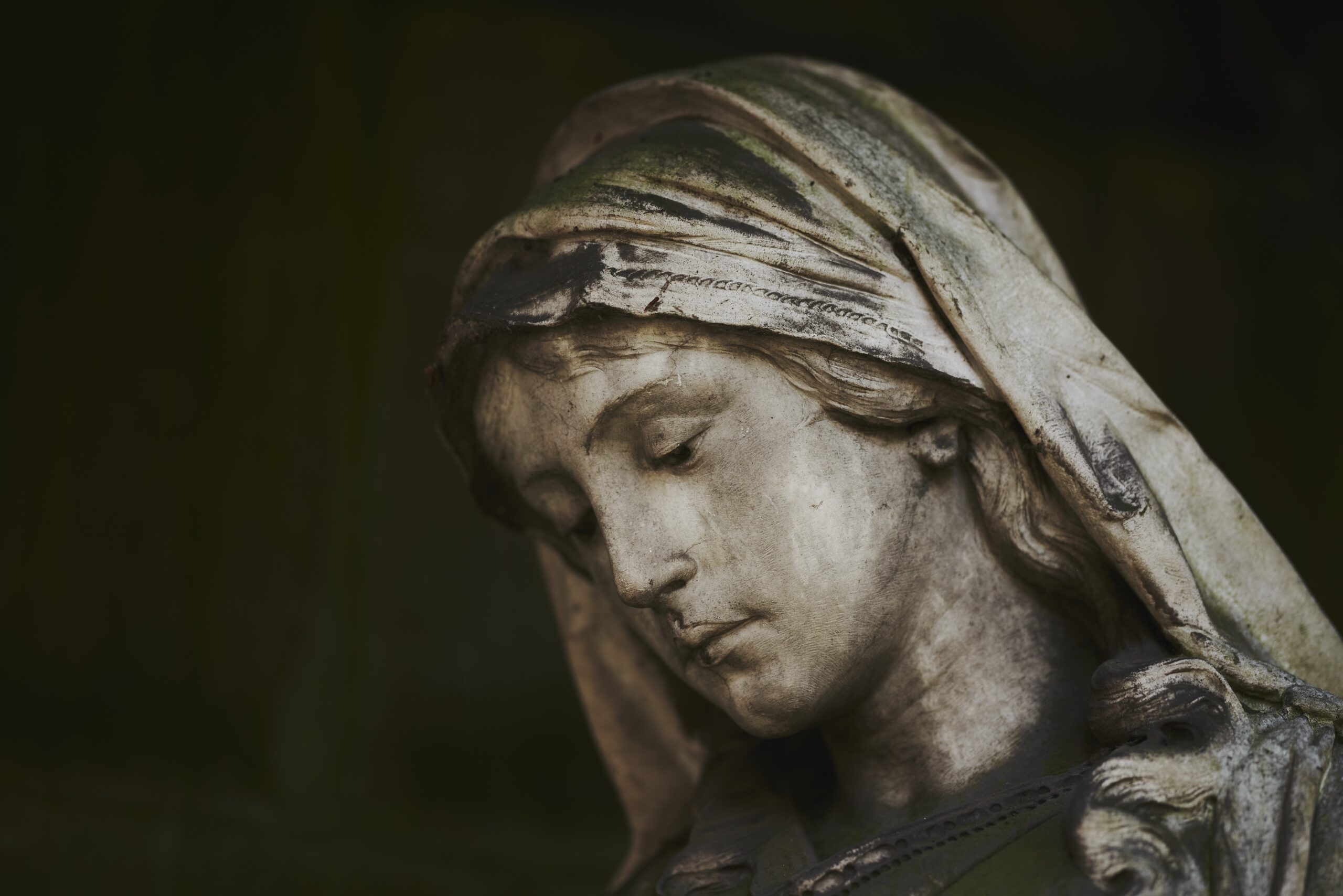
It wasn’t until today that I reconsidered the namesake of Annunciation. The word Annunciation should not be fixed in our mind as an inexplicable, unconscionable tragedy, which it indisputably was. Rather, in our grief, in considering the word Annunciation, let us return to a moment of unexpected hope from two millennia ago. In a sleepy town in Galilee, a young woman was confronted by a luminous, otherworldly being. And she was terrified. In her confusion and uncertainty, the angel Gabriel assuaged her fear, “Do not be afraid, Mary, for you have found favor with God.” Notwithstanding all the trials she would endure from the Massacre of the Innocents to the Passion of the Christ, Mary trusted. Of course she worried and feared. No doubt she was uncertain and unprepared. But she knew—she knew in her core—that God would make the senselessness aright. Somehow. In some way. “Behold,” she whispered, “I am the handmaid of the Lord. May it be done to me according to your word.”
Yesterday, a shooter awash in sin and lost in wickedness shattered lives.
But the faithful of Annunciation Church and Mary’s moment at the Annunciation promise something more powerful than wickedness. They promise us comfort, hope, and redemption. They remind us—amid utter confusion and galling uncertainty—to pray on, to love one another, to rest our weary heads on the loving shoulder of Christ who knows our pain from his own cross. For the Annunciation says no to wickedness and yes to Emmanuel—“God with us”—no matter the terror, no matter the pain, no matter the uncertainty. “Behold, I am the handmaid of the Lord.”
God is with us.
Still.
God is with us.
Mary, Mother of Sorrows, pray for us and for the lives and souls of the Annunciation Catholic community.