
Just the other day, I was remembering something my mother often used to say to me as I left the house. She would say in her sing-song sort of motherly voice, “Mark, remember who you are.” The only thing worse was when she was suspicious that I wasn’t telling her the truth about something. Then she would start to sing the old Protestant hymn “There’s an All-Seeing Eye Watching You.” Mothers really know how to get under your skin, don’t they?
I think I knew, even then, that there was wisdom in her words. Consciences were maybe more tender then, and many of us had a fear of doing something that would bring shame to our family. That fear was a stabilizing force in the formation of character. At least, it caused me to think more than twice about doing something I shouldn’t—and that was enough time for a change of heart. If I decided to exercise my poor judgment, I knew there would be hell to pay when my father got home.
The neighborhood and religious culture around us worked together to keep my friends and me on the right path.
The formation of my identity was inseparable from the awareness of what my family stood for: my father’s role in our Protestant church as an elder, the esteem everyone in our small church had for my extended family, my parents’ constant care and watchfulness, and of course the connections my mom had in the neighborhood ladies’ gossip group—what they called their weekly coffee clutch. They created quite a surveillance network that also kept us on our toes.
The neighborhood and religious culture around us worked together to keep my friends and me on the right path. But it was more than those things that (mostly) kept me from satisfying my young curiosity in nefarious ways. It was memorizing Bible verses each week, singing the “Star Spangled Banner” and “America the Beautiful,” and saying the Pledge of Allegiance every day at school. In those days, civic pride was still promoted in my public elementary school. We were part of a tradition that believed in the formation of young people to find their identity in faith and shared cultural values. It was noble work, and I am grateful for all those who dedicated their lives to it. I don’t think that same commitment exists now. The world is a much different place, and there is little we share in either faith or cultural values.
It was the formation of our cultural and religious memory that allowed us to see the folly of the world that even then was beginning to unravel around us. It was the 1960s.
I vividly remember witnessing that unraveling in the trail of smoke rising from the Bank of America building as rioters burned it near the University of California, Santa Barbara. It was close to where I lived, and I could see the smoke from my backyard. We saw an increasing number of hippies around us who camped on the side of the road and hitchhiked their way along the 101 Freeway to San Francisco and the Haight—1960s disheveled and tie-dyed pilgrims in search of a new spirituality of peace and love in a material world of abundant drugs and free sex.
A few years later, my friends and I would joke about the cloud of marijuana smoke that perpetually hung over the athletic field at our high school. Cutting classes was never punished, and the only course we were required to take was physical education because it was a state requirement. Cultural memory was vanishing in the haze, and formation of the intellect was only for those who thought they wanted to go to college. Identity wasn’t found in faith and family; it was proclaimed by your preference of genre in rock music and its associated costume. A couple of my friends became victims of that culture and one of them was eventually arrested for shooting the windows out of a car in a nearby neighborhood. Scott had forgotten who he was. I later discovered he had been sexually abused by our junior high band director, so maybe that was how he was dealing with his anger and shame. His memory had been damaged. No, the “good old days” were never as good as they appeared to be. Sin is not new, but it wasn’t socially acceptable then.
What my mother didn’t teach me was that God’s eye casts upon us a gaze of love, not a condemning stare.
I’ve been thinking a lot about memory these days and how important it is to form it wisely. We separate it from that “all-seeing eye” at our peril. What my mother didn’t teach me was that God’s eye casts upon us a gaze of love, not a condemning stare. I was raised in a fundamentalist Protestant home where the understanding of God was short on relationship and big on dos and don’ts—mainly don’ts. That wasn’t all bad, but not the whole picture either. It was lacking in the essentials of God’s being.
Ancient people understood the importance of memory in preserving their culture. The Mesopotamians had the Epic of Gilgamesh, and the Anglo-Saxons had Beowulf. Other cultures had their epic tales, too. The Israelites had the best one, and not only because it is true. The center of their story was a God who created them in his image and cared for them as a father. God’s delivery of the Israelites from slavery in Egypt and his provision for them during the exodus and beyond is memorialized in the Hebrew scriptures, where it was intended to be shared from generation to generation, burned into their cultural consciousness, and memorialized in the great Psalms of David that were recited daily.

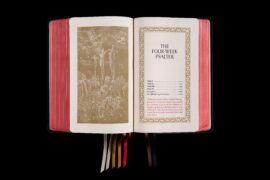
Catholics inherited that tradition in the Liturgy of the Hours, and I often pray the nine psalms of Matins early in the morning from the 1960 breviary. (I love the extended psalms and readings in the earlier version.) I especially look forward to Fridays and praying Psalm 78, which begins:
Attend, O my people, to my law:
incline your ears to the words of my mouth.
I will open my mouth in parables:
I will utter propositions from the beginning.
How great things have we heard and known,
and our fathers have told us.
They have not been hidden from their children,
in another generation.
Declaring the praises of the Lord, and his powers,
and his wonders which he hath done. (1–4)
The seventy-some verses that follow call our attention to why we should be attentive. They reprise significant moments in the history of God’s relationship with Israel that remind us of who we are and where we’ve come from. Most significantly, they remind us of how much God loves us in spite of who we are. We read,
The children that should be born and should rise up,
[should] declare them to their children.
That they may put their hope in God and may not forget the works of God:
and may seek his commandments.
That they may not become like their fathers,
a perverse and exasperating generation.
A generation that set not their heart aright:
and whose spirit was not faithful to God. (6–8)
Psalm 78 warns of the consequences that come to a “perverse and exasperating generation” that doesn’t keep God’s covenant, nor remember the miracles he worked to show them his power and his love. God turned against the Israelites only when they forgot him, then he made “their days vanish like a breath, and their years in terror.” The Israelites, like us, were fickle. Time and again they turned back to God, repented, and “sought God honestly,” but it was only for a little while. God’s patience was exhausted, and he allowed the Israelites to experience a brutal defeat and captivity. Eventually, though, he returned to defend them. As my favorite lines in the old translation say:
The Lord was awaked as one out of sleep, and like a mighty man that hath been surfeited with wine. And he smote his enemies on the hinder parts: he put them to an everlasting reproach. (65–66).
Praying the Psalms reminds us of who we are. They challenge us to face our own faithlessness and the treacherous darkness present in human hearts. Most importantly, they remind us of the possibility of redemption by God, who loves us and watches and waits for our return. His gaze of love glowing from his “all-seeing eye” is always there. Hope even in the darkest of times.
What personal or social failures allowed or invited the darkness that has invaded their souls—so dark that their vocation becomes executioner?
We are living in dark times now. Recent events have put us face to face with unspeakable evil: the murders of Catholic schoolchildren at Mass, a beautiful young Ukrainian immigrant who came to the US to flee war in her own country, Charlie Kirk, and not just these very public killings but thousands more—all those nameless souls who are killed every day in wars and persecutions around the world that rarely make headlines.
Don’t you wonder what has formed those who brandish weapons and steal the lives of others as if they “were thrusting down a leaning wall, and a tottering fence” (Ps 62:4)? What influences have formed their identity to see themselves as warriors in a culture of death and destruction; what has called them to wage war against grievances, fears, or prejudices they imagine against their victims? What personal or social failures allowed or invited the darkness that has invaded their souls—so dark that their vocation becomes executioner? And just a small step below the ones who commit these horrors are those who valorize the murderers and gleefully sneer at their victims.
My description of my childhood was naïve. It is equally true that we were blessed to be raised in a more intact society and that we were raised amidst rising social conflict. The Vietnam War was raging and so were the protests it inspired. One of those protests resulted in the burning of the Bank of America I mentioned. We also experienced the assassinations of President John F. Kennedy, Martin Luther King Jr., and Robert Kennedy. Society was fraying, and the fragmentation has increased exponentially since then. It’s hard to imagine how to unite a people with no common identity.
St. Luke wrote that “the good person out of the good treasure of the heart produces good, and the evil person out of evil treasure produces evil; for it is out of the abundance of the heart that the mouth speaks” (Luke 6:45–46). That seems obvious, but Jeremiah adds the complication: “The heart is devious above all else; it is perverse—who can understand it?” (Jer 17:9). Evil and deviousness have their source in mystery, the “mystery of lawlessness” that St. Paul wrote to the Thessalonians about (2 Thess 2:7). He named the evil but also provided the solution to its wiles, and it requires formation of the heart: “Stand firm and hold to the traditions that you were taught by us, either by word of mouth or by our letter” (2 Thess 2:15).
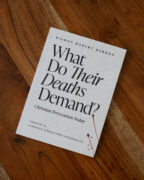
In his forthcoming book, Towards Dawn, Bishop Eric Varden observes:
The world about us now is swept away by a rhythm increasingly resembling that of a danse macabre. Its multiple voices shout each other out in often fearful cacophony. There is no established score, no one conducting. We need to set another pace, even if it incurs the rage of the fast-whirling crowds. We need to listen out for the one perfect, penetrating pitch by which alone our instruments may be symphonically tuned. . . . In that symphony, the voices of our time resound in harmony with those of Abraham and Gilgamesh. To keep that hope-filled music alive is the Church’s obligation, mission, and sublime privilege.
The Church, grounded in the Gospel of Jesus Christ, is our mother’s voice. It forms our identity and is obliged to remind us of who we are—to keep us attuned to the perfect pitch of salvation’s promise under the loving eye of our Father in heaven. It is our only peace among the “fearful cacophony” and “fast-whirling crowds.”