
Who Loves You, Baby?
Daniel K. Williams is a thorough historian, but his books always feel like an entry point into alternative history for me. When I first read his Defenders of the Unborn: The Pro-Life Movement Before Roe v. Wade, it gave me a glimpse of a lost inheritance. Before the polarization of Roe, pro-lifers had a range of political views, and many of them were progressives.
In his most recent book, Abortion and America’s Churches: A Religious History of Roe v. Wade, Williams explores how America’s Christian denominations gradually divided in the fight over the legality of abortion. The book is excellent and detailed. Williams’s own views are clear to the reader, but he sifts through primary sources with frank curiosity and charity about how church leaders chose sides. One philosophical turning point particularly stuck with me.
In Williams’s telling, in the wake of World War II, there was a desire in many philosophical and religious traditions to be able to speak about human dignity without relying on reference to God. Religious language limited who would listen. In the wake of the Holocaust, there was an urgent need to find a minimum ground of human dignity that many diverse nations could assent to. What was objective and unambiguous about human beings?
For some thinkers, a way of grounding human value was pointing to other human beings who valued a particular person at risk. If someone was loved, whether by their mother, their child, their students, their neighbor, it required no reference to God to argue that when they were the target of violence, the harm rippled outward. This humanist view put more emphasis on the way we belong to each other, but it also made human dignity contingent on, as Williams puts it, the “rationality and the socialization process.”
When advocating for legal abortion, Dr. Alan Guttmacher, a president of the Planned Parenthood Federation of America, could appeal to this formulation to push children in the womb outside the category of dignified persons. Children in the womb could be morally distinguished from their mothers, Guttmacher argued, because they “had no consciousness, no life experience, no previous association with fellow humans.”
Every human being is made for connection, but connection is not something we eventually mature into.
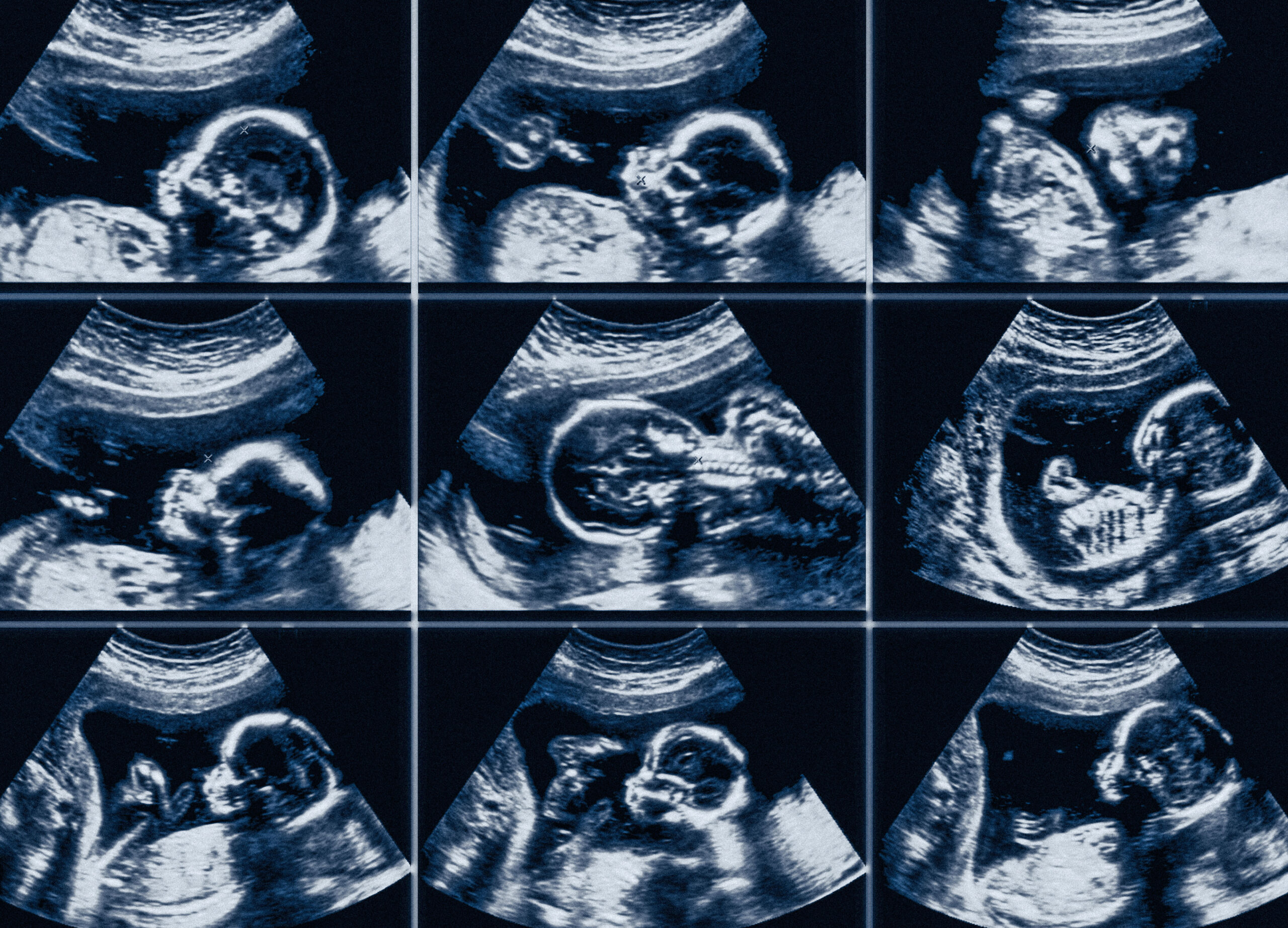
The claim that a child in the womb has no association with fellow humans could only come from a man. For a woman who is pregnant, it is obvious that her child is intimately bound up with her. Her blood vessels brush those of her child in the placenta, as nutrients and waste flow back and forth. Even before her child’s movements are perceptible, the baby’s growth reshapes her hunger and makes her body tender and her stomach unstable.
If the baby did not have an “association with fellow humans,” there would be no need for abortion. There would be no umbilical cord to sever, no placenta to delicately scrape off with a curette. Guttmacher’s claim only makes sense if human associations must be rational, conversational connections. The baby cannot speak to its mother in utero, or for a long time after delivery. Guttmacher anticipated philosopher Peter Singer’s claim that moral personhood depends on the capacities we attain (and may not be fully achieved until long after birth). As Guttmacher put it, “To me, an early conception is not a human being created in God’s image; it is a potential human being in man’s image.”
Guttmacher’s view began to turn up more and more in the arguments of liberal Protestant denominations as they decided how to square the conflicting claims of mother and child. In 1970, the Lutheran Church in America (now merged into the Evangelical Lutheran Church in America) issued a statement on abortion that awkwardly split the baby. “Since the fetus is the organic beginning of human life, the termination of its development is always a serious matter,” the Lutheran statement acknowledged. “Nevertheless,” the statement went on, “a qualitative distinction must be made between its claims and the rights of a responsible person made in God’s image who is in living relationships with God and other human beings.”
The mother had a stronger claim to live in relationship with other human beings. (It is not clear how the Lutherans assessed her baby’s relationship with God as weaker than her own.) Her husband, her other children, her coworkers, her neighbors could all step forward to give voice to their love for her. The baby, veiled in her flesh, could not produce similar witnesses who had met him face to face. The fact that the mother did not want to see her baby draw breath was not an invitation to pity but a proof that he was unpitiable.
Williams’s book is a fascinating history because of the space he gives to the prolonged struggle within denominations to decide what their position on abortion would be and how they would explain it. The connection theory of humanity stood out to me because it is a strong example of the danger of a partial truth. Human beings are not lone individuals. Long after our umbilical cords are clamped and trimmed, each of us is a sprawling, exposed being. We love others, and we feel their hurts as our own. We slip into physical debility and once again rely on others to change our diapers or bathe our bodies. Our moral reasoning errs when we imagine we can consider any one person “in isolation.”
However, when our moral worth is premised on others’ feelings about our need, rather than the blunt fact that we all need others, it is the most marginalized who are at the greatest risk of becoming unpersoned. The throwaway culture treats each human life as possibly valuable, but it requires proof of that value. Each person knows his or her place is contingent on who (if anyone) is willing to bear the burden of loving him or her.
Every human being is made for connection, but connection is not something we eventually mature into. We each begin life intimately and particularly dependent on our mothers, unable to reciprocate in kind what we receive. Pregnancy images the unasked-for gift of our own existence: We are loved into being by God and conserved in existence by him, moment by moment. In one sense, nothing could be more correct than to say we have moral weight because we are loved. But human love, with divine love set aside, is not strong enough to give that philosophy a solid foundation.