
A few weeks ago, my church sponsored a field trip to The Cloisters, a time capsule of medieval art and architecture located in northern Manhattan. Opened in 1938 as a branch of New York’s Metropolitan Museum of Art, The Cloisters is the culmination of the efforts of an eccentric art collector, a visionary architect, and John D. Rockefeller, Jr.’s money.
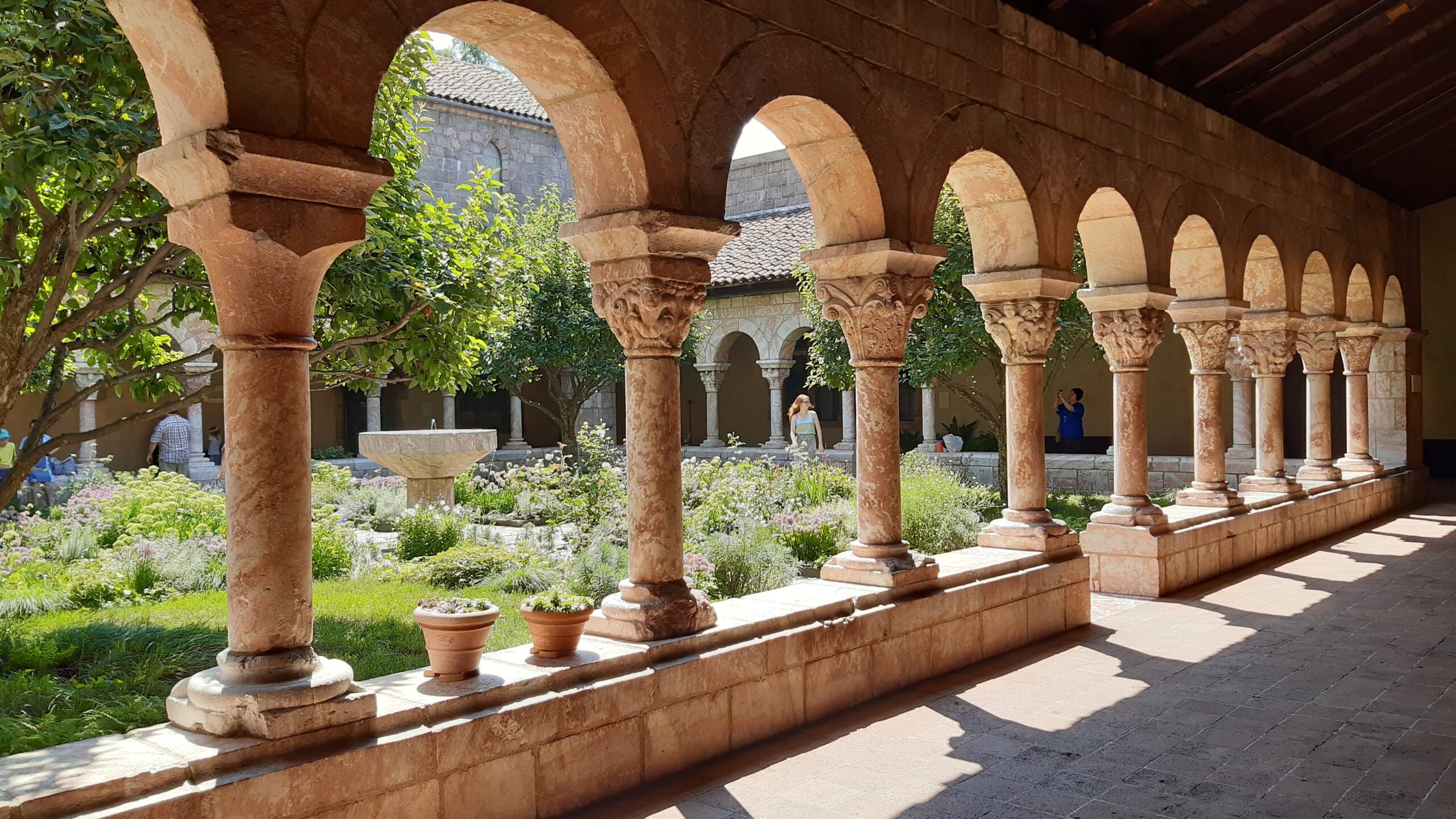
Unlike other museums, where ancient works of art often clash with modern surroundings, The Cloisters is designed to feel like a stroll through a monastery or convent of the Middle Ages. Covered passageways, or cloisters, border three gardens leading to reconstructed chapels, which serve as galleries—just as a cloister would have led between buildings where monks and nuns lived, worked, and worshiped hundreds of years ago. Parts of abbeys in France and Spain were disassembled and shipped to New York, stone by stone, to create this structure that feels centuries away from modern life, despite its twenty-first-century urban location. It’s an immersive experience, both historically accurate and ahead of its time. For those wishing to travel back to the Middle Ages, I would recommend it as a more serene and edifying field trip than a visit to one of those ersatz “Medieval Times” dinners and tournaments, unless pseudo jousting and eating with your hands is your thing.
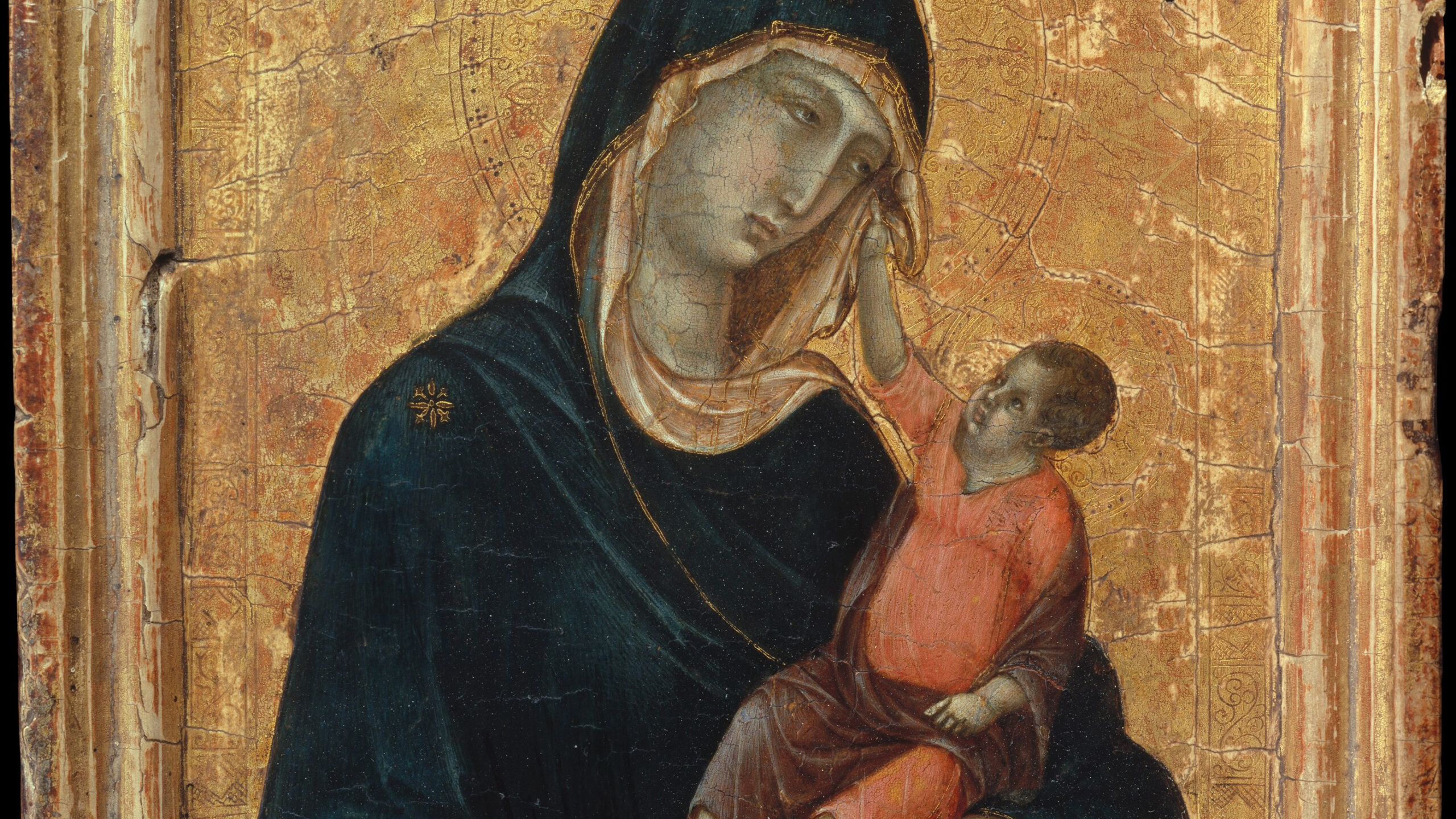
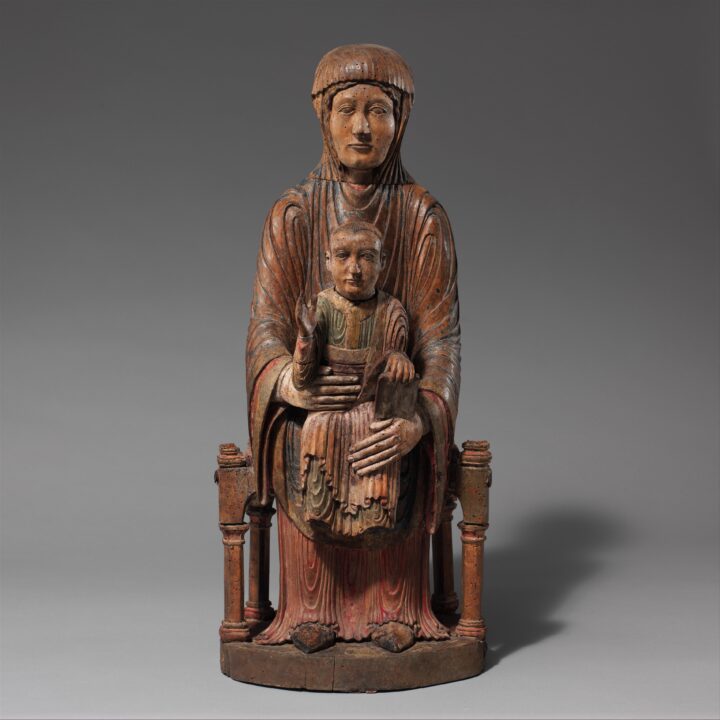
Aside from unique architecture, The Cloisters is perhaps best known for the Unicorn Tapestries, which have both religious and secular interpretations. But most of the sculptures, paintings, and tapestries are more recognizable, less enigmatic depictions of scenes from the pre-Reformation Christian (and hence Catholic) story. Prominent are depictions of the Madonna and Child—perhaps the best known being The Enthroned Virgin and Child sculpture, with the baby Jesus looking almost like a miniature adult—and a more traditional Romanesque image presiding over the beautiful reconstructed apse from San Martín at Fuentidueña.
In fact, images of the Madonna and Child are everywhere at The Cloisters—in sculptures, tapestries, paintings, and carvings. One could even say after visiting The Cloisters that the Madonna and Child was the ubiquitous “meme” of the Middle Ages, an icon that was reproduced in all forms of cultural expression. All this, despite the fact that the scene of Mary holding an infant Jesus is never explicitly described in the New Testament, with the possible exception of the presentation at the temple. Of course, the prevalence of the image in medieval art points to the supremacy of Christ in Western culture for more than 1,000 years. But I sensed there was something more to it. Why was an image of a mother and child so revered, so ubiquitous, for so long?
Love, particularly the love of a parent for a child, is an area where science and religion truly intersect.
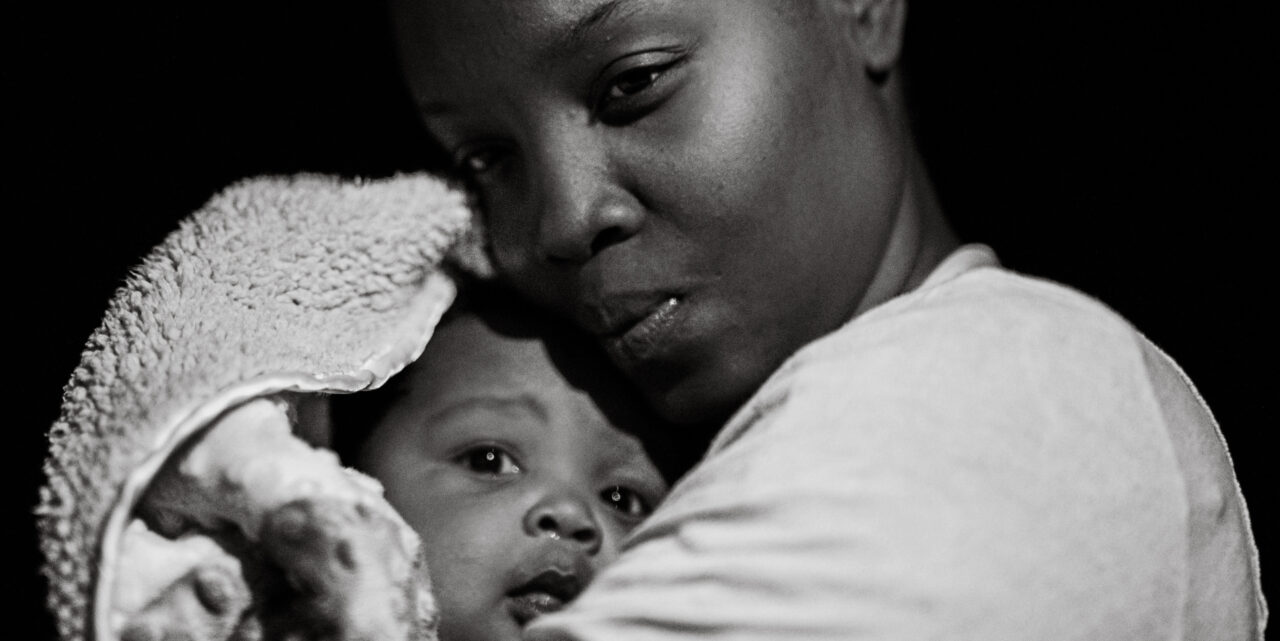
On the bus ride home from the field trip, it dawned on me. Perhaps the cultural influencers of the Middle Ages had a deep understanding of the psychology of human beings that modern psychologists, social scientists, and neuroscientists have just begun to discover in the past few decades: that the bond between mother and child has unrivaled significance in human development. Beginning in the twentieth century, researchers began to find that the importance of the connection between a mother and child (or a primary caregiver and child) and the impact that relationship has on a person and society as a whole simply can’t be underestimated.
I learned about the remarkable research on the importance of early childhood, and in particular the mother-child bond, in 2010, when I stumbled into a job for which, honestly, I was not very qualified. Despite having no degree in early childhood education or child psychology, I became the coordinator of an early childhood collaborative in Danbury, Connecticut. (The first coordinator didn’t work out, time was ticking on the grant funding, and I was available and willing.) The idea of the collaborative was to bring parents of young children, childcare providers, early educators, and pediatricians together to cultivate a community that would raise happy, healthy children, prepared for school and for life. I had two children of my own who were in their teens by then, and I tended to remember infancy and early childhood as all snuggles, nursery rhymes, and Barney videos, punctuated by a few unpleasant tantrums and a lot of messes to clean up. In short, in my mind, the ages from birth to five were a sort of holding period before the real educational preparation for life began in first grade. As it turns out, I couldn’t have been more wrong.
Neuroscientists now tell us that babies’ brains form one million new neural connections per second. Those connections help children learn to move, talk, and solve problems. What helps those infants’ neural connections grow, the “fertilizer” if you will, are loving relationships with the adults who care for them. This happens primarily through “serve and return” interactions, such as when a baby reaches out or cries and the adult responds. These most critical brain connections are built long before a child begins learning to read, write, and do arithmetic in elementary school.

John Bowlby was a pioneer in this field in the 1940s. He and the social scientists who followed him developed attachment theory, exploring the ways a strong, nurturing bond between a mother and child can affect a child’s emotional and mental health. They found that children who have a strong sense of attachment feel more secure, are better at regulating their emotions, and have a safe foundation from which to explore the world. As Bowlby put it, “Life is best organized as a series of daring adventures from a secure base.” Without the secure base, the “daring adventure” of a rich, fulfilling life is less likely. The child who fails to attach securely finds it hard to learn and form healthy relationships with other children and adults. Many face challenges that last into adulthood, both educationally and psychologically.
Medieval culture used beauty and art to convey truths about the human experience that modern social science is beginning to reveal through data.
Then there’s the stunning research associated with the ACEs test. ACEs stands for adverse childhood experiences. The test includes ten questions about the stability of your home life as a child, including questions about physical and emotional abuse and neglect, alcohol and drug abuse, divorce, domestic violence, and mental illness. (Learn more about ACEs here.) The original ACE studies were conducted by Kaiser Permanente between 1995 and 1997 on 17,000 participants. That study, and many that have followed, found that the more ACEs a study participant experienced as a child, the more likely he or she was to suffer from mental health issues (depression, anxiety, and PTSD), chronic diseases (heart disease, liver disease, diabetes, and stroke), and substance abuse. Career and educational prospects for participants with higher ACEs scores are also grim. One study even showed that individuals with six or more ACEs died on average nearly twenty years earlier than those with no ACEs.
Think about that: One way to reduce chronic disease, mental illness, poor educational outcomes, and early mortality is a loving, nurturing home life and a strong, stable connection with a caregiver during the first few years of life. Apparently, the medieval Church was onto something by placing an image of a mother and child at the center of the culture.
Images of the Madonna and Child are of course less prevalent today. The concepts of individual freedom and “self-actualization” hold more sway over our modern cultural imagination than a secure, happy mother-child bond. In my lifetime, feminist and other influences (which in many ways have been beneficial for women) have often downplayed the importance of the role of motherhood, emphasizing career achievement over parenting. Imagery of women tends to focus on beauty, sexuality, and power rather than maternity. But the conundrum of modern secular life is this: The self-actualization that we regard so highly has been proven, through research, to be difficult if not impossible unless you had a strong connection as a baby with a primary caregiver, most often a mother. Some sacrifice, some loss of focus on the self, is required of the primary caregiver for the child to have a healthy, happy life. Ironically, by downplaying motherhood as a society, we’ve thwarted our chances of self-actualization. Without the mother-child bond, we can’t be the best we can be—for ourselves or for others.

As the attachment scientist Louis Cozolino says, “Those who are nurtured best, survive best.” Love, particularly the love of a parent for a child, is an area where science and religion truly intersect. With love, we thrive; without it we struggle. It seems that medieval artists, their patrons, and their public perceived something universally sacred, even divine, in the bond between caregivers and children. The first image of the Madonna and Child appeared in the Catacombs of Priscilla in Rome between the second and fourth centuries. Artists have created innumerable versions and variations on the theme ever since. I believe that somewhere in their deep collective psyche, the people of the so-called Dark Ages knew part of the key to healthy human development was the mother-child bond. It has only been in the past few decades that the sacredness of that bond has been researched and rediscovered by scientists and is starting to regain the prominence it deserves.
After my visit to The Cloisters, I’ve become more attuned to the way medieval culture used beauty and art to convey truths about the human experience that modern social science is beginning to reveal through data. The ubiquity of the Madonna and Child was part of the intuitive genius of medieval culture—a culture that modern secular society tends to consider backward. Hundreds of years before social scientists gathered infants and toddlers into their labs, before longitudinal studies were conducted on childhood outcomes, before academics scratched their heads and thought of ways to determine why some children are well adjusted and happy while others seem to struggle with academics, addiction, or chronic disease, there was the Madonna and Child presented to us by the Church as an icon of nurturing love. That love, it turns out, is the very foundation of human thriving.