
So, whether you eat or drink, or whatever you do, do everything for the glory of God. // 1 Corinthians 10:31
I’ve been thinking a lot about food lately. Not in a particular sense, such as what I’m going to eat for lunch today, but in a more general sense—how we acquire our food and how that shapes our society and our bodies and minds. It’s on my mind partly because I just finished reading Dr. Robert Lustig’s 2021 book, Metabolical: The Lure and the Lies of Processed Food, Nutrition, and Modern Medicine. The book describes in great detail what too much sugar and too little fiber does to our bodies at the cellular and even mitochondrial level, while arguing convincingly that processed food has exponentially raised levels of chronic disease in modern societies. While I honestly didn’t understand a lot of the biological mechanisms described in Metabolical, I now think twice before eating anything that comes out of a box.
Another reason I’ve been thinking about food is that I’m surrounded by it one day a week. I mean literally surrounded by it. I work at a local food pantry on Fridays, and I recently inherited the job of being the “bread lady,” which means I have to sort bread products by type: sliced bread, Italian bread, bagels, donuts, pastries, and desserts. Often, each pantry patron will get one of each type of bread product. Sometimes I find myself waist high (or even higher) in boxes and bags of everything from stone-ground whole wheat bread to Hostess cupcakes. Man may not live by bread (products) alone, but if you come to our food pantry, you could quite possibly get enough calories to survive on bread for a week. Unfortunately, if you do that, according to Metabolical, you’ll risk ending up with a serious metabolic disorder.
Most of us have no idea where the food we eat comes from. This is a relatively recent phenomenon.
All the bread and pastries, and much of the other (healthier) food that we give away on Fridays, is donated by local grocery stores, for which they receive a tax deduction. I know they bake some of the bread, cookies, and cakes they donate in their own in-store bakeries, but otherwise they buy bread products from suppliers. Where the ingredients come from—the wheat, the yeast, the oil, the salt—I don’t know. My guess is that, unless you work as a buyer for a company that mass produces baked goods, you don’t know either.
Most of us have no idea where the food we eat comes from. This is a relatively recent phenomenon. My father, who was born almost a hundred years ago in 1926, grew up on a small, hardscrabble family farm in Maryland. He reminisced about naming and becoming fond of pigs that he knew would later become a series of family dinners. He liked to get a rise out of us by talking about shooting swans in the ponds surrounding his Eastern Shore home and described those swans as “good eatin’.” Almost everything his family ate was grown on the farm or by neighbors. Canning and preserving that local food was an annual part of preparation for winter. Runs to the store for food were rare. Most of my generation and I—born just thirty-three years later—were raised on sandwiches made from a substance called Wonder Bread. I’m embarrassed to admit that I’ve never grown anything edible in my life.
The many downsides to the modern food supply and industrial agriculture are depicted in graphic, sometimes stomach-turning, detail in a number of documentaries. Depending on the documentary you watch, you’ll learn about the waste, soil depletion, pollution, and pesticides on the food-growing side of the equation or the diabetes, heart disease, and rampant obesity it causes on the consuming end. I’m sure you’ve seen a few of these on Netflix. And then there’s that one pesky positive to industrial agriculture: It has most likely prevented millions of people from starving.

I’m not qualified to debate the pros and cons of industrial agriculture. But what I’ve been pondering is how unbiblical it is not to know where our food comes from. The Bible is replete with agricultural and food references, from the infamous fruit in Eden to the breaking of bread at the Last Supper. It’s almost impossible to understand the Bible’s stories and the truths they convey without understanding how food was cultivated, raised, and harvested for most of human history. Is part of the reason many now struggle to find relevance in the Bible because we no longer raise or grow our own food?
In the Old Testament, nothing less than man’s covenantal relationship with God was expressed through food. The covenant was established almost entirely through sacrifices and by only eating foods not forbidden by God. Much of the book of Leviticus is dedicated to detailing the foods that should be sacrificed to God to atone for man’s sins and how they should be prepared. In Deuteronomy 14, God tells the Israelites what animals may or may not be eaten, and both Leviticus and Deuteronomy forbid the eating of blood. This all seems ridiculous to modern man; if you try to translate that into 2025 food habits, you might end up bringing plastic-wrapped kosher chicken breasts, a bag of Fresh Express salad mix, and a pricey seven-dollar loaf of Whole Foods’ sourdough to an altar.
We can’t fathom the laws of Deuteronomy or Leviticus because unlike people in biblical times, we don’t spend a year of effort—most of our waking hours—sowing, cultivating, and harvesting our grains or fattening our sheep. We struggle to understand that a sacrifice was called a sacrifice because it meant less for you and your family to eat. When we don’t put any effort into growing our food, when we don’t forgo some of the fruits of that effort by giving food to God, when we don’t know the people who grew it or where it was grown, how could it help us establish a right relationship with God? How could you enter into a covenantal relationship with God through a burger and fries delivered by Grubhub?
Hunger was a powerful driving force behind man’s relationship with God, both good and bad.
In addition to the raising, growing, and sacrificing of food, much of the Old Testament biblical narrative is propelled by a lack of food. Hunger was a powerful driving force behind man’s relationship with God, both good and bad. When a ravenous Esau sold his birthright to Jacob for a bowl of lentils, the history of the chosen people changed. It was a famine that reunited Joseph and his brothers in Egypt after they had sold him into slavery for twenty pieces of silver. It was hunger that almost turned the Israelites back to Egypt, ready to desperately resign themselves to enslavement rather than strive toward the promised land. Most of us moderns have never experienced more than a few moments of hunger—and more often than not it’s self-inflicted for the sake of health or vanity. Famine surely still exists in the world, but for first-world residents it appears only on the screen. It’s hard to be grateful to God for providing an abundance of food if we’ve never experienced its lack. When a massive supermarket filled with food (or food-like substances) sits in every commercial strip in America, it’s easy to forget that it’s only by the grace of God that we have enough to eat today.
In the New Testament, we learn to enter into a covenant with God not through food sacrifices but through Christ. Now we don’t need to kill livestock to get right with God; Jesus has sacrificed his own body for us. But still, the most evocative stories and sayings of Jesus are about the growing and consuming of food and drink. The bread of life, the killing of the fatted calf, turning water into wine, the vine and the branches—all are food and agricultural images that are familiar to even the most casual of Christians. Jesus recruits fishermen as his first apostles and equates their new mission of evangelization with the acquisition of food from the sea. Jesus and the Pharisees butt heads over his disciples plucking and eating grain on the Sabbath, with Jesus shocking them with his declaration that he is the Lord of the Sabbath. The analogy of bearing “good fruit” as the result of a healthy spiritual life appears many times in the New Testament. Even today, food still plays a paramount role in our Catholic faith; we enter into the life of Jesus at Mass by consuming the consecrated host and wine—Christ’s body and blood.
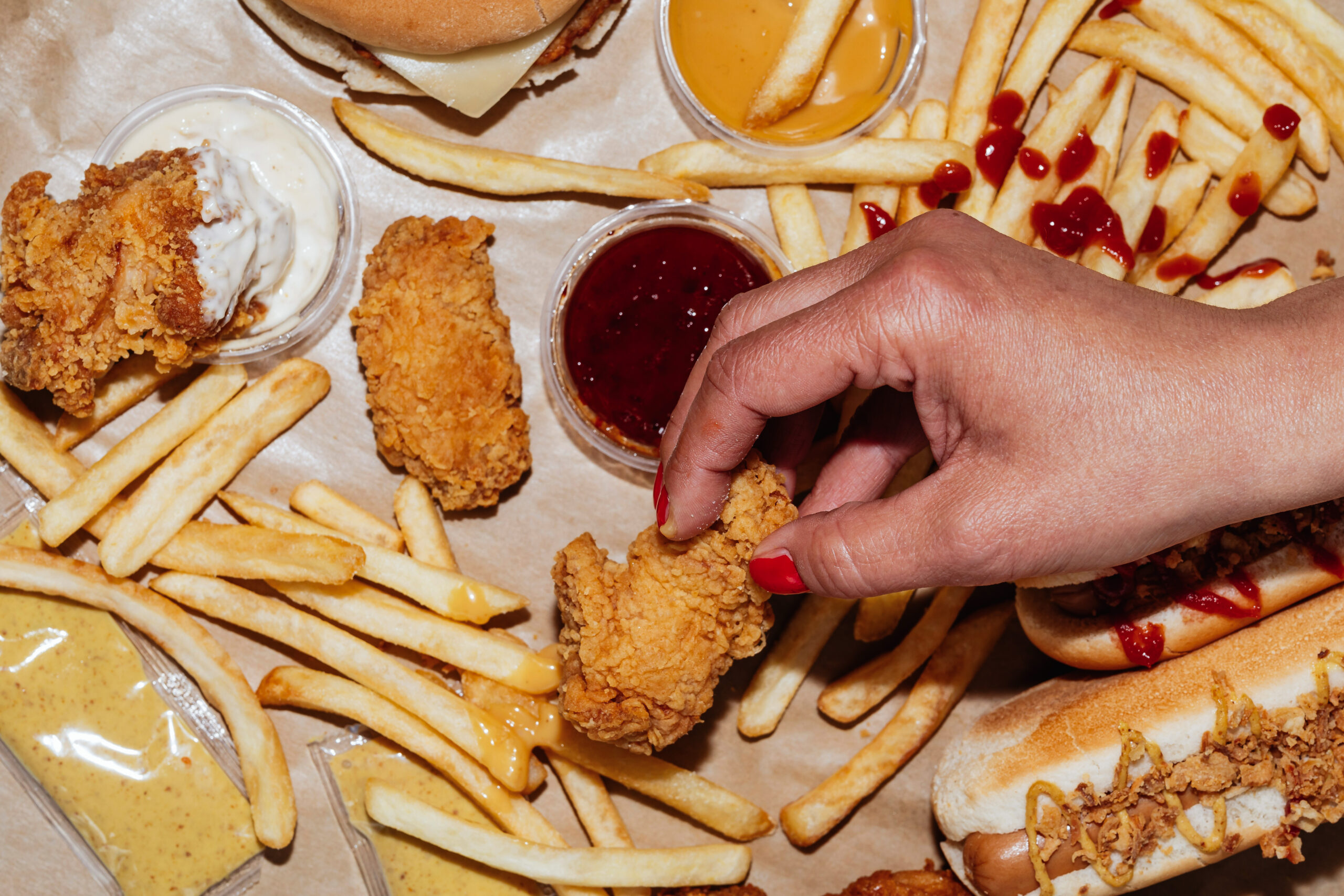
All of this leads me to wonder: If Jesus meandered through those automatic sliding grocery store doors we’re so familiar with today, what would he do? How would he expect us to navigate the aisles of ultra-processed food that is the “fruit” of industrialized agriculture? First Corinthians tells us that our bodies are temples of the Holy Spirit. Yet industrial agriculture and ultra-processed food seem to somehow desacralize the very substances that sustain those bodies. Ironically, nutritionists now tell us that the most healthful diet for us is the Mediterranean diet, which probably most closely resembles the diet of the people of the Bible. Jesus would want us to keep our bodily temples holy. So while I don’t think he would be a health-food fanatic, I do think he would favor the consumption of food in its most natural form, grown in a way that honors the planet the Father created. (And besides, it’s just hard to think of Jesus eating a Twinkie.) It seems like good Christian practice, when possible, mostly to eat food that’s been minimally processed and that didn’t have to travel around the globe to get to our plates.

Perhaps more important, Catholic social teaching tells us it should remain top of mind that every person involved in the production and distribution of food is a child of God, from the field hand to the truck driver to the guy handing you food in a bag through a window. When you meet these people, remind yourself that they are often grossly underpaid, struggling to get by, despite the fact that our lives depend on them. Each person who plays a role in feeding us must be regarded with the utmost respect and dignity and given the opportunity to live a decent life. One very minor way to show that respect is by expressing our gratitude to those people, and to God, by reviving our commitment to saying grace, even when our meals are “grab and go.”
My sense is that, like most of modern life, industrial agriculture is a genie that can’t be put back in the bottle. But we can find ways to “re-sacralize” food by making it a way to connect with God and each other. Shared meals, family dinners, community gardens, food pantries, bringing food to the elderly, cooking a meal for a friend who is ill—these are all ways we can bond with and serve others. Even if your next meal does come from a box, when you take it out, look at it and pray over it. Think about all the human hands and effort that it took to get this food in front of you. And remember that food, even in its most unnatural form, isn’t possible without the soil, water, and sunshine that comes from God alone.