
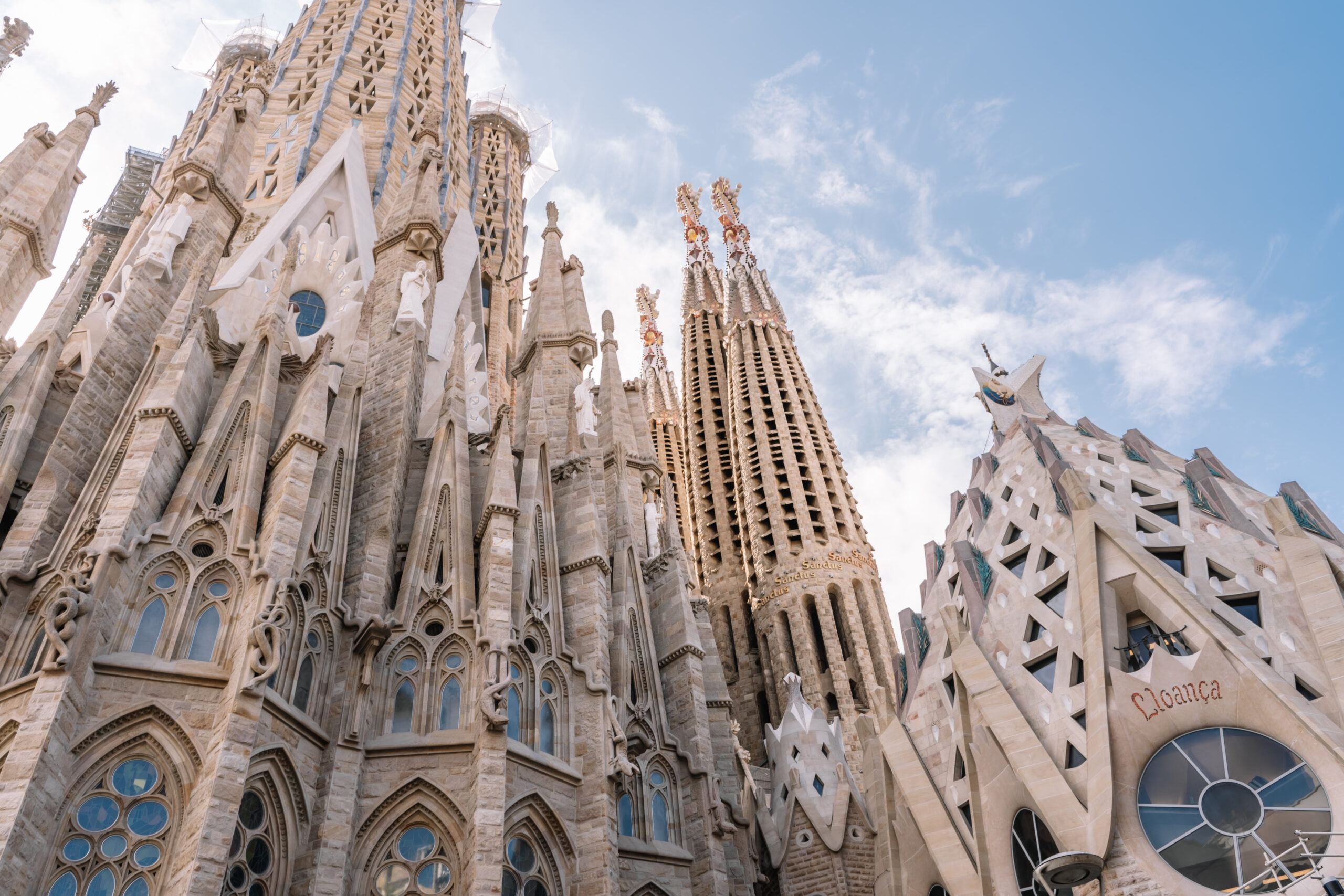
New York City has the Statue of Liberty; Paris, the Eiffel Tower; London, Big Ben. These urban icons reveal the ultimate concerns and aspirations of their builders; they tell us who or what they worship. I know of only one church that has, in modern times, achieved such iconic identification with its city: the Basilica of La Sagrada Familia in Barcelona, the work of the recently declared Venerable Antoni Gaudí i Cornet.
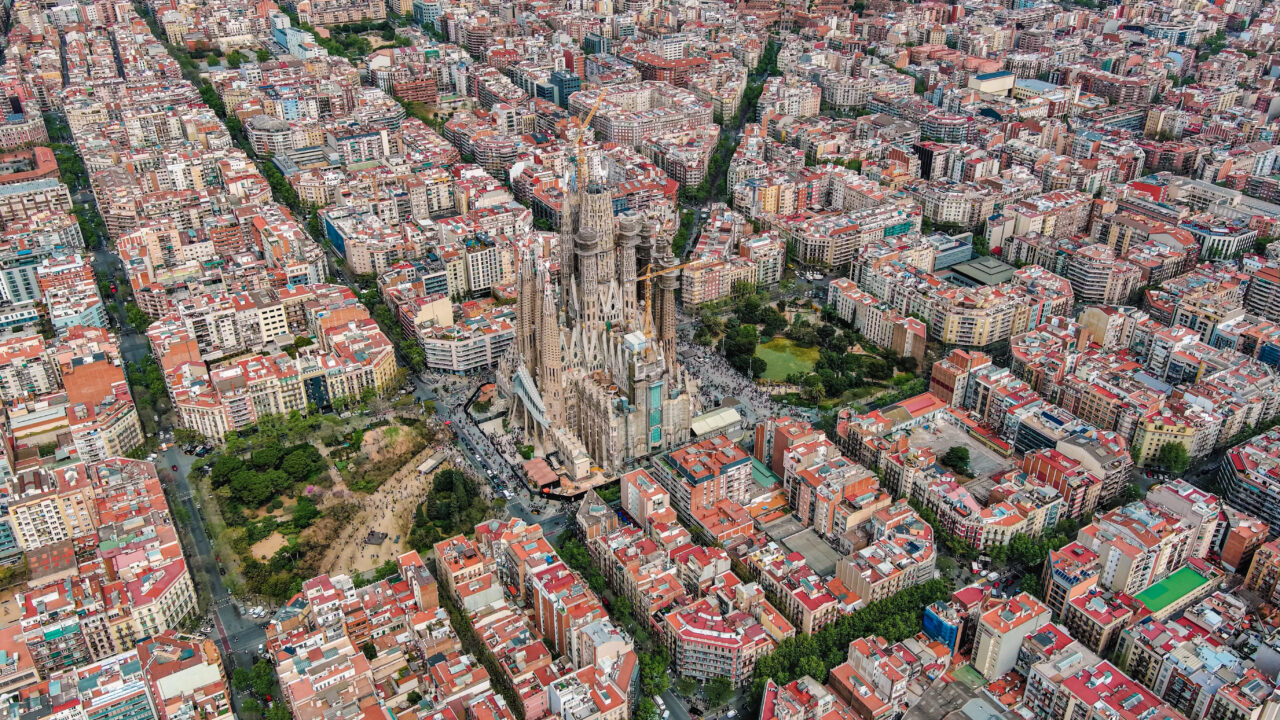
Pope Francis declared Gaudí as worthy of veneration not because he was a great architect but because he lived a holy life. That said, his holy life is inseparable from his work as an architect. He was a layman, and the Catechism describes the vocation of the laity thus: “It pertains to them in a special way so to illuminate and order all temporal things with which they are closely associated that these may always be effected and grow according to Christ and may be to the glory of the Creator and Redeemer” (CCC, 898). Gaudí’s work transformed the contour of his city: It made the skyline of Barcelona itself a song “to the glory of the Creator and Redeemer.” Had it not been for his faithfulness to his vocation, such praise might never have been raised.
In the Middle Ages, Barcelona was the most important city in the lands of the Crown of Aragon. Its privileged location on the Mediterranean fostered its wealth and magnificence. Four grand Gothic churches were erected in the city: the cathedral, the Basilica of Santa Maria del Pi, the Basilica of Santa Maria del Mar, and the Basilica of Saints Justus and Pastor. Barcelona’s skyline was Gothic and thoroughly Catholic. By the mid-1800s, trade with Spain’s few remaining colonies brought a new phase of economic prosperity. Barcelona grew, and as a sign of its modern character, the old medieval walls were torn down. New lands were incorporated, and the plans for a new district, the Eixample (“expansion” in Catalan), were drawn. The city center was moving away from its ancient position and not even the attempt to complete the cathedral—which had remained unfinished after 150 years of construction—could prevent it. Other major cities had witnessed iconic status drift from churches to secular structures. In London, Big Ben adorned the Houses of Parliament. In Paris, the Eiffel Tower was raised as a monument to engineering and science. In New York, the Statue of Liberty sang the praises of freedom. Barcelona looked as though it would follow a similar secular path.
José María Bocabella y Verdaguer, a seller of religious books, wanted to prevent this shift. He envisioned building a replica of the house of the Holy Family he had visited in Loreto in the newly laid out Eixample district. Francisco de Paula del Villar, as diocesan architect, was put in charge of the project. Construction of the crypt began in 1882, but less than a year later, disagreements led to Villar’s resignation. Bocabella turned to a young and unknown architect named Antoni Gaudí. Gaudí eagerly accepted the commission, expecting it to launch his career, which it did, but it also brought with it something unforeseen: a radical conversion. While Gaudí was working on the basilica from 1893 until his death in 1926, God was working on Gaudí, pursuing him through the influence of his friends, clergy and laymen alike. Bocabella had made it his personal mission to rekindle the young architect’s faith. Eusebi Güell, a wealthy industrialist and devout Catholic, became Gaudí’s most important patron, giving him free rein to experiment with different architectural forms. While building the episcopal palace of Astorga, Bishop Juan Bautista Grau y Vallespinos taught Gaudí the centrality of the liturgy. By 1890, Gaudí’s luxurious youth had given way to an ascetic maturity. He lived in the rhythms of the Benedictine Ora et Labora: Mass in the morning, work, and an evening meditation to end the day. From 1915 onward, La Sagrada Familia became his sole concern.
To be original, Gaudí held, meant returning to the origin, to God.
Gaudí finished the crypt according to Villar’s plan, with minor modifications. From then on, he set out to redesign the rest of the building. Villar’s original plan called for a neo-Gothic church, the style then in vogue. It is unlikely the result would have had the power La Sagrada Familia has had in drawing the city to itself. St. Patrick’s Cathedral in New York, for instance, is a beautiful neo-Gothic church, but for all its beauty it has not become the defining feature of New York City. The Gothic style spoke in a language the people of the Middle Ages could understand but not in one modern man understands. Gaudí acknowledged this and set out to do something new.
Here we must avoid falling into an erroneous reading of Gaudí: a “modernist” breaking with the past, an innovator freeing himself from tradition. We can mistakenly perceive him, to borrow a term coined by Pope Benedict XVI, with a hermeneutic of rupture, when we should read him instead with one of continuity. In his address to the Roman Curia in 2005, Pope Benedict spoke of the idea of reform:
It is precisely in this combination of continuity and discontinuity at different levels that the very nature of true reform consists. In this process of innovation in continuity we must learn to understand more practically than before that the Church’s decisions on contingent matters . . . should necessarily be contingent themselves, precisely because they refer to a specific reality that is changeable in itself. It was necessary to learn to recognize that in these decisions it is only the principles that express the permanent aspect, since they remain as an undercurrent, motivating decisions from within.
In his notes, Gaudí echoed similar sentiments with respect to architectural styles: “In the first half of the current century, tradition imposed the forms of the Renaissance. Since then, the tendency has been to reject them in favor of those of the Middle Ages. One and the other have elements worthy of preservation that we cannot dispense with because we are heirs of the traditions of both these ages.” Gaudí was well versed in many different historical styles and was one of the foremost experts in Catalonian Gothic. His love for the Gothic, however, did not blind him to its need for improvement. He set out to perfect it.
If we are to understand Gaudí’s Sagrada Familia with a hermeneutic of continuity, we need to find the principles connecting him to the builders of medieval cathedrals. There are many, but here I will focus on one. In consecrating La Sagrada Familia in 2010, Pope Benedict XVI proposed that the task of all Christians is “to show everyone that God is a God of peace not of violence, of freedom not of coercion, of harmony not of discord.” The medieval builders wanted their churches to be images of a divinely created cosmos, one that was created nonviolently by God, who spoke it into existence and saw that it was “very good” (Gen. 1:31). Sin introduced conflict and violence into the world, but that is not its deepest truth. Both Gaudí and the medieval cathedral builders were trying to convey the same idea. What reason was there for a discontinuity?
Walking amidst this forest of stone—colored light streaming from the stained-glass windows as if through a vast canopy—one is taken up with St. John in his vision of the heavenly Jerusalem.
Medieval builders knew—through trial and error and past experience—how to keep a structure standing. They had learned that to attain tall and slender structures, they had to add buttresses, flying buttresses, pinnacles, and spires as supports and deadweights to redirect the thrust from the vaults. What they lacked was a scientific understanding of the forces at play. Gaudí possessed this knowledge, and so he realized these additional structures were crutches—beautifully adorned crutches, but crutches nonetheless. Gaudí perceived a contradiction with the idea his predecessors were seeking to express. Gothic buildings could only remain standing by making use of opposing forces, blurring in them the image of nonviolence. Gaudí dedicated his professional life to solving this contradiction, this structural conundrum.
To be original, Gaudí held, meant returning to the origin, to God. God had created the world, and this created world was itself an origin from which we could learn God’s artistry. Gaudí found in nature the solution to complex structural problems:
The success of an invention consists in seeing what God has placed before the eyes of mankind. . . . In this garden there are trees that rise and hold up all their elements with grace. They have no need of external materials and counterweights. This is the model that God has given to us. And we men go about building everything backwards.
In nature, Gaudí discovered the fundamental geometry of his architecture: hyperbolic paraboloids, hyperboloids, and helicoids—the geometric forms of leaves and vines and bones—all of which are relatively simple to build. They also held a profound symbolism. The hyperbolic paraboloid, for example, stood for the Holy Trinity. It is generated by sliding a straight line along two other straight lines. If these two lines represent the Father and the Son, the third one, proceeding from both and binding them, represents the Holy Spirit.
He developed a funicular model consisting of a network of strings attached to the ceiling holding suspended sacks filled with buckshot. The weight of the sacks was proportional to the loads the columns and arches were meant to support. The strings formed an upside-down structural model of the building that made visible the invisible thrusts generated by compressive forces. If one built following these thrust lines, thrusts would be channeled to the ground following their natural course, without needing counterforces to redirect them. It revealed that the columns should be slanted, not vertical: slightly inclined at the bottom but branching like trees as they approach the vaults. The tips of these branches touch the center of gravity of the elements being supported, transmitting their weight down to the “trunk” and through it to the ground. If the soaring columns and ribbed vaults of Gothic cathedrals resemble a forest, in La Sagrada Familia the image becomes almost literal, as Gaudí himself planned. Walking amidst this forest of stone—colored light streaming from the stained-glass windows as if through a vast canopy—one is taken up with St. John in his vision of the heavenly Jerusalem (see Rev. 22:1–2). In La Sagrada Familia, all of salvation history is bound together: from creation through the fall; to the life, Passion, and death of Christ; to his glorious triumph in the new heavens and the new earth.
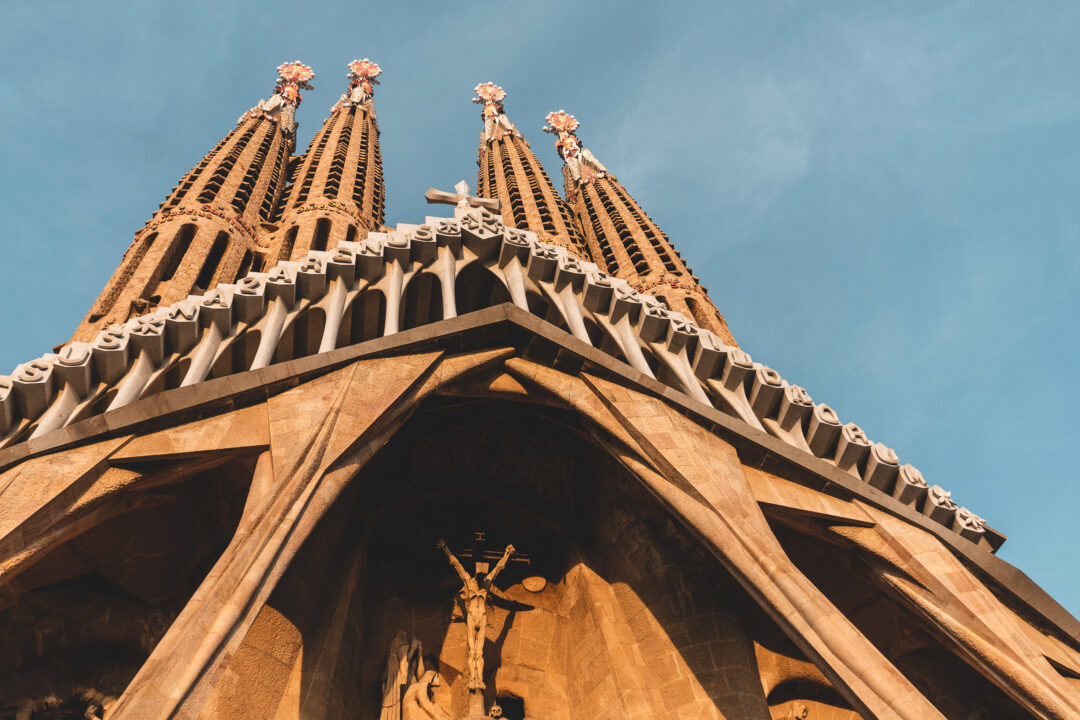
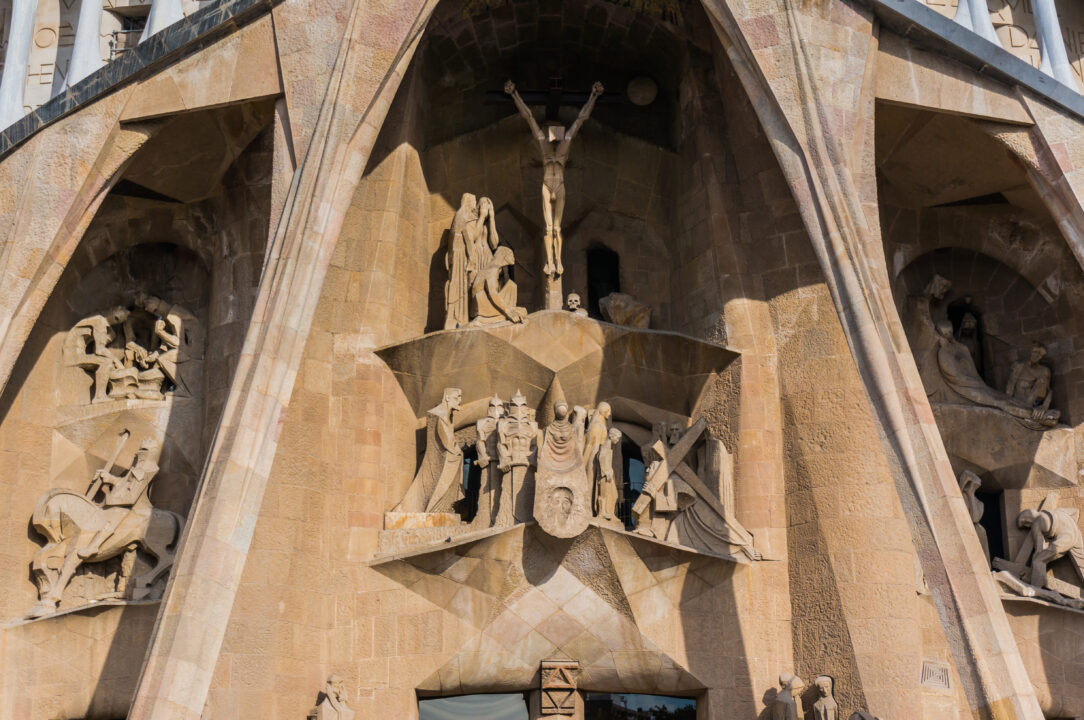
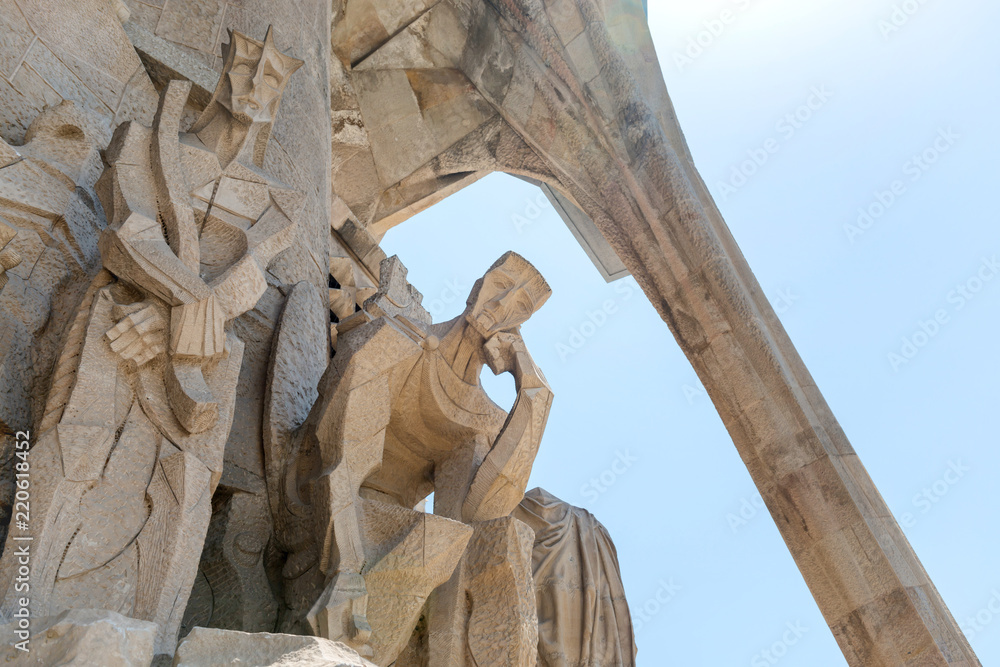
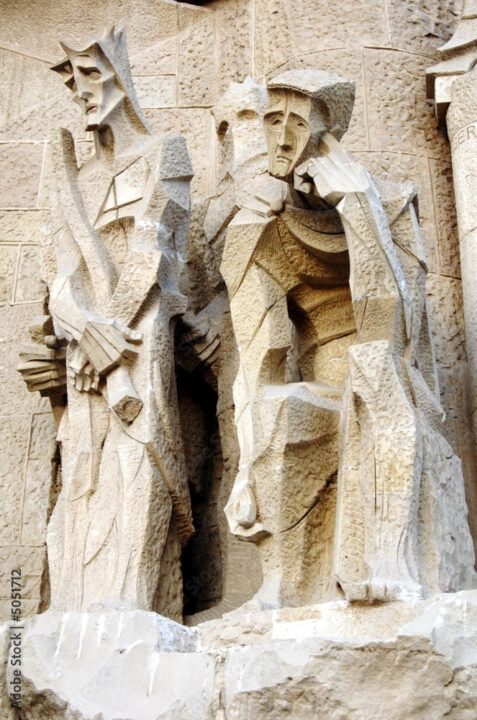
The full drama of God’s nonviolence is displayed in the Passion facade. The exuberance of the Nativity facade gives way to a barren scene crowned by a series of bone-like columns. The stark contrast is fitting: It makes the violence of sin patently evident. The naturalistic figures of the Nativity facade could well have been carved in the Gothic or the Baroque, but those of the Passion facade are distinctly modern. Here the break with the past appears to be explicit. All human figures are roughly hewn, reduced to bare geometry: Sin has deformed man beyond recognition. When man seeks his glory apart from God, he becomes less than man. But this violence is not met by an opposing and overwhelming violence from God; rather, he takes it upon himself. Christ is also disfigured, as roughly hewn and as unhuman-like as the other figures: “But I am a worm, and not human; scorned by others, and despised by the people.” (Ps. 22:6). And yet, the harshness of these figures is not discordant with the rest of the building, and the rupture is only on the surface. The violence man used with God does not have the final word. The ornamentation on the facade is radically different from that of the rest of the building, but the logic underlying its structure is not. The graphic-static analysis of the facade that Gaudí drew shows that the massive, slanted columns built to support and frame the facade follow the thrust lines, resulting in no need of opposing counterforces. Here, too, the structure peacefully upholds the weights. In the face of human violence, God responds not with violence but with the cross. The resurrected Christ met the apostles who had betrayed and abandoned him with a greeting of peace, not reproach.
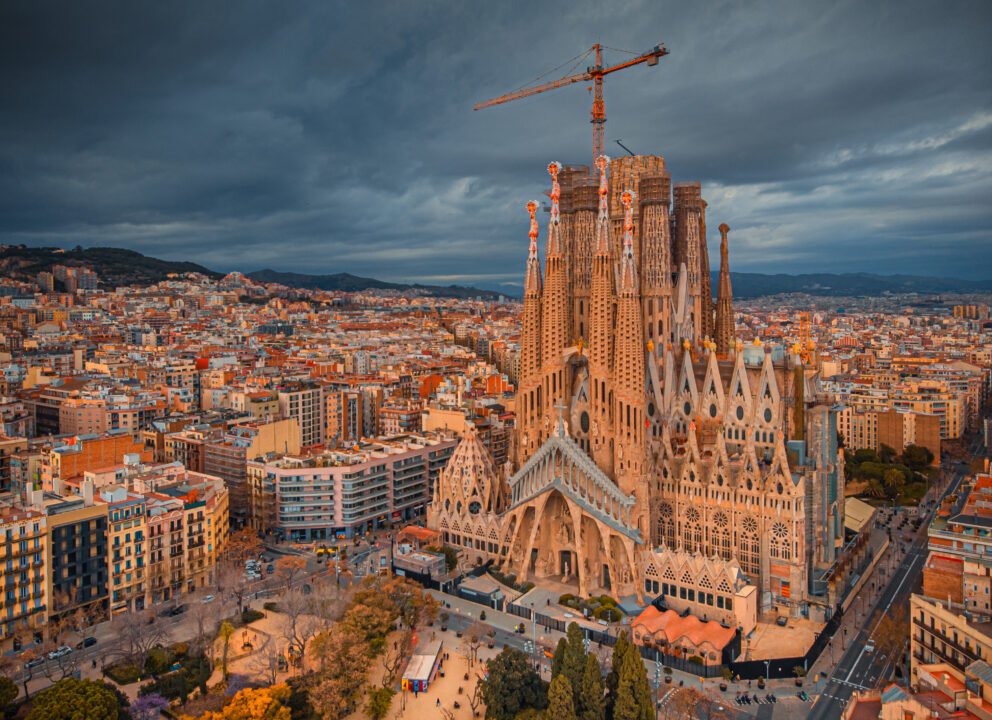
La Sagrada Familia is to be completed in 2026, one century after Gaudí’s death. The last and tallest tower, that of Jesus Christ, will be crowned with one of Gaudí’s famous four-armed crosses. From inside each arm, a spotlight will cast its beams to light the night sky and embrace the city with the sign of the cross. Gaudí’s masterpiece will illuminate and order all things within its reach to the glory of God. His witness to a lay vocation lived to the fullest is an example to us all.