

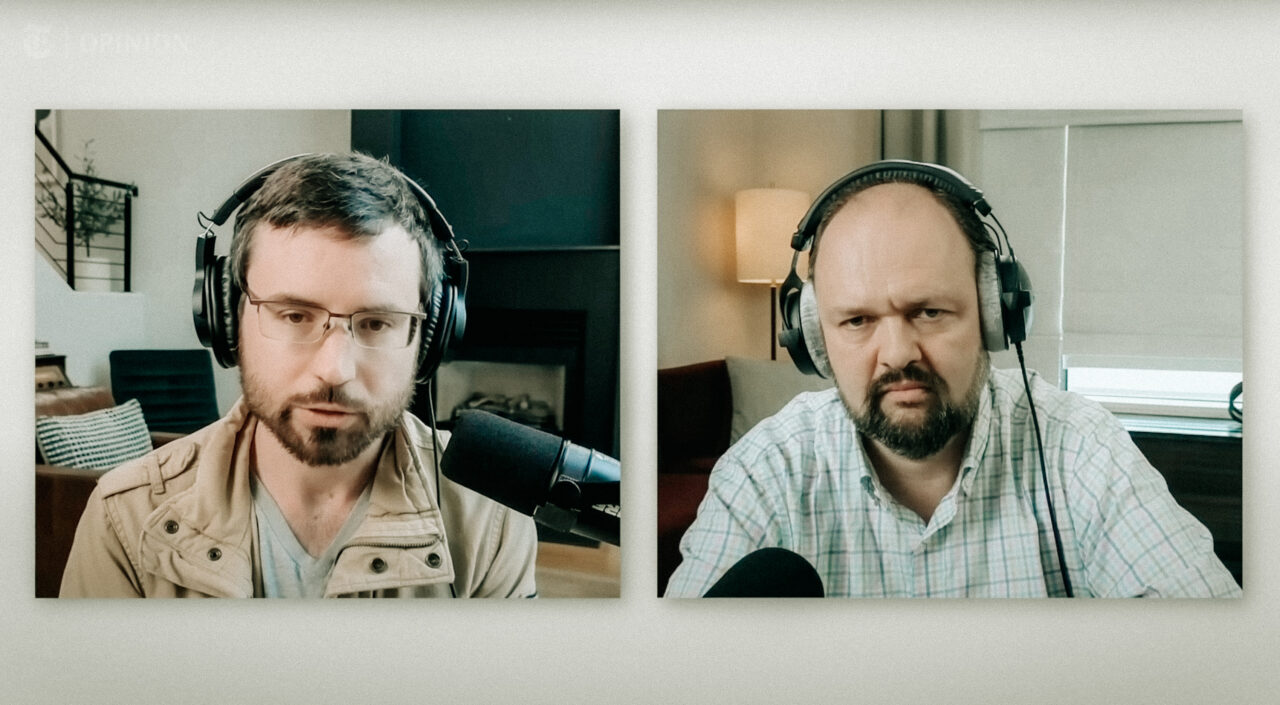
The dream of a world where we “sit back and sip margaritas” while the robots do all the work may soon become reality. AI expert Daniel Kokotajlo recently told Ross Douthat that it’s this vision for a world of prosperity and unlimited leisure that drives the most prominent tech leaders to design machines that within a decade or two will “basically run the whole show.” But while Kokotajlo worries this technology will take a dystopian turn (and soon), the louder opinion seems to be that the end of human labor will mean a new era of human flourishing—unimaginable medical advances, unprecedented economic growth, and an abundance of leisure. To hear many of these forecasts, it almost sounds as though work has only ever been a burden we can soon finally cast off.
We have, after all, heard these hopes before. John Maynard Keynes, to take a prominent example, predicted that technological innovation would first make work easier and then eventually confront us with the question of how to occupy so much free time. In “a hundred years hence,” Keynes writes, if we need to do any work at all, “three-hour shifts or a fifteen-hour week” should suffice.
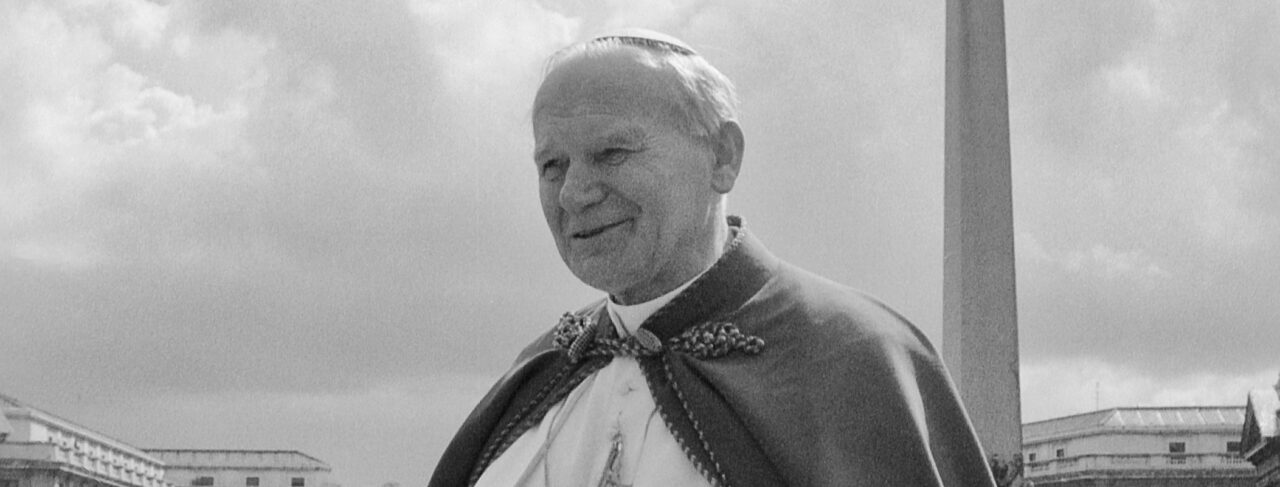
And, of course, Wendell Berryish objections aside, technological innovation often improves our lives. High-speed internet, for instance, makes possible a remote job my wife loves, lets me video chat with long-distance family, and helps sites like this one reach an audience broader than its earliest editorial staff ever could’ve imagined. But “innovation” also often crosses the line where it no longer augments our lives and work. In his 1981 encyclical Laborem Exercens, John Paul II warns that technology can diminish our personal lives, steal our creative impulses, take jobs we value, and subtly reduce us to “the status of its slave” (§5).
Don’t be such a luddite, the post-work proponents would say. The average job is boring and repetitive and most workers don’t feel very free. Derek Thompson reports that advocates for an automated workforce suppose that if we can figure out how to share automation’s profits responsibly—a big “if”—we could put an end to wage labor and walk into a “golden age of well-being.”
But is work—even menial work—so antithetical to well-being? Pew reports that by a margin of two-to-one, retirees still want to work even if they don’t need the money. I know one retiree who happily runs the check-out line at a local market, another who came out of retirement to do landscaping for Parks and Rec because he was bored, and another who after decades of teaching high-school French now spends her evenings gladly teaching adults at the local Alliance Française.
Unemployment makes people unhappy. Post-work proponents say our culture conditions us to feel this way. And financial stress surely plays a part, though it can’t explain everything, as my well-off retired friends at their part-time jobs attest. At the very least, Thompson writes, a job offers us “a routine, an absorbing distraction, and a daily purpose.” So maybe being unemployed is such an unhappy state because work brings a sense of fulfillment that few other pursuits can.
The authors of Genesis make clear that work is a primordial gift woven into the fabric of our existence: “God blessed them and said to them: ‘Be fruitful and increase in number; fill the earth and subdue it. Rule over the fish in the sea and birds in the sky and over every living creature’” (Genesis 1:28, NIV). All human work corresponds in some way to this command to cultivate the creation, John Paul II argues, and so in work we not only express our dignity, we also “increase it” and become even “more a human being” (§9).
This mandate doesn’t include immoral work or work that exploits and degrades a person. And John Paul II frames Laborem Exercens in part as a call to governments, societies, and employers to ensure that conditions of labor uplift the human person. But he refuses to accept that because a job is menial it cannot include (or be reformed to include) some objective measures that allow a person to find meaning, creativity, or autonomy. However dull the average job might be, “the value of human work is not the kind of work being done, but the fact that the one who is doing it is a person” (§6).
Maybe being unemployed is such an unhappy state because work brings a sense of fulfillment that few other pursuits can.

To work as a fast-food fry cook, for instance, might seem like lousy drudge work. And if you’re a teen looking for a summer job that won’t worsen your acne, you should avoid this one. But John Paul II would encourage this person to appreciate not only the instrumental goods the job provides in the form of wages, a safe space, access (ideally) to benefits and entry-level job training, and so on. He would also point to the more important ways the job provides the person with an opportunity to grow in virtue, to enjoy friendship and solidarity with coworkers, and to serve others. In these ways, among others, the fry cook elevates his or her humanity.
But why do you need to work to develop yourself in these ways? Surely our hobbies can provide less toilsome opportunities for self-realization than work. And maybe technological innovation will supercharge leisure with things like virtual reality systems that might allow us to “tour” Notre Dame, study The Republic with an AI deepfake of Plato, or transform my family video chats into hyper-real hangout sessions. There are people who hope such “augmented reality” will foster character and quality of life. I think that’s heroically naïve.
Nonetheless, we can’t control what people do with their free time, and more leisure does sound pleasant. If our society does figure out how to apply automation’s profits to some kind of safety net so that a person doesn’t have to work the graveyard shift at Tasty Fried Chicken anymore, maybe that’s good—though your late-night run to Tasty Fried Chicken will have lost the tangible good of a human presence.
But these vaulted hopes for leisure indicate a collective amnesia about what differentiates leisure and work. Granted, the line between them can blur. One person’s career is another person’s hobby. And our culture does a poor job recognizing as work the vital full-time labor many people do to take care of loved ones at home. For the most part, though, we know when we work and when we rest.
And the rhythm between work and rest follows the form Genesis gives to our divine likeness. God “wished to present his own creative activity under the form of work and rest,” John Paul II writes, and so we imitate God, express God’s image, and realize our humanity when we do the same (§25). In work, we join in God’s care and cultivation of this world; in rest, we partake in God’s love of it.

Rest, in this sense, is not the same thing as free time. And God does not rest from work in Genesis 2 because of fatigue. God pauses on the seventh day to relish the creation’s goodness. And Josef Pieper reminds us that because God is the Creator, we join God’s celebratory rest and affirm with God all that exists above all when we worship God. But leisure also comes with any deliberate pause to celebrate the goodness of anything that exists.
Then we get back to work, charged with a renewed commitment to the goodness of the world and the stewardly responsibility we bear for it, however objectively small our given task might be. And what this means is that work is not simply an “absorbing distraction,” as Thompson calls it. A brush with real leisure should allow us to express and augment our human dignity not in some modern self-referential sense but for the life of the world.
It’s the cliché of a thousand boilerplate commencement addresses, but it’s also true that any good work well done makes the world a better place. A regenerative farmer, or doctor to the poor, or advocate for the marginalized might feel more keenly than the rest of us that his or her work contributes to the common good. But John Paul II encourages us to believe that even our menial, dull, and repetitive work elevates the world and adds something to “the heritage of the whole human family” (§10).
In work we not only express our dignity, we also “increase it” and become even “more a human being.”
And such work might endure longer than we could possibly imagine. “Thanks to the light that penetrates us from the Resurrection of Christ,” John Paul II writes, God can use our work to offer us “a glimmer of new life,” as if our work somehow announced “the new heavens and the new earth” (§27). John Paul warns that while we should be careful not to conflate our work or social progress with the kingdom of God, “the expectation of a new earth must not weaken but rather stimulate our concern for cultivating this one” (§27).
As the council fathers write in Gaudium et Spes, “After we have obeyed the Lord, and in His Spirit nurtured on earth the values of human dignity, brotherhood, and freedom, and indeed all the good fruits of our nature and enterprise, we will find them again, but freed of stain, burnished, and transfigured” when the Lord brings the kingdom of God “to its full flower” (§39). God therefore not only allows our work here and now to participate in his care for creation. We can hope that in the mystery of God’s providence and grace, God will also transfigure our good work well done and allow us to help build the New Jerusalem.
Toward the end of their conversation, Douthat and Kokotajlo talked about what purpose human life might serve as AI takes off. Kokotajlo has been warning the public that apocalyptic, Battlestar Galactica–type scenarios remain alarmingly plausible. But if we assume the best-case outcome where AI-powered automated labor has created a world of unthinkable abundance, what will we strive toward? Douthat looked to the starship Enterprise and wondered if perhaps our purpose might be “to boldly go where no man has gone before.”
Kokotajlo perked up at this and expressed his enthusiasm for colonizing the galaxy. “If we can get through the initial phase with superintelligence”—the phase where it might turn apocalyptic—“then obviously the first thing to do is solve all [the world’s] problems and make some sort of utopia and then bring that utopia to the stars.” But then Kokotajlo’s tone became a little sad. “The thing is,” he said, “it would be the AI’s doing it, not us. In terms of actually doing the designing and the planning and strategizing and so forth”—all the things that make our labor fulfilling—“we would only be messing things up if we tried to do it ourselves.”
John Paul II explains that cultural development and technological innovation have always compelled us to “discover new meanings of human work” because the dignity of work depends upon and expresses the dignity of the human person (§2). Our work may or may not change at the dramatic pace some forecasters predict, but eventually it will experience seismic shifts, and the promises (or threats) of human obsolescence will continue. And so it behooves us to help steer our cultural discourse about work in a life-affirming and humanizing direction. Because for our good, God blesses us with work; in his providence, God might crown our labors beyond our wildest expectations, so long as we’re the ones doing it.