
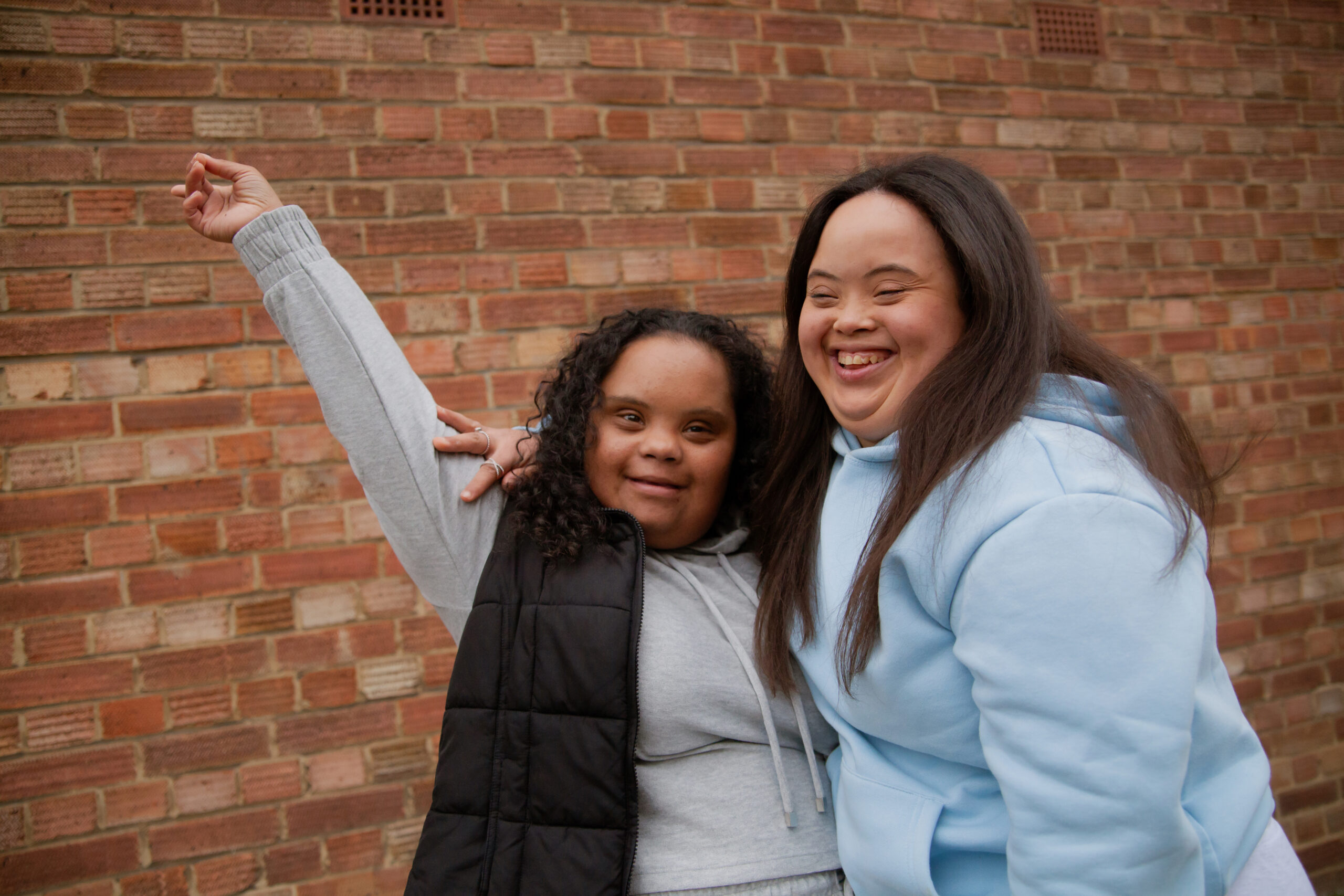
Lauren Costabile founded a nonprofit organization called Hearts of Joy International after visiting Uganda for the first time in 2017. What she saw there was scant understanding of Down syndrome and a tremendous need to bring an end to the stigma and shame families experienced because of their child born with the condition. Lauren was moved to establish a nonprofit to provide heart surgeries for children with Down syndrome in Uganda, India, and the Philippines who would die if their cardiac defects were left untreated. However, Lauren has an even more challenging goal: to instill understanding, compassion, and acceptance in those communities and make it easier for parents to be proud of their children.
Today, March 21, is World Down Syndrome Day (WDSD), and Lauren’s story is an excellent example of why this day is important. Today isn’t only about helping parents be proud of their children but about advocating for a world where children born with an extra copy of the twenty-first chromosome are able to find acceptance—not only in their families but in all places where persons with Down syndrome are still rejected. In reality, that is pretty much everywhere.
It is easy for those of us in high- and middle-income countries to hear Lauren’s stories about her work abroad and think ourselves superior and better informed than families in the low-income countries where her work is focused. But allow, for a moment, the statistic to sink in that reveals what most families here in the US do after receiving a prenatal diagnosis: Prenatal discovery of Down syndrome results in abortion 74 percent of the time.
The impact of that choice is that the population of persons in the US living with Down syndrome is about 36 percent less than it would be if there were no prenatal discovery and subsequent abortion. Elsewhere the situation is even more grave. In Spain and Portugal, the population of individuals with Down syndrome is about 66 percent less than it would be if there were no prenatal diagnosis and abortion. That’s a damning statistic for Portugal, where the Blessed Virgin Mary once appeared to three young shepherd children, and for Spain, which hosts the terminus of a major pilgrimage route through Europe to St. James’s tomb in Compostela.
How well are we responding to our Lord’s commandment to love our neighbor as ourselves?
With those abortion statistics in mind, consider that the leading Down syndrome advocacy organizations that promote this day—like the National Down Syndrome Society (NDSS) in the US and Down Syndrome International (DSI) in the UK—refuse to advocate against the selective killing of these tiny persons in the womb. Shouldn’t it be obvious that if you’re dedicating a day to advocate for persons with Down syndrome, you would advocate for their fundamental right to live? We live in a time of paradoxes, don’t we? The true advocacy is up to us!
The theme chosen for this year’s WDSD is “Together Against Loneliness.” Research shows that 40–50 percent of persons with intellectual and developmental disabilities—including Down syndrome—experience loneliness, compared to 15–20 percent of people without disabilities. Loneliness is directly correlated to social rejection, exclusion from peer networks, and barriers to employment. Loneliness is also a significant driver of mental health concerns that disproportionally impact persons with Down syndrome, especially in categories like depression and anxiety disorders.
What does WDSD mean for Catholics? First, it isn’t only a day for people with Down syndrome and their families. In fact, the day is mainly for those unaffected by Down syndrome. It is a day to raise awareness, and all Catholics should use it as a day to check our consciences as a pretest to see how well we will do at our final judgment. The question is this: How well are we responding to our Lord’s commandment to love our neighbor as ourselves?
Catholic social teaching (CST) is valuable in articulating what loving our neighbor means in practice. A simple application of CST’s teaching in this case is that no one—including persons with Down syndrome—should ever experience loneliness and isolation. Families in our parishes who receive a prenatal diagnosis of Down syndrome or any other disability should never have to question the welcome and support they will have in their parish from the moment of their child’s diagnosis to the end of their natural life. Families who have children with disabilities can feel isolated and lonely too. Many of them change churches or leave the practice of religion, disillusioned by how rejected they have been made to feel. (See Erik W. Carter, “The Absence of Asterisks: The Inclusive Church and Children with Disabilities,” 170). When that happens, we the Church have failed these families.
Most Catholics understand CST teaches that human dignity is inherent in our very being as God’s unique creation, but fewer are familiar with the other three core principles of CST that are especially relevant here: solidarity, subsidiarity, and the common good.
The common good is realized when the conditions necessary for all individuals and communities to flourish are present. All means that persons with disabilities cannot be left out. The common good develops out of the interplay of solidarity and subsidiarity that govern our shared responsibility to one another. These two principles, properly understood and observed, ensure that everyone’s contributions are fostered and that they can act freely in community within their competence. This interplay ensures no one will be isolated without the support of the community or vanish, unseen and lonely, in the midst of a group.
The common good respects the right to an individual’s self-determination and provides opportunities for integral development by empowering individuals to flourish with the support they need to contribute their gifts to the body of Christ as they are able.
The Catholic parish, then, offers the ideal solution to loneliness. A well-formed parish is a welcoming community that embraces persons with Down syndrome and other disabilities, identifies and respects their gifts, and invites them to share their gifts in service of the common good.
In their 1978 pastoral statement on disability, the US bishops called the Church to “reexamine their attitudes toward their disabled brothers and sisters and promote their well-being” by more fully integrating them “into the Christian community,” inviting their “fuller participation in its life.”
Every Catholic parish should be a model of welcome—encouraging us to closely conform our hearts to the heart of Jesus in his concern for the vulnerable and appropriately welcome the participation of those with Down syndrome and all disabilities into the fullness of parish life.
In Catholic parishes, no one should feel rejected or lonely. No couple who receives a prenatal diagnosis should ever feel afraid and unsupported.
Happy World Down Syndrome Day.