
Except where otherwise noted, all quotations come from Heather Ayala and Katie Rogstad, General Biology (Novare Classical Academic, 2020), 306–310.
Every cell in our body requires oxygen. Oxygen is necessary for cellular respiration, which releases the energy stored in food so that each cell can perform its vital task in our body and maintain our life. That oxygen is delivered by our red blood cells, which are carried throughout the body in the bloodstream of our circulatory system.
Our red blood cells must first travel to the heart through our veins. The heart then pumps the blood to the lungs, where each red blood cell receives oxygen from the respiratory system. Oxygenated blood then returns to the heart, where it is pumped back out to the body through the arteries to bring oxygen to all our other cells.
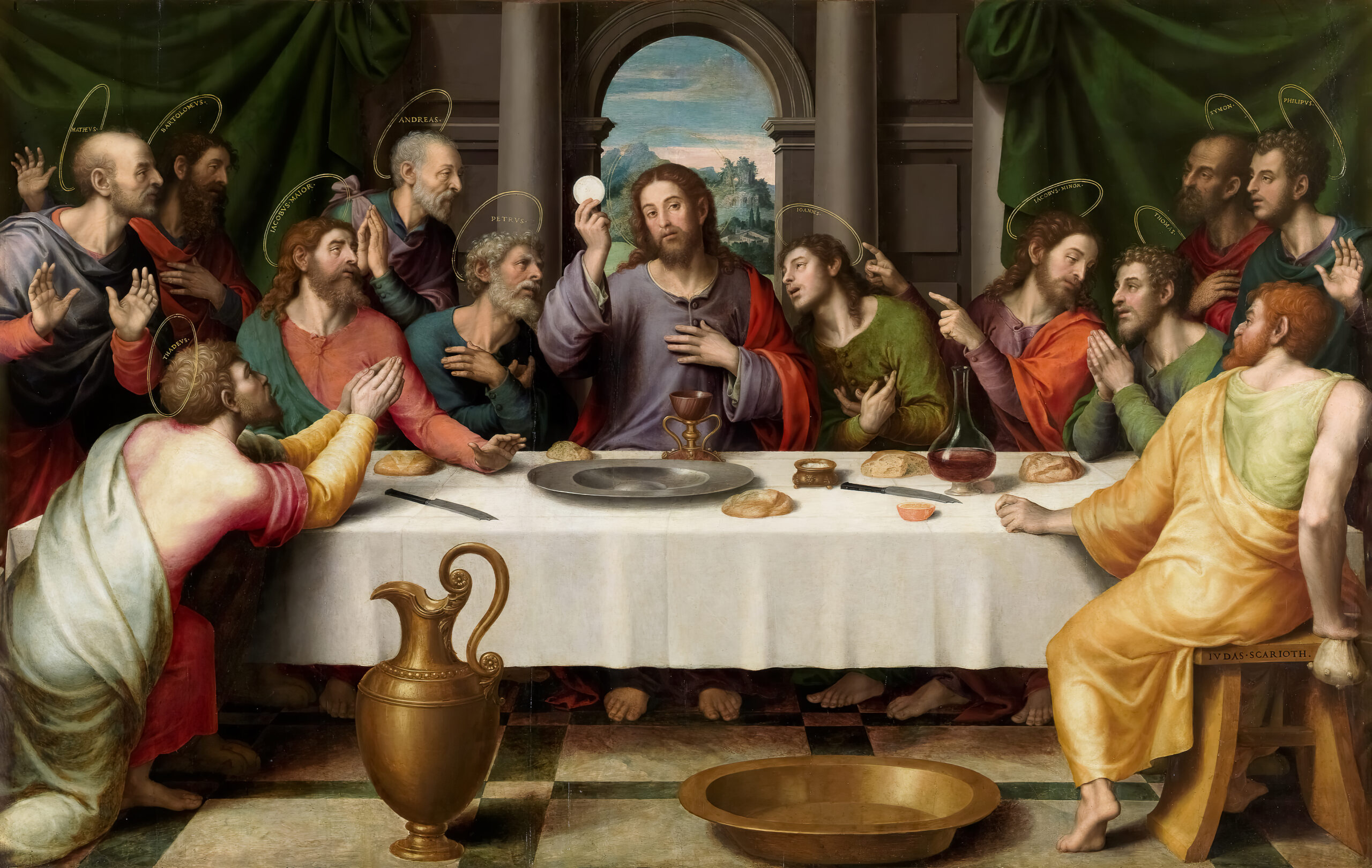
After Mass, we are meant to go out into the world to bring God’s life to others, the way red blood cells travel throughout the body, bringing life-giving oxygen everywhere.
When we come to Mass, we are like deoxygenated red blood cells coming back to the heart. When we receive Holy Communion, we receive a new infusion of God’s love, like a red blood cell receiving oxygen once again: “The Eucharist strengthens our charity, which tends to be weakened in daily life” (Catechism of the Catholic Church 1394). After Mass, we are meant to go out into the world to bring God’s life to others, the way red blood cells travel throughout the body, bringing life-giving oxygen everywhere.
The heart is responsible for pumping blood throughout the body. It has four chambers, two atria and two ventricles, that correspond to four movements in the Mass. “The right atrium receives blood back from the body through a large blood vessel called the vena cava.” When we pour into the Church from our homes and occupations, we are entering the right atrium of the Church’s heart, so to speak. It is there that we engage in the Introductory Rites of the Mass. From the right atrium, blood is pumped into the right ventricle in preparation for being sent to the lungs. This movement corresponds to the Liturgy of the Word, which prepares us for the Eucharist.
The next step in the journey of the circulatory system is for the blood to be pumped out of the heart: “Blood exits the right ventricle through the pulmonary artery and travels to the lungs.” At this point, it becomes clear how interdependent the circulatory and respiratory systems are. In the respiratory system, air is drawn into the body through the nose and mouth, down the trachea, and into the lungs. The lungs contain branches called bronchioles, which “end in the alveoli, small air sacs where gas exchange takes place. Average adults have around 480 million alveoli in their lungs! . . . Each alveolus is surrounded by a network of capillaries. Both the capillaries and the alveoli have a single layer of cells surrounding them. . . . This makes it easy for oxygen to diffuse out of the alveoli and into the blood.”
During the Eucharistic Prayer, the priest performs a gesture called the epiclesis over the bread and wine and asks God to send the Holy Spirit to transform them into Jesus. The Latin word spiritus, the Greek word pneuma, and the Hebrew word ruach, all of which we translate as “spirit,” also carry the idea of “breath” or “wind.” The epiclesis can thus be compared to a deep breath taken by the Church that brings life-giving oxygen into her lungs. The Holy Spirit “oxygen” then travels throughout all the tiny hosts and drops of wine present on the altar, transforming them into Jesus, the way that air travels throughout the entire lung down to each individual alveolus.
When we leave our pews and make our way up the aisle to receive Communion, we are like the blood in the pulmonary artery traveling from the heart to the lungs. The pulmonary artery branches into smaller arterioles and eventually into tiny capillaries. “The wall of a capillary has a single layer” of tissue, and “the diameter is so small that only one red blood cell can fit through a capillary at a time. For this reason, when blood flows through the capillaries, its speed decreases significantly. This slow movement allows time for oxygen” to enter the red blood cells from the lungs by diffusion. When our moment comes to receive Holy Communion, we are like a single red blood cell in a tiny capillary receiving oxygen from an alveolus.
Once blood has been oxygenated by the lungs, it travels back to the left atrium of the heart “through the pulmonary veins.” This movement corresponds to our movement back to the pews after Communion. From the left atrium, the blood moves to the left ventricle, which then “pumps blood through the aorta and then out to the rest of the body. . . . One special feature of cardiac [heart] tissue is that all the cardiac muscle cells contract at the same time. This synchronized action provides the force necessary to pump the blood out of the heart and into the blood vessels.” This coordinated, purposeful contraction corresponds to the words “Go, the Mass is ended,” followed by our exit, as Dr. John R. Betz explains:
The point of the Church is . . . to be sent out, as is suggested by the . . . etymology of the word “Mass” from the Latin of the dismissal, Ite, missa est [“Go, the Mass is ended”]. In other words, the Mass has an evangelical purpose apart from which it cannot be understood: we are called out of the world to be nourished and equipped (by the hearing and preaching of the Word, by the sacraments, and by fellowship) in order to be sent back out into the world to share the Gospel, engage in the ministry of reconciliation, and pass on to others the newness of spiritual life that Christ died to give.
As Bishop Barron puts it, after participating in Mass and receiving Holy Communion, we are meant “to Christify the world,” like re-oxygenated red blood cells bringing life to the rest of the body. As Christ breathed upon his apostles (John 20:22), and as he sent the Holy Spirit upon them at Pentecost in the form of wind (Acts 2:2), he continues to “breathe” the Holy Spirit in us through the Mass, which is an encounter in his Sacred Heart. Let us never separate ourselves from this vital connection to him—for our own sake and for the sake of the world.