
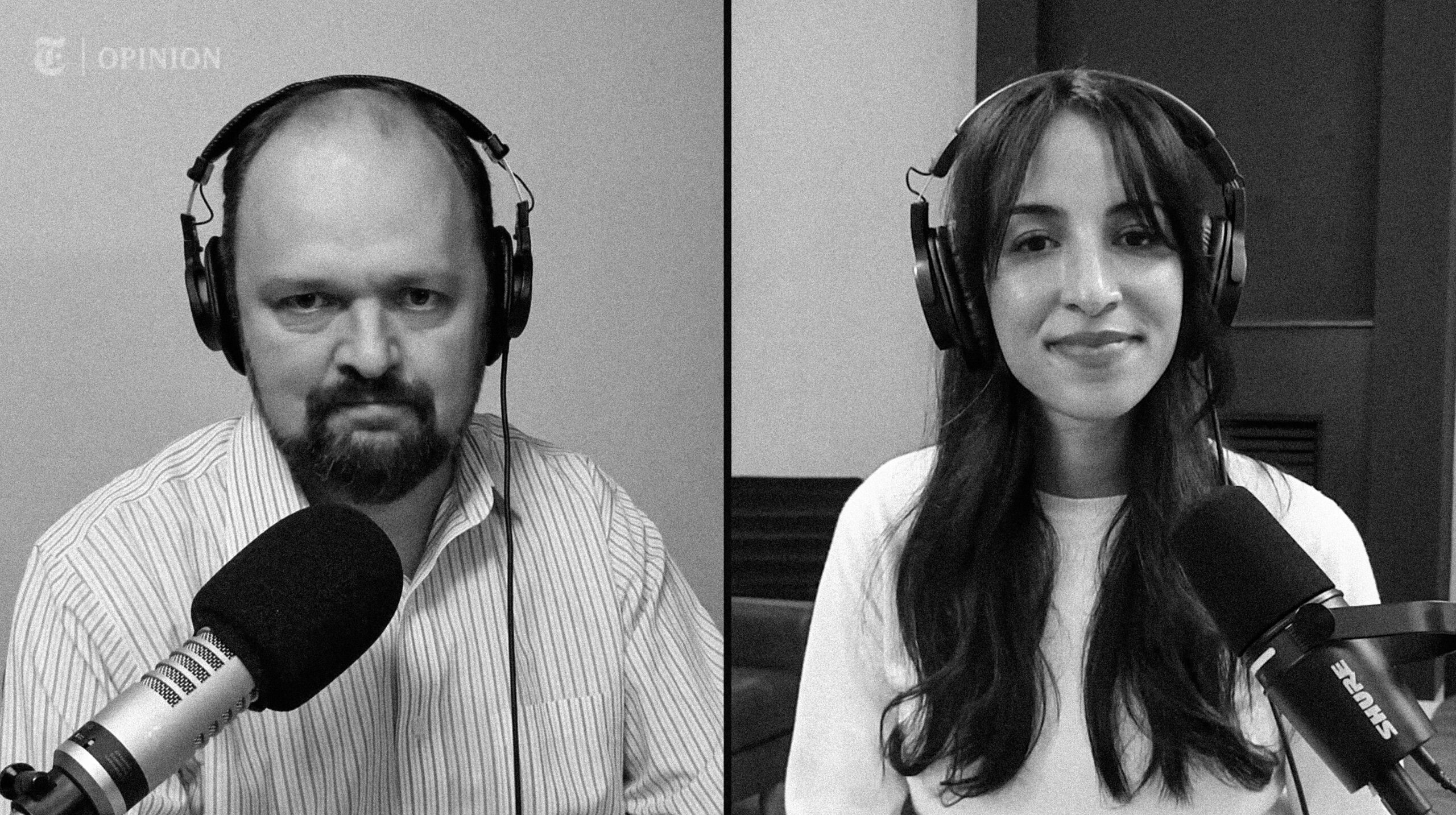
In an interview on August 7, 2025, with Noor Siddiqui, the founder and CEO of Orchid, Ross Douthat attempted to make a final point by ending the interview with a touching poem by Irish poet Galway Kinnell called “After Making Love We Hear Footsteps.” Orchid, by the way, is a tech startup that uses its proprietary algorithm and whole genome sequencing to evaluate the quality of embryos in order to mitigate the risks of a couple having a baby who isn’t perfect.
The poem Douthat reads describes a scene familiar to most parents but is increasingly old-fashioned—a frightened child runs into his parents’ room in the dark and climbs into bed with them. Consoled with a hug, the child snuggles down between his parents and falls back asleep, leaving the parents in wonder at the miracle between them—a product of their love’s embrace. The final lines of the poem are these:
In the half darkness we look at each other
and smile
and touch arms across this little, startlingly muscled body
this one whom habit of memory propels to the ground of his making,
sleeper only the mortal sounds can sing awake,
this blessing love gives again into our arms.
Love is born of generosity of selves in consort with the true giver of life and the Creator of all.
This small child, a blessing of love born from his parents’ passion, brings back to their memory their lovemaking and unites not just the two but the three of them in what parents have understood for a multitude of generations back to the very beginning: In the mutual gift of spouses, a miracle of new life springs forth in wonder and reminds them that love is born of generosity of selves in consort with the true giver of life and the Creator of all.
Douthat asks Siddiqui if she “worries [about] removing or diminishing from human experience that aspect of being a husband and a wife in relationship with a child.” Siddiqui’s response, “What do you mean?” Douthat, a Catholic, continues to explain that what would be missing is the feeling a man and woman experience together who make love; he’s not talking about the physical sensation of sex but the openness to life and the feeling expressed in the poem—the “blessing love gives.” She remains puzzled by the question.
To Siddiqui, the profound connection between making love and having a child is lost. But then, this is the same woman who was quoted in The New York Times as saying that “sex is for fun, and embryo screening is for babies.” That seems something like saying that eating is for pleasure and Soylent Green for nutrition. It’s a bizarre kind of sexual bulimia.
Clearly, Siddiqui and her husband see no connection between marital intimacy and a child. Sex is just for fun and its greatest risk is children, so they have used IVF to engender sixteen frozen embryos, waiting for the time when they decide to implant one—just the right one.
So, we find ourselves careening toward a cultural crossroads. To Siddiqui—and increasingly more people—the old-fashioned way of having babies is too risky. Why should you risk natural selection if you can use science and pay $2,500 per embryo to Orchid to do a deep screen of your embryos to get rid of problem children before they’re even born? She claims to have already had thousands of customers.
I’m afraid poetry is lost on deaf science minds, those who want to control reproduction (without lovemaking) by reviewing a list of possible disabilities or diseases their child might have. The best poetry has been written out of the messiness of life. Would our lives be enriched without the inspiration of Helen Keller, or the insights of Flannery O’Connor or Stephen Hawking, or the beauty of John Milton’s Paradise Lost? Or without the beautiful artwork of Frida Kahlo or Henri Matisse? These people were all disabled, but it doesn’t matter. Too risky, these science fanatics say. We have surrendered the beauty of chance for the humdrum existence of the typical, the dependable, the safe. We’ve become so boring!
Arthur Schopenhauer published an essay in 1913 called “On the Sufferings of the World,” where he wrote:
If the world were a paradise of luxury and ease, a land flowing with milk and honey, where every Jack obtained his Jill at once and without any difficulty, men would either die of boredom or hang themselves; or there would be wars, massacres, and murders; so that in the end mankind would inflict more suffering on itself than it has now to accept at the hands of Nature.
Those whose quest is for the perfect child are on a fool’s errand.
Schopenhauer was not the first nor the last to warn us of trying to create a paradise on earth. Actually, what he warns about sounds a lot like the world we’re living in now.
Screening out potentially “defective” children, whether through IVF and whole genome sequencing or through prenatal diagnosis and abortion, doesn’t only devalue the lives of people with disabilities. It devalues all our lives and warps our cultural sense with the illusion that we can play God—that someday we can achieve a perfect parental world of milk and honey and beautifully perfect children. How I hope not! We will be the lesser if we do.
Those whose quest is for the perfect child are on a fool’s errand. Great disappointment awaits, and their greatest disappointment will be not in their children but in themselves and what they surrendered in their failed attempt for perfection—the freedom of making poetry and marveling at the result.