
Often Wrong, Finally Right
No one talks about Lord Halifax.
And I suppose that is not surprising.
After all, few contemporaries of Winston Churchill can escape the overwhelming shadow his legacy casts over them.
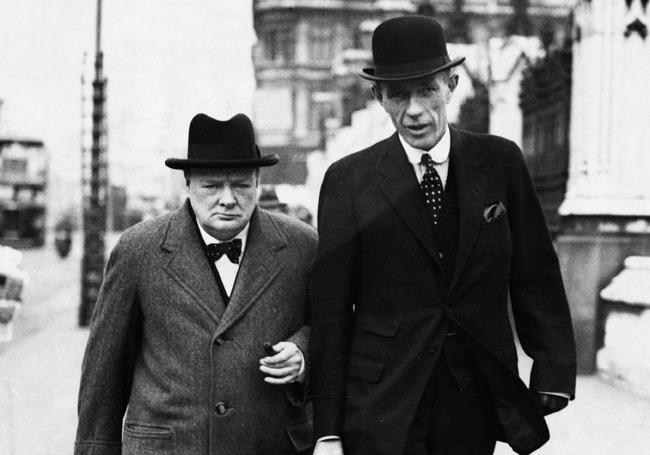
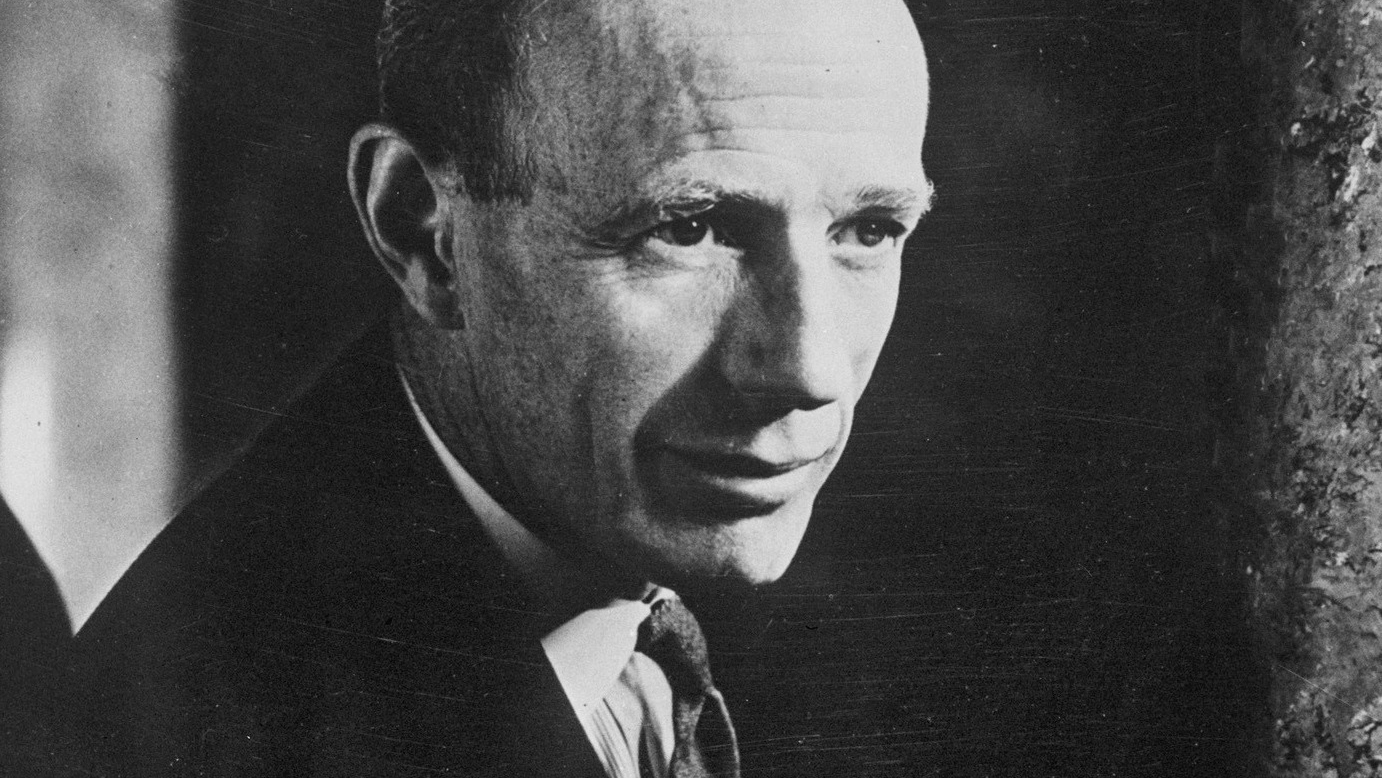
Lord Halifax (aka Edward Wood, the 1st Earl of Halifax) was a blue-blooded Englishman born in a Yorkshire castle in a lineage of distinguished earls and notable viscounts. By dint of sibling deaths, he was heir to his father’s riches and his seat in the House of Lords by the tender age of nine. Entering the fray of politics at the age of twenty-eight, he was elected to the House of Commons and served in several lesser ministerial positions before entering the House of Lords in 1925. Thereafter, his career skyrocketed as viceroy and governor-general of India for five years before advising Prime Ministers Stanley Baldwin and Neville Chamberlain in the late 1930s.
It was his proximity to power during the resurgence of Germany under Adolf Hitler, however, that revealed the mark Halifax would make. A genial type and polished aristocrat, Halifax was admired by many. The American ambassador to Great Britain Joseph Kennedy cooed, “He is the most noble figure in public life I have encountered, almost a saint.” Another acquaintance confessed, “You know, one trouble with the fellow is that everyone who comes at all into close contact with Halifax becomes enamored of him.” Because of his rich devotion to his Anglo-Catholic faith, even Winston Churchill quietly referred to him as “the Holy Fox.”
As the years passed and the Nazis agitated their way onto the international scene, Halifax served as a de facto deputy under Foreign Secretary Anthony Eden. There were myriad reasons Halifax didn’t want to tussle with the Nazis. The British were still reeling economically from the Great Depression. The memory of the First World War was still raw, so considering another descent into conflagration seemed unthinkable. And there was a tendency to sympathize with the Nazis as a bulwark against the communists and a toothless rabble seeking to reclaim rights harshly taken away by the Versailles Treaty. As Lord Lothian muttered when the Germans marched into the demilitarized Rhineland between France and Germany, “[This is] no more than the Germans walking into their own backyard.”
It is convenient to assert that I would have done exactly what Churchill did and little of what Halifax did.
“Nothing to see here, folks,” Lord Halifax seemed to say in agreement.
After accepting an invitation in 1937 to hunt foxes with Nazi Reichsmarschall Hermann Göring, Halifax found himself surprisingly charmed by the Nazis, even after he had nearly mistaken the führer for a footman at Hitler’s home in Berchtesgaden. The small band of Nazi leaders sought to justify their right to reacquire lands stripped from them by the Versailles Treaty. “One blood,” as Hitler wrote in his memoir, Mein Kampf, “demands one Reich.” Halifax ambiguously implied a stayed British hand over “possible alterations in the European order which might be destined to come about with the passage of time.”
Hitler and his men smiled.
Upon returning from Germany, Halifax told Henry “Chips” Channon that he was “much impressed, interested and amused by the visit” and that he “liked all the Nazi leaders, even Goebbels.” In March 1938, when the Nazis bloodlessly annexed Austria, Halifax (now serving as foreign secretary) agreed with Prime Minister Chamberlain who admitted, “The hard fact is that nothing could have arrested what has actually happened [in Austria] unless this country and other countries had been prepared to use force.” In July 1938, Halifax purportedly told Hitler’s adjutant, Captain Fritz Wiedemann, that he “would like to see as the culmination of his work, the Führer entering London at the side of the King amid the acclamations of the English people.”
In two months, Hitler demanded the Sudetenland of Czechoslovakia, ostensibly in the name of German reunification and to “protect German citizens being persecuted.” Quick to appease, Chamberlain (and Halifax) gave Hitler exactly what he wanted only so that Chamberlain could return home, wave his papers from the tarmac, and declare “peace for our time.” The despondent and disregarded Czech Foreign Minister Jan Masaryk approached Halifax warning, “If you have sacrificed my nation to preserve the peace of the world, I will be the first to applaud you. But if not, gentlemen, God help your souls.” Winston Churchill darkly warned, “[Neville] had the choice between war & dishonor. He chose dishonor, & he will get war anyway.” Privately, Hitler crowed, “My enemies are little worms—I saw them at Munich.” In another six months, Hitler would annex the remainder of Czechoslovakia.
This, however, changed Halifax’s mind.
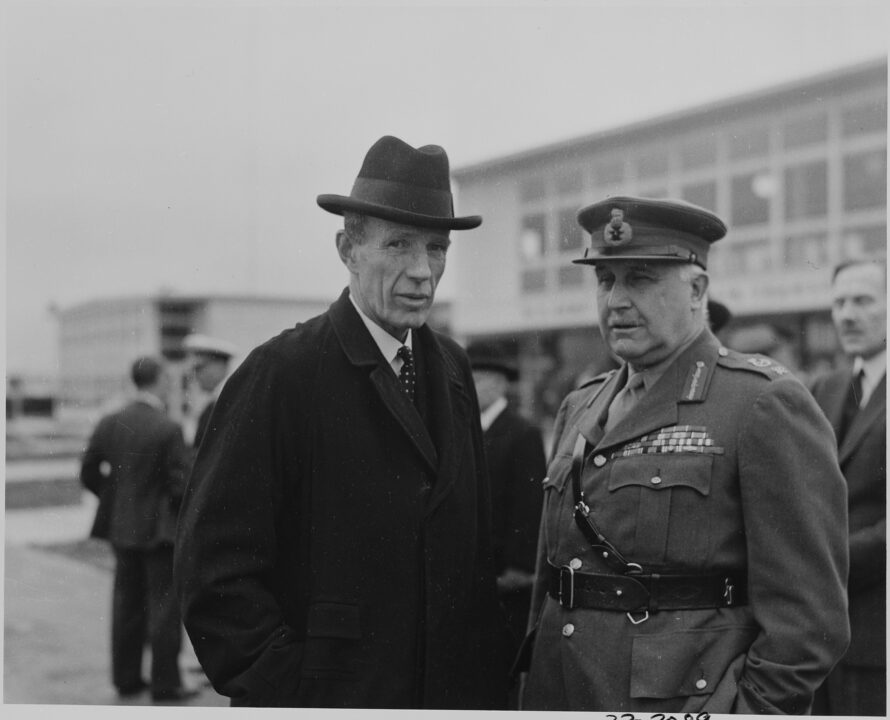
Seeing that Hitler’s word meant nothing, Halifax shifted into a mode of deterrence, including a treaty guaranteeing the integrity of Poland. He insisted that there must be “no more Munichs.” He worked, unsuccessfully, to achieve a British-Soviet Pact prior to the outbreak of the Second World War. And when, on September 1, 1939, the Nazis invaded Poland, Halifax stiffened Chamberlain’s spine and championed an ultimatum that, if disregarded, put Great Britain at war with Germany. During the next nine months of the Phony War (a period when the British and French did little to fight the Germans, but simply made speeches and dropped leaflets), Halifax fostered relations with the French and anti-Nazi Germans and championed an anti-appeasement approach. When Chamberlain was ousted from being prime minister, Halifax was approached, but he demurred, citing his position in the House of Lords and not the House of Commons and feeling himself unsuitable as a war leader. Instead, Winston Churchill became prime minister on May 10, 1940.
During this time (well represented in the film Darkest Hour and the even better book Five Days in London: May 1940), Winston Churchill found himself alone. Adolf Hitler and his Nazi hordes had just blitzkrieged their way through Denmark, Belgium, Holland, Luxembourg, Norway, and France. The British and French army (350,000 soldiers) were pinned down on the beaches of Dunkirk with no escape in sight and annihilation assured. The British aristocracy brimmed with influential Nazi sympathizers. And, meanwhile, President Roosevelt and the American nation promised not to send boys to any foreign wars.
Halifax and Chamberlain, two still-mighty Conservative leaders, served on Churchill’s five-man War Cabinet (along with Labour leaders Arthur Greenwood and Clement Attlee) and fell back into an appeasement mode. Clearly things were dire and the lives of 350,000 British and French soldiers were on the line, but Churchill insisted, “Nations that went down fighting rose again, but those who surrendered tamely were finished.” Halifax and Chamberlain were relentless, but Churchill outmaneuvered them, getting the support of the Outer Cabinet, telling them, “If this long island story of ours is to end at last, let it end only when each one of us lies choking on his own blood upon the ground.”
Though Halifax bitterly lost the War Cabinet Crisis, he soon fell in line and changed his tune. When Hitler conquered all of western Europe, including France, the führer made a speech in the Reichstag, “My Last Appeal to Great Britain,” demanding peace negotiations. It was July 1940, merely six weeks after the acrimonious War Cabinet Crisis with Winston Churchill. Lord Halifax was charged with the response. And it was brilliant. Consider these excerpts:
The peoples of the British Commonwealth, along with all those who love the trust and justice and freedom will never accept this new world of Hitler’s.
Free men not slaves. Free nations, not German vassals. A community of nations freely cooperating for the good of all these are the pillars of the new and better order that the British people wish to see.
And I hope that our country which leads the fight today to prevent the immeasurable human tragedy which Hitler’s victory would mean will be the one to point the way for all peoples to a better life.
We can be of good heart when we survey the prospect. Hitler may plant the swastika where he will, but unless he can sap the strength of Britain, the foundations of his empire are built on sand.
In their hearts the peoples that he has beaten down curse him and pray that his attacks may be broken on the defenses of our island fortress.
They long for the day when we shall sally forth and return blow for blow.
We shall assuredly not disappoint them. Then will come the day of final reckoning when Hitler’s mad plans for Europe will be shattered by the unconquerable passion of man for freedom. And beyond the bounds of Europe, across the wide Atlantic, there are mighty nations who view his works with growing detestation.
The people of the United States did not build their new home in order to surrender it to this fanatic. They have judged his narrow and twisted vision. They see that his gospel is a gospel of hate, that his policy is the policy of brute force, his message to mankind the enthrallment of the human spirit under ruthless tyranny.
We may take heart from the certain knowledge that that great people pray for our victory over this wicked man and his ways as fervently as any of his present victims. The foundations of their country, as of ours, have been Christian teaching and belief in God.
Lord Halifax, if you close your eyes and listen to his words, sounds a lot like Winston Churchill.
At last.
In December 1940, Churchill reassigned Lord Halifax to become the ambassador to the United States. Though less influential than foreign secretary, entrusting a nemesis and former appeaser to cultivate the vital relationship with President Roosevelt was the epitome of magnanimity. By the end of the war, Churchill was exceedingly grateful to Halifax and he was regarded as one of the most popular British ambassadors to ever serve in the United States. He resigned in 1946. He died of a heart attack on December 23, 1959, at the age of seventy-eight.
Reflecting on the life of Lord Halifax, it is easy to say that, regarding Hitler, what he did was wrong and what Winston Churchill did was right. And it is convenient to assert that I would have done exactly what Churchill did and little of what Halifax did.
But I know that is not true.
Because in the midst of trials, I too, like Halifax, can be uncertain. I too can be worried. I too can be overconfident in my judgment and under-appreciative of the wisdom of others. In life, most of us want to fight like Churchill, but, too often, we fear like Halifax.
So I understand, Your Lordship: You were wrong and then right. Wrong again and then right again. Kind of fumbling around, like me.
Lord Halifax is a cautionary tale with a happy ending. He was often wrong, but finally right.
Heaven have mercy on all of our broken, wayward, wrongheaded souls. And may God grant that we live courageously and end aright.