
Cardinal Jean-Paul Vesco, Archbishop of Algiers, is caught between the proverbial rock and hard place of legal and religious tensions. In a May 27, 2009, report entitled “Algeria bans Muslims from learning about Christianity,” the website of the European Centre for Law & Justice notes:
The Algerian parliament has approved a law banning the call to embrace other religions than Islam.
This Law states to jail anyone “trying to call on a Muslim to embrace another religion,” in remarks to the Christianizing (evangelize) campaigns taking place in the country.
[ . . . ]
The ratified law stated to sentence imprisonment for two to five years and a fee between 5 to 10 thousand EURO against “anyone urging or forcing or tempting, to convert a Muslim to another religion.”
As a former lawyer for seven years and as a Cardinal Archbishop from the Dominican Order, His Eminence has tremendous experience in both law and religion. I do not envy his situation; he must navigate a precarious environment in which the call to evangelize is threatened with legal punishments.
In this way, Cardinal Vesco finds himself in circumstances not unlike those of the Apostles and early Church Fathers, many of whom were martyred precisely because of their missionary efforts.
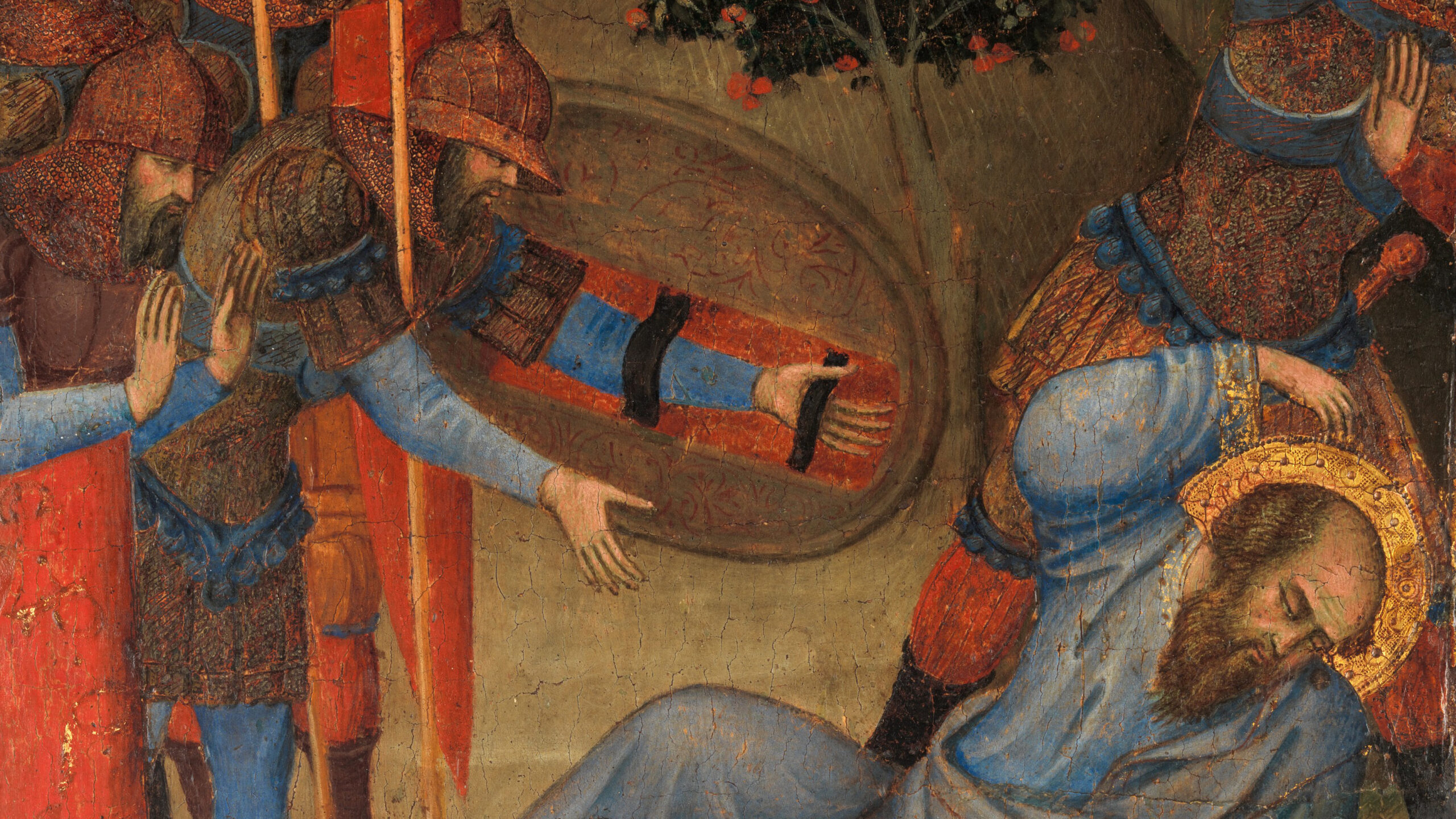
In the Acts of the Apostles, we read that King Herod “had James, the brother of John, killed with the sword” (12:2). He then had Peter arrested as well (12:3). This wasn’t the first time Peter and the Apostles had been imprisoned. Already once before, the high priest and Sadducees “arrested the apostles and put them in the public prison” (Acts 5:18). Both times, there were miraculous escapes through angelic intervention.
During the first prison break, “an angel of the Lord opened the prison doors, brought them out, and said, ‘Go, stand in the temple and tell the people the whole message about this life.’ When they heard this, they entered the temple at daybreak and went on with their teaching” (5:19–20).
Whether he has said these words under duress is not the issue; the issue is their truthfulness.
So, immediately after escaping, Peter and the Apostles heeded the divine command to continue the proclamation of the Gospel precisely in a place where they would easily be found and recaptured, which is exactly what happened.
The high priest then addressed the Apostles with words similar to the Algerian Law: “‘We gave you strict orders not to teach in this name, yet here you have filled Jerusalem with your teaching’” (5:28). Peter’s response to this interrogation is telling: “‘We must obey God rather than any human authority’” (5:29). St. Peter was eventually martyred for his refusal to bow to secular authority, as were numerous other martyrs during the first few hundred years of Christianity’s persecution by Roman emperors.
Christian Martyrdom has not ceased. As Robert Royal reports in an article published on All Souls Day, “Within just one week, two massacres of Christians took place that went almost unnoticed. In Jordan, nine Christians were killed and dozens more wounded during a funeral procession at St. George’s Orthodox Church. And in Ethiopia, sixty Christians were murdered in two separate incidents by gunmen who went house to house, hunting them down and burning twenty of their homes along the way.”
The threat, especially in Christian-minority lands, is real. Those of us who live in places of relative safety ought not be over-confident that we would be more courageous in the face of such persecution than those whom we criticize. For, alongside the countless martyrs in the early Church, there were also many who capitulated to the demands of the political power of their day.
No one is questioning the difficulty of Cardinal Vesco’s situation and the weight he must feel regarding the safety of his flock. But the question remains: Were Cardinal Vesco’s now famous remarks—made to a Belgian, not an Algerian outlet—an authentic Catholic view regarding evangelization and conversion? Whether he has said these words under duress is not the issue; the issue is their truthfulness.

In an interview with Christophe Herinckx of CathoBel, Cardinal Vesco made the following remarks about the Church in Algeria:
Another challenge, since Algerian independence, has been to be, as much as possible, a Church that participates fully in civic life, one that is woven into the life of the country. Above all, we must not be a community closed in on itself. That would not be the Church. We are the Church of this people. Not a proselytizing Church, not a Church that is there to convert, but a Church that aspires to be one of the constituent parts of this people.
The dispute over the cardinal’s remarks center around two key terms: “proselytizing” and “convert.” The former can be understood in one of two ways. In the first way, proselytizing is distinct from proper evangelization, insofar as it uses coercive techniques, whether threat of punishment or promises of earthly goods. In another sense, it is at least a partial-synonym for evangelization and simply means any attempt to convert someone from one religion to another, including through proclamation or attempts to convince through rational discussion. Despite what Christophe Herinckx thinks, Bishop Barron is not confused about this term. Today, proselytizing is more often used in distinction from evangelization, and Bishop Barron explicitly cites this difference in his criticism of Cardinal Vesco’s words.
It is Cardinal Vesco’s equation of “a proselytizing Church” and “a Church that is there to convert” that Bishop Barron contests. Additionally, Cardinal Vesco removed all doubt about his denial of the call to evangelize. In his own response to Bishop Barron on a Facebook post, Cardinal Vesco plainly said, “Yes, I believe that believers of the three monotheisms [Christianity, Judaism, and Islam] have something better to do than trying to convert one another.”
The Great Commission consists precisely in making disciples of all nations and baptizing them into Christ and his Church (Matt 28:19). The Apostles carried this out to both Jews and Gentiles alike. All nations means all nations and peoples, none excepted.
Some have come to the cardinal’s defense by claiming that it isn’t our job to convert; it’s the Holy Spirit who converts. That’s only partially true, and it is ultimately irrelevant. Let me explain.
Yes, in the midst of our proclamation of the Gospel, ultimately, the Holy Spirit is the one who offers the gift of faith by which people can repent and believe in the Gospel. But that doesn’t excuse us from the command to proclaim the gospel, which is precisely the matter under dispute. Secondly, the Holy Spirit works in and through proclamation.
I can think someone is wrong about something, including religious beliefs, without thinking we don’t share the same humanity.
It is fitting, in this context, to cite someone who actually did convert and was also the greatest of evangelizers: St. Paul. What does he have to say about all this?
Regarding whether or not he should evangelize, St. Paul says, “An obligation is laid on me, and woe to me if I do not proclaim the gospel!” (1 Cor 9:16b). With respect to the faithfuls’ role in bringing souls to Christ, he does not say “don’t worry about it, the Holy Spirit has it covered.” Quite to the contrary, he states, “But how are they to call on one in whom they have not believed? And how are they to believe in one of whom they have never heard? And how are they to hear without someone to proclaim? And how are they to proclaim unless they are sent? . . . faith comes from what is heard” (Rom 10:14–15, 17).
St. Paul was a convert from one monotheism to another (pace, Cardinal Vesco), and he sought to convert his fellow Jews as well as Gentiles to the truth of faith in Christ. He conducted this evangelization in the midst of a religious and political situation that wanted to—and did—kill him for it.
No law forbidding proclamation of the gospel is valid. As Dignitatis Humanae says to nations that try to stop the Church from evangelizing, “In the face of government the Church claims freedom for herself in her character as a spiritual authority, established by Christ the Lord, upon which there rests, by divine mandate, the duty of going out into the whole world and preaching the Gospel to every creature” (13).
I not only disagree with Cardinal Vesco’s words cited above, I also have a problem with the less-discussed rationale he offers for his outlook. In the original interview, he stated, “In the monotheistic religions, proselytism is a poison because it implies considering the other person’s religion to be false. When I have a Muslim in front of me who says, ‘You’re a good person, but your religion is worthless,’ that brings the dialogue to an end. Suddenly we are no longer of the same world; we no longer belong to the same humanity. We have to fight against that.”
We’ve already addressed the problem with how the word proselytism is being used above, so I won’t rehash that. That aside, I do not agree with his assessment. Cardinal Vesco is saying if I disagree with someone else, then we are “no longer of the same world” and “no longer belong to the same humanity.” That, to me, is patently false. I can think someone is wrong about something, including religious beliefs, without thinking we don’t share the same humanity.
There is nothing dignified about burying our heads in the sand and refusing to discuss our differences openly and honestly.
Also, I don’t think such statements about disagreements have to be the end of the discussion. They can be precisely the beginning of a conversation. That’s what interreligious dialogue is all about. As one of my former professors, Fr. Harvey Egan, SJ, once told me, “It is not dialogue if you give up your position from the start.” In other words, pretending you agree when you don’t is not authentic dialogue.
The whole purpose of dialogue is predicated on a mutual desire to help one another come to a better grasp of the truth. The fact that we already disagree is precisely that: a fact. Islam does think Christianity is wrong about Christ; Christians think Islam is wrong about Christ. No amount of pretending we don’t think the other is wrong about these beliefs will change that fact. At least the hypothetical Muslim the cardinal speaks of is being honest, and honesty about our differences is the beginning of authentic dialogue. The scenario shouldn’t be: “I think you are wrong, so let’s not talk.” It should be: “We both think the other’s position is mistaken—let’s discuss.” It is the willingness to rationally discuss in the face of disagreement that manifests our recognition of the other’s dignity. There is nothing dignified about burying our heads in the sand and refusing to discuss our differences openly and honestly.
Honesty about one’s beliefs, especially when they contradict those of the other, are necessary for dialogue, and so is the prior commitment to the truth. In his book The Nature and Mission of Theology, Joseph Ratzinger uses St. Augustine’s own conversion experience as a powerful example. He writes, “Augustine concludes that the community of friends was capable of mutual listening and understanding because all of them together heeded the interior master, the truth. . . . Dialogue without this interior obedient listening to the truth would be nothing more than a discussion among the deaf” (34). As I commented in the The New Apologetics, “If there is no truth which both parties are committed to seeking and to obeying, then no dialogue is possible. Dialogue presupposes that the truth can be sought, acquired, and shared, that logos is the basis of dia-logos” (109).
But here we come to another statement by Cardinal Vesco that I find problematic. He does not just reject attempts to convert; he does not think we should even have interreligious dialogue with Muslims. When asked what the conditions for fruitful dialogue with Muslims would be, he answered flatly: “My deep conviction is that dialogue should not take place on the religious level. It is not Christian–Muslim dialogue that will improve the situation in the banlieues.” To give him the benefit of the doubt, perhaps he means that there are too many obstacles to dialogue on the religious level that need to be removed before any such thing could be attempted in Algeria. But, as stated, the cardinal says we ought not try to convert people to Christianity and that we ought not even engage in interreligious dialogue with Muslims. Neither exemplify the Catholic position.
Let me conclude with words from Nostra Aetate regarding the Catholic view of our relation to other religions, including Islam: “The Catholic Church rejects nothing that is true and holy in these religions. . . . However [vero], she proclaims, and ever must proclaim Christ ‘the way, the truth, and the life’ (John 14:6), in whom men may find the fullness of religious life” (2, emphasis added).