
In the closing scene of Christopher Nolan’s gripping film Dunkirk, two rumpled, bedraggled British soldiers rest fitfully in a train car as the train’s rhythmic thump and rattle mark the time. With matted hair, dirty skin, and sallow eyes, they carry a mixed burden of shame and relief. They are going home.
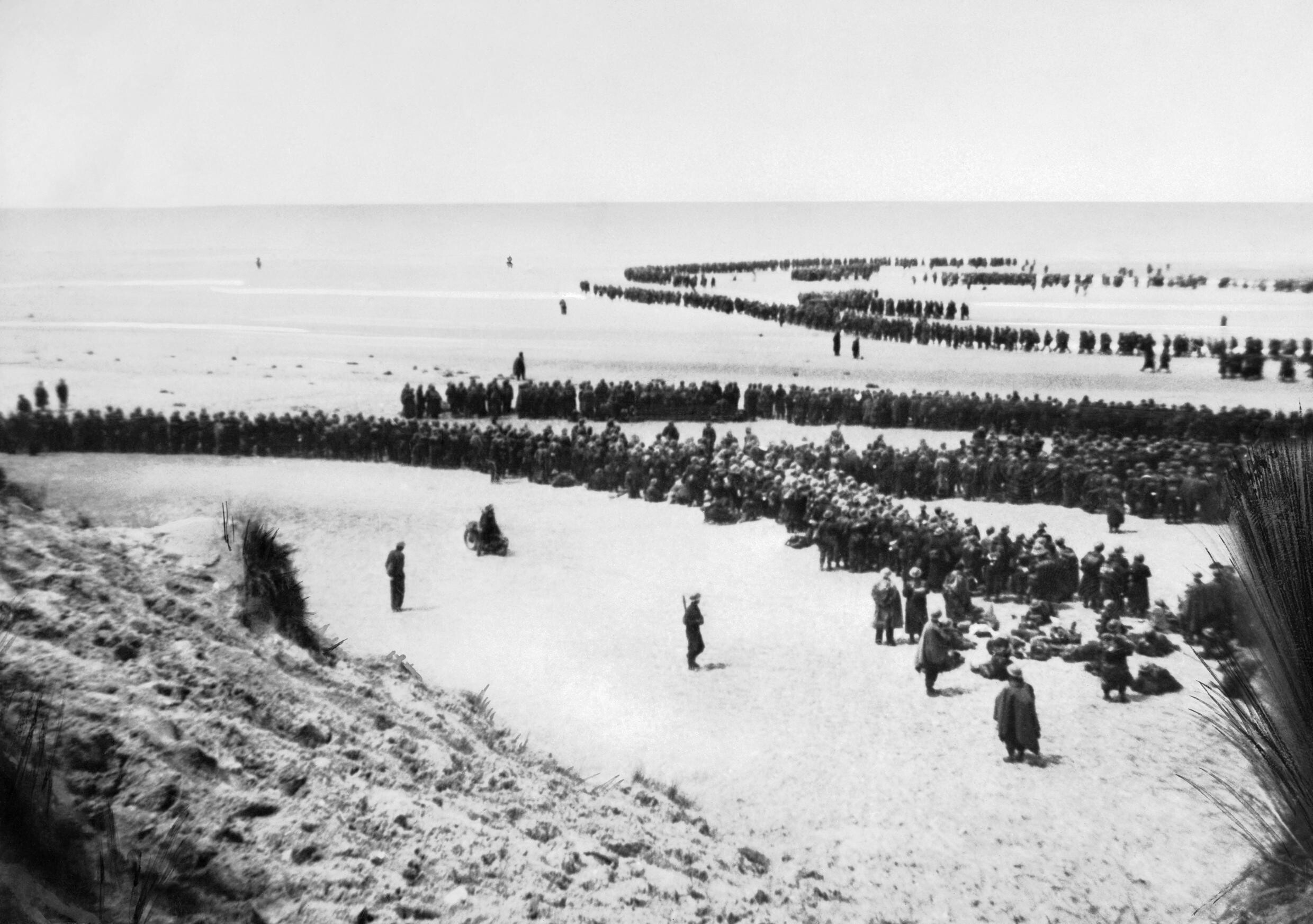
What they left behind was carnage. The roaring blitzkrieg of the Nazi army had pinned the reeling French and British armies on beaches abutting the English Channel at the seaport of Dunkirk. Nearly 350,000 soldiers waited—both worried and listless—for the help that seemed it would never come. Annihilation was assured. When conventional military seacraft measures were prevented from drawing close to the shores without enduring blistering attack, Prime Minister Winston Churchill authorized Operation Dynamo, which recruited a “people’s navy” of schooners and fishing boats, tugboats and garbage scows to “bring our boys home.” Having little hope of saving even a meager fraction of the stranded soldiers, the endeavor stunningly saved 338,000. Shortly thereafter, Winston Churchill dubbed the rescue “the Miracle at Dunkirk.”
Surely, the soldiers feared, we are returning home in shame.
In Nolan’s film, as Tommy and Alex rode the train home after reaching British shores, they sank shamefaced into their seats. Reading Churchill’s speech from that day’s newspaper, the Lion of London spoke of the seismic events of the day. “Wars,” he growled from the page, “are not won by evacuations.” As Tommy read, Alex winced with his head tucked even deeper into his chest. And as the train slowed, he turned away from an aged man who approached and began tapping on their windows. “I can’t look,” Alex confessed. “Our thankfulness at the escape of the army,” Churchill’s speech went on, “must not blind us to the fact that what has happened in France is a colossal military disaster and we must expect a blow to be struck almost immediately.”
Surely, the soldiers feared, we are returning home in shame.
But as the tapping at the window grew ever more insistent, Alex slid the pane down. And what he heard shocked him. Cheers and laughter. Waving hands and blown kisses. Two beers were pressed into his hands. Apples followed.
What they encountered was not acrimony or recrimination.
It was gratitude.
Shocking gratitude.
Gratitude for life. Gratitude for fighting against impossible odds. Gratitude for return.
Sweet gratitude.

Tommy read on, the sweep of Churchill’s words picking up steam:
We shall go on to the end. We shall fight in France. We shall fight on the seas and oceans. We shall fight with growing confidence and growing strength in the air. We shall defend our island whatever the costs may be—we shall fight on the beaches and on the landing grounds. We shall fight in the fields and the streets. We shall fight in the hills. We shall never surrender. And even if, which I do not for a moment believe, this island were subjugated and starving, then our Empire beyond the seas, armed and guarded by the British fleet, would carry on the struggle until, in God’s good time, the New World, with all its power and might, steps forth to the rescue and liberation of the old.
With eyes open to the raw reality of unmitigated defeat, the British people never gave up on their boys. They were aware of their incontestable value, the sweet, God-kissed relief of their return, and the earnest hope to fight once again for honor, for victory. Whereas the Nazis castigated and the Soviets executed their failed soldiers, the British healed and rebuilt them.
This is what the characters Tommy and Alex found upon returning home. Though stung by bitter loss, they were stunned by unconditional love. They were surprised and grateful. And, in that moment, they were transformed.
Gratitude doesn’t simply soothe; it inspires. Gratitude reminds us that light outshines darkness, joy overmasters pain, grace outlives suffering.
The cycle of gratitude is a grace. The British people, though dismayed by defeat, were grateful for their boys’ efforts and deliverance. In turn, the soldiers, despite their loss, were grateful that they were not received with caustic judgment but with uncommon generosity. Gratitude doesn’t simply soothe; it inspires. It recognizes the notion of gift—an unmerited blessing that didn’t have to be but wondrously is. Gratitude does not dismiss reality; it sees the darkness as well as the light: It possesses a clear eye. Chastened by humility knowing we all have clay feet, gratitude allows us to be heartened that we can prevail, outlast, and overcome nonetheless. Gratitude reminds us that light outshines darkness, joy overmasters pain, grace outlives suffering.
Thus, as far as I’m concerned, the true “Miracle at Dunkirk” was not that the boys survived the defeat on the French beaches in 1940 but that they came back and were the very boys (along with the Americans) who delivered the victory at D-Day four years later. Without doubt, they had their fears, but they were girded with gratitude. Inspired by a home for which they were thankful and which was thankful for them, they returned valiantly to the fight. While Churchill honestly reminded, “You must put your head into the lion’s mouth if the performance is to be a success,” he also hopefully insisted, “I take up my task with buoyancy and hope. I feel sure that our cause will not be suffered to fail among men. At this time I feel entitled to claim the aid of all, and I say, ‘Come then, let us go forward together with our united strength.’”
The fact that Winston Churchill believed in his soldiers, and that the British people were thankful for them in spite of ignominious defeat, galvanized a young generation to recover and rescue the world. They emerged from rubble and destroyed one of the most towering tyrannies ever known. But they did it for reasons born out of gratitude. As G. K. Chesterton insists, “The true soldier fights not because he hates what is in front of him, but because he loves what is behind him.”
Today, let us remember that no loss is irrecoverable. Let us recognize how the gratitude we give and receive doesn’t simply soothe us; it ennobles, transforms, and galvanizes us for the good. And let us rise up from our own defeats and move forward with certain hope, unwavering faith, and inexhaustible gratitude. In so doing, we can beam like Winston Churchill (a phoenix emerging from the ashes), saying, “I cannot but think we have much to be thankful for, and more still to hope for in the future.”