
In the Introduction to his great classic The Everlasting Man, G. K. Chesterton remarks that to see Christendom as well as the history of humanity clearly, we must see them as a whole. And not just as a whole, but in their dynamic development toward that whole which they are in the process of becoming. As Chesterton comments, “We have to see how they developed as well as how they began; for the most incredible part of the story is that things which began thus should have developed thus.”
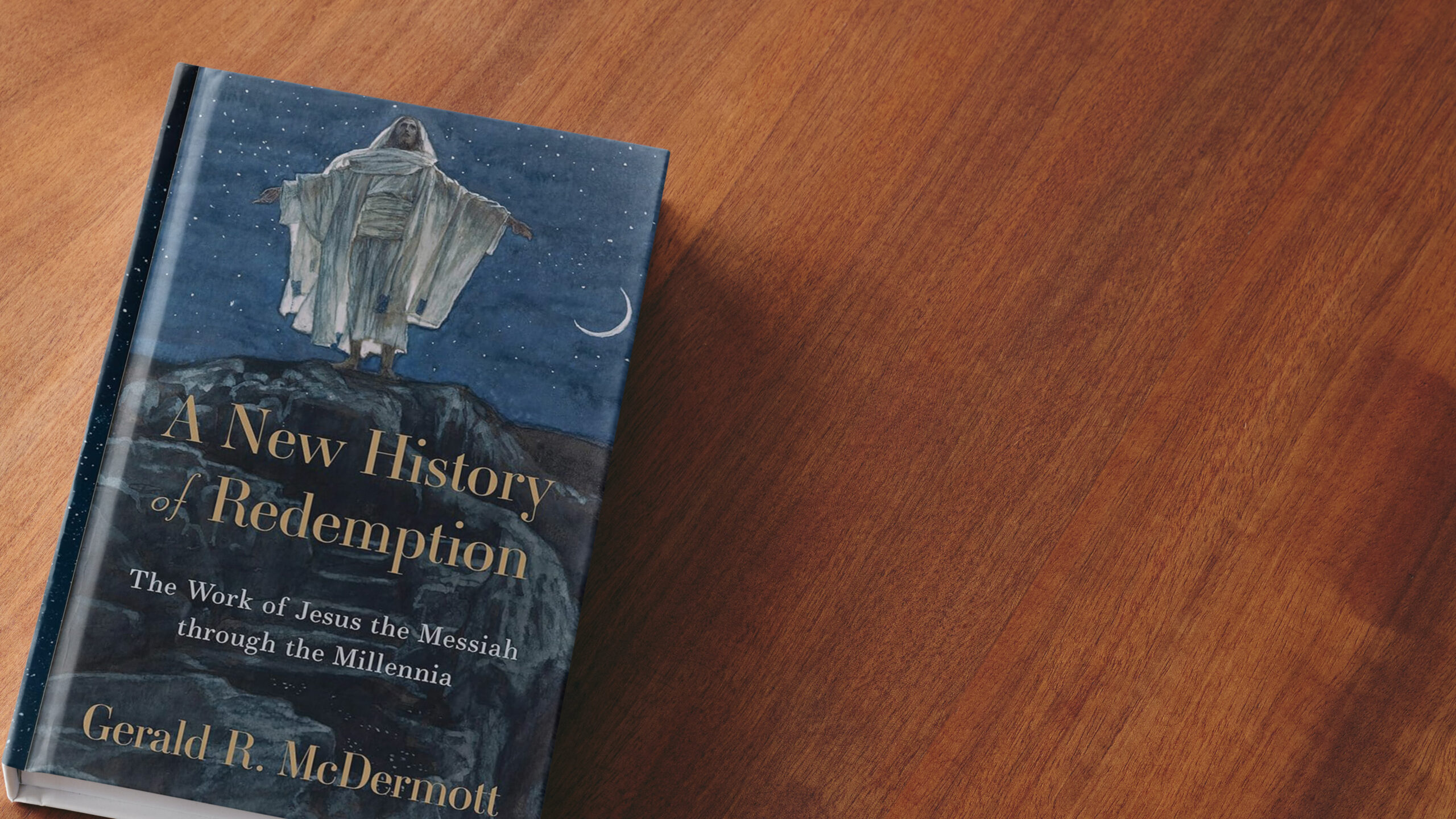
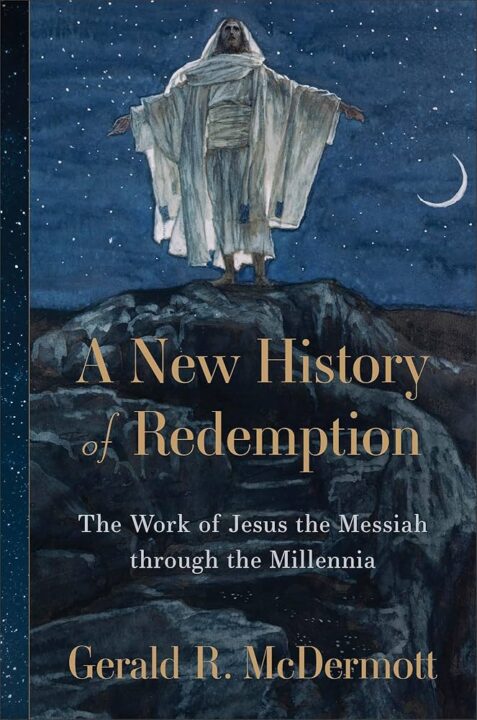
That quote came to mind when reading Gerald McDermott’s absorbing new book, A New History of Redemption: The Work of Jesus the Messiah through the Millennia (Baker Academic, 2024).
Conveying the unbroken history of redemption in its dynamic development is an ambitious undertaking, to be sure. But it is one in keeping with the author’s original impetus for writing this book: to complete the unfinished masterpiece of someone who is arguably America’s greatest theologian, Jonathan Edwards.
McDermott, who is an Edwards scholar, provides an engrossing panoramic overview of God’s (still ongoing) work of redemption. That grand narrative, which he calls “the most wonderful story of all,” allows the reader to achieve a deeper appreciation of that story while gaining a renewed admiration for the major chapters that comprise it.
A strong emphasis on continuity characterizes the author’s treatment of the more than 4,000-year history covered in the book.
Throughout, the book displays a strongly ecumenical, orthodox spirit. There’s no hint here of the strong animus against the Catholic Church that Edwards himself exhibited. (In a previous work, McDermott called this tendency out as a major limitation in the Calvinist theologian’s thinking.) In this regard, McDermott reminds me of his fellow Anglican C. S. Lewis, who used the term “mere Christianity” to refer to the great tradition of historic Christianity, which he wholeheartedly embraced.
A strong emphasis on continuity characterizes the author’s treatment of the more than 4,000-year history covered in the book. We see this most prominently, perhaps, in what is one of the most distinctive features: the emphasis on the organic unity that exists between Israel and the New Testament Church (the New Israel).
The elements of continuity between the two run deep, ranging from a profound belief in the one God and in his written Word to a strong reliance on liturgy, worship, and priestly mediation to the great prominence both assign to the cosmic scope of God’s redemption.
In this context, McDermott strongly rejects the notion that God’s redemptive purpose for the Jewish people came to an abrupt halt with the coming of the Messiah and the birth of the Church. He expresses his view succinctly: “The old tree was not cut down and replaced.”
In thus repudiating supersessionism or replacement theology, the author’s views align closely with the teachings of the Second Vatican Council’s declaration Nostra Aetate. That document urged the Church not to “forget that she draws sustenance from the root of a well-cultivated olive tree onto which have been grafted the wild shoots, the Gentiles.” That is why John Paul II often referred to Jews as “our older brothers” who are “beloved of God, who has called them with an irrevocable calling.”
A second element of continuity exists between the founding of the New Testament Church and its subsequent history. As McDermott’s discussion suggests, Church history is redemption history. To be sure, the pivotal chapters of that story are the momentous events associated with the first coming of the Messiah that we celebrate throughout the year with the aid of the Church’s liturgical calendar.
That annual cycle ends with the current phase, which we used to call “the Season after Pentecost.” That older designation helpfully draws our attention to the chief task at hand: the Spirit-empowered proclamation of the Gospel to all nations for the building up of the Church and the sanctification of the world.
The author convincingly shows how the history of the Church has been “meandering and unpredictable.” One thing that is predictable, however, as the author forcefully asserts (echoing St. Paul), is the final restoration of Israel and its glorious entrance into the shalom of God’s kingdom.
The current long phase also will end someday, as the book of Revelation prophesies. And McDermott does a wonderful job of carrying the story through to its triumphant end by including an interesting section on the events associated with the eschaton.
This last part contains a fascinating discussion of the new heavens and the new earth. In it, McDermott draws on a wide range of sources to paint a vivid picture of what the “life of the world to come” might look like. (If you’re curious about whether there will be animals—or sex—in heaven, this is the place to go.)
By design, A New History of Redemption draws our attention to the long arc of redemption history. But it also provides the reader with many rewarding stops along the way. One of my favorites is McDermott’s discussion of the book of Leviticus, which, as he rightly points out, many Christians often consider expendable.
But in fact, the author contends, for many rabbis Leviticus provided the hermeneutical key to all the Scriptures. For that reason, he explains, it was the first book taught to young Jewish boys, with the aim of providing them with the necessary grammar for understanding God’s Word and ways.
Another rewarding stop is a highly informative chapter on the Oxford Movement. Interestingly, it is with the Oxford Movement that Chesterton rounds off his discussion in The Everlasting Man. For Chesterton, that movement represented a great and unexpected reversal from the seemingly relentless march of theological liberalism. To most people, he wrote, it seemed as if a river were turning backward from the sea and trying to climb back into the mountains.
The Oxford Movement is another one of those improbable and wonderful surprises one often finds in the meandering and unpredictable nature of God’s ways with the Church. It’s a captivating story for which McDermott has shown himself an excellent guide.