
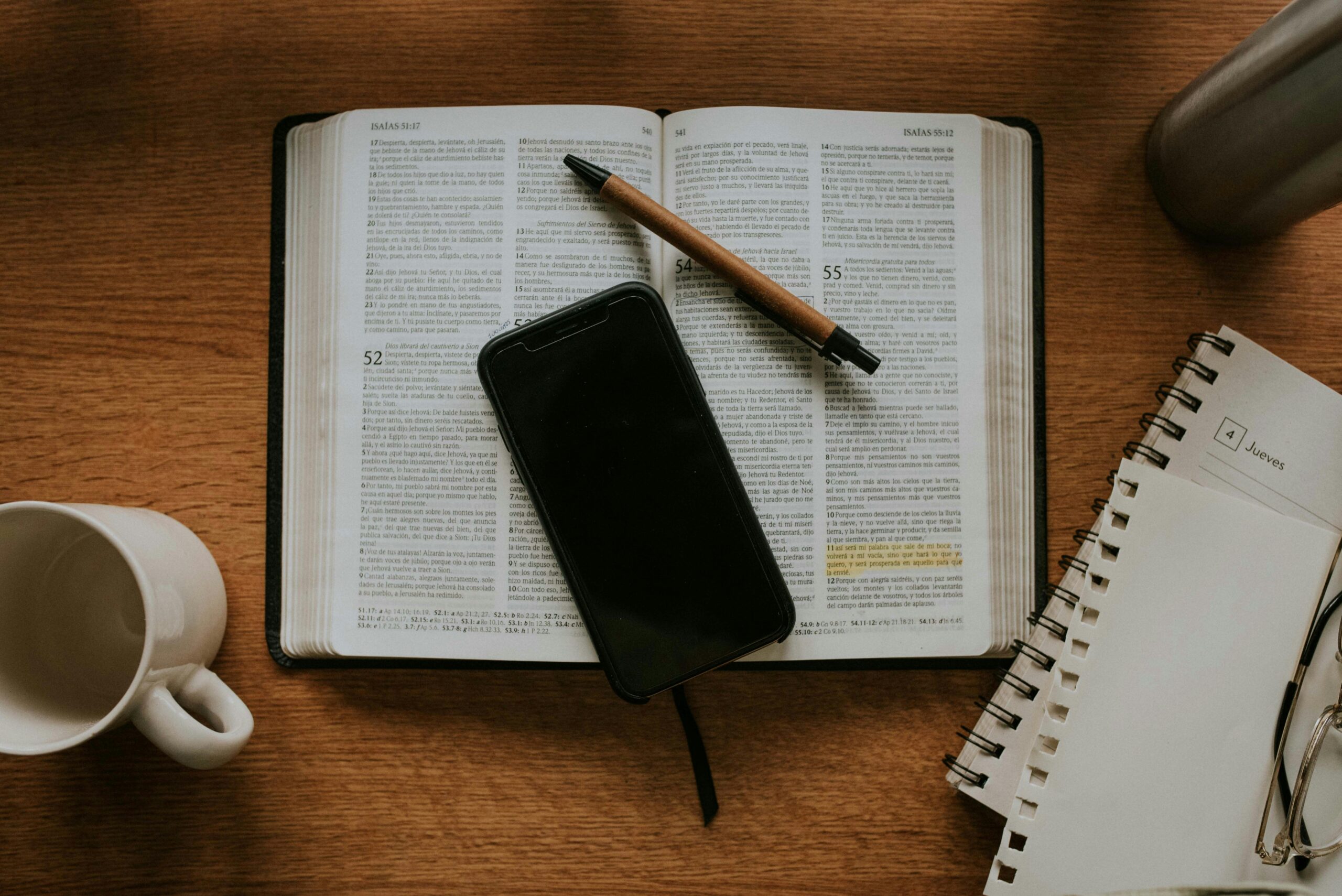
A few weeks ago, I tried something simple: ten minutes of prayer before work. No phone. No laptop. Just silence. I did not last three. My mind began sprinting almost immediately. Emails I had not answered. Messages I thought I had heard but had not. Meetings stacked one after the other in a calendar that never seemed to end. And when I finally opened my eyes from the swirl of mental alerts, I saw my son across the room, sitting on the couch. He was watching reels—not one or two but what seemed like a hundred micro videos in the space of twenty minutes. His face was calm, but I could sense the flicker underneath. His brain was moving as fast as mine.
That moment unsettled me more than I expected. Not because it was new but because it was too familiar. There we were, side by side, in two different worlds, and yet caught in the same current. That current has a name. Constant stimulation. Endless novelty. The pull of everything, everywhere, all the time. If God is the still, small voice, then where do we go when the whole world is shouting?
It would be easy to say this is a problem for teenagers. But the truth is, we are all in it. Adults spend hours each day on social media. We open our phones instinctively. We scroll without purpose. We consume without pause. And it is not just about time. It is about formation. We are being shaped to crave what is fast, what is new, what is loud. We say we have no time for prayer, and yet we find time for seventy reels and three rabbit holes. We say we long for depth, but we have trained our attention for surfaces. We say we are busy, but we are somehow always available. We are not just distracted. We are being discipled by distraction.
Long before smartphones, Blaise Pascal wrote that the root of most human problems was the inability to sit quietly in a room alone. He wrote that in the seventeenth century. He could not have imagined what the twenty-first would become. Today we do not just avoid silence. We fear it. Stillness feels foreign. Boredom feels unbearable. And prayer, once a natural part of daily life, now feels like an uphill climb through mental noise.
The spiritual life has always moved at a different pace. God does not rush. The Gospels unfold slowly. Jesus pauses. He walks. He prays alone. He spends time with people, one conversation at a time. The psalms are not soundbites. They are songs for pilgrims. The saints did not multitask their way to holiness. They returned again and again to silence, repetition, and stillness. Grace is not urgent. It is not designed to keep up with our feeds.
God does not operate by push notification. He does not compete for our attention.
Yet our habits have changed. We speed up podcasts. We skip through videos. We swipe before we finish reading. Our brains expect constant novelty. Our hearts grow restless without it. Even prayer becomes something to optimize. We set reminders to pray, track our spiritual progress, and expect immediate results. But God does not operate by push notification. He does not compete for our attention. He waits. And when we do not hear him, we assume something is broken. Maybe what is broken is our ability to be quiet long enough to listen.
I remember reading about the rule of life followed by early monastic communities: Ora et Labora. “Pray and Work.” A rhythm that gave shape to their days and structure to their souls. Today, our rhythm is different. Scroll and refresh. Consume and repeat. Our days are driven by reaction, not reflection. And in that rhythm, prayer begins to feel unnatural. It is not because it is impossible. It is because we have been trained away from it. Our habits are out of sync with the life of the soul.
Some days, I have felt tempted to abandon the tools altogether. To delete the apps. To power down the phone. To walk away from the screens. That instinct comes from a good place. It is born from a hunger for clarity, for peace, for God. But over time, I have started to ask a different question. What if the answer is not always to retreat? What if there is a way to invite God into the very thing that so often distracts us? Can grace move through a touch screen?
It helps to remember that the Church has always made use of whatever tools were available. Paul wrote letters. The reformers printed tracts. Evangelists used radio and television. Today, we live online. The question is not whether it is possible to encounter God there. The question is whether we are willing to shape these tools rather than be shaped by them. Technology is not sacred, but it is not beyond redemption either. It reflects what we give it. It amplifies what we feed it. If the digital world trains us in comparison and noise, then maybe we are called to respond not by escaping it but by reforming it—reclaiming it.
Last week, I noticed my wife using a prayer app on her phone. At first, I dismissed it. I thought it was another productivity tool dressed up as something spiritual. But then I watched more closely. It was not just for her. The app invited her to pray for someone else’s intention. Ten seconds of silence. A whispered prayer. Then it offered her prayer request to others in return. This simple exchange, powered by a screen, revived something ancient. Intercession. Solidarity. The communion of saints, reimagined through code. In that moment, I no longer saw a person on a device. I saw a believer practicing love. Technology, used rightly, had become a tool for presence, not escape.
It reminded me that not all digital habits disconnect. Some connect more deeply. When rightly ordered, they draw us toward compassion, not comparison. Toward service, not spectacle. It is not about rejecting the tools. It is about reclaiming their purpose. I began asking myself: What else could be redeemed? What if our phones became sacred spaces? What if we treated them not only as mirrors of the self but as windows into God’s presence?
I began to experiment. My mornings now begin without my phone. The first fifteen minutes belong to silence, to breath, to a verse that grounds me. During the day, I leave small reminders, a psalm taped to the fridge, a sticker on my laptop, a keychain with a sacred image. I pray while brushing my teeth, while walking down the street, while waiting in line. On Sundays, I place my phone on airplane mode during Mass and block that hour in my calendar as I would any sacred meeting. Because it is. If I cannot make it to the church to pray, I speak to God as if he were sitting next to me: a simple sentence on the way to the store, a whispered plea in traffic, a moment of thanks before a meeting. These fragments are not lesser prayers. They are the scaffolding of a relationship.
I do not believe we need to escape the modern world to find God. But I do believe we need to stop assuming that God will shout over our noise. He will not. He is patient, but he is not loud. He knocks, but he never forces the door. That is the challenge. In a culture that values performance above presence, prayer will always feel inefficient. In a world built on speed, grace will always seem slow. But that slowness is not a flaw. It is a feature. The still, small voice has not changed. We have.
I often think about my grandparents. Their faith was not dramatic. It was steady. They went to Mass every Sunday, prayed the Rosary at night, and said grace before meals, even when they were alone. They did not wait to feel spiritual. They simply prayed. They did not ask whether their routines felt authentic. They trusted the rhythm. That kind of faith was born in a world that moved slowly, a world where repetition was not seen as a dead ritual but as something grounding. Sacred. Today, we question everything. We hesitate to act unless it feels meaningful in the moment. But the spiritual life is often shaped in moments that feel small. It grows not through inspiration but through habit. Repetition becomes a form of resistance.
We talk a great deal about innovation. Smarter devices. Faster networks. Better algorithms. But maybe the most important innovation we need is not new. Maybe it is ancient. Maybe we need to remember how to be still. How to pause. How to be fully present without needing to capture or post or optimize the experience.
The digital world rewards what is seen: the post, the comment, the applause. But faith grows in the invisible. In the quiet. In the words no one hears.
Imagine if we saw stillness not as failure but as protest. In a world obsessed with output, choosing to rest in God may be the most countercultural act we have. We refresh our inboxes and expect responses. We send a message and wait for the blue ticks. We post a thought and track the likes. The internet has trained us to expect instant validation. But the spiritual life does not work that way. God rarely answers on our timeline. Sometimes he is silent. Sometimes he asks us to wait. But that waiting is not empty. It is where trust is built, where roots grow.
Prayer is not a vending machine. We do not insert a request and receive a miracle. We sit. We listen. We open our hands. For those of us raised in a world of two-day shipping and instant feedback, that kind of waiting feels strange. But it is holy. I have begun to see delay not as absence but as formation. When God does not speak, perhaps it is not because he has turned away but because he is teaching me to stay. To remain. To grow deeper than my wants, closer to his will.
There is a kind of spirituality today that feels like another list of tasks. Journal in the morning. Meditate. Practice gratitude. Go to church. Read Scripture. Avoid distractions. All good things. But when faith becomes another item to check off, it starts to feel like performance. Another project to optimize. Another metric to measure. We forget that the Gospel does not begin with action. It begins with identity. Before Jesus healed or taught or sacrificed, he was baptized. And the first words he heard were not instructions but a declaration: You are my beloved.
That truth still comes first. Before the effort. Before discipline. Before achievement. We are loved. We do not need to prove ourselves. God is not watching for our performance. He is waiting for our presence. Some days, the holiest thing we can do is to stop. To step out of the current. To be still long enough to realize again we are loved.
In this world of metrics and measurements, the soul does not show up on the dashboard. No one is asking how well we forgave. No one is tracking how deeply we loved. But heaven is not driven by data. The heart of God is not an algorithm. It does not measure. It embraces. If you prayed today, even distractedly, it “counts.” If you whispered a thank-you while walking, it matters. The soul does not need more pressure. It needs more presence.
The digital world rewards what is seen: the post, the comment, the applause. But faith grows in the invisible. In the quiet. In the words no one hears. In the small “yes” spoken when no one is watching. I try to remember that every time I choose prayer over scrolling, silence over noise, presence over performance. Not because I am rejecting the world around me but because I refuse to be defined entirely by it. My phone can tell me how many steps I took, how many emails I sent, how many hours I slept. But it cannot measure whether I was kind. Whether I listened. Whether I loved.
Sometimes, I imagine God sending a message, not through an app but through the ordinary. A sudden breeze on a hot afternoon. A smile from a stranger. A line from Scripture I did not expect to read. A whisper in traffic. Maybe grace does not require reception. Maybe heaven has its network, one that does not need a password. One that does not drop calls. One that waits for us to answer.