
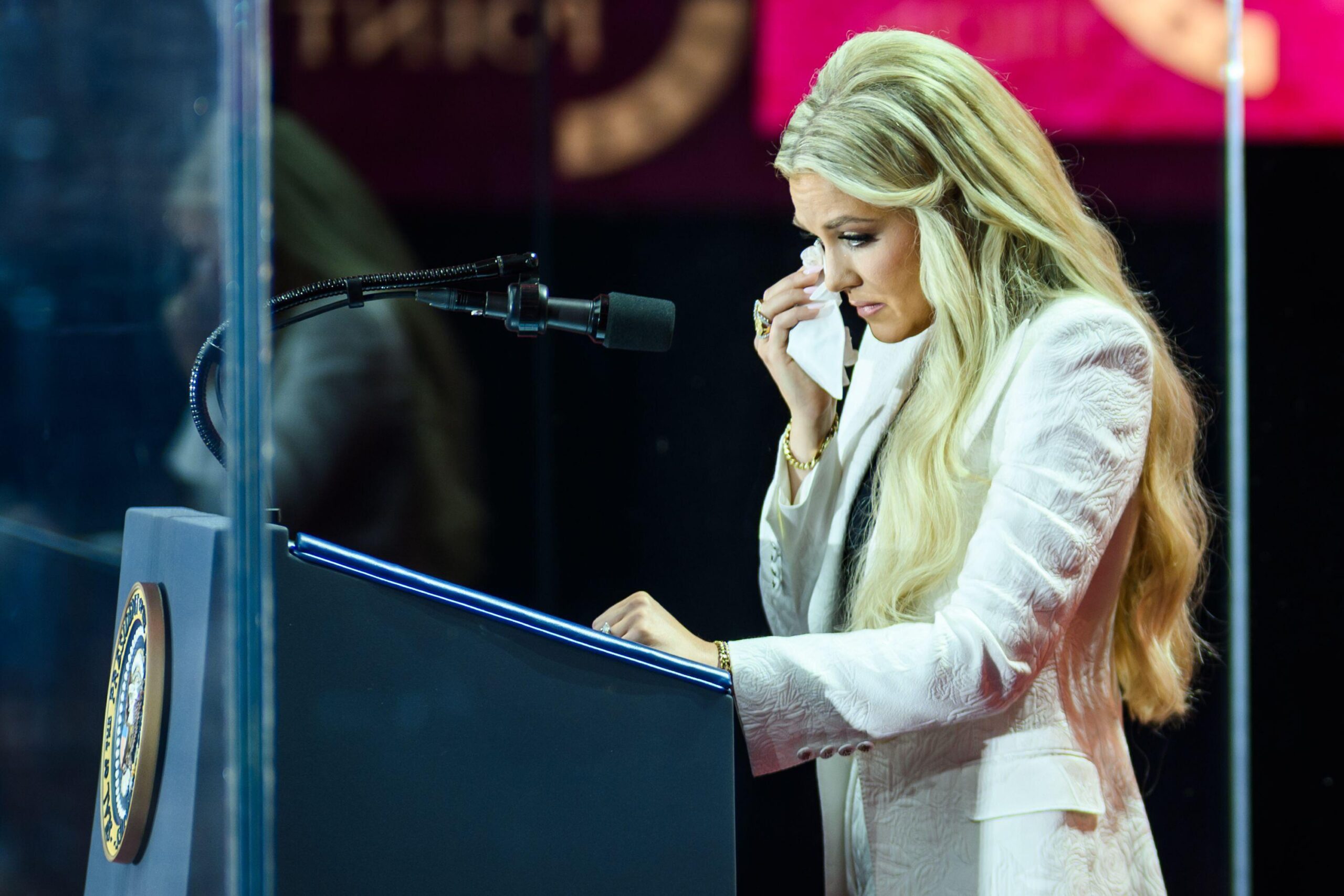
At the memorial service for her murdered husband, Erika Kirk said of the young man who shot her husband, “I forgive him. I forgive him because it was what Christ did. . . . The answer to hate is not hate. The answer we know from the Gospel is love and always love. Love for our enemies and love for those who persecute us.” These words stunned and amazed millions of people, including myself.
I am inspired by her example. She follows in a distinguished line of Christians who forgave, including the Amish, who forgave the killer of their children; Everett Worthington, who forgave the man who raped and murdered his elderly mother; and Pope St. John Paul II, who forgave his would-be assassin.
What exactly did Erika Kirk do? Forgiveness is not forgetting. There is no way Erika will ever forget that her husband was murdered in cold blood. “Forgive and forget” is a nice saying, but if the harm is murder, then forgetting is never going to happen. So, to forgive is not to forget.
Nor is to forgive to forgo justice. Justice for crime is necessary for the well being of the community and the wrongdoer. Just punishments protect the wider community by deterring some would-be criminals from committing crimes. Just punishments also restore the order of justice that the criminal has disrupted. Just punishments can help a wrongdoer to understand and hopefully regret the wrongdoing. Just punishments can make the community safer by removing dangerous criminals from further opportunities to cause harm. So, to forgive is not to forgo justice.
Forgiveness also does not mean reconciling with the wrongdoer. Ideally, the wrongdoer asks for forgiveness, commits to never repeating the offense, and seeks a restoration of the prior relationship. But, in this case, the alleged murderer of Charlie Kirk had no prior relationship with Erika Kirk and has not, as far as I know, asked for forgiveness nor committed to never repeating the offense.
Forgiveness is not forgetting, not forgoing justice, not reconciling, and not feeling better about it. What exactly is forgiveness?
Forgiveness also does not mean feeling better about what happened. Over time, the hurt of the harm will lessen. Hopefully, the memory becomes less raw, the loss less biting, and the harm less overwhelming. But for some kinds of harm, the emotional toll will continue indefinitely. When times are tough, some people advise, “Take it one day at a time.” But when times are intolerable, as Erika Kirk recounted Usha Vance’s advice, you “get through these fifteen minutes and the next fifteen minutes after that.” And yet, in the midst of this trial of fire, she forgave.
So, forgiveness is not forgetting, not forgoing justice, not reconciling, and not feeling better about it. What exactly is forgiveness?
To forgive is to forgo revenge. To forgive is to let go of the roles of judge, jury, and executioner of the wrongdoer. To forgive someone is to let God and the civil authorities decide what the wrongdoer will get in recompense. Rather than personally avenge the evil done, an eye for an eye, forgiveness lets the wrongdoer see—hopefully see the wrong that was done.
Why did Erika Kirk forgive the man who murdered her husband? She said, “I forgive him because it was what Christ did” on the cross. Jesus practiced what he preached: “If you forgive others their trespasses, your heavenly Father will also forgive you; but if you do not forgive others, neither will your Father forgive your trespasses” (Matt. 6:14—15).
And, one might wonder, why did Jesus put such an emphasis on forgiveness? One reason might be to short circuit a cycle of revenge. But the good of forgiveness serves not only the wider community but serves the good of the one who forgives. As Christopher Peterson notes, “Forgiveness undoes our own hatred and frees us from the troubled past. Indeed, forgiveness has been described as the queen of the virtues—that is, those who forgive are much more serene than those who do not and display many other positive strengths.” Human beings, even people who are trying to love each other, often end up hurting each other. So, if we do not have forgiveness, we will not have long-term relationships with anyone. These long-term relationships are essential for human happiness.
Erika Kirk concluded her remarks by saying, “Charlie’s life was a turning point for this country. It was a miracle. Let that miracle of his life be your turning point as well. Choose prayer. Choose courage. Choose beauty. Choose adventure. Choose family. Choose a life of faith. Most importantly, choose Christ.” Erika Kirk shows us how it is done.