
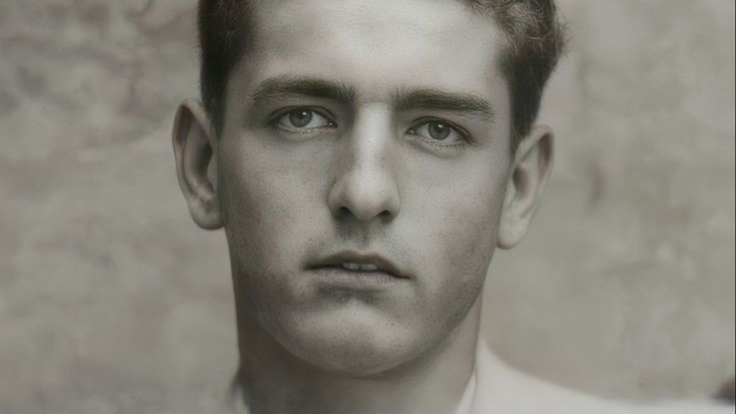
It inspires so much hope when one discovers a saint close to their own era. Sweeter is that discovery when the saint shares one’s vocation, and lay saints are relatively few and far between. And so it was my sweet surprise to discover a recent blessed of the Church who lived the lay life and walked the tightrope of being in the world but not of it: an active politician who won the respect of even the Communists, lived through the bombings of World War II and the Nazi occupation of Rimini, and was a talented engineer and dedicated high school teacher. His name was Alberto Marvelli, and he has been dubbed by some the “Engineer of Charity.”
Alberto was born to Luigi and Maria Marvelli in Ferrara, Italy, on March 21, 1918. His mother, the Good Samaritan of the family, gave her six children a vivid example of what it meant to love. It was not uncommon for Mrs. Marvelli to enter the dining room, saying, “Jesus has come, and he is hungry,” whisking away Alberto’s plate to feed the poor hungry soul who had wandered to the family’s door. Given his mother’s example, it is no wonder that Alberto fostered a deep charity and concern for others from a young age.
In June 1930, the Marvellis moved to the coastal town of Rimini. There, Alberto attended the Salesian Oratory, kept very busy with a variety of sports—cycling was his favorite—and involved himself with the local Catholic Action group. It was at this time that he started seriously thinking about his call to holiness, and he was known to say, “My program of life is summed up in one word: holy.” He developed a devotion to St. Dominic Savio and took as a role model Pier Giorgio Frassati, who had died just five years prior, in 1925.
Alberto didn’t just want to go to heaven: He wanted to pull everyone else there with him.
On March 7, 1933, Alberto’s father died unexpectedly, just two weeks before Alberto turned fifteen. In October of that tragic year, he began to keep a spiritual diary and wrote out his daily schedule: As soon as his alarm rang, he woke up as early as possible every morning; practiced a daily meditation for at least half an hour, unless he was prevented by circumstances he could not control; spent at least another half hour in spiritual reading; attended Mass every morning; prayed the Angelus at noon; and recited the Rosary every day. In his diary, he wrote, “What a new world opens up to me contemplating Jesus in the Blessed Sacrament. Each time I receive Holy Communion, each time Jesus in his divinity and humanity enters into me, comes in contact with my soul, it awakens holy ideas in me, a burning and consuming flame, but one that makes me so happy!”
At the age of eighteen, in 1936, Alberto was elected the president of Catholic Action in Rimini. When he went to Bologna University to study engineering, he became an active member of the university’s Catholic organization. When he visited home on the weekends, he tended to Rimini’s Catholic Action group and did all he could to help the needy.
He graduated in 1941 and immediately left to enlist in the army. He was, however, soon found exempt because two of his brothers had already joined. After being discharged, Alberto returned to Rimini and became a high school teacher. He devoted much of his free time to being a Good Samaritan to the sick and poor.
During World War II, air raids forced the Marvellis out of Rimini and into the town of Vergiano. After each raid, Alberto rode his bicycle back to Rimini to bring what aid he could to the devastated city. He gave whatever he had to the wounded, dying, and homeless citizens. Sometimes he returned home barefoot after giving away his shoes. There were even occasions when he had to walk back to Vergiano because he had given his beloved bicycle to someone who needed it more than he did.

When Rimini was under German occupation, many innocent people were taken in trains to concentration camps. Alberto broke open the sealed cars and freed those he could before the trains left the station. The occupation ended on September 23, 1945, and the Marvelli family returned to the destroyed, impoverished city. The authorities immediately entrusted the issue of housing to Alberto, who soon joined the Italian Society of Civil Engineers. He became town councillor and opened a soup kitchen, encouraging the downtrodden community to go to Mass, praying with and for them, and being attentive to their hardships.
Alberto became very active in local politics and joined the Christian Democratic Party. He gained respect from all around him, even the Communists, with whom he strongly and openly disagreed. One of his Communist opponents reportedly said, “I don’t mind if my party loses, so long as Engineer Marvelli becomes mayor.” In 1946, the good engineer was a candidate for a local office. On the evening of October 5, while bicycling to the elections, he was hit by a military truck and died hours later. Alberto was twenty-eight years old. News of his death spread throughout Rimini as the voting process began; many voted for him just the same. His mother, who was so influential on his charitable heart, was elected in his place.
The theme of Bl. Alberto’s life was a self-sacrificing, extroverted outpouring of love, which he seemed to learn from his mother. His dedication to Catholic Action, his bleeding heart for the poor, his role as a teacher and guide to his students, his willingness to risk his life helping his fellow citizens in World War II, and his involvement in local politics all point to the fact that Alberto didn’t just want to go to heaven: He wanted to pull everyone else there with him. Misery loves company. But then, so does holiness.