
Four years ago, in my first piece for Evangelization & Culture Online, I discussed the then announced conversion to Catholicism of one of the most popular Christian apologists on Youtube, Cameron Bertuzzi. One of the salient features of Bertuzzi’s conversion was the role that apologetical argument played in it. In particular, Cameron was convinced of the doctrine of the papacy by the biblical typological argument connecting St. Peter with Eliakim, an Old Testament figure mentioned in Isaiah 22. It was Suan Sonna, who also happens to be a convert to Catholicism, whose exposition of this argument helped bring Bertuzzi to Catholicism.
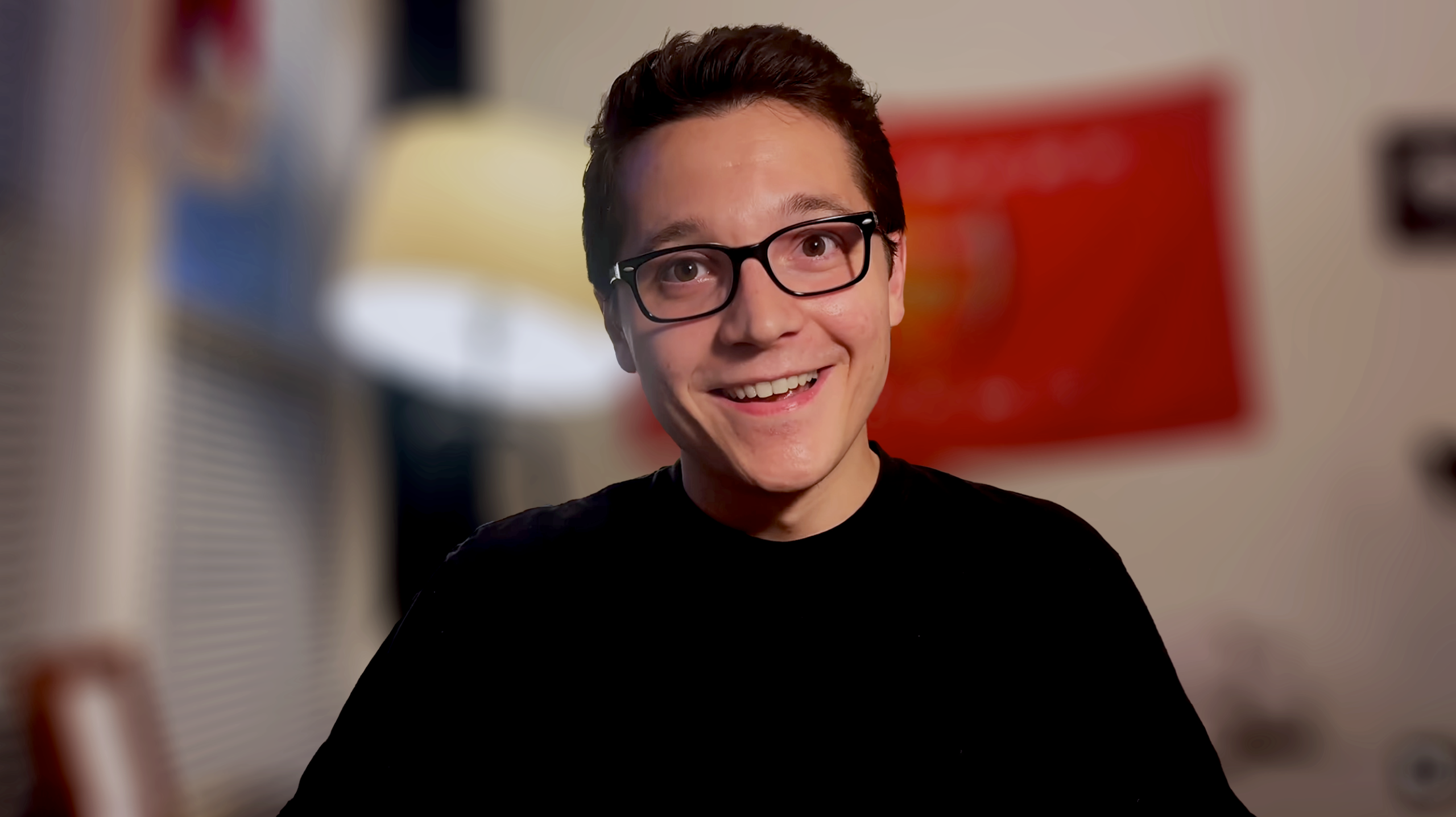
It was a joyous surprise the other day when I found out that Joe Schmid, an agnostic PhD student in philosophy at Princeton and longtime YouTuber, had also converted to Catholicism.
In one way, Schmid’s conversion is more striking than Bertuzzi’s because he is not merely coming to Catholicism from another Christian denomination but from agnosticism. Though raised Catholic, for years, Schmid has run a very interesting YouTube channel called Majesty of Reason, which focuses on various topics in philosophy, taking particular interest in arguments for and against God’s existence. Indeed, a number of his videos are of him debunking arguments for God’s existence and making arguments against theism and Christianity.
Schmid outlined his journey from his Catholic upbringing into atheism, agnosticism, and then finally back to the Catholic faith in a video on his channel, and he’ll be appearing on other channels to discuss his conversion as well. Schmid and Bertuzzi both run in some of the same apologetics circles online, and their conversions bear some notable similarities.
Schmid’s Conversion to Theism
Schmid’s conversion followed a logical order, starting with an increasing confidence in God’s existence and then moving towards more specific beliefs in Christianity and finally Catholicism in particular. Schmid notes that during the first few years of his PhD studies, many of his objections to God’s existence, including things like the problem of evil, began to be answered, and many of his previous objections to God’s existence began to fade away.
No one’s conversion (or reversion) to Catholicism is due entirely to apologetic arguments.
For instance, Schmid was impressed by the argument of fine-tuning the universe for life and, more generally, of theism’s broad explanatory power as a simple hypothesis to explain the universe, beauty, our moral intuitions, and many other things. Like Bertuzzi, Schmid was also struck by the immense beauty in the created world that pointed him toward God.
Miracles and the Case for Catholicism
Convinced of theism, Schmid was faced with a variety of evidence for Catholicism during this early period in his PhD program that has played an undersized role in Catholic apologetics in recent years: Catholic miracles. From Eucharistic miracles, to Padre Pio, to Marian apparitions, Schmid was struck by the overwhelming evidence these miracles claim and support, as well as their implications regarding the Catholic faith.
Schmid’s conversion seems to support a claim Bertuzzi made during a recent Catholic apologetics conference hosted by Trent Horn that miracles are an undertapped source of evidence for Catholicism and should be investigated and shared further. Bertuzzi’s comment has proved prophetic. Just a few weeks ago, Ethan Muse, an up-and-coming Catholic apologist himself and fellow graduate student in philosophy, was on Matt Fradd’s podcast for five hours discussing Catholic miracles, making waves in apologetics circles.
According to Schmid, it was the very same Ethan Muse who routinely took the time to converse with him and share with him the extraordinary evidence for certain Catholic miracles as well as respond to Schmid’s various objections to the Catholic faith toward the end of Schmid’s journey to conversion.
Beyond Argument: The Role of the Saints and Conscience
No conversion consists of an intellectual change alone. Rather, metanoia, or conversion, is a change of the whole person that goes beyond (meta) the mind (nous). A couple of details from Schmid’s account of his conversion reaffirm this truth.

First, Schmid notes that the powerful story of St. Maria Goretti caused him to seek after the same strong desire for purity and love that she showed in her short life. At the same time, Schmid notes that his conscience began to convict him more and more of his own personal sin and how short he was falling from the life God calls us to. Thus evidence, inspiration from saints, internal witness of conscience, and other religious experiences were all part of what Schmid describes as a “frontal assault” by God against Schmid’s non-belief, which culminated in him going to confession for the first time in many years several months ago and coming back into communion with the Church.
The Upshot
There are a couple lessons that both Bertuzzi and now Schmid’s conversions teach us. First, no one’s conversion (or reversion) to Catholicism is due entirely to apologetic arguments. People are not mere intellects but body and soul creatures with a deep spiritual, emotional, and rational life. As Schmid himself testifies, what drew him back to the Catholic faith was a variety of experiences that God providentially ordered. However, as a philosopher, reason and argument played an indispensable role in Schmid’s conversion just as it did in Bertuzzi’s a few years ago.
Arguments for God’s existence should be investigated, refined, and utilized in apologetics. This is why Bishop Barron in his introductory lecture at the launch of The New Ressourcement journal noted, “Theologians of a new ressourcement should enter into renewed dialogue with Aquinas precisely on this point of demonstrating God’s existence.” Moreover, arguments for Catholicism, specifically Catholic miracles, can and should be used to demonstrate the truth of the Catholic faith.
Another lesson we may gather is that converts beget converts. Bertuzzi was deeply impacted by Suan Sonna’s case for Catholicism. Sonna himself was brought into the faith by some of his college friends, some who were themselves converts to Catholicism. Ethan Muse is a recent convert, and he seems to have played a vital role in Schmid’s reversion to Catholicism. This Pauline zeal for the faith demonstrated in these converts helps to power their important ministry in reaching out to nonbelievers who in turn can reach out to others and so forth. The role of one single person can make a remarkable difference not just in another’s life, but indirectly in the lives of all those shaped by that other person too.
What’s Next?
Schmid’s channel’s focus will no longer be philosophy in general but on the case for God’s existence and Catholicism. With Schmid’s intellect and his already impressive résumé, we can expect some great material from him in the future.
Despite having met Schmid briefly only once and having had only one or two interactions with him online, I cannot overstate how thrilled I am by this news and will continue praying for him on his journey with Christ.