

Of the multitudinous ways in which the Lord speaks to us, among the most delightful is through books. Perhaps it is because he knows we are storytelling beings made to understand the world, its history, and our own lives through stories, and that a beautiful image or finely rendered sentence has a way of stealing through the back door of our hearts and touching it in ways that a theological explanation or a moral truth do not.
As we begin a new year, among our other resolutions or hopes, we might consider if God is calling us to particular books this year.
I’ve long believed that each of us receives a personal call to read certain books in certain seasons. The beauty of discerning what God might be calling us to read in a given year is an adventure, and one that is well worth paying attention to.
Though some of us may have reading that is required for our profession (i.e., if we are a professor) or state in life (i.e., if we are a student), consider asking the Lord if there is one book he’d like you to read this year for leisure. (Or consider asking if there is one book among your required reading that he’d like you to pay special attention to.) It doesn’t have to be the book everyone else is reading or on the “must reads” of our friends. God can be found in all things; he threads himself through the human story. And the ways he brings books into your life tell a story of their own. For example, I fondly remember a threefold call to read The Brothers Karamazov some years back that included seeing “Read The Brothers Karamazov” written on a bathroom wall in a local coffee shop.
These might be little nudges from the Lord to pick up this book and give it a try.
This article is in fact inspired by my reading of Ida Friederike Görres’s The Hidden Face: A Study of St. Thérèse of Lisieux. In the midst of noting books that shaped Thérèse’s spiritual outlook, Görres offers this gem of a thought: “We know that there is a special ‘providence of books’ which in the most astonishing fashion brings to each of us the right book at the right moment (for every book that is important to us has its own moment). . . . A good many of us owe to a sentence or a picture in a wholly unimportant or even stupid book a decisive impulse which spiritual and secular classics have failed to give us—the impulse which enables us to force open the door to treasures that nourish us long after the initial impetus has been forgotten” (127).
Each of us likely remembers a moment we read, saw, or heard something that really moved us, that we carry with us as a personal touch from the Lord. One such moment happened to me this past Advent during a time of uncomfortable waiting. In prayer one evening, the Lord brought to mind an image from the book I was reading for book club, O. E. Rølvaag’s Giants in the Earth. The main character, Per Hansa, a pioneer to the Dakotas, is planting his wheat on his land for the first time. Readers are told that this moment feels like the most momentous of his life. Against his neighbors’ warnings about it being too early to plant and his field not being dry enough, Per Hansa plants. And then, the snow comes and the new wheat is buried two feet under. Per Hansa falls into a depression. Surely the wheat is ruined, and when the snow finally melts and he digs up some of the seed and finds it pale, he sees only confirmation of his dashed hopes. But one day his son comes in and tells Per Hansa the impossible: The wheat has broken the surface of the soil in delicate green shoots. The wheat seed was not destroyed by the snow.
This image became for me a guide in my Advent waiting. I do not know the future. What I think improbable, impossible, beyond hope, I am called to surrender to God. I see only the piles of snow. I do not know if the seeds will survive; in the unknowing, there is hope.
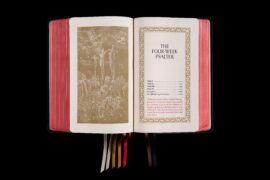
A goal for 2026 is to attend to God’s movements in the realm of reading. What follows are a few suggested practices for attending to God in your reading this year.
1. Listen for patterns. Look for opportunities. Is there a book title that has come up multiple times in the past few weeks or months? Is the subject matter at all attractive to you? Is a particular group reading something you’ve always wanted to read but have felt intimidated to read alone? These might be little nudges from the Lord to pick up this book and give it a try.
2. Get inspiration from other readers. At the end of every year, I look forward to the annual “Best Books I Read” article from the Catholic World Report, where dozens of Catholics share their reading lists for the past year. This article provides a great list of books in a variety of genres and subjects. Word on Fire has also produced some wonderful books that feature the work of Catholic writers (see Women of the Catholic Imagination) or authors whose thought is inspired by literature (see Bishop Erik Varden’s Towards Dawn: Essays in Hopefulness).
3. Mark the treasures. Consider marking the most moving part of the book you read with a little note that says why this part of the book was most significant. Whether or not you read the book again, the note can serve to either remind a future version of yourself how the book impacted you or pass along to another reader a moment that mattered to you. You might also keep a small journal or commonplace book of key quotes from your reading that you want to savor further.
4. Don’t be afraid to switch books or to return after a pause. A spiritual director once shared her approach to reading. Many of her books contained bookmarks, noting the place she had stopped reading. When she returned to a book months or even years later, the bookmark was in just the place she needed it to be to hear from the Lord.
5. Read aloud or let yourself be read to. Consider gathering your spouse, family, or friends for a read-aloud of a book. Struggling to get through a book that you’d really like to finish? A well-made audiobook can be a great supplement.
6. Approach reading a bit like a hobbit. Just as adventure finds the hobbits in Tolkien’s work, good books will find you. So relax, be attentive, and see what comes up. The process of discovering what you might be called to read next can be fun and as delightfully surprising as finding your friends have drawn baths for you after a tiring journey. And it can lead you on adventures you never could have imagined.