
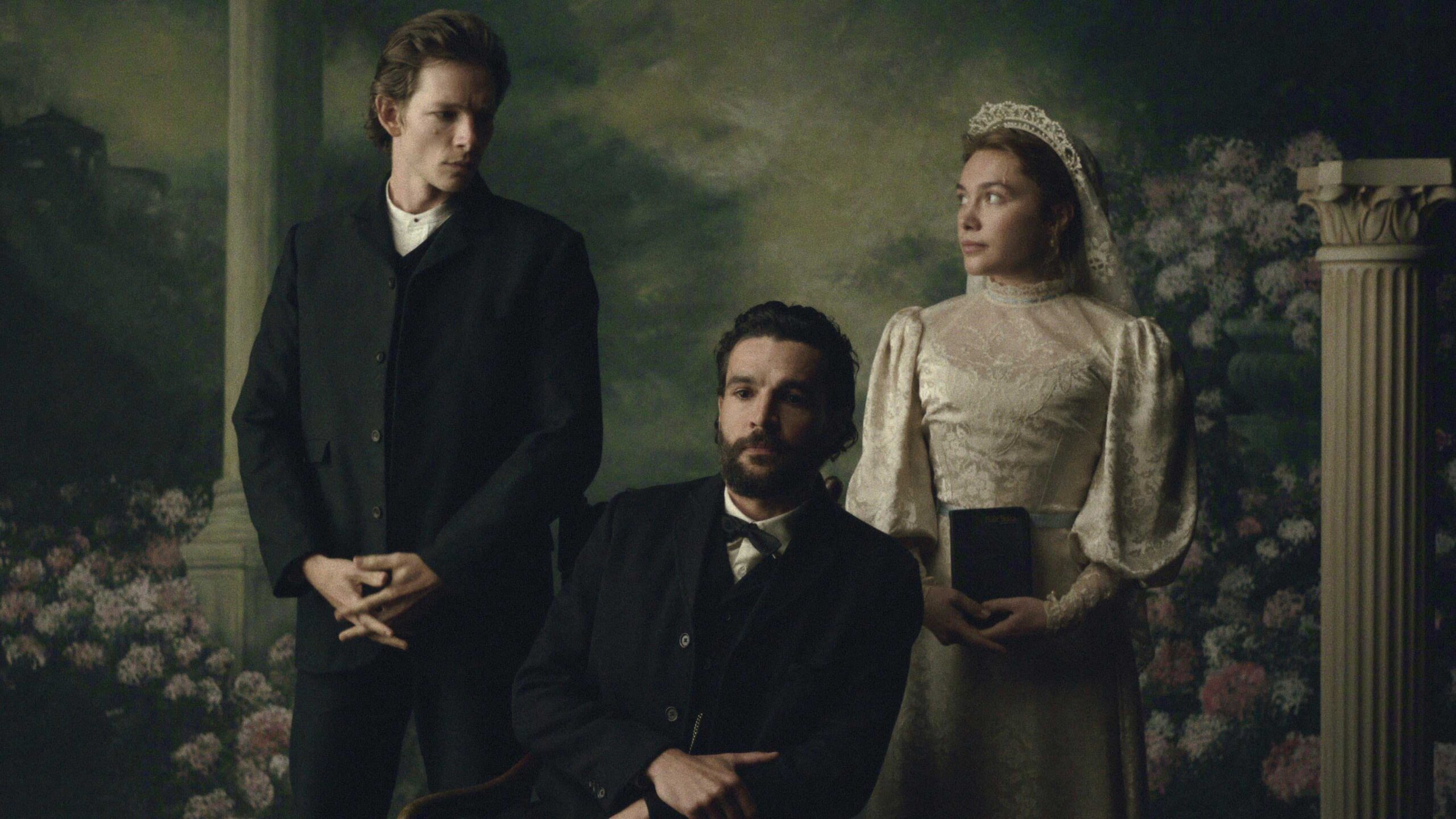
To ask someone, “What is your all-time favorite novel?” is a little unfair, especially if they are an active reader. A more reasonable question might be, “What are your top-five favorite novels?” For me, one of the five will always be East of Eden (1952) by John Steinbeck. I had the privilege of reading and discussing it with several other people for the first time in the Salinas Valley of central California, Steinbeck’s home and the setting of the novel. He is the author of The Grapes of Wrath (1939), Of Mice and Men (1937), Cannery Row (1945), and the Winter of Our Discontent (1961). He won the Nobel Prize in Literature in 1962 and thought East of Eden was his most important novel, even though The Grapes of Wrath has been his most celebrated work.
Life East of Eden
I found the book overwhelming, so I wasn’t surprised when a student of mine said he had recently read East of Eden, and it had “changed his life.” Steinbeck’s novel is a retelling of the Genesis account of evil entering paradise and how, consequently, those who made it their home were ordered to leave by the Eastern Gate, which was then guarded by a sword-wielding angel to prevent reentry. The novel also deals with the reality of evil, the freedom to choose good or evil, and the possibility of overcoming evil and experiencing redemption over time.
After their transgression, “at the breezy time of the day,” Adam and Eve were confronted by the Lord God. They then hid themselves “among the trees of the garden.”
The Lord God called to the man, and said to him, “Where are you?” He said, “I heard the sound of you in the garden, and I was afraid, because I was naked; and I hid myself.”
God then asked the telling question, “Who told you that you were naked?” The Lord already knew the answer to his follow-up query, “Have you eaten from the tree of which I had forbidden you to eat?” In what might have been the first recorded instance of “passing the buck,” Adam blamed Eve but implied that it was really God’s fault because he had given him Eve. Eve blamed the snake. The snake must have looked about and found no one else to blame.
The man said, “The woman whom you gave to be with me, she gave me fruit from the tree, and I ate.” Then the Lord God said to the woman, “What is this that you have done?” The woman said, “The serpent tricked me, and I ate.”
After God pronounces the consequences for all three, he prepares them for their exit from paradise.
The Lord God made garments of skins for the man and for his wife, and clothed them. Then the Lord God said, “See, the man has become like one of us, knowing good and evil; and now, he might reach out his hand and take also from the tree of life, and eat, and live forever”—therefore the Lord God sent him forth from the garden of Eden, to till the ground from which he was taken. He drove out the man; and at the east of the garden of Eden he placed the cherubim, and a sword flaming and turning to guard the way to the tree of life.
The Screen v. The Book
On October 1, a Netflix adaptation of East of Eden will premiere starring Florence Pugh, Mike Faist, and Christopher Abbott. Hoon Lee will play the important but understated role of the sage Chinese–American cook and housekeeper, Lee. This follows the 1955 film adaptation with James Dean and Julie Harris and the 1981 version with Timothy Bottoms and Jane Seymour.
Does this mean that those who might have read the book will not do so now? Will the Netflix release—as good as it might be—give people an easy opt-out of tackling the novel? For that matter, do the Jane Austen reimaginings and adaptations—from bad to very good—give those who might otherwise read the novels an off-ramp?
In the dystopian classic Fahrenheit 451 (1953), books are prohibited, and the role of firemen is to burn any books that are discovered. The conclusion of the film offers hope as it depicts a rural sanctuary where each individual has memorized an entire classic book and, in so doing, preserves the book for everyone else. Among those books are Plato’s Republic, the Book of Ecclesiastes, the Book of Revelation, As You Like It (Shakespeare), The Wealth of Nations (Adam Smith), Leaves of Grass (Walt Whitman), and works by Marcus Aurelius, Einstein, and Gandhi.
Would that we had such commitment today! Keeping up with the assessments of American reading habits is like watching a slow-moving train wreck. Fewer than half of American adults now read for daily pleasure. The average American reads about two to five books per year, with roughly 40 to 50 percent of US adults reporting that they have not read a single book in the past twelve months; nor is it encouraging that 75 percent of Americans report that they have read at least “part of a book” over the course of a year.
It gets worse, as not only are reading habits weak, but reading ability is steadily dropping as well. According to one study, about 130 million US adults (54 percent of those age sixteen to seventy-four) read below a sixth-grade level. Approximately forty-five million US adults are functionally illiterate, struggling to read below a fifth-grade level.
In recent decades, faculty have found many of their students, even at the most prestigious universities, are overwhelmed by reading assignments—especially the Mt. Everest–like challenge of reading an entire book. There are at least two reasons: High schools, especially those afflicted by progressive educational ideas, tend to find it unreasonable to require students to read an entire book. Digital distractions, moreover, undermine the development of good reading habits.
It seems, then, that in our day we don’t need the book-burning fireman destroying our books—we are taking care of that in our own way.
Squandering Leisure
This, then, is a modest plea to read Steinbeck’s novel before seeing the TV series. In his short but important book Leisure, the Basis of Culture, Josef Pieper warns that a society that does not know how to use leisure is a society at risk because a proper use of leisure is the irreplaceable foundation of a healthy culture. He worries that “unless we substitute true leisure for our hectic amusements, we will destroy our culture—and ourselves.” Pieper, an Aristotelian and a Thomist, logically extends the benefit of leisure, explaining that a proper use of leisure should lead to a “sense of wonder,” which is a step toward contemplation. Indeed, Aristotle opens his Metaphysics by noting the human inclination to wonder but also to nurture it. In On The Virtues of the Human Heart, Pieper explains that, as opposed to leisure, acēdia looks like laziness but is a more serious vice: acēdia is a denial of the experience of the goodness and grandeur of God. Pieper convincingly translates Psalm 46:10 not as “Be still and know that I am God” but rather as “Be at leisure and know that I am God.” All of this implies that a serious habit of reading is a dimension of leisure; short of that, the average person will be inhibited in their progress toward contemplation. There are practical benefits as well. When students ask me how they can learn to write better, I always tell them, “Read better.”
Steinbeck and Contemplation
So, what is the lesson here? Read Steinbeck and enjoy the beatific vision? Not quite. One of the reasons that purgatory makes sense is because, no matter how hard we try, it is unlikely that any of us will be prepared for God’s presence upon our passage from this life. We tend to think this is so because we may not shed our sinful nature in one easy step. Our wayward thoughts may not immediately dissipate. Except perhaps for saints, our passions may not be properly and wholly directed toward God.
If it is healthy, our imagination is a far better director than anyone in Hollywood.
But our need for purgation may also involve our habits. In Thomistic moral philosophy, habits are not casual inclinations to grab Frappuccino from a Starbucks on the way to work. Rather, following Aristotle, a “habit” (ἕξις hexis) is a possession, a fixed disposition of character. To the degree these important components of character are deficient upon our passing, the cultivation of these essential habits is likely to be part of the purgatorial experience.
Another problem with the small screen and the big screen is that, for the most part, they deprive us of the exercise and strengthening of our imagination, a companion faculty to our intellect, our memory, and our will. Aquinas taught that human beings cannot form abstract thoughts or intellectual concepts without the sensory images provided by the imagination, but if the imagination is weak, we are hobbled, just as we are when the will is weak. If it is healthy, our imagination is a far better director than anyone in Hollywood.
Admittedly, cinema is an art form involving true artistry. Genuine film critics are some of the smartest people around, but then, they have read all the books. Shakespeare’s plays and Sophocles’s tragedies, moreover, were meant to be watched not read. But things have changed. Now, a sturdy habit of reading must come first. When I was growing up there were only two theaters in town—one showed regular movies, the other, movies you don’t want to see. Now, we are lucky enough to have as many as 500 TV channels, multiple theaters, and the opportunity to binge-watch a universe of digital entertainment.
Will I, then, avoid the Netflix series? Perhaps, because so much of the book is fixed in my imagination, and no matter how good the screenplay may be, it cannot match the nuance and vivid images of the book I already relish. It’s the same reason I was reluctant to watch Project Hail Mary. My son, a science–fiction buff, had recommended the book, and although some of his recommendations are too technical for me, I was able to wrap my head around this one—and I couldn’t put it down.
The Adaptation
Admittedly, the trailer to the Netflix adaptation of East of Eden is alluring. Will it be good? It will really depend on how well Florence Pugh can play a moral monster. The trailer cleverly begins with the early scene of the beaten and bloodied “Cathy” crawling to the doorstep of the Trask brothers.
A dirty bundle of rags and mud was trying to worm its way up the steps. One skinny hand clawed slowly at the stairs. The other dragged helplessly. There was a caked face with cracked lips and eyes peering out of swollen, blackened lids. The forehead was laid open, oozing blood back into the matted hair (emphasis added).
Steinbeck’s choice of verbs recalls Canto 34 of the Inferno, where Virgil describes Satan as “the wicked worm that pierces through the world.” Steinbeck said of his character Cathy, “If you can believe in saints, you can believe that somebody can be all good, you’ve got to believe that somebody can be all bad.”